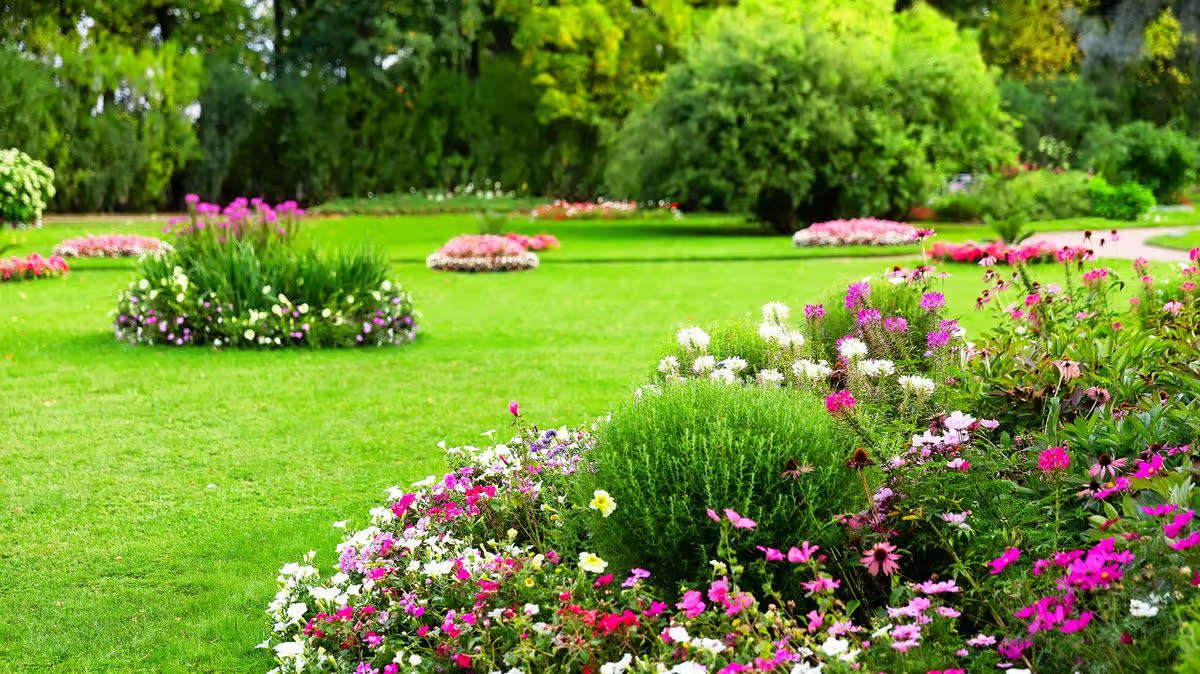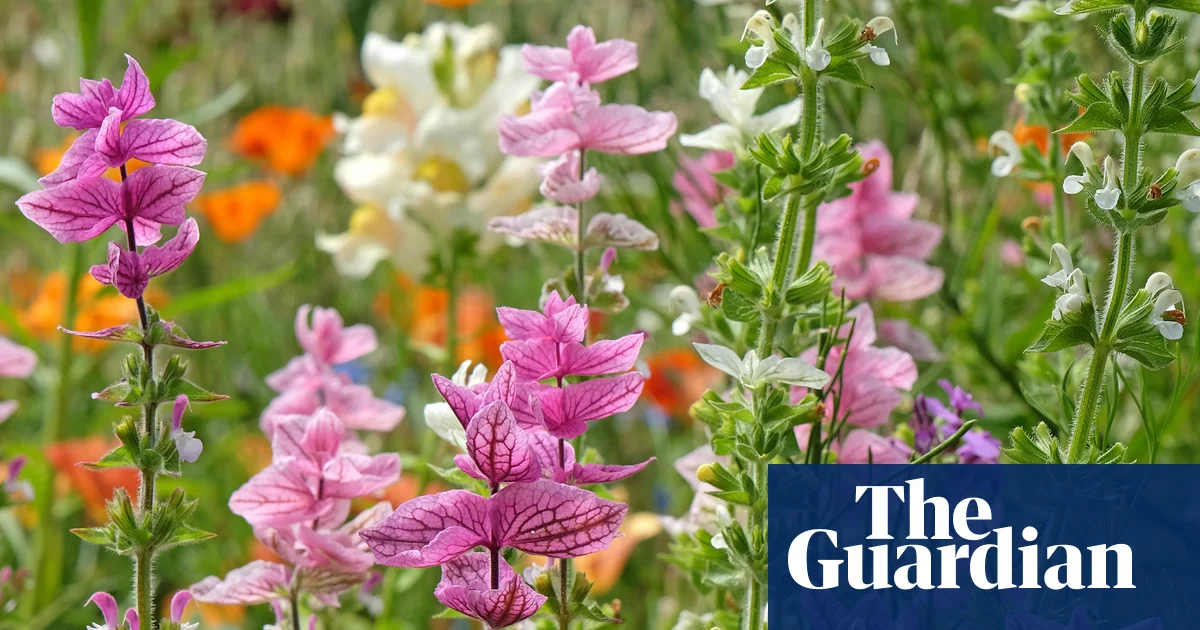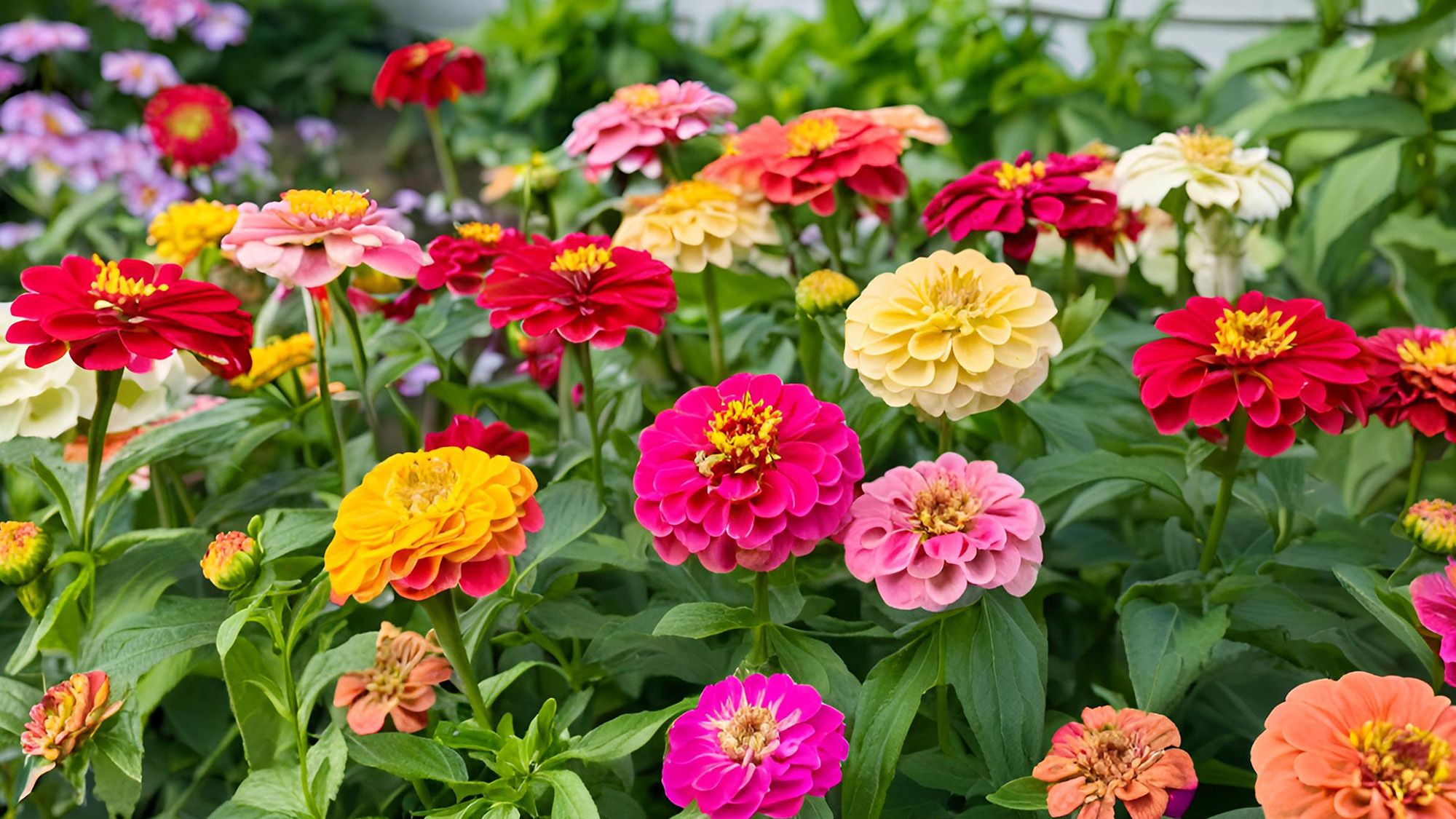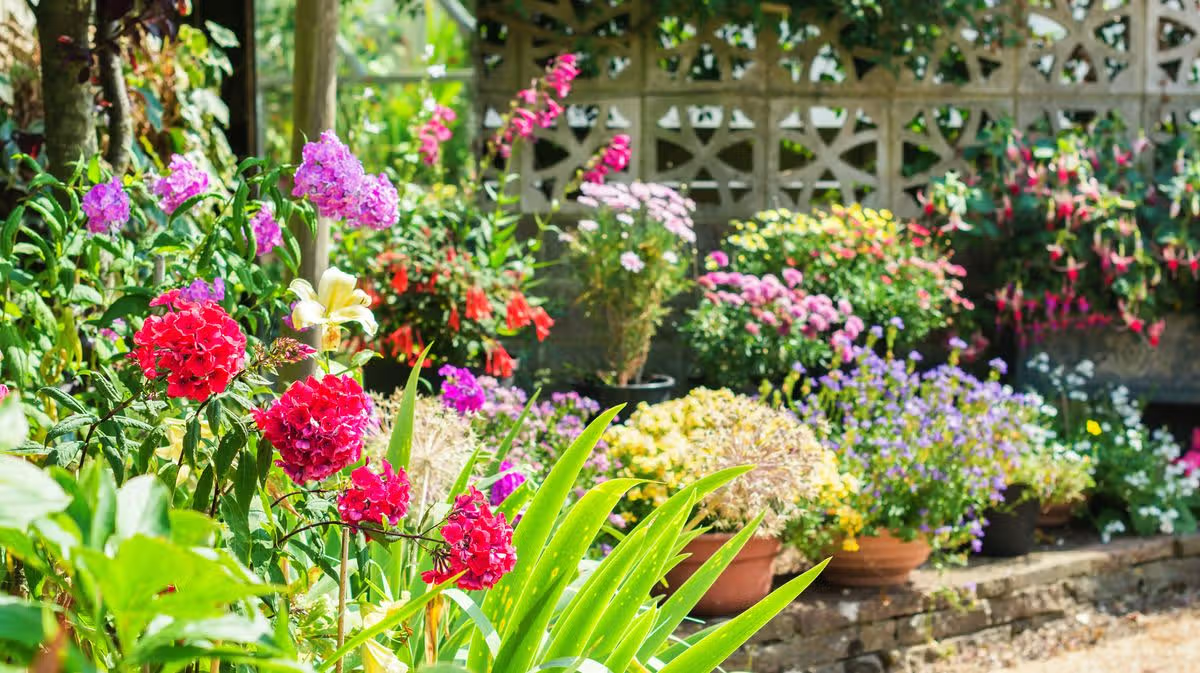
If there’s one expression that rings painfully true at this high point in the gardening year, then it’s surely “mind the gap”.Show me the gardener who hasn’t at some stage been ambushed by the sudden, unwelcome appearance of said gap in an otherwise ample flower border – a dark hole slap-bang in the middle of abundance that silently reproaches us for our failure to anticipate it and plant accordingly. Except that, of course, this is far harder than it looks, requiring us to play the horticultural equivalent of a game of chess where we sometimes find ourselves in checkmate.Truth is, ugly gaps in summer flower borders appear for lots of different reasons, including some beyond our control. But one of the most frustrating – because it’s often entirely avoidable – is when plants get toppled by a sudden violent squall. This happened to some fat clumps of the exquisite annual poppy, Papaver ‘Amazing Grey’ in my own garden recently, just as their tissue-thin, silky lavender-grey flowers were unfurling. A day of rain and buffeting winds repeatedly swung them back and forth so harshly that the plants eventually snapped at the base, just at the point where their dainty tap roots anchored them to the ground. Gutting.Next year I’ll do better by making sure to protect them in time with a nest of lightly crumpled chicken wire placed gently around the young seedlings, tethered with a few metal landscape pins discreetly pressed into the ground. But for now, I’ve got a couple of ugly holes at the front of the border in urgent need of filling.Another common cause of gaping holes appearing like gloomy spectres in flower borders at this time of year is late spring and early summer-flowering perennials such as lupins, delphiniums, opium poppies, geum, aquilegia, trollius, alchemilla, nepeta and sweet rocket starting to die back after the plants have finished blooming. One minute you’re looking at a colourful blaze of glory, the next it’s an unlovely mess of faded flower stems and tired-looking foliage.Devising clever ways to conceal this particular kind of seasonal hole in a flower border is challenging. But as a rule, it’s best to cut these kinds of early flowering species back very hard, almost to the ground, immediately after flowering, water them consistently and very generously, and then liquid-feed twice a week. At the very least this will encourage the production of plenty of young fresh foliage, while in some cases (depending on the species), it will also encourage a second, smaller flush of flowers.Highly organised gardeners, anticipating these kinds of lulls in a display, also cleverly counter them by temporarily dropping some container-grown plants into the gaps, either plunging the containers into the ground or making sure to conceal them deep among the foliage of other plants. Fast-growing, long-flowering, late-summer flowering annual species such as cosmos, nicotiana and scabious are perfect for this purpose. So are late flowering bulbous species such as dahlia and gladiolus, as well as many kinds of salvia (examples include the long-flowering, floriferous ‘Wish’ series, the ‘Lake’ Series, Salvia sagittata ‘Blue Butterflies’ and Salvia ‘Hot Lips’). These kinds of heat-loving, not-always-reliably hardy species can first be brought on in pots grown under cover of a glasshouse or polytunnel to encourage them into flower by early July when they’re needed. Just remember to keep them deadheaded, regularly watered and liquid-fed (use a high quality, potash-rich feed for this) as otherwise they’ll soon start to falter.Gaps in summer flower borders appear for lots of different reasons. Photograph: Getty Images Another part of the solution is to plant some very fast-growing annuals such as nasturtiums or calendula into any glaring gaps. To counter the costs involved as well as the fact that they won’t be as large or as productive as their earlier-sown equivalents, these should ideally have been raised in large numbers from a late sowing in May.Alternatively, you can often find self-sown seedlings of these and other annuals popping up around the garden at this time of year, which can be carefully dug up and quickly transplanted where needed. There’s also – just about – enough time to scatter seed of the fast-growing annual night-scented stock. Just make sure to water the ground very well before and after you do so. While its dainty flowers don’t give much visual impact, their sweet, peppery scent is one of the special joys of the summer garden on a warm, sultry night.Devising clever ways to conceal seasonal holes in a flower border can be challenging. Photograph: Getty Images/Mint Images RF Gardeners can also overcome these kinds of seasonal, early summer gaps by permanently incorporating a good selection of late-flowering perennial species into the border. As those early summer dazzlers fade to grey, these will gradually take over the show. Suitable examples include sedum, aster, achillea, sanguisorba, helenium, pennisetum, penstemon, linaria (long-flowering, sterile varieties such as ‘Peachy’ and ‘Dial Park’), verbena (various forms of Verbena bonariensis, Verbena hastata, and Verbena rigida), gaura, hardier border-type salvias such as Salvia ‘Amistad’ and Phlomoides tuberosa, which are all excellent for this purpose.Many kinds of roses have also either finished flowering entirely or have completed their first flush of bloom by now. They are taking a rest to recover their energies before flowering again later in the summer. To encourage the latter, deadhead them ruthlessly, and then water and liquid-feed them regularly over the coming months.Finally, despite the undoubted challenges, it’s good to know that there is a very definite silver lining to these kinds of glaring gaps, which is that they provide welcome opportunities for nature – which abhors a vacuum – to do its thing. As a result, self-sown seedling will often appear in them as if by magic as once-dormant seed takes advantage of its sudden exposure to light and available growing space to germinate. For this reason, it’s often best to put down the hoe at this time of year and hand-weed only. You’ll be very pleasantly surprised by the many little treasures you’ll discover.This WeekProtect members of the brassica family such as cabbage, broccoli and kale against damage from the caterpillars of the white butterfly by netting them, making sure to check the underneath of the plants’ leaves first for any signs of their eggs.This is a good time to summer-prune wisteria by cutting back the whippy green shoots of the current year’s growth to five or six leaves to keep the plants healthy and floriferous and prevent them from getting too large and unruly. See rhs.org.uk for detailed instructions.Dates For Your DiaryJune Blake’s Garden, Tinode, Blessington, Co Wicklow (W91EC90): ‘Summer Talks’ series continues every Sunday afternoon (from 2pm) throughout the remainder of July and all of August, with a guided tour of this exceptionally beautiful garden by owner and creator June Blake and a range of delicious home-baked cakes available in the garden’s coffee shop. See juneblake.ie. Annual Carlow Garden Festival: The festival takes place from Saturday, July 25th to Sunday, August 2nd. There will be an outstanding line-up of guest speakers including Joe Swift, James Alexander-Sinclair, Arit Anderson, Chris Beardshaw, Bunny Guinness, Tom Coward, Fiann Ó Nualláin, Colm O’Driscoll, Jimi Blake, Oliver Schurmann, Helen Begadon, Daphne Shackleton and Mary Keenan. Pre-booking is essential. See carlowgardentrail.com and carlowtourism.com.
Summer gardening: How to fill the gaps in your flower borders
Ugly gaps in summer flower borders are painful to behold, but there are ways to manage them
1,206 words~5 min read