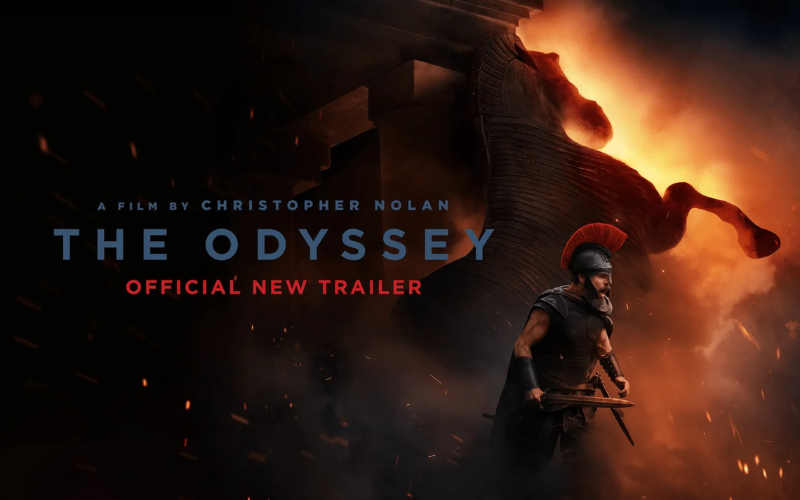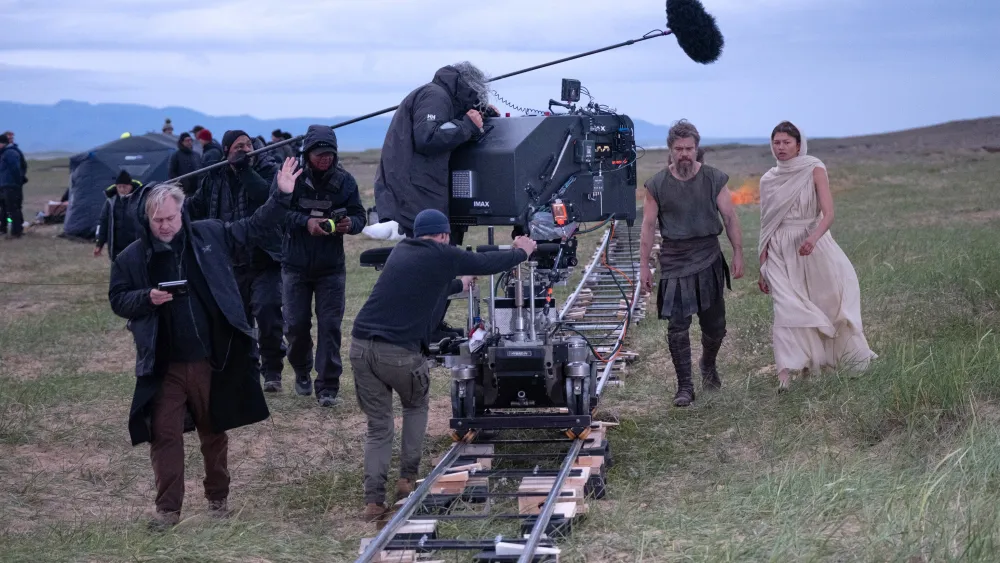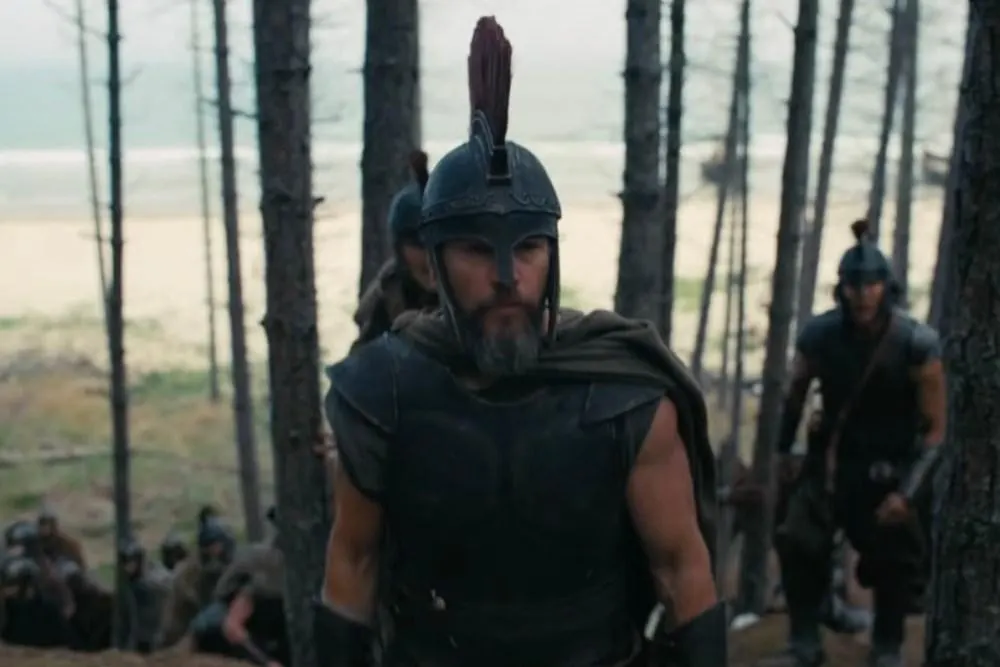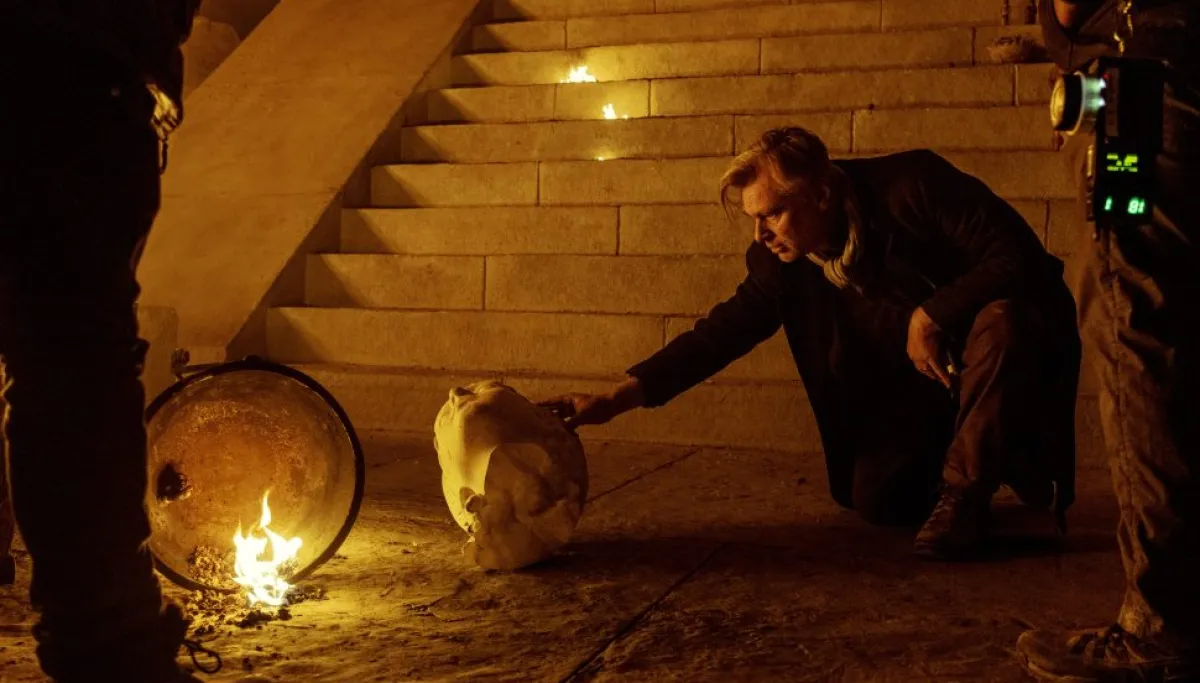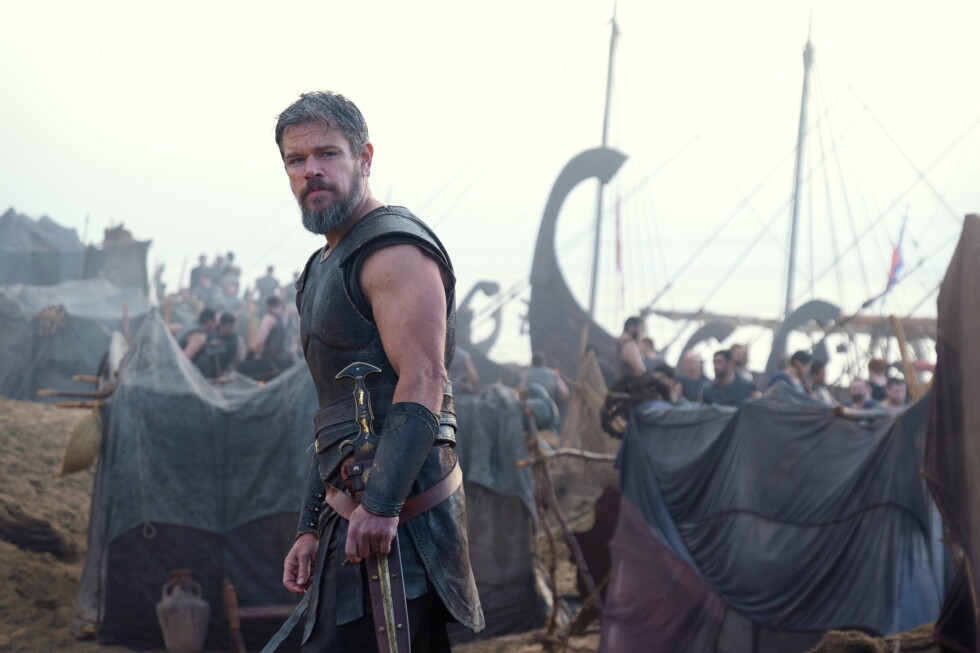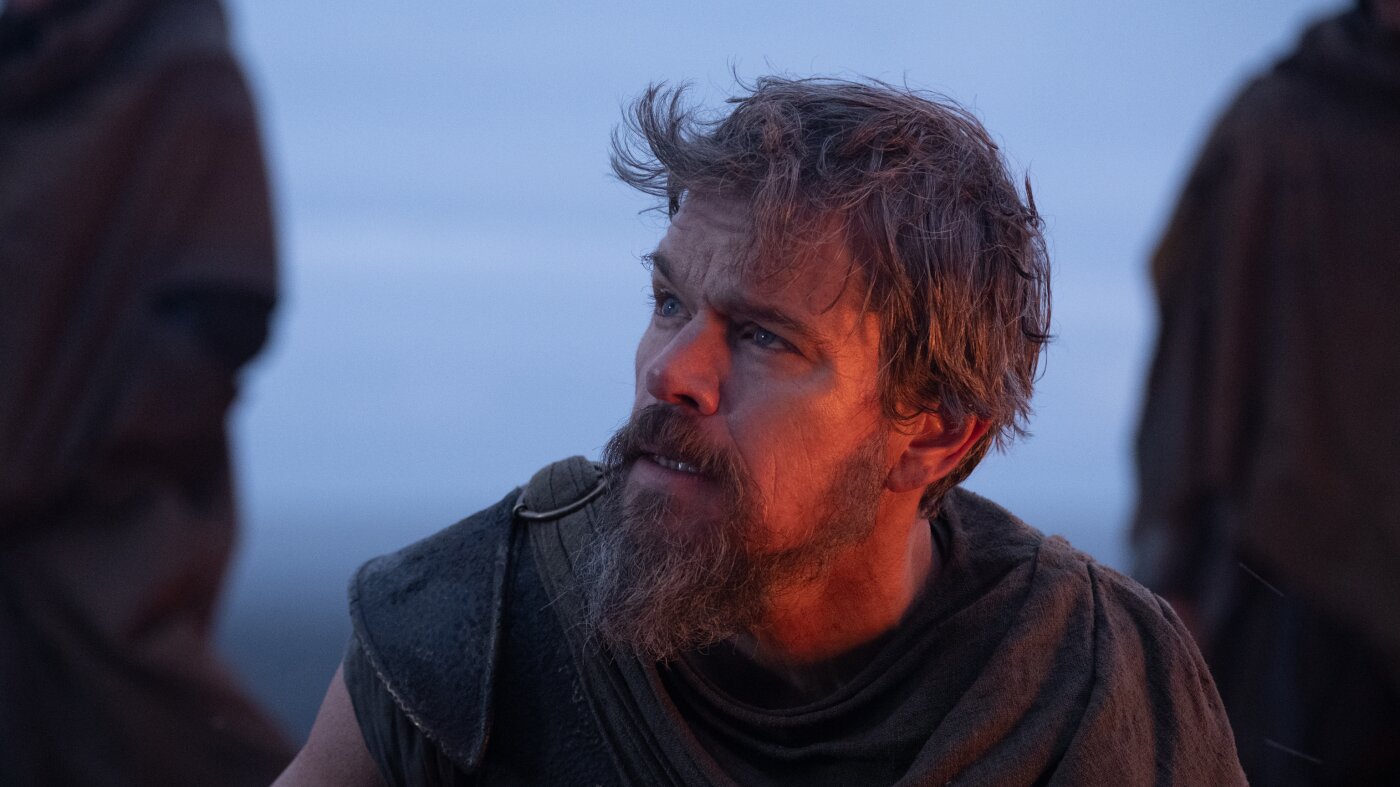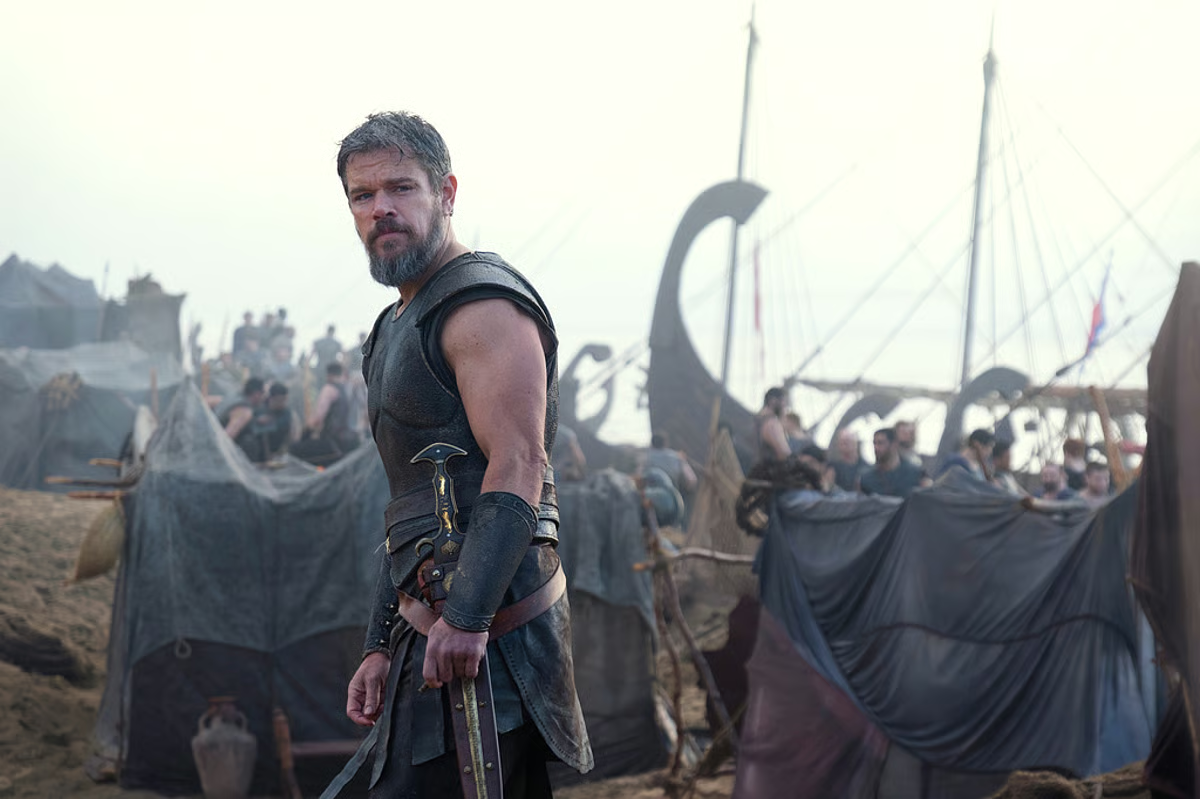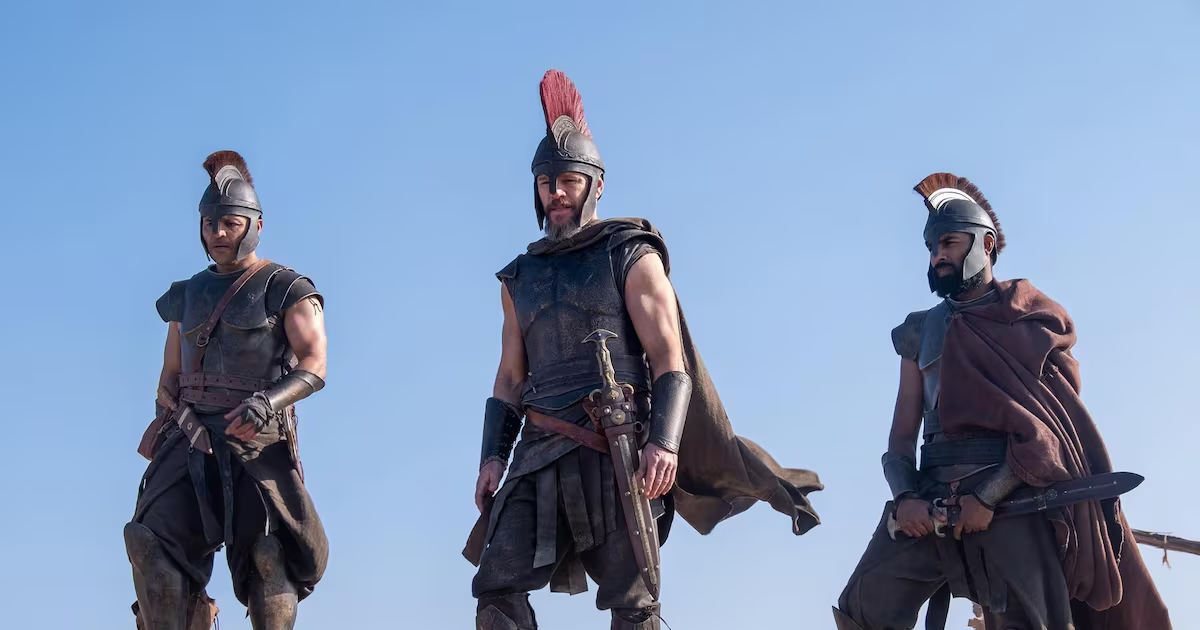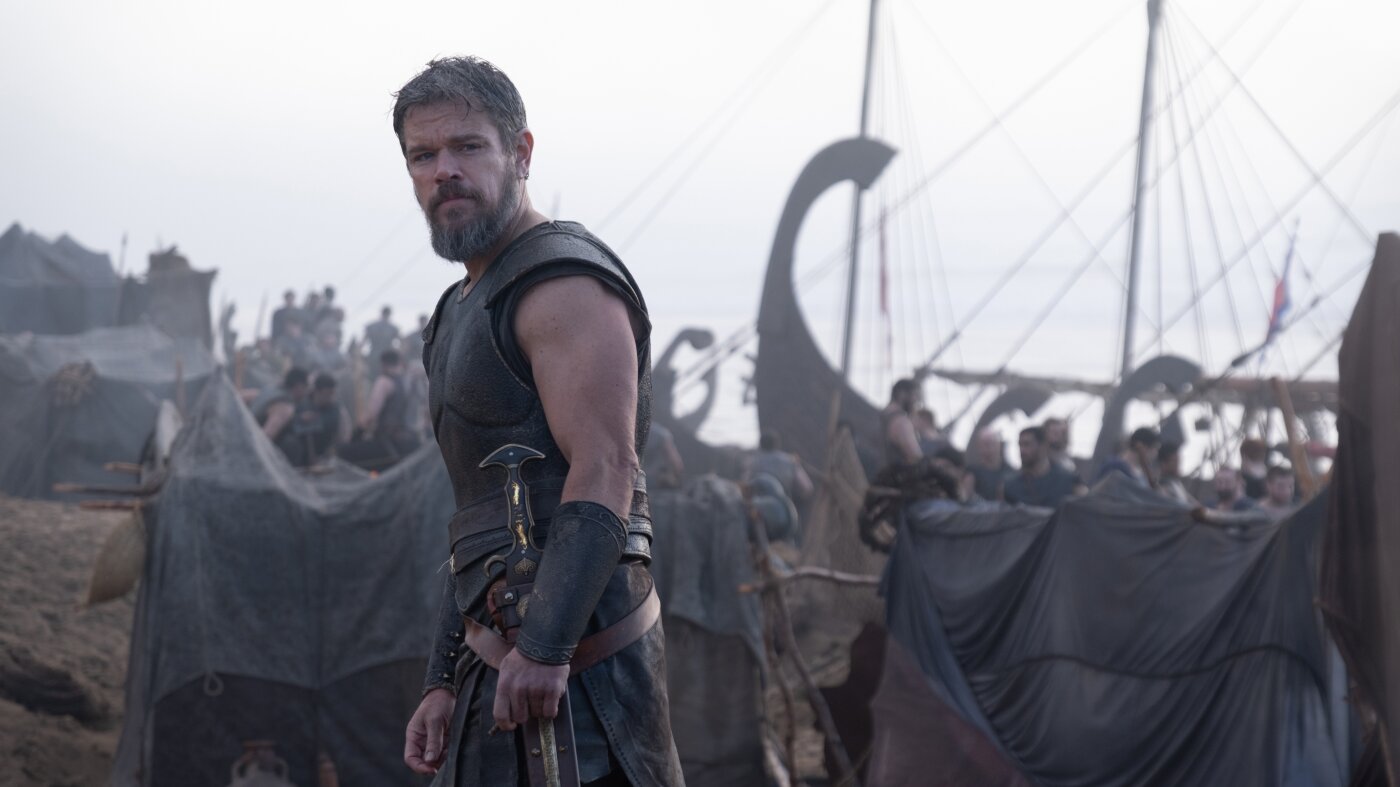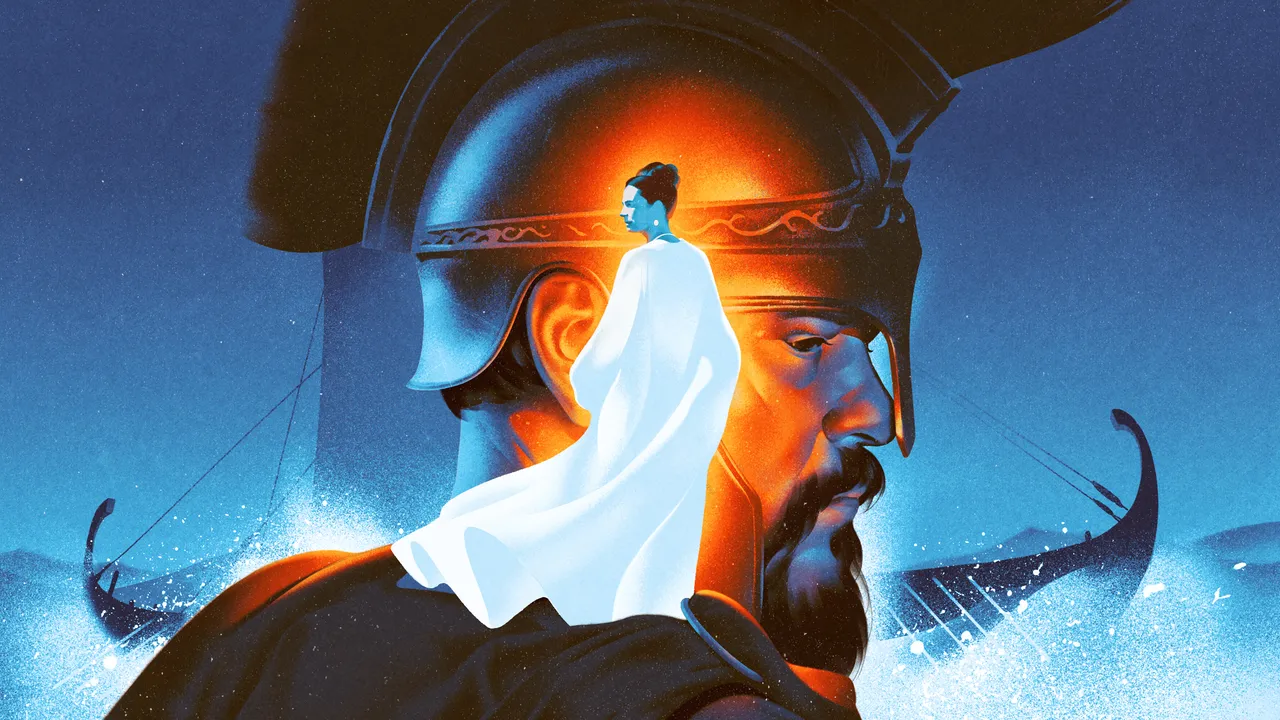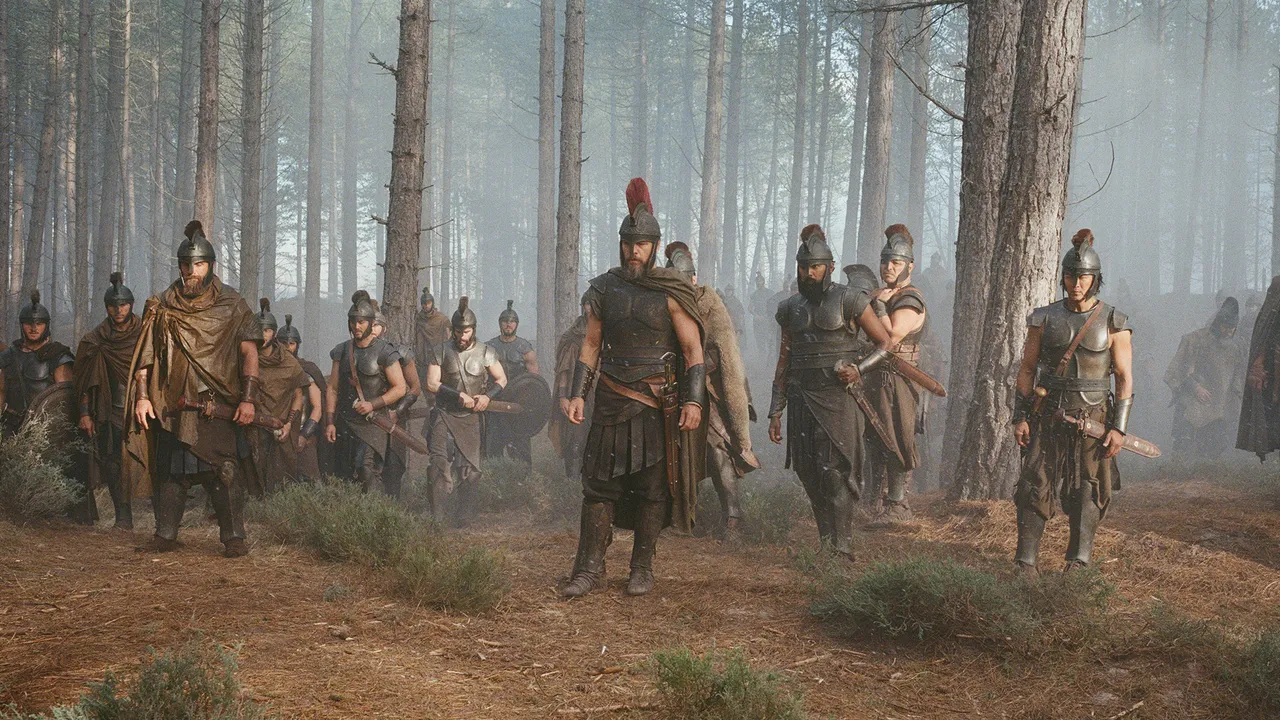
In one of many astonishing scenes in Christopher Nolan’s new film, “The Odyssey,” several men sit around a table on a remote island, noisily devouring a meaty stew that a woman has laid before them. They are reaping the benefits, or so it seems, of Zeus’ law, which is rooted in xenia, the ancient Greek concept of hospitality. The rule is unwritten, but, this being a Nolan movie, it doesn’t go unspoken; like nearly all the director’s structuring principles, Zeus’ law is invoked repeatedly, with an almost incantatory awe. It’s a directive and a warning: welcome the stranger into your home with food and drink, for you never know if they might be a god in disguise. In this case, though, the guests are mere mortals, Greek veterans of the Trojan War, and it is their host, played by a mesmerizing Samantha Morton, who turns out to be supernatural. She is the sorceress Circe, and she transforms the men into pigs—the very creatures, she says, that their gluttony has shown them to be.Even so, you can’t begrudge the men a hot meal. For years, they have been stuck at sea with their leader, the great warrior king Odysseus (Matt Damon), trying to find a route home to Ithaca; hunger and desperation have spurred his fiery second-in-command, Eurylochus (Himesh Patel), toward mutiny. What befalls them on Circe’s island smacks of a similar punishment from the animated fantasy “Spirited Away” (2002), in which a greedy couple are turned into boars after gorging themselves in an enchanted food court. Nolan gives the men’s faces a swinish aspect even before they start to go all oinky. The transformation itself is remarkably lifelike—an illusion achieved with fleshy, tactile closeups rather than C.G.I. pyrotechnics. Morton’s Circe, evoking the snarling villainy of the late Jean Marsh (in fantasy films such as “Willow” and “Return to Oz”), favors a hands-on approach to witchcraft; listen to her coo and coax as she calmly sculpts a face into a snout. You’re reminded of Nolan’s wonkish instincts as a filmmaker: again and again, he shows us the mechanics of the impossible—not just the big-picture what but also the nuts-and-bolts how.Here is one answer, then, to a question that some of us raised the moment this curious project was announced: How would Hollywood’s most stubborn logician adapt to Homer’s world of gods and monsters? Until now, nearly all mythology has been Greek to Nolan. This “Odyssey” takes place, we’re told at the outset, during “a time of apparent magic,” a skeptical formulation if ever there was one. And although the enchantments that follow are certainly real, they feel sparingly, even reluctantly, conjured. For his critics, Nolan’s realist instincts will seem like an inability to surrender fully to the wonderment of the tale, indicating a fundamental mismatch between filmmaker and material. But much of the pleasure of “The Odyssey” comes from watching Nolan think his way through this tension and figure out how much of his own mastery to assert over an existing masterwork. His rationalism is an armor against kitsch, obviousness, familiarity, and visual-effects bloat; it provides just the note of real-world groundedness that a great fantasy needs to achieve liftoff. It’s also a bridge between the ancient and the modern, ushering us into the minds of characters who inhabit a kind of polytheist-secularist limbo, and who suspect, for all their prayers and offerings, that the gods have long since abandoned them.“The Odyssey” begins elliptically, with images of a restless tide, an ominous rumble of drumbeats, and searching snippets of narration that situate us, as Nolan often does, in a labyrinth of guilty memories. Nearly twenty years after the fall of Troy, Odysseus, stricken with amnesia by the island nymph Calypso (Charlize Theron), is a lost man in every sense, tormented by misdeeds that he can neither undo nor fully remember. What haunts him most clearly is the ingenious trick he devised with the Trojan horse—here no rickety contraption on wheels, as it’s often depicted in popular culture, but a gleaming statue perched on its hind legs, eternally poised to attack. Was this pose the faintest of clues to the Trojans, signalling what would befall them once they dragged this offering through their city gates? Perhaps. As one Ithacan subject fondly recalls, Odysseus always had an unfashionable belief in playing fair.Back in Ithaca, his wife, Penelope (Anne Hathaway), and their grown son, Telemachus (Tom Holland), who hasn’t seen his father since childhood, cling uneasily to the hope that Odysseus is alive and on his way home. So does the king’s loyal swineherd, Eumaeus (John Leguizamo), who, in this telling, has gone blind and is thus endowed with near-Tiresian powers of perception. Meanwhile, the palace has been besieged by loutish suitors, led by the scheming Antinous (Robert Pattinson), all of them vying for the queen’s hand in remarriage and mooching off the absent king’s food and wine. Given Nolan’s tendency to throw a narrative curveball or two, the great surprise of all this Ithacan setup is how devoid of surprises it is—how willingly it hews to the spirit and structure, if seldom the letter, of the poem. Indeed, Nolan’s well-known penchant for nonlinear plotting dovetails neatly with the way that Homer’s epic, influenced by the oral tradition from which it most likely sprang, shuffles perspectives and time lines.The film, Nolan has noted in interviews, emerged from an exhaustive study of the work in multiple versions, chiefly Emily Wilson’s celebrated translation, from 2017. But he has also been ringing variations on the Odyssey for decades, and the new film has the quality of a palimpsest, in which even familiar twists in the tale reverberate anew with echoes from across his filmography. When he shows Odysseus and his men hiding inside the Trojan horse on the beach—an agonizing, days-long baptism by piss, shit, and seawater—you may recall “Dunkirk” (2017), with its hellish evocation of the tides of war. And when Calypso’s spell drains seven years from Odysseus’ life in seemingly an instant, it’s difficult not to flash back to “Memento” (2001), with its pitiless tale of manipulation and memory loss, or “Interstellar” (2014), in which an astronaut’s roughly three-hour detour costs him more than two decades of Earth time.Late in that space odyssey, Matt Damon popped up as a wayward astronaut, so desperate to return home that he betrayed his fellow-travellers. Did Nolan have an inkling, even then, that he had found his Odysseus? This production may seem like uncharted terrain, a rare opportunity for the director to set his heavyweight IMAX 70-mm. cameras adrift on the high seas. (The work of the cinematographer Hoyte van Hoytema is unsurprisingly stunning.) But Nolan’s “Odyssey” is less a departure than a homecoming. A three-thousand-year-old pillar of the Western canon turns out to be something of an urtext for the filmmaker’s career.There are times when you can sense Nolan’s frustration—not with Homer so much as his own inability to reshape the material into something more than mere spectacle. When Odysseus and his men navigate a course between the stonelike, man-grabbing tentacles of Scylla and the enormous churning maelstrom of Charybdis—or, as they are known in less orthodox translations, Rocky and Poolwrinkle—Nolan seems even more impatient to press on than the men are. And when Telemachus pays a crucial visit to the Spartan king Menelaus (Jon Bernthal) and his faithless queen, Helen of Troy (a fiercely defiant Lupita Nyong’o)—in a sequence that also recaps the grim postwar fate of the Greek conqueror Agamemnon (an unrecognizably helmeted Benny Safdie)—you sense plot points being jammed capably, if perfunctorily, into position.Mythology can be unyielding, and apart from one bold borrowing from Virgil’s telling of the Trojan-horse story—Sinon (Elliot Page), a warrior who appears in the Aeneid but not in the Odyssey—Nolan is compelled to follow the natural flow of Homer’s narrative events. It’s in the realm of language and theme that he finds the creative liberation he seeks. He has simplified and deformalized much of Homer’s poetry, and, in a shrewd decision, he has encouraged his actors to speak in a contemporary register, in more or less their native accents. Damon doesn’t go full Bostonian, but he gives us the most plainspoken American of epic heroes, down to the occasional F-bomb. His old-fashioned movie-star charisma has a bracing cut-the-crap terseness. When Odysseus outwits Polyphemus, the Cyclops—a towering puppet, brought to life by the actor Bill Irwin—he does so in near-total silence; gone is the character’s floridly articulated ruse to get his one-eyed captor drunk. Damon can be as crisp an orator as any actor now working, but his performance here reminds you why Jason Bourne, moving stealthily through a crowd like a sheathed dagger, remains one of his defining roles. There is something about a more taciturn Odysseus that suits Damon’s no-nonsense affect, his contained gravity. It feels right that, when he adds insult to the Cyclops’ injury, his taunt takes the form of an arrow.Nolan doesn’t exactly share his hero’s reticence; one of his signature tactics as a writer is to place blocky, boldface ideas in furious opposition. “Oppenheimer” (2023), his despairing drama about the origins of atomic warfare, was about the chasm between theory and practice—an academic genius’s inability to confront the darkest applications of his brilliance. “The Prestige” (2006), a tale of rival professional conjurers from the late nineteenth century—talk about a time of apparent magic!—pitted the rigors of art against the compromises of commerce. Like those films, “The Odyssey” unfolds amid momentous social and technological upheaval: the Trojan War has ushered in a brutal new era of human domination, and the gods themselves have retreated in disgust from mortal affairs. The ideological conflict here is between Zeus’ law, which insists on compassion, and the rules of combat, which increasingly demand that every rule be broken.The secularism of Nolan’s film thus carries a genuine moral logic. We encounter just one Olympian deity, Athena (Zendaya), who pops up from time to time to offer Odysseus her counsel, and even she might well be a mere projection of our hero’s addled mind—like one of the extras in Nolan’s dreamworld fantasia, “Inception” (2010). Poseidon, the angry lord of the sea, is visible only through his handiwork, the great sloshing storms that nearly capsize Odysseus’ red-masted ships. Zeus himself is entirely absent, which is why the repeated invocations of his law feel so resonant: in a world of overwhelming human savagery, a simple gesture of kindness becomes a profound act of faith, reasserting a covenant between men and the gods who might still walk among them.It’s no accident that the most powerfully imagined set pieces in “The Odyssey” are all predicated on violations of Zeus’ law. Circe’s swine-and-dine trick is one. Polyphemus’ violent inhospitality is another. Then, in the film’s most shattering moment, Odysseus realizes that no one has dishonored Zeus’ law with more world-altering consequences than he and his men did at Troy—a mass tragedy that, as presented here, is morally analogous to the horrors that J. Robert Oppenheimer’s invention unleashed on Hiroshima and Nagasaki. Nolan divides the sacking of Troy into two lengthy sequences, both shot under cover of darkness but edited (by Jennifer Lame) with a magisterial clarity. The first sequence plays out with breathtaking suspense, the second with wrenching tragedy; the difference is calibrated by the composer Ludwig Göransson, whose score pulses with mournful dissonance and martial fury. Violent mayhem hasn’t always been Nolan’s choreographic strong suit, but in “The Odyssey” he finds the propulsive rhythm of big-screen action. Blood spurts and weapons clash as they never have before in his films, and the impact of every loosed arrow registers with sickening force. Would Homer have admired the result? It’s hard to say, though I suspect that, here and there, Kurosawa might have.All of which is to say that the Odyssey, in depriving Nolan of opportunities for his ingenuity as a screenwriter, has also pushed him toward greater filmmaking risks. He evinces a more intuitive command of the medium and, at times, an uncanny sense of restraint. When Odysseus hears the Sirens’ deadly song, he does not urge his men to untie him from the mast, as the text declares; he simply breaks down sobbing, as if the lyrical force of the music had reminded him of every piercing regret and every errant desire that had ever afflicted him. And then there is Odysseus’ climactic return to Ithaca—a long-overdue family reunion and political reckoning that unfolds with classical directness and simplicity, featuring passages of great emotional tension and moments of silent, miraculous recognition. Tom Holland comes across as a vulnerable princeling without being petulant or drippy. And Anne Hathaway, in a bravura performance, situates Penelope on an emotional precipice, caught between indecision and indignation, between yearning for her husband and a palpable disgust with the alternatives.Like Damon, Hathaway has now appeared in three Nolan movies (the two briefly shared screen time in “Interstellar”), and here she embodies a welcome rarity in his œuvre. Nolan’s work has long betrayed a morbid preoccupation with deceased female partners; in films including “Memento,” “The Prestige,” “Inception,” and “The Dark Knight,” the dead wife or girlfriend becomes a supreme motivator toward vengeance, an angrily defining obsession. Homer has steered him right. Penelope is no femme fatale from beyond the grave; she’s a living, breathing, genuinely regal woman, and the pull that she exerts on her husband’s memories is one of unambiguous benevolence, grace, and love. Nolan is by now as close to a Zeus figure as exists in Hollywood cinema, and “The Odyssey” is his latest lightning bolt, hurled from an Olympian perch of critical and commercial supremacy. It’s also proof that he should violate his own laws more often. ♦
Christopher Nolan Has Always Been Making “The Odyssey”
In a starry, stirring adaptation of Homer’s epic, the director’s signature realism grounds, without dispelling, the drama’s emotional and mythological power.
2,277 words~10 min read