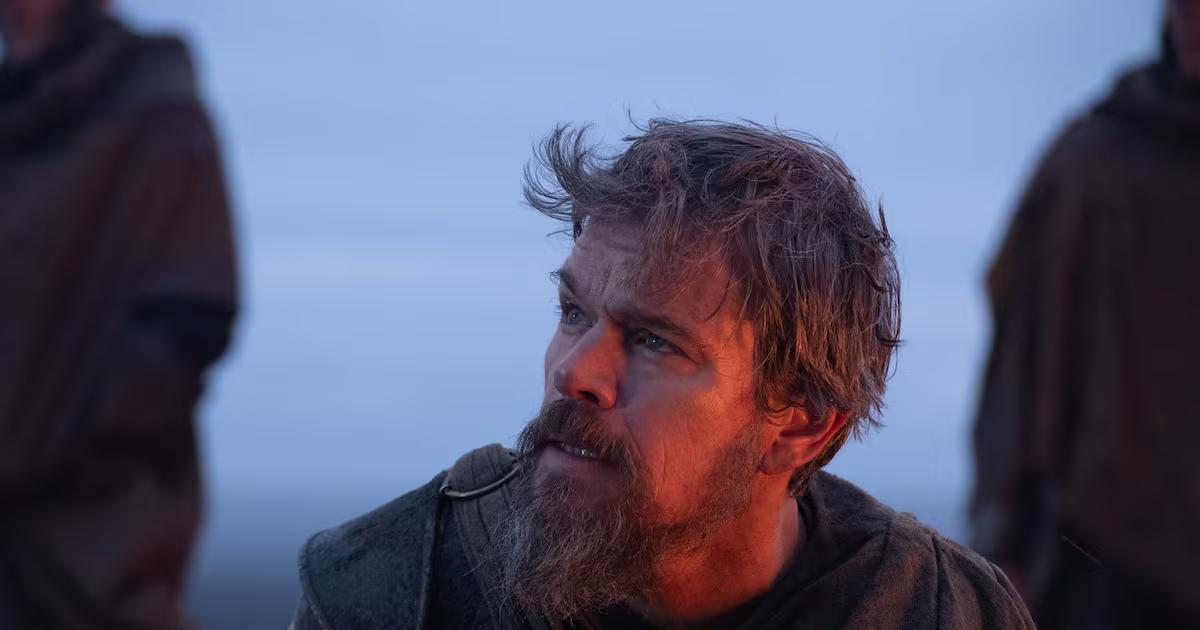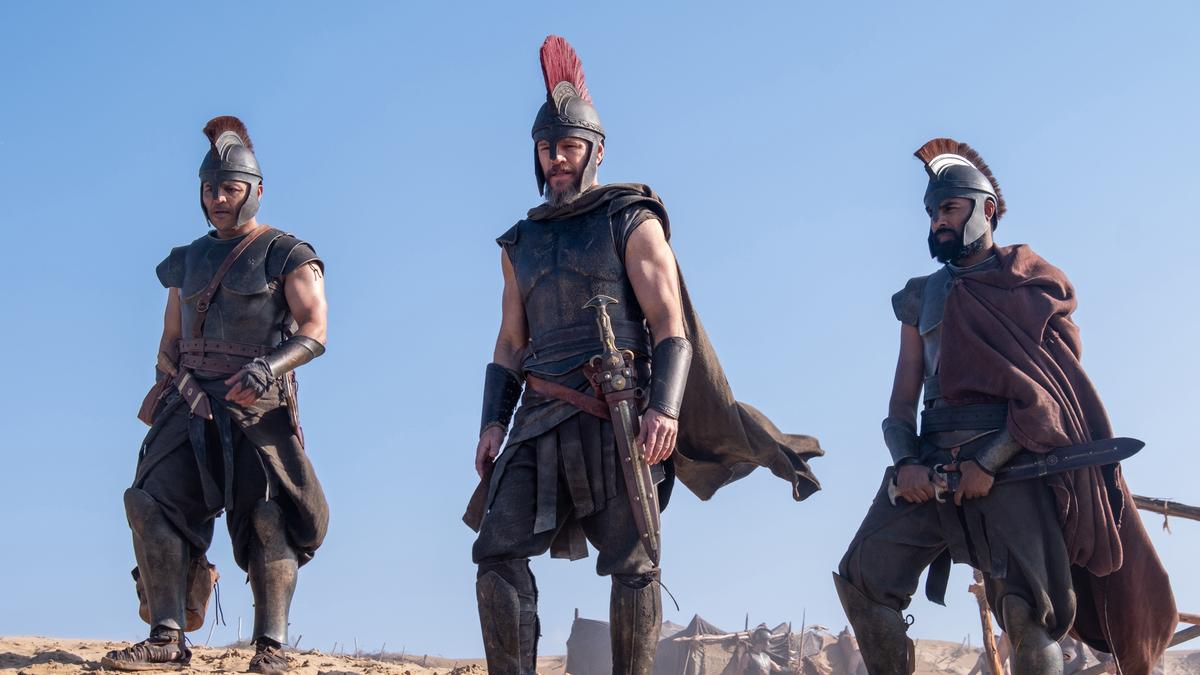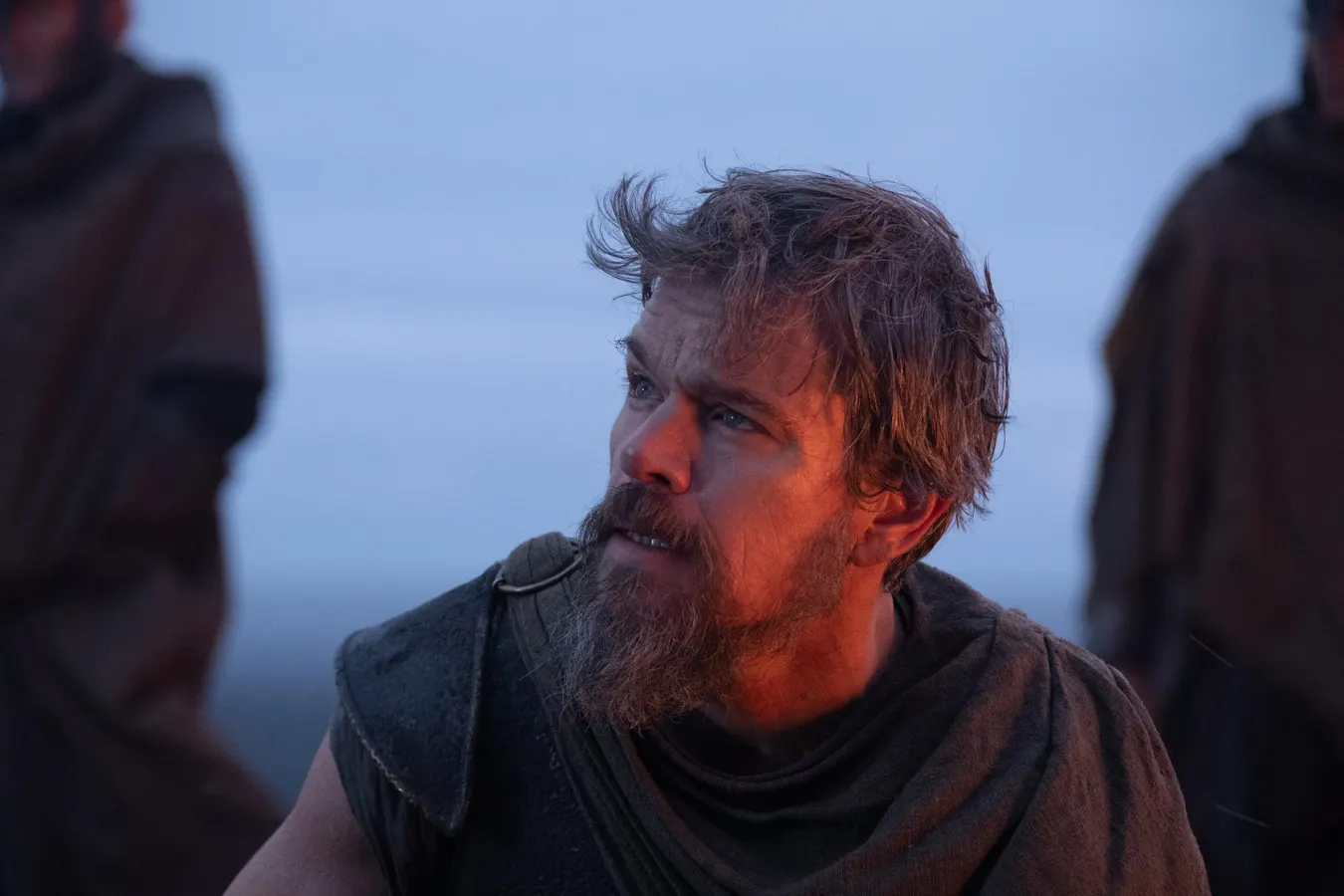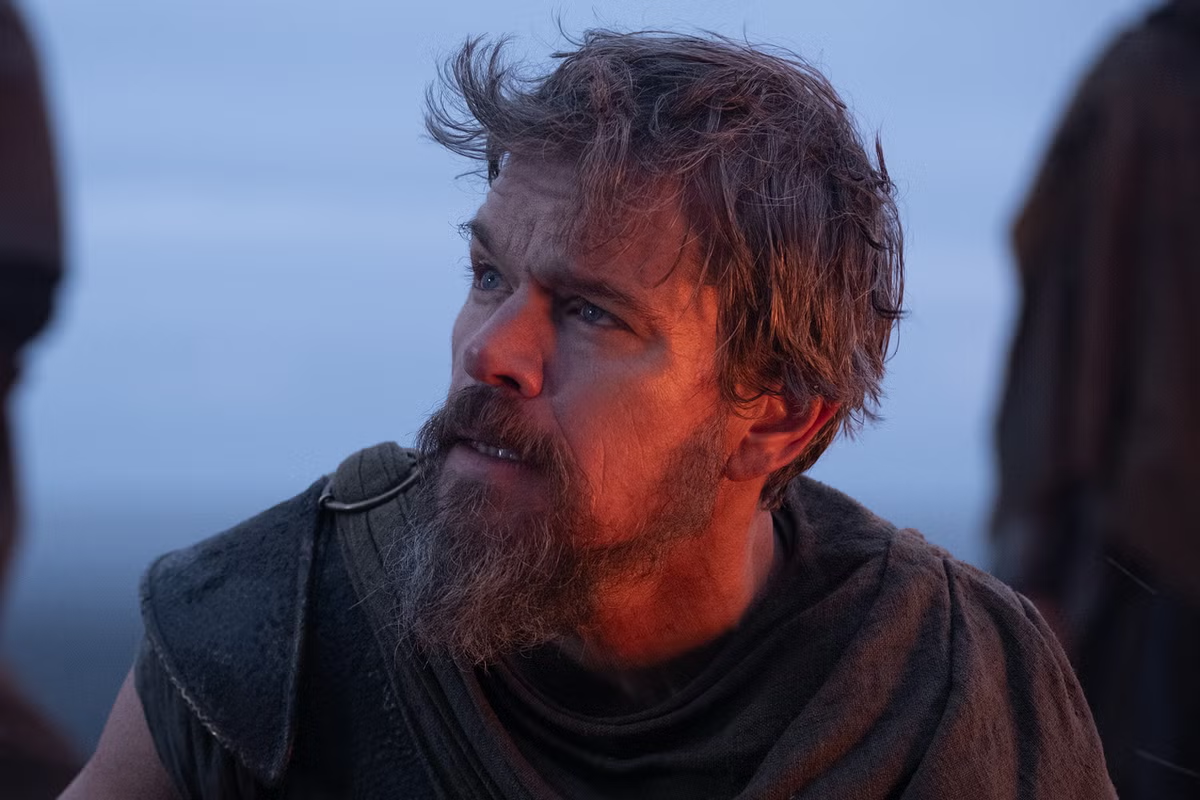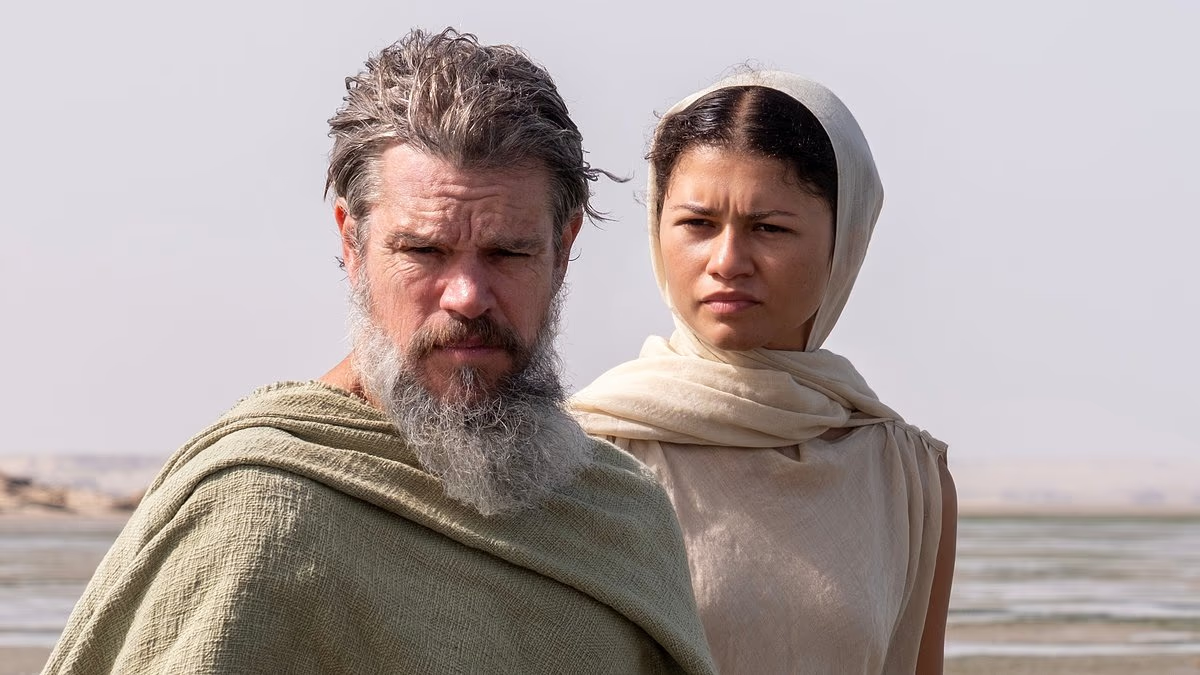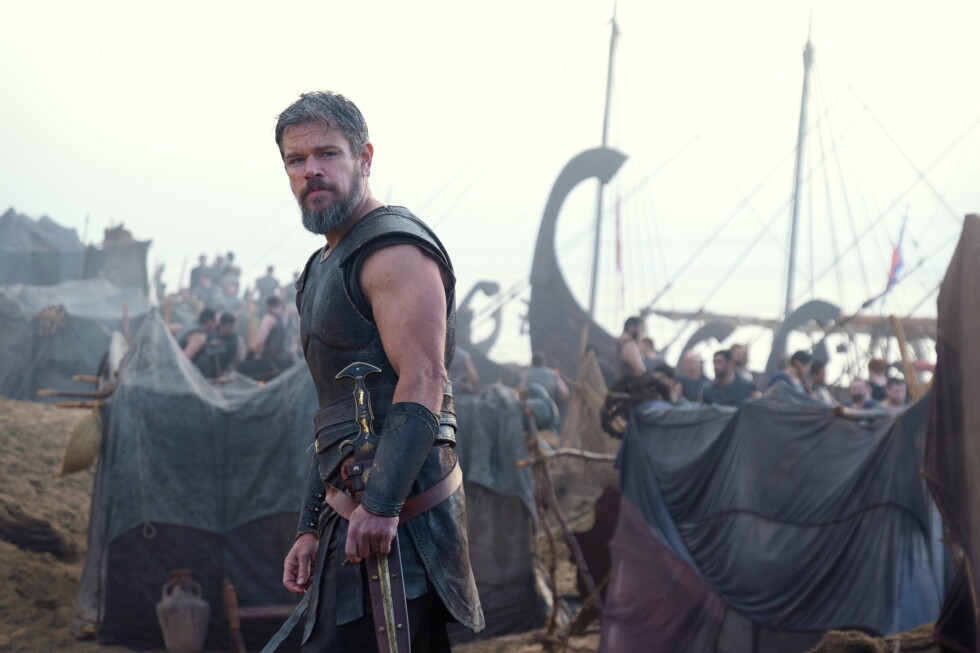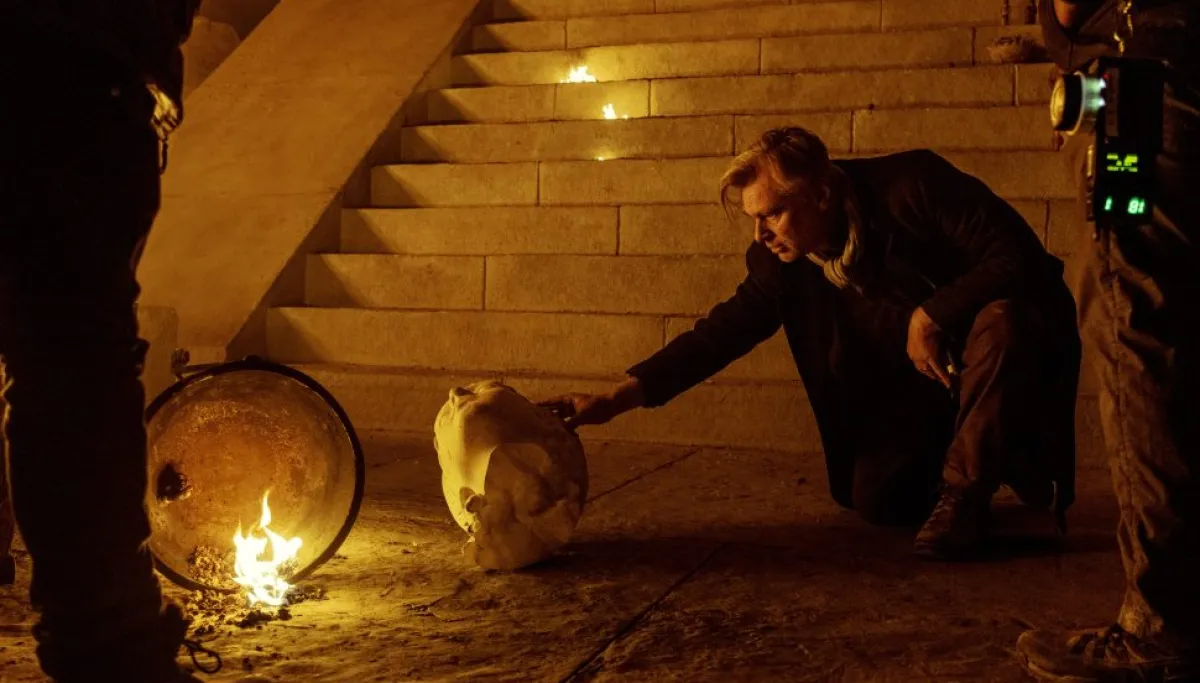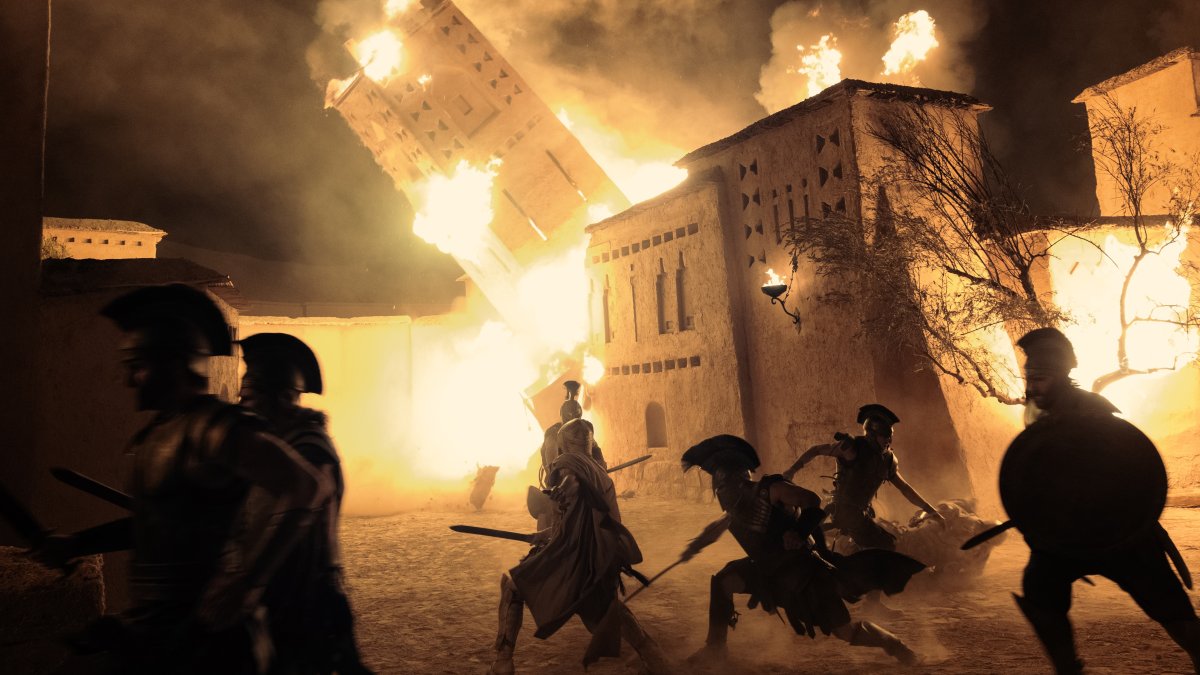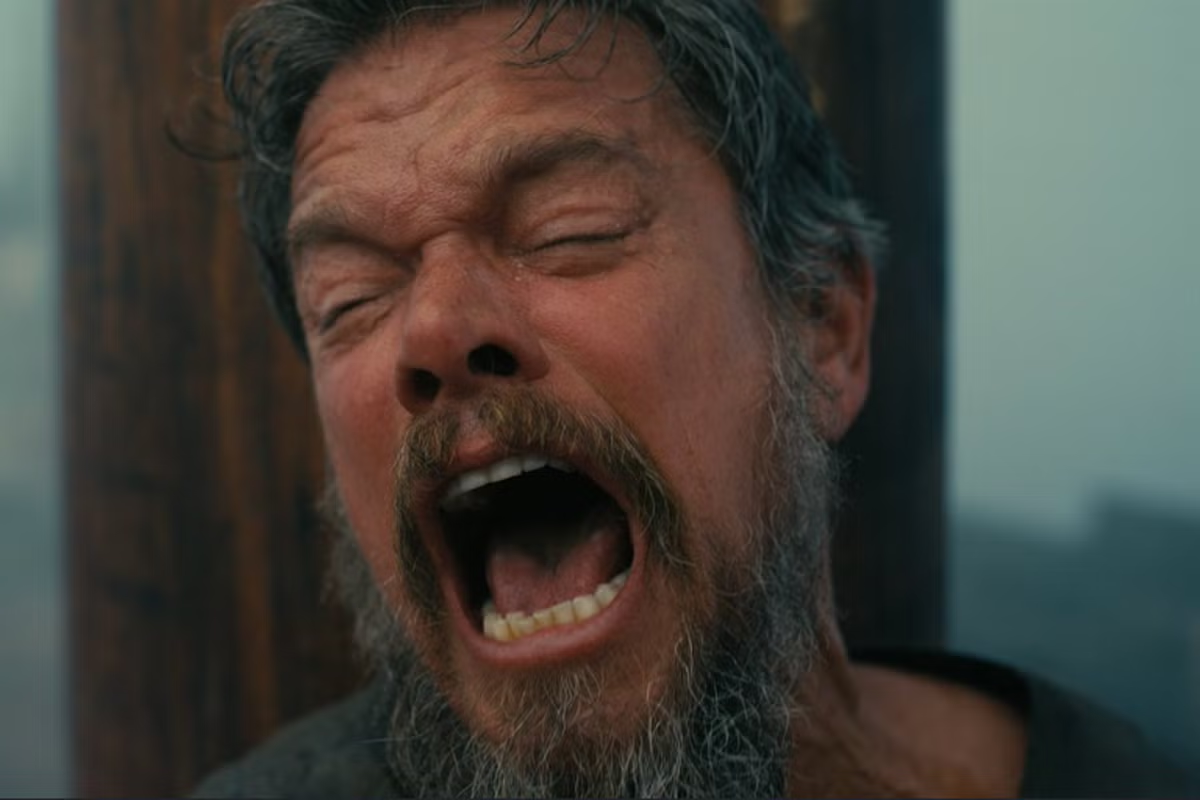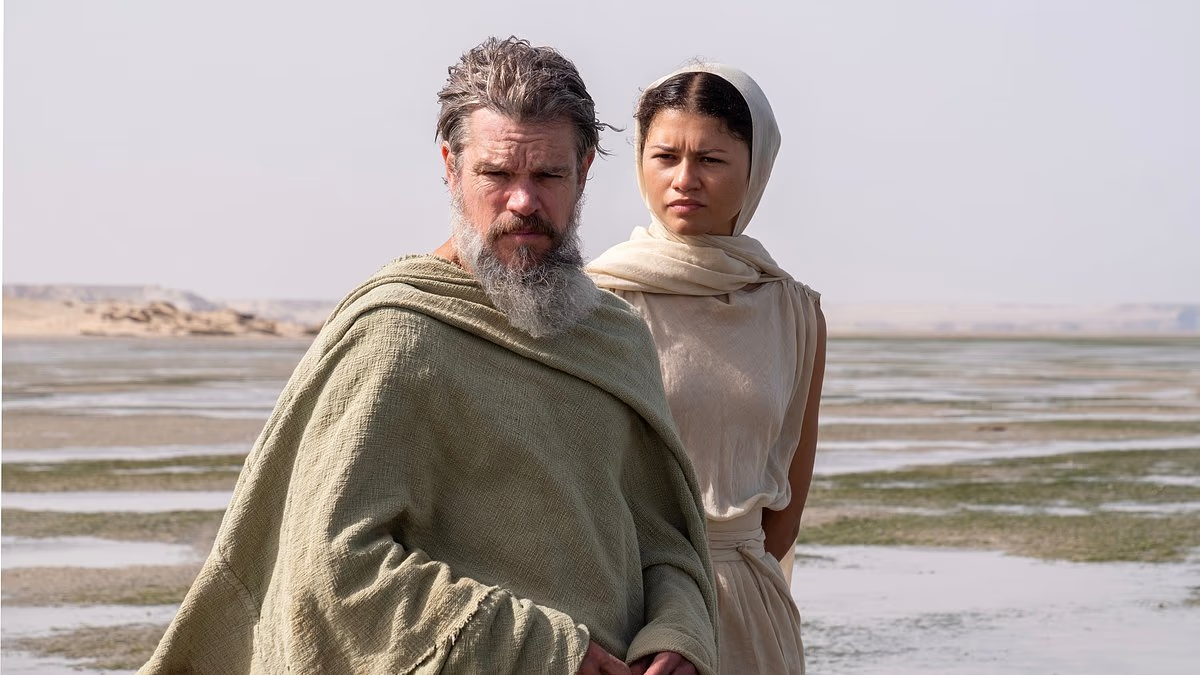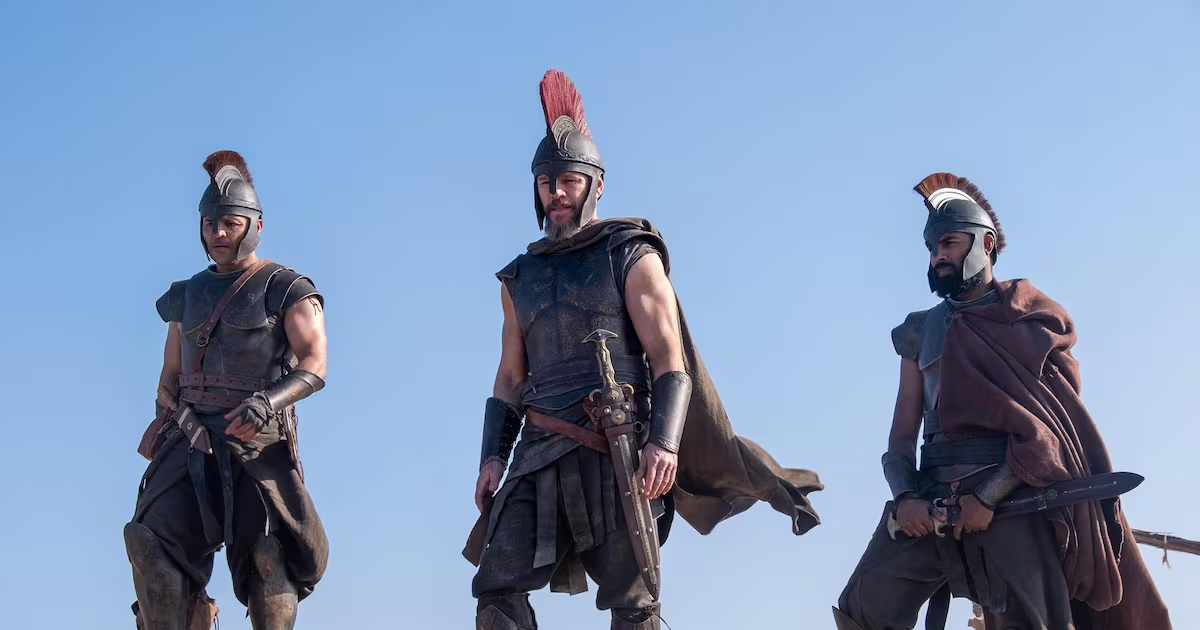
We didn’t realise it, but Christopher Nolan has been making The Odyssey for almost three decades.There is some of it in Memento (2000), as a man struggles to pull together the threads of his own story and find direction; in Batman Begins (2005), as its hero embarks on a journey of self-discovery before he is ready to reclaim his destiny; in Interstellar (2014), as a father leaves his family to fulfil what he believes is his duty to the world; and in Dunkirk (2017), as soldiers search for any route home in the face of certain destruction.Most of all, there is something of the great general Odysseus in Oppenheimer, which also follows a man grappling with the paradigm-shifting evil he brought into the world to secure victory for his people. One man’s Trojan horse is another man’s atomic bomb.▶Unlike those earlier films, however, The Odyssey is weighted with consequence from its opening shot. It feels less like another variation on Nolan’s recurring ideas than their culmination: one of our greatest, most ambitious filmmakers reaching back into the annals of western storytelling, pulling at its roots to find a path forward. Much has been made of Nolan shooting the film entirely on IMAX film – a first for a feature, and a feat few other filmmakers would have the resources or inclination to attempt. More important is the narrative purpose the format serves.Nolan does not use the massive frame simply to capture beauty. The sea and skies are a hostile grey rather than a vibrant blue. The men’s clothes are ragged and their armour is dark, save for the blood-red streaks of horsehair above their helmets. The scale of the image accentuates the ugliness of this world. Even the famous faces we are accustomed to seeing polished on screen appear haggard.Matt Damon and Zendaya start in Christopher Nolan's The Odyssey. Photo: Universal PicturesInfoWhat the camera captures instead is awe. In aerial shots, it gives us a view seemingly cast down from Mount Olympus. From the characters’ perspective, it looks upwards at unfathomable foes with an almost cosmic horror. In close-up, it exposes the naked humanity of figures that myth has made impenetrable.At every turn in this adaptation of Homer’s nearly 3,000-year-old epic poem, we see the consequences of Odysseus’s actions across the 20 years since he left Ithaca for Troy. Back home, his kingdom is in shambles – his wife doggedly pursued by suitors vying for the empty throne, his son trying to stay alive, his hunting dog staving off death in the hope of seeing its master one last time. On every inhospitable island where he stops, he encounters a world shaped by his own great violation of the rules that once held civilisation together. In the land of the dead are countless soldiers who followed him and died without honour. In the men still trying to journey home, he sees what years of survival have stripped from them. And in himself, he can no longer find the soul he sold off piece by piece to survive.Matt Damon, brooding and sinewy in the titular role, is one of the few actors who could engender enough empathy to carry us through such a bleak journey. Good casting does a lot of the lifting here – Tom Holland’s boyish, Michael J Fox-ish charm gives Odysseus’s son Telemachus an immediate likeability, Anne Hathaway balances grace and menace as Odysseus’s wife Penelope, and Robert Pattinson appears to find pure glee in making her chief suitor detestable.Anne Hathaway and Tom Holland are brilliantly cast in The Odyssey. Photo: Universal PicturesInfoBut as the non-linear story criss-crosses the sea, most of these well-known actors have little time to make an impression – and yet nearly all of them do. Elliott Page is downright haunting when we meet him in the land of the dead. Bill Irwin makes the giant Cyclops feel like a tragic figure. Lupita Nyong’o, in the dual roles of Helen of Troy and her sister Clytemnestra, reaches into the same sad, violent depths she explored in Jordan Peele's Us. The only performance I cannot really rate is Benny Safdie’s Agamemnon, as his imposing costume seems to do all the work.This world is barren and seemingly in ruins – at times, it feels post-apocalyptic. Greece’s triumph over Troy was a Pyrrhic victory, and society has crumbled in its wake. No one has emerged better on the other side, and no one can trust anyone afterwards. Part of the reason Odysseus cannot make it home, we learn, is that he has lost hope in himself – and in the possibility of a better world.But hope still has a place in Nolan’s The Odyssey. In fact, hope is the point. There is love here, too. Evil wins and societies fall, but stories do not end there. Our worst actions cannot be undone, but faith in one another can still offer a path back from them – and perhaps the chance to build something better from the ruins. We can return.That is the message of The Odyssey, and it feels like Nolan’s defining statement. Who would have thought so notoriously cold a director could become such a sentimentalist?The Odyssey is in cinemas now across the Middle East
The Odyssey review: Christopher Nolan turns Homer’s epic into his defining statement | The National
Monumental adaptation brings acclaimed director's career-long obsessions to their fullest expression
869 words~4 min read