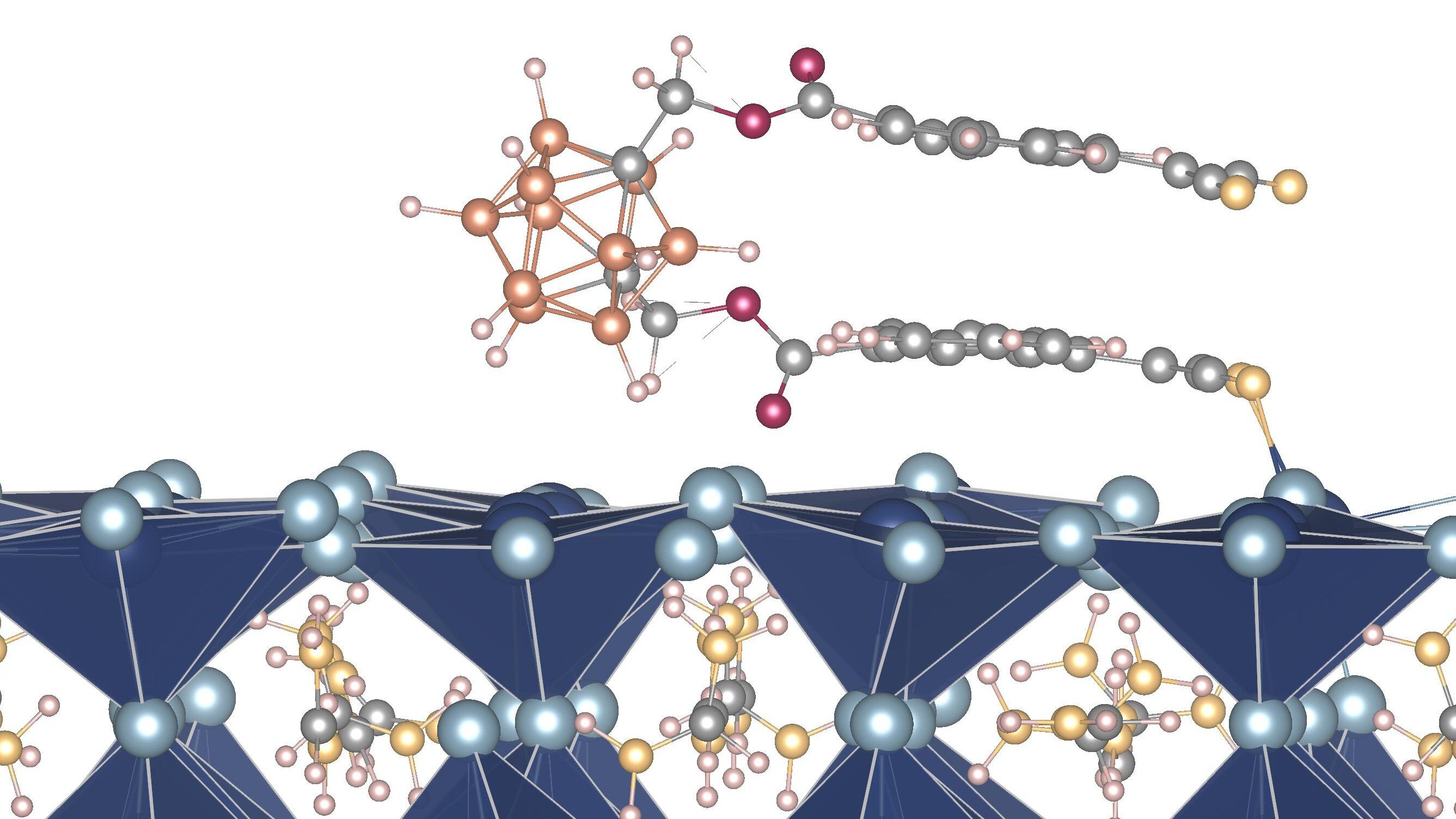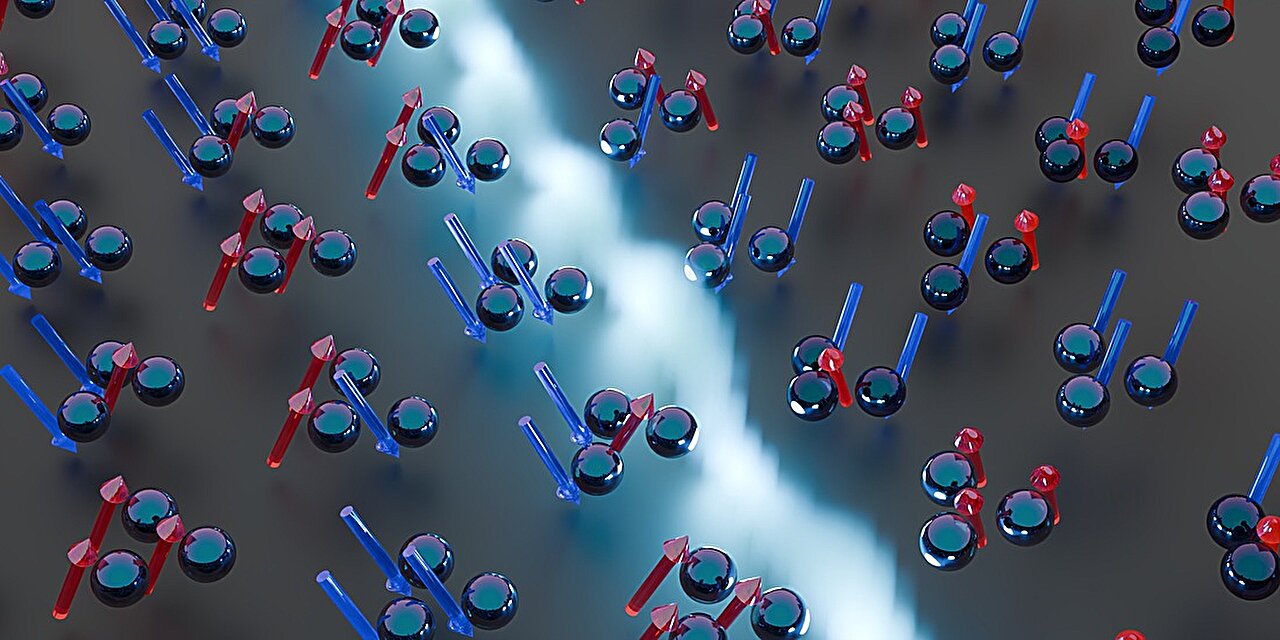
A hybrid domain wall in K₃[Nb₃O₆|(BO₃)₂]. The walls separate two regions with different arrangements of dipoles (red and blue arrows). The spheres represent the structure of the niobium atoms (Nb). Such domain walls possess several unique functional properties that may open up new possibilities in future electronics, sensors, and other advanced technologies. Credit: Ivan Ushakov, NTNU
Many of the advanced electronic components surrounding us in everyday life rely on polar materials to function. Polar materials have an uneven distribution of electric charge. This gives them a positive and a negative side even in the absence of an external electric field. The most important among these are ferroelectric materials, in which the direction of polarization can be reversed by applying an electric field.
Researchers are now identifying materials that combine properties previously thought to be mutually exclusive. This could lead to new technological applications.
Antiferroelectric materials
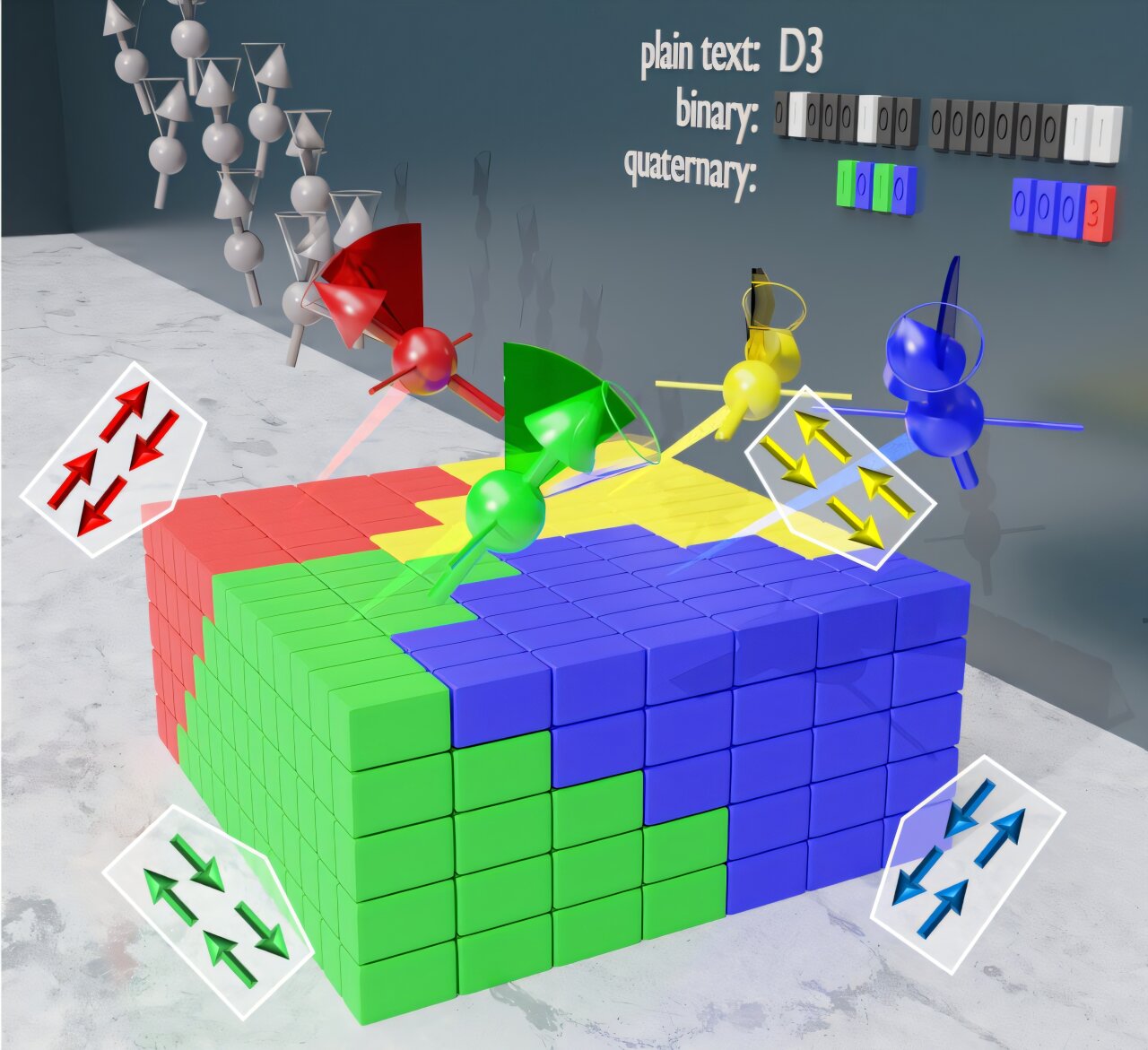
Antiferroelectric materials are different. They exhibit an alternating up-down arrangement of tiny electric dipoles. These materials possess unique properties that can be exploited in applications such as energy storage and novel cooling technologies. Until recently, however, researchers believed that such materials could not also be polar.