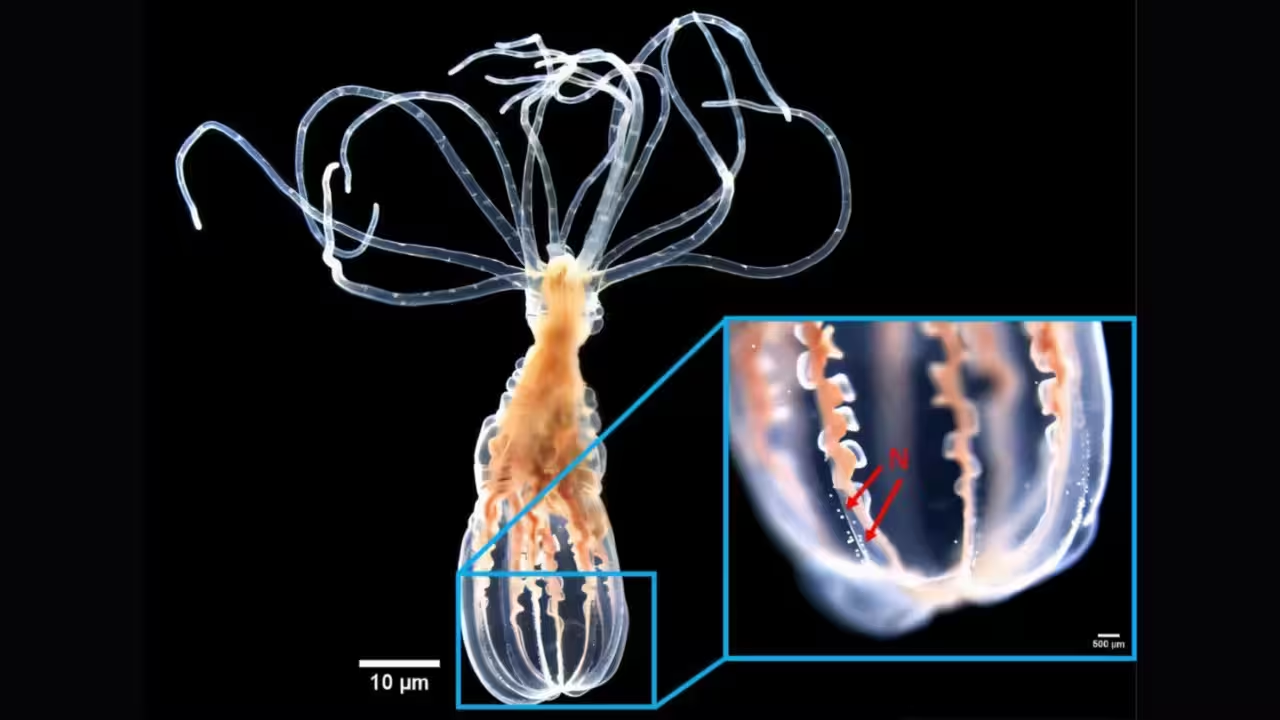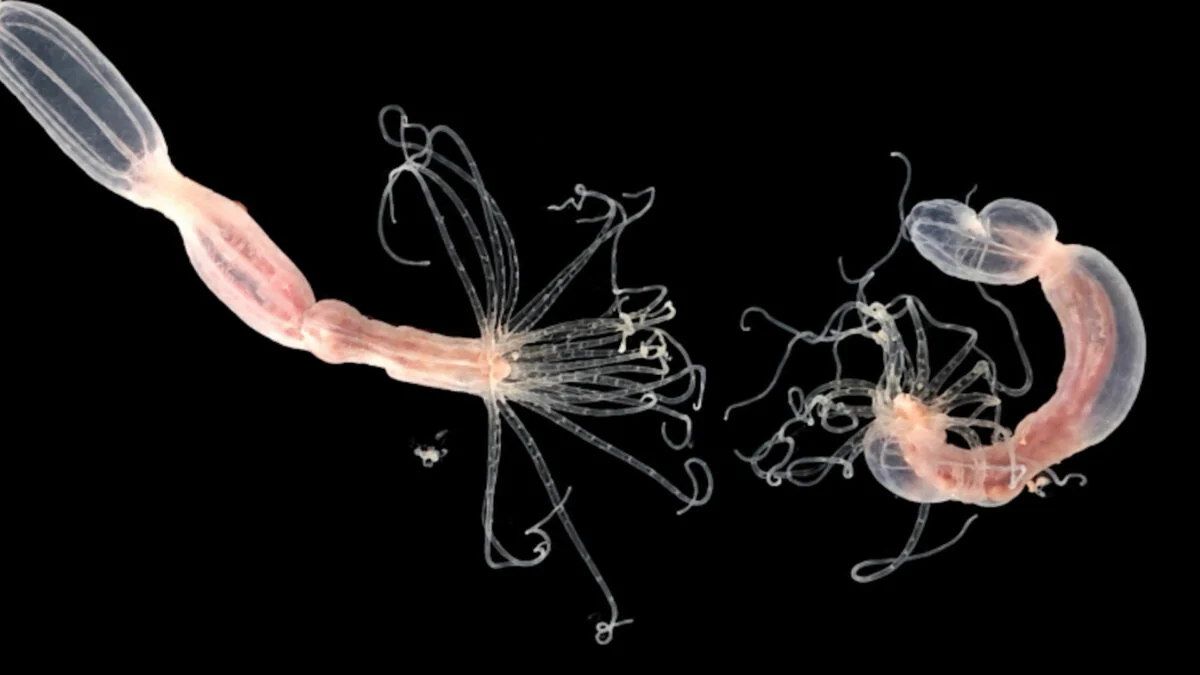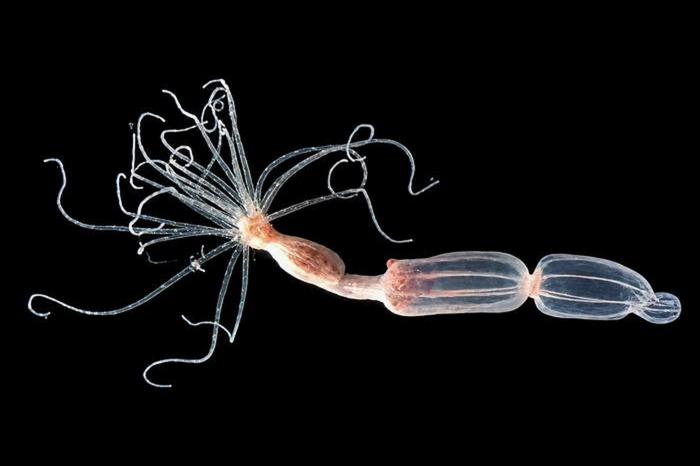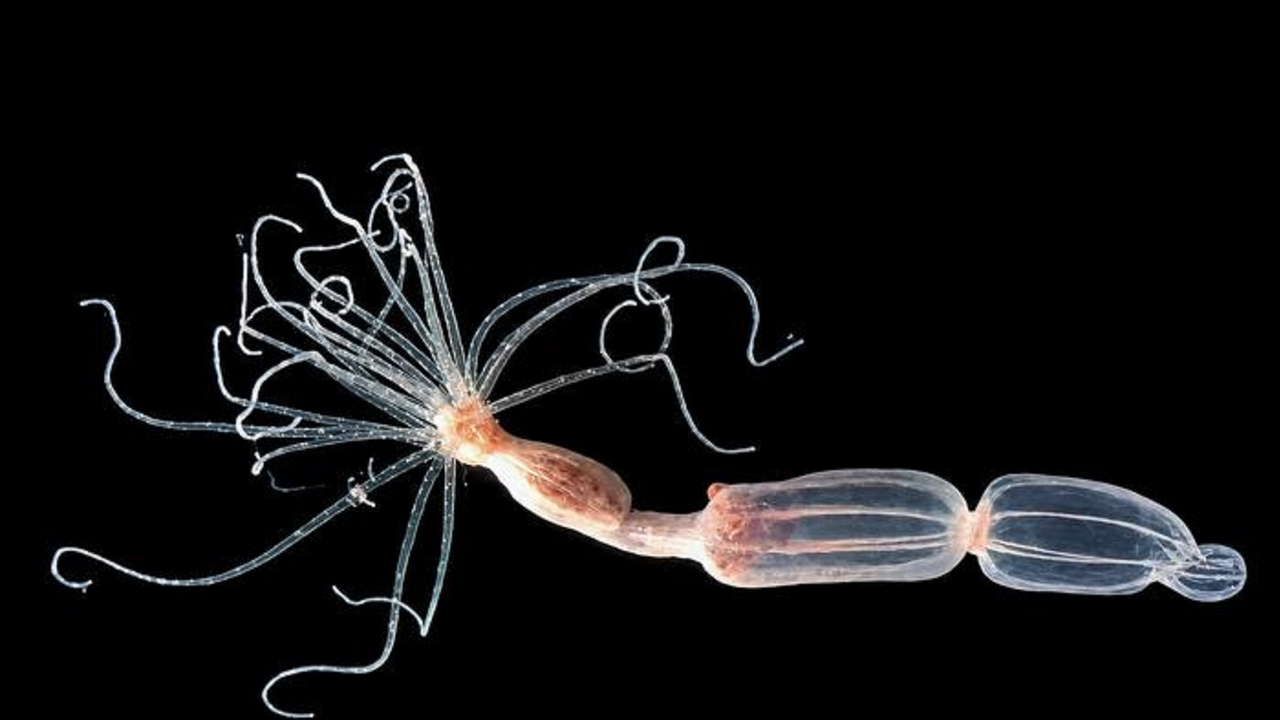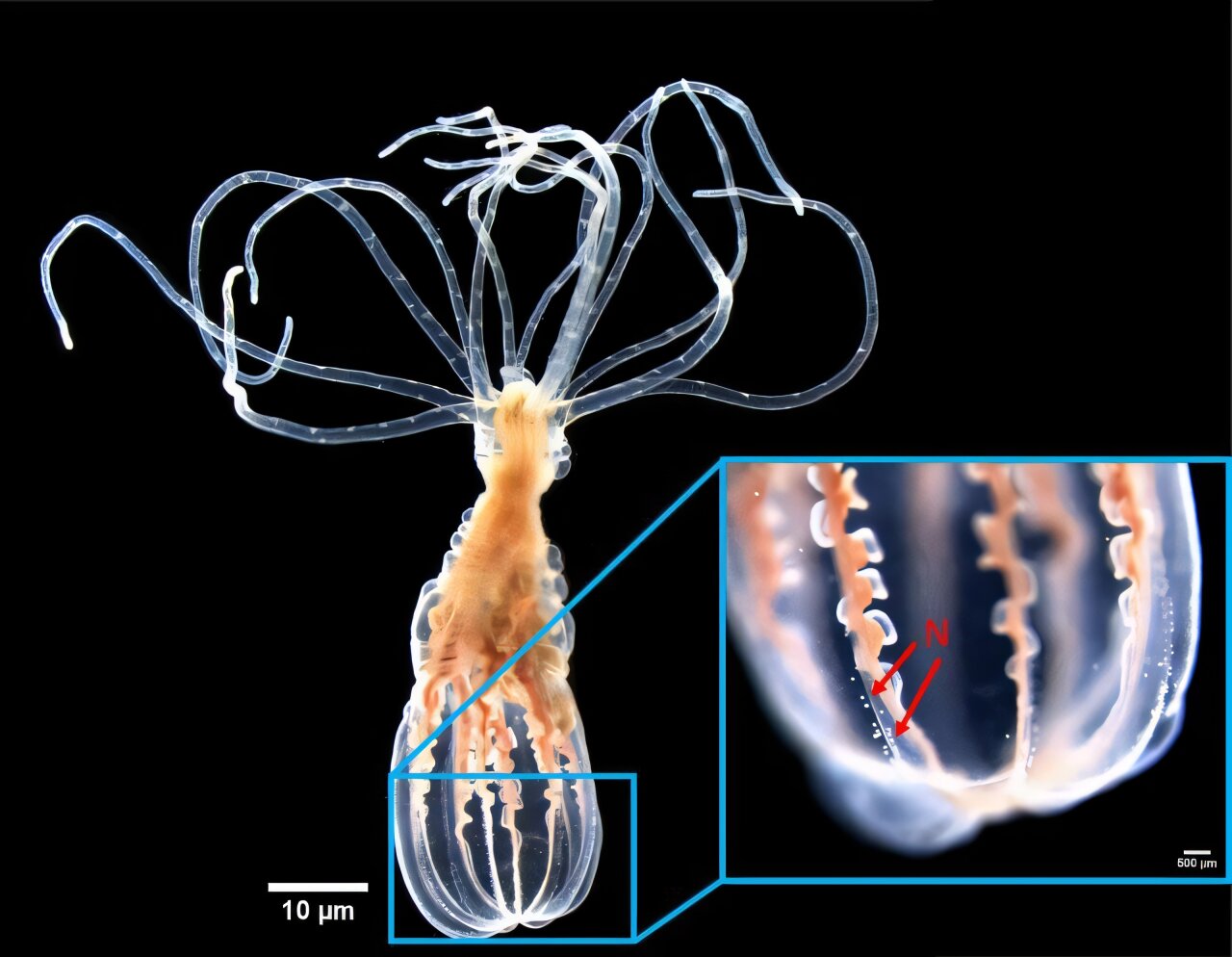
The sea anemone Nematostella vectensis. In the enlarged section, the nematosomes—which are key to the immune system of these invertebrates—are highlighted. Credit: HHU/Nida Kaya
Researchers from Heinrich Heine University Düsseldorf (HHU) and Kiel University (CAU) have examined immune system function in an early-branching animal—a sea anemone. They discovered that the immune systems of these animals can selectively distinguish between different microorganisms, protecting beneficial bacteria from harmful bacteria—an ability that has been attributed only to vertebrates to date. So-called "nematosomes" play an important role in this process.
The innate immune system is considered the first line of defense against pathogens. According to conventional wisdom, it reacts immediately but largely nonspecifically to infecting microorganisms. By contrast, the adaptive immune system of vertebrates can discriminate between beneficial and harmful bacteria. This is because only the adaptive immune system has antibodies and memory cells trained through contact with pathogens over an animal's lifetime.
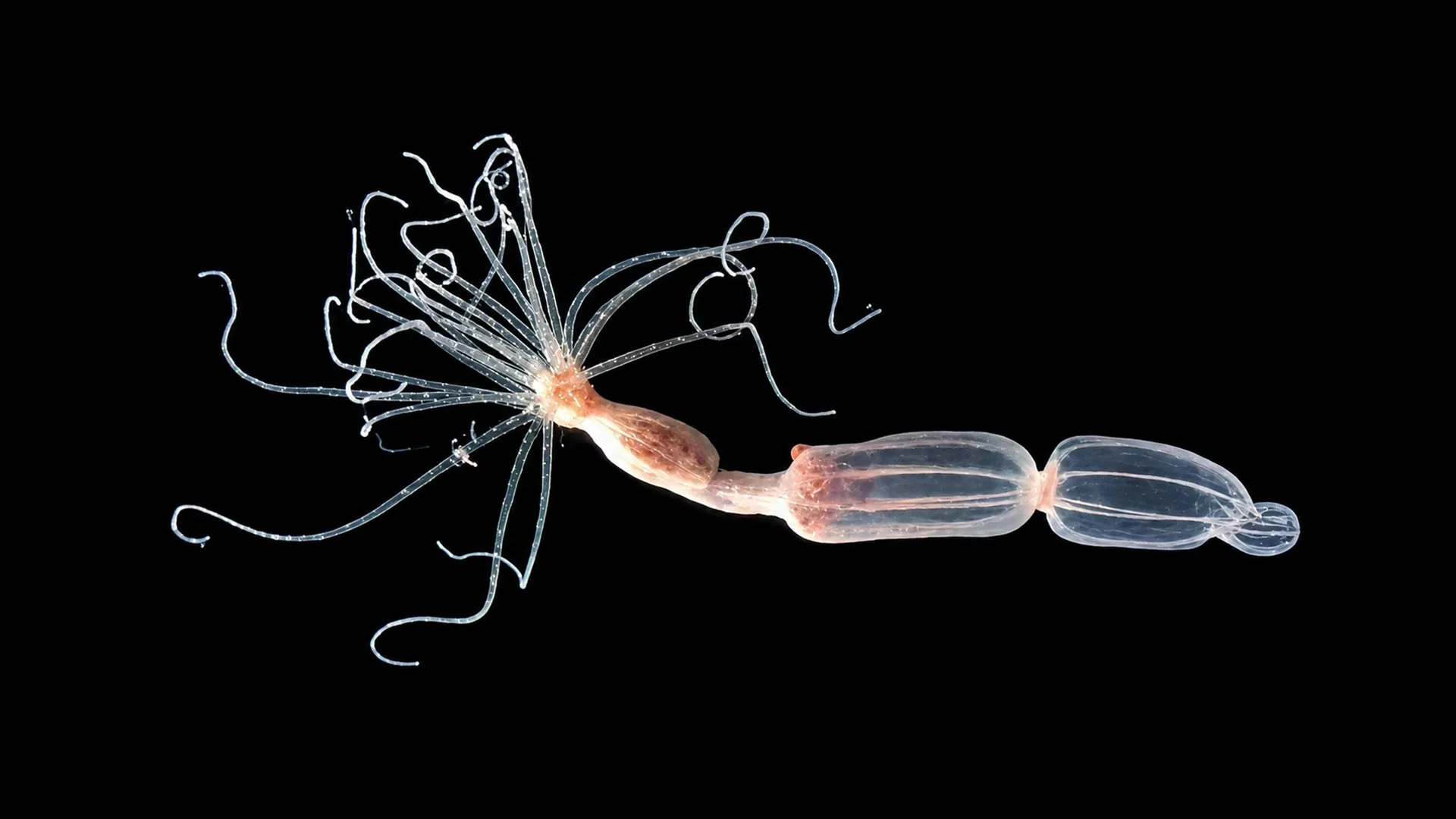
In the study published in Nature Communications, a research team led by Dr. Sebastian Fraune of the HHU Institute of Zoology and Organismic Interactions, in collaboration with colleagues from Kiel University (CAU), established that this view needs to be updated. The researchers proved that even the sea anemone Nematostella vectensis—an animal that represents an early branch in animal evolution—can selectively distinguish between microorganisms, although it possesses only an innate immune system.