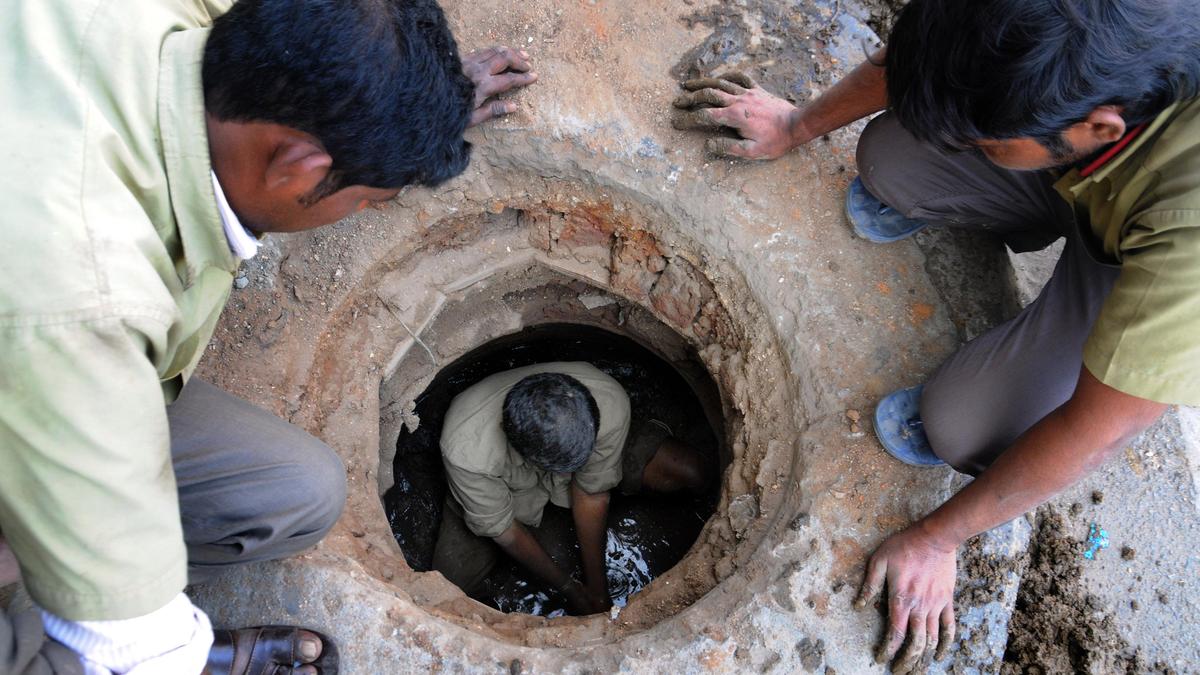
I think my life shares as deep a bond with my excretory system as it does with my respiratory system, for whenever I jog my memory and drag it to the far end of my early childhood, the odd things that invariably surface on that mnemonic landscape are the sordid toilets of the neighbouring chawl, named after its owner Hiralal. And rightly so. For, as if the question of filling the bottomless pits of hunger was not vexed enough, the daily dilemma of emptying our bowels had made our lives, both personal and social, embarrassing and miserable. The rub was that our chawl didn’t have even a single public toilet attached to it, something that compelled us to use those hellish toilets of Hiralal’s chawl. Kids like us could squat anywhere on the footpath outside, but what would the elders do? And what about the women? Our chawl was inhabited in large part by the Rohits, people of the tanner caste, who had migrated from Charotar, a large swathe of fertile land covering districts like Kheda and Anand in central Gujarat. However, the rest of the chawls, including that of Hiralal, were populated by the Vankars, people of the weaver caste, from Mehsana, a district in north Gujarat. Deprived of the social respectability that separate toilets attached to one’s chawl brought, we had to sheepishly go relieve ourselves at Hiralal’s. Toilets of their own had got the Hiralalwallas inebriated with a sense of entitlement, so they threw their weight around, name-called us with slurs like the chanotara and let go of no opportunity to harass us. We too got even with them by calling them – not publicly, however – bloody patanwadia, the people from Patan district. And all this cheek was for toilets that were no better than hellholes. Can you beat that? Unlike the ones we commonly use these days, the floor of those toilets was not set in marble or glossy, ceramic tiles. With coats of plaster dropping off its walls, the goddamn structures sported big patches of brick-and-mortar design at several places. And in most cases, the lousy excuse for a door had neither a stopper nor a chain latch to boast of. Something that left the squatter on the edge throughout the business … to the mercy of Lord Rama, if you will. A soiled, soggy chamber pot, flanked by two parallelly placed uneven stones, was all one had in the name of a toilet seat. No marks for guessing, one of the stones would either be broken or on the verge of it, which made the whole human squat installation lean on one side. Even in such an awkward position, the user literally had to hold fast to the makeshift chain, or whatever that secured the rickety door, lest someone from outside pulled it open, out of innocence or sheer malice. As the wavy line of prospective users grew outside, a howl of protest from the disgruntled and impatient queuers soared, warning the user inside to make haste. At such moments, if someone snitched about such and such chanotaro occupying such and such toilet, the precariously hinged door would be yanked open with a bang and the water in the brass pot, carried for washing and flushing, would be drained with a resounding kick. Despite waiting in the queue till your legs ached, at the time of your turn, if a patanwadia kid materialised – God knows from where – you had to forgo your right to use the loo and give the queue-jumper the right of way. Again, a rowdy Vankar harrying a chanotari, filling her pitcher with water from the public tap, by thrusting his filthy toilet pot midstream and letting it overflow was a common sight. A strange thing to say but it was in these queues that I had learnt my first lessons in social inequality. All these people were extremely beleaguered, a harried lot that had come here to escape poverty, untouchability, oppression and exploitation, and yet they saw hierarchy and hatred as natural ways of being, such that even the slightest breach in the set order resulted in exchanges of expletives and blows. Though not untouchability in its conventional sense, these practices were rooted in direct discrimination, in an ordained difference between the high and the low, that had seeped right up to the bottom of the caste order. One scene in particular comes back to me repeatedly, no matter how hard I try to forget it. The first house at the mouth of our chawl was that of Bala Dhedh, a Vankar from Kheda and thus, a chanotaro for the patanwadia. In the “thatch” – a kutcha hut – attached to the house stayed Neno Ma’raj, a man of priestly Garoda caste, considered the highest among the Dalits. A mill worker of no consequence, Ma’raj would, in a blatant exhibition of his caste pride, lay his string cot out on the footpath every evening and lounge there like a maharaja, a veritable badshah holding his royal court. At such a time, the area became off-limits for everyone, even for a mangy-looking cur. For if the poor thing came up, barking or sniffing, from within the chawl, an affronted Ma’raj would fly into a lion rage, hurl a stick at it and roar, “Buzz off in, you … stay in ….” In his exhaustive, eye-opening study of the forms of untouchability practised by non-Dalits and Dalits (among themselves) in Gujarat, my friend Martin Macwan has pegged the numbers at ninety-eight and ninety-nine, respectively. Where would this kind of untouchability, and its distinctive, discriminatory form, figure in those lists? And in the dragnet of such divisions and sub-divisions, what happens to Dalit biradari, the idea of fraternity and caste solidarity?I have often wondered why we Dalits use the same word gandh [odour] to refer to both fragrance and stench. Perhaps, in the Dalit lexicon, there are no separate terms to define and differentiate between pleasant and unpleasant smells. Thus, for us, everything “reeked”, be it a rose or a vial of attar. Even otherwise, how could the dictionary of a people, whose olfactory organs had known nothing but the noisome stench of toilets day in day out, have a luxuriant terminology around fragrance? The public toilets in Rajpur, as elsewhere, brimmed over with excreta almost as a rule. Worse still, the ingenious lot in our locality saw them as a gateway to the nether world for the huge, grey rats they trapped at home. They would come up with their rat traps and release the furry thing into the toilet from the gaps or holes in the rickety door, without bothering with it being occupied or vacant, in the fervent hope that the animal would scurry its way into the cesspit below; naturally, the sudden entry of Uncle Rat with scary, needle-like whiskers would make the squatters get the hell out of there, their bowels blocked by astonished sphincters. On those dreadful days when the chamber pot surged with excreta, the droppings splashed droplets of shit all over the squatter’s body. And when these toilets overflowed – which was almost every other day – the unbearable, rotten stench that permeated the surroundings would send a “normal” human being into fits of retching. And yet, I don’t remember having seen anyone in my community gagging, clipping their nose or pressing a handkerchief against it. Conversely, on seeing the Christian converts cover their noses with their scented hankies as they passed by our locality, Dalit women would giggle among themselves and then quip, “Oh dear me, look at these hoity-toity Christians, they can’t stand this odour!”Right in front of Hiralal’s toilets was a large space where kids from the chawls squatted out in the open. Even today, I shudder as I visualise myself in the daily early-morning ordeal of weaving my way to the toilets through that open space, littered with steaming piles of fresh and stale turds, waiting to be stamped over. Generally, the clutch of Hiralal toilets kept bustling with customers throughout the day, but young girls and women couldn’t hope to find a purchase any time before sundown when they stepped out, their water-pots discreetly covered by the loose, flowing ends of their sarees. Most of them squatted with the door left half-ajar and duly guarded by their sisters-in-law or friends who chatted away leisurely as the relief operation went underway. At that tender age, I was at a loss to figure out why the young men of our chawl gravitated towards the toilets every evening as soon as it turned dark. Much later did I realise that going to a restaurant or a public garden for a tryst with their beloveds or just to ogle at them in the hope of striking a romantic liaison was an idea alien to their amorous imagination. All one had to do, they thought, was to stand somewhere near the toilets and stare, from that vantage point, at one’s love interest to heart’s content. To those young men, the toilets of Hiralal’s chawl were nothing short of a Love Garden.The bus stop for Hiralal’s chawl was right next to these squalid toilets. As the buses plied by the Ahmedabad Municipal Transport Service halted and stood purring by them, the college-going boys and girls from the chawls, waiting in the toilet queue, a brass pot in hand, would freeze with embarrassment. What a sorry figure they’d cut before their Savarna classmates who might be on that bus, they thought! For reasons too bizarre for me to unpack, the Savarna youngsters from Rakhiyal and Gomtipur mockingly called our toilet-hugging bus stop “Hollywood”. Scared of being ragged back at college, Dalit boys and girls from Hollywood got off either at Kamdar or Gomtipur bus stops, which came before and after Hiralal’s, respectively, and walked their way home, up or down. And I can’t even begin to describe the sorry scene the overflowing septic tanks of those toilets created. The faecal matter and reeking water would flood the main road, transforming the whole area into a real hell. Often, the sanitary worker tasked with cleaning these leaking loos would be a skinny female, a widowed or deserted Dalit woman, and the contractor’s headman would rudely set her to the task of scrubbing, breathing down her neck even if she was ill. I have seen several such women succumb at a tender age to the constant, infectious exposure to the dirt and the bacteria that those squalid toilets liberally emitted. The fellow would push the poor thing into a rickety-doored toilet, unbothered to check if it was occupied or vacant; thus, at times, the door, carelessly yanked open, revealed a squatting man to the lavatory woman’s great embarrassment. The sad-eyed lady would then proceed to clean the whole vomit-inducing thing without a wince, let alone a word of protest. And, by her misfortune, if a local bully or an influential man showed up at that time, he would, by force of habit or in exercise of his manly right, pick flaws in her work, give her a public dressing-down and force her to do the cleaning all over again.Excerpted with permission from Homes without Windows, Chandu Maheria, translated from the Gujarati by Hemang Ashwinkumar, Juggernaut.
From the memoir: What waiting in line at toilets taught a Dalit writer about social inequality
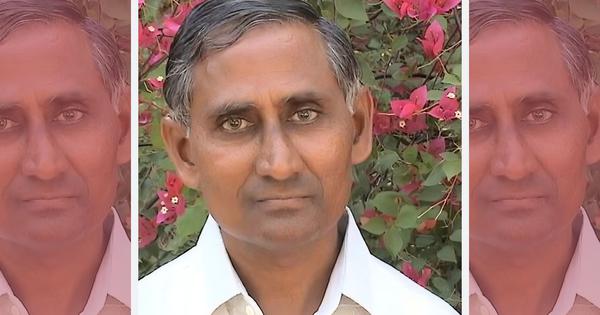
An excerpt from ‘Homes without Windows’, by Chandu Maheria, translated from the Gujarati by Hemang Ashwinkumar.
1,888 words~9 min read