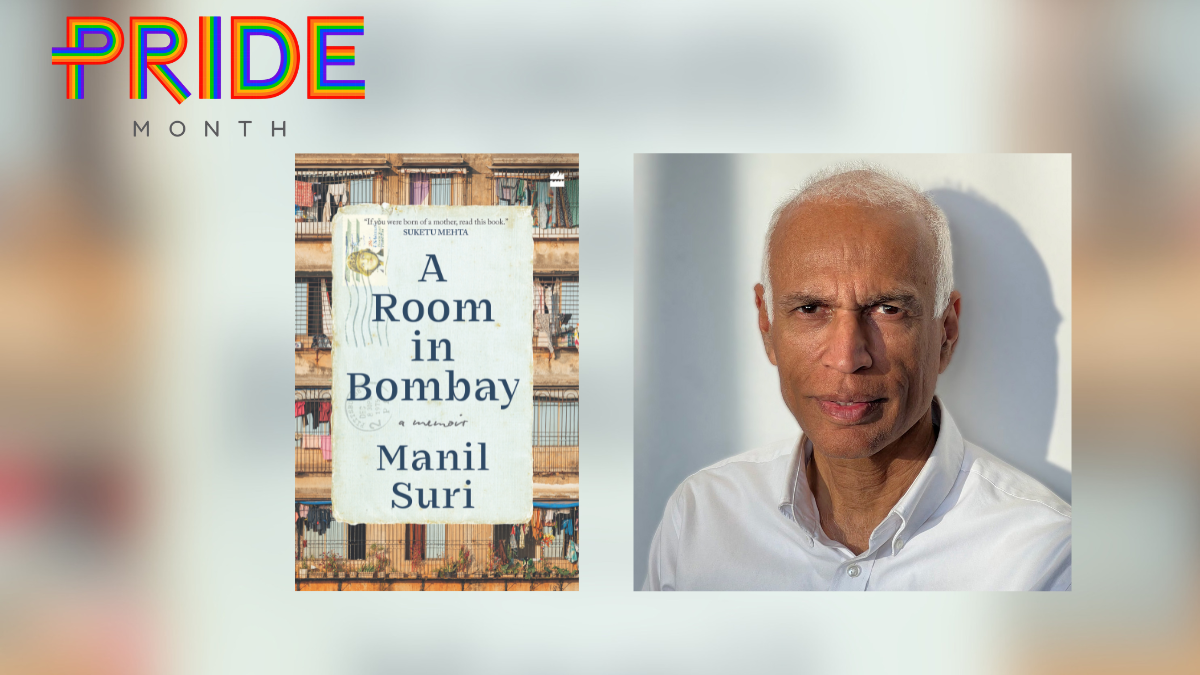
From as far back as I can remember, my mother felt the periodic need to apologise to me for where we lived. She would start with nostalgic accounts of the Rawalpindi mansion – the stately entrance, the sprawling gardens, the abundance of space – “so much that even the servants had their own kitchen.” Then she would say that the reason she had ended up trapped in this one room was precisely that she grew up so happy, in such luxury. It all had to balance out, she explained, which meant I would be compensated for current hardships with much joy and comfort in my adult life.In truth, I didn’t feel particularly deprived – at least not during my early years. Our room was big enough to accommodate all its bulky furniture and still leave me a generous clearing of tiled floor for play. This is where I engineered battles between my toy cars and trucks, sat to limn (judging from my mother’s praise) great masterpieces of art, set fire to matchboxes, paper planes, and – less successfully – the cars of a train set (only burning off the paint, but also, to my credit, warping the rails). The storage trunks under the beds presented a warren of hide-and-seek choices – other favourites being behind the dressing table mirror or under the corner washbasin. True, there was dust everywhere – clumps of it, in fact, once hair and humidity worked their magic – but we did have our own attached room for baths. My mother would pour pans of hot water into my yellow plastic bucket – one big enough for me to fit in when I was small and pretend it was a bathtub. What I truly relished, though, were the rare occasions when there was enough pressure to operate the shower – every dribble elicited a rain dance, as if it were a gift from the gods.My parents couldn’t do enough for me – it was as if they’d been building up the need through 12 years of marriage, waiting for release. My father scanned the fruit stands in the neighbourhood to find me the juiciest sweet limes, the ripest mangoes, the most fragrant apricots. Each morning, my mother gathered the cream that rose to the top of the milk, mixing it with sugar and banana (mango when in season) for my breakfast dessert. Once, a dinner guest ate all the grapes without offering me any, as my parents blanched, too polite to intervene (he was never seen again). I learned to reward them equally – not just with a hug, but with a kiss – emphatic, and on the lips. They were dependent on the intimacy I doled out; it was the drug that kept them going.They rarely demonstrated physical tenderness towards each other: the occasional awkward attempt at a hug, a peck for a birthday or anniversary. Sometimes after a fight, I insisted they kiss to show they’d made up, to which they’d agree. Occasionally, a flicker of affection would show through the palimpsest of disappointments – as when my father called my mother “Laurel,” the nickname he had for her once, after the Laurel and Hardy comic duo. My mother would muster a strained smile.The sleeping arrangements reflected this dynamic. I got the choicest bed, right under the ceiling fan, while my mother used the other bed, pulled up against mine. My father unrolled a mattress nightly on the floor and slept on that.Being pampered had its downsides. Each time I sneezed, it seemed I was whisked off to Dr Kagalwalla’s clinic down the street. His red and purple concoctions (sometimes milky from a bonus digestive suspension) did little to arrest my sniffles, which were almost surely from dust-induced allergies. But downing medicine did wonders to relieve my father’s symptoms of anxiety. Not that I didn’t fall sick – measles, chicken pox, flu, bronchitis – I became a veteran of them all. In the sixth grade, a bout of typhoid, acquired from a roadside watermelon drink vendor, kept me home for three months. This was the role of a lifetime for my parents, who fully rose to the occasion – sponge baths in bed, card games at 3 am, were I to awaken, mad scrambles to summon the doctor home each time my fever went up. My father hung oranges and sweet limes as offerings in front of his tableau of gods, and performed weekly rituals over me with fistfuls of salt to reclaim my body from the evil eye.Once I was old enough to take buses unaccompanied, opportunities opened up for my parents to whip their fears to new heights. Anytime I arrived late from school, I’d see them on the balcony, straining to scan the passersby below for a sign I might still be alive, but bracing for the worst. Even when I was in college and got delayed, I’d find them dishevelled and flushed, trying to conceal their celebratory relief at my return.Realisation of the power I possessed over my parents dawned early on. I was what they had in common, the godchild whose happiness would keep them going, the seer to whom they came for advice. They ran everything by me, down to which towels to buy and what to cook each night. During my entire childhood, there was only one occasion when they took off to do something by themselves: a night show of the movie Doctor Zhivago, which my mother really wanted to see, but which had an “adults only” rating (I was seven at the time). Afterwards, even though I’d been in the care of a neighbour, my mother hugged and kissed me in profuse apology.I could have kept her dangling. But the realisation of my power had brought with it a sense of responsibility. I’d learned to calibrate my reactions – an unkind word from me could be devastating. Only the gravest infractions merited the silent treatment, which, given the inescapable confines of our room, was particularly cruel punishment.This levelheadedness also extended to money. Cash for running the household was kept in an old wooden cigar box next to a picture of Laxmi, the goddess of wealth. From this, I was free to help myself to whatever I needed, just like my parents did – there was no question of them imposing an allowance. In fact, at some point, when finances became tighter, I assumed the duties of treasurer, keeping higher-denomination notes in a locked metal box, and even hiding a few for rainier days. Sadly, this arrangement took the joy out of receiving presents – whatever they gave me, I could have gone out and bought myself. Eventually, by unspoken agreement, we simply stopped giving gifts.This, then, was the unwitting control my parents developed over me. By trusting so much to my judgment, they engendered in me a sense of responsibility, rather than turning me into a spoiled monstrosity.My parents weren’t the only ones I interacted with. The Jaffers had a son my age, Kasim, and a daughter two years younger, Noor, whose company was readily available. In the afternoons, we draped towels over the sides of their dining table in the verandah outside the kitchen and played “house” underneath. Sometimes we piled into a rusty toy car and pedalled furiously down the long main corridor of the flat until we crashed into the wall by the toilets. One advantage of living in an old house was that there were no raised eyebrows even when we sent fragments of plaster flying. Each time a building of similar age caved in somewhere in the city (at least once or twice every monsoon), we’d try to scare each other with reported sightings of the taps in our bathrooms gushing spontaneously – a supposed portent of imminent collapse.During the Hindu festival of Diwali, I shared my firecrackers with Kasim – Noor was more comfortable with sparklers. We lit them right inside the building, either in the indoor verandah or on the staircase landing (chakris zoomed fierily over the floor, sometimes vaulting over the furniture). The other festival we shared was Holi, when Kasim and I gave each other a good dousing with coloured powder, then filled balloons with dyed water, and dropped them on passersby from our balcony (we hid when they came up to complain). The flat’s floors and walls got splattered in the free-for-all at the end – Mrs Jaffer was willing to tolerate it as long as my mother mopped up the mess.The long, hot summer vacations incubated even more mischief. Kasim and I would strafe bus passengers with a pea gun from the balcony, ring the doorbell outside apartments on higher floors and vanish, sneak into Amji’s bathing room and drop freshly ironed clothes into buckets of water. I never had to worry about being punished, unlike Kasim, whose mother was free with her slaps and whose father would hurl footwear across the room to nail him. A couple of times, Kasim and I managed to slip past the usually locked door onto the terrace – given its crumbling railings, it’s a wonder neither of us got killed. Not all our activities were borderline delinquent. I spent many hours playing “teacher” with Noor, riding rented bicycles in the secluded nearby Bulsara Lane with Kasim, watching old Bollywood film clips in tents at the fair at Gowalia Tank with the two of them.And then there was Sunilla, my mother’s eldest niece, who lived with us for a few years, starting from when I was five. A flight attendant for BOAC, the precursor to British Airways, she’d pop in at unpredictable hours, depending on her flights, and disappear as mysteriously a few days later. She’d bring me enormous bags of airline sweets, which my parents complained rotted my teeth (they did – the dentist had to put me out with laughing gas, there were so many cavities to fill). More exotic were unusual fruits like mangosteens and my favourite – dried Chinese plums, so tart they induced coughing fits. Convinced they were the root cause of my cough-and-cold ills, my father flung them out the balcony whenever he found them.My father had other issues with Sunilla, such as the boyfriends who’d yell out her name from cars screeching by late at night downstairs (a few times, even Mr Jaffer complained). As far as I was concerned, though, Sunilla could do no wrong – I was addicted to her hugging and kissing, in love with her carefree vivacity. “Even the water she bathes in smells like roses afterwards,” I announced to my mother.Which might, indeed, have been true – Sunilla never travelled without a large red sixties cosmetic case. I’d exult when she used its contents to make up my face, and positively shriek in excitement when she clipped on earrings and draped something feminine over my head. Once, for a costume contest, she transformed me into a geisha, complete with a silk kimono, mid-heel sandals, and chopsticks in my hair. I looked so ravishing that my mother and she took me clomping down to the photographer’s studio near Breach Candy and had a professional shot taken. Neighbours, shopkeepers, sidewalk dwellers, passersby – all waved and complimented me along the way.Excerpted with permission from A Room in Bombay: A Memoir, Manil Suri, HarperCollins India.
From the memoir: Mathematician and writer Manil Suri on his childhood in a crumbling Bombay flat
An excerpt from ‘A Room in Bombay: A Memoir’, by Manil Suri.
1,894 words~9 min read