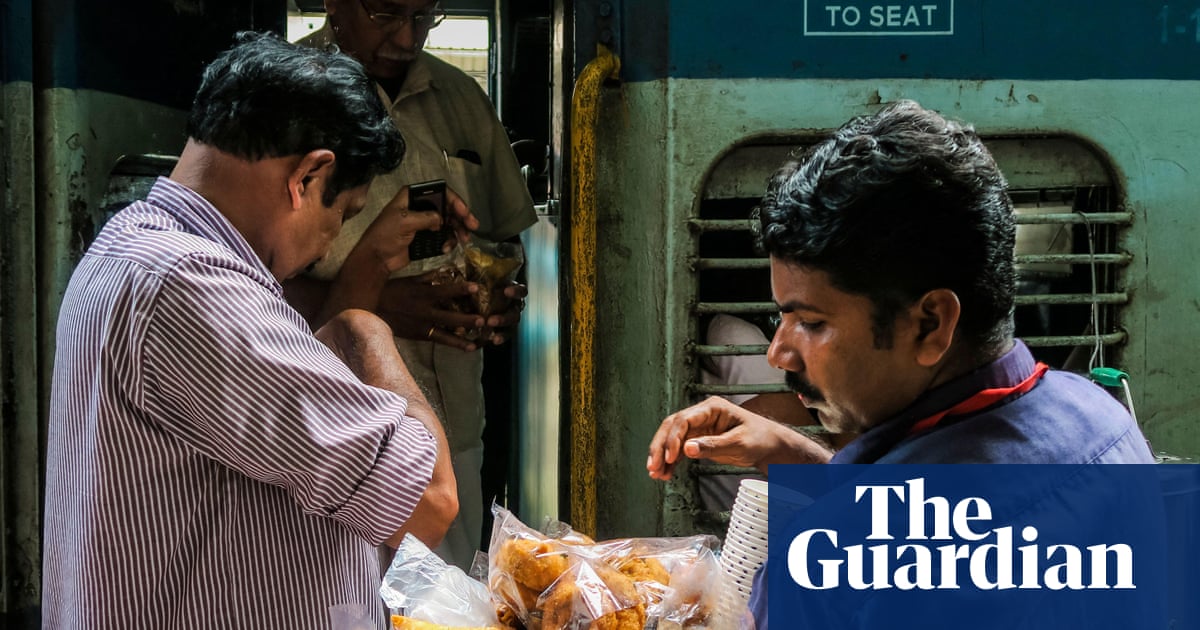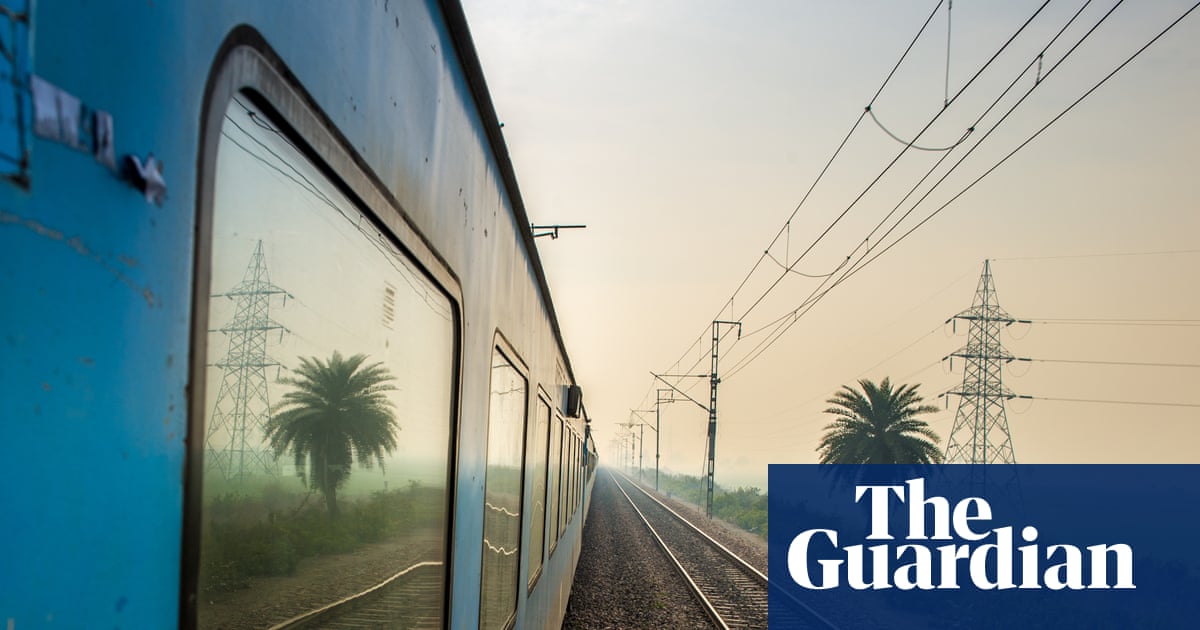
The last time I boarded a train, I was travelling from Dharbhanga, Bihar to Delhi with my family in 2025. My father, who usually keeps to himself, befriended a shy man who sat opposite us. Like my father, he had two daughters who lived with him in Delhi. While he told us about his 19-year-old daughter, he was ambiguous about the age of his older unmarried daughter. With slight embarrassment, he said she was “twenty-five plus”. My father, in an attempt to comfort him, said he too had an older unmarried daughter past the age of 25 and pointed to me. I returned the man’s awkward smile. From then on, my sister and I were silent observers to the intimate conversations between my father and the man, whose name I have now forgotten. However, I could not forget his dilemma of being torn between modern-day Delhi and his village in Samastipur. Though he wished to act in his daughters’ best interests, he also felt accountable to his family in Samastipur, who pressured him to get his elder daughter married against her wishes. The man wished to open a diagnostic centre for his elder daughter to run.Along with the chat, he also shared food with my father as our train got delayed by hours and we had ran out of ours. On Indian trains, people tend to be vulnerable and are often treated kindly in return by co-passengers. We make adjustments to accommodate each other. However, trains also serve as sites of crime and corruption – human trafficking, exploitation, and signs of systemic collapse in India. Amitava Kumar’s slim book, The Social Life of Indian Trains, captures these varied, often difficult encounters that together constitute the social and political texture of Indian trains.Train dreamsKumar boards the Himsagar Express from the Himalayan Foothills in Kashmir, travelling to the southernmost tip of India, Kanyakumari – a journey of three days. Notes and observations from this recent journey, along with those from other journeys taken over the last few decades, form the basis of his book. He remembers SNS Sastry’s documentary I am 20, made twenty years after India gained independence. A 20-year-old man being interviewed says that he wants to go all over the country with some money, some paper, a tape recorder and a camera – to understand, to know what he is a part of, and what is a part of him. Kumar’s book takes you closer to the young man’s desire. The reader learns about the India they are part of, and also what is part of them. Kumar takes us back to a time long ago, to a newly independent India, when the youth was full of idealism. What happened to their hopes and dreams? Is modern-day India anything like they imagined it would be? We are about to find out.On the Himsagar Express, as Kumar comes across a seemingly pleasant elderly couple who start praising Vinayak Savarkar and criticising Gandhi’s ideal of non-violence, Kumar remembers Sastry’s documentary, “none of Sastry’s subjects seemed preoccupied with the presence of a demonic other in their midst. The film contains no railing against ethnic minorities.”Kumar also explores another significant aspect of the Indian trains – that of loss, displacement, and constant migration. While on the Himsagar Express, the author meets Ganesh Rajwar, a labourer from Jharkhand who is headed to Vijayawada in Andhra Pradesh to work a construction job that will pay Rs 400 for eight hours of work, to support his children and his mother back home. When Rajwar shows Kumar his flip phone, which he is going to use to stay connected to his family back in the village, Kumar notes that the village has come nearer to the city. But at what cost? Thousands of workers are pushed out of their village and into the abyss of the Indian metropolis in search of paid work. Here, they are paid a pittance for salary, often working in hazardous conditions. This traps them in an endless cycle of modern-day slavery. Rajwar depends upon the telecom services of Mukesh Ambani’s Reliance Jio. He believes the recent 25% increase in the cost of the data plan is caused by Ambani’s massive spending on his son’s wedding. With nearly 2000 celebrity guests, the estimated cost of the Ambani wedding stood at $600 million. A driver in Delhi told Kumar that the wedding felt like a slap in the face of India’s poor. Another group of youths from Khagaria (Bihar), all smartphone owners, showed Kumar a video of the warehouse where they were going to work, lifting and transferring large sacks of chickpeas (each weighing 68 kg) from the warehouse to trucks. They would be paid Rs 10 per sack.On his way, the author also meets the Modi family, who have dropped their son off to study at a private engineering college in Punjab, and are now returning to Andhra Pradesh. The family had migrated from Bihar but spoke fluent Telugu because Mr Modi had found work as a supervisor in Andhra Pradesh in 2003. The family has been living there since. Before the family got out of the train, Mrs Modi disturbed Kumar’s sleep by watching Hindi TV dramas – Anupama and Ye Rishta Kya Kehlata Hai – at a high volume on her smartphone. As the train entered Kerala, the state with the highest literacy, Kumar’s view outside the window was transformed by tall palm trees and deep-green mountains. He met another young man, Debin Thomas, travelling back to Kottayam from Delhi, where he was training to become a nurse. For ten years, he had not seen his mother, who was working as a nurse in Rome.Reading on, we realise yet again that these trains run through modern-day India – the land of vastly unemployed and desperate youth. On the train, there is the clogged overflowing toilet, the stink of urine, the grimy floors and walls of the toilets – a constant through the history of Indian trains.Kumar also writes about the historical significance of trains, and the contrasting attitudes of Indians, who refused to board the train to maintain caste purity, and that of the British, who viewed the railways as a useful tool to increase their profits in export and their military stronghold in India. The introduction of railways in India also led to the commercialisation of crop production. The shift from subsistence farming brought about famines, and the trains were further used to take grains away from those farming them.Trains and bordersPartition violence looms large in the North Indian memory of trains. The railway station that had served as a symbol of order and progress turned into the backdrop for mass violence as the country approached partition. Kumar writes, “One of the main stories told about the Partition is that of trains crossing the border of the newly divided nation in the middle of the night with all the lights turned off. They were like ghost trains, not least because all the passengers had been slaughtered.”Kumar keeps his tradition intact. Much like his earlier nonfiction works, The Blue Book, The Yellow Book, and The Green Book, The Social Life of Indian Trains makes a compelling case for close observation and note-taking in art and writing.The book also introduces readers to significant writers and their works, including piercing short stories on Partition and Indian trains, such as Gulzar’s Raavi Paar (Crossing the Ravi) and Bhisham Sahni’s Amritsar Aa Gaya Hai (We Have Arrived in Amritsar). These narratives lay bare the shocking capacity for violence, revenge and brutality that partition either brought about or merely exposed. Thus, Kumar explores Indian trains as settings for political unrest and communal tensions. In another instance, Kumar turns to the tragic burning of the Sabarmati Express, an event that caused the Godhra riots in Gujarat. The Social Life of Indian Trains is not without its limitations. While Kumar captures a scene from 2020 – men clog each window and door of a train in Bihar – the passengers were mostly applicants who appeared for an exam for the state police force. However, he overlooks the tragic consequences of the moment during those years when trains came to a halt. With the Covid lockdown, thousands of migrant workers lost their jobs in big cities. As train and bus services stopped, the workers were forced to walk on deserted roads for days to reach their villages and hometowns. On May 8 2020, 16 migrant labourers were killed after a cargo train ran over them in Aurangabad district. The workers were walking back home to Madhya Pradesh, and it seemed they had fallen asleep on the tracks, assuming that trains were not operating. According to data shared by the Railway Board, 8,733 people, mostly migrants, were killed on railway tracks in 2020.Although Kumar writes about the death of migrant workers on the Railway tracks in his earlier work, The Blue Book, he leaves it out in The Social Life of Indian Trains, which seems odd. Writing about a photograph (that had appeared on his phone) of the scene of the accident where the workers were killed, Kumar writes in The Blue Book, “I’m sure none of the dead, who had only been trying to get home, had any money on them. So, no currency notes fluttering in the breeze. There must have been in one or other of the pockets an Aadhaar card or a ration card. A photo of a child or a wife left behind in the village where they were now headed. A tiny passport photo which is the shallowest grave a person can find to bury the story of a life that never makes it to the news. But I couldn’t see any of those things in the image that had arrived on my phone.”However, Kumar seems to say, passengers will also find pockets of compassion on these trains. Suketu Mehta writes about the Bombay local in an essay for Granta, “passengers in those trains are packed tighter than cattle are legally allowed to be, and yet they retain empathy for their fellow travellers. They will adjust and make space for you. If you are late to work and are running to catch the train just as it is leaving the platform, you will find many hands stretching out to grab you on board, unfolding outward from the train like petals.” You may witness such acts of compassion when a young man carries his sick father on his back. Indian trains run across the country, ferrying families, workers, and dreamers.Kumar concludes, “The world is dirty, and life is difficult. Why should the railway sanitise your existence? No, let it fling reality back at you so you can feel alive again.” Much like his earlier works, The Social Life of Indian Trains connects readers to something larger than themselves – in this case, the Indian Railways. Once again, observation emerges as the seed of literary endeavour. Through trains, Kumar captures a vivid cross-section of India’s politics, social history, and class realities.The Social Life of Indian Trains: A Journey, Amitava Kumar, Aleph Book Company.
‘The Social Life of Indian Trains’ by Amitava Kumar: Dreams and nightmares of train journey
The book makes a compelling case for close observation and note-taking in art and writing.
1,855 words~8 min read