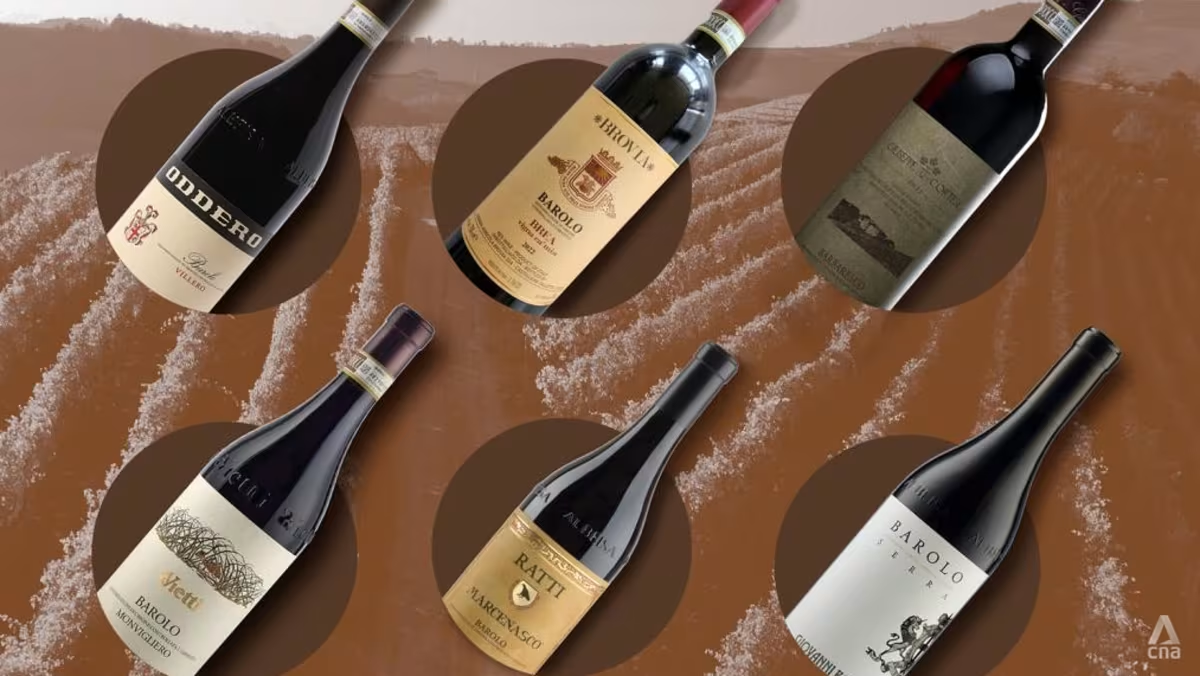
Few wine notes speak as readily to wine lovers across the globe. Damson, forest berries and cedar can be lost in translation, but rose – fresh, dried or preserved – is a universal language.Rose is one of the signature notes of Nebbiolo, a red grape grown across the steep hills of the Langhe in Piedmont, northwestern Italy. It also delivers cherry, tar and dried herb notes in its wines and depending on where it’s planted, it can taste remarkably different from one hillside to the next. Last November, I found myself in Alba, blind-tasting 100 Nebbiolo wines every day over three days. Each morning began the same way: a cold, fog-laced walk through Alba’s empty streets, past shuttered wine bars and the scent of truffles – autumn is truffle season – to the tasting office. After an orientation or a lecture by a regional expert, we launched into the day’s 100 wines. Three days of tar, roses and purple-stained teeth taught me more about Barolo than any other bottle I’ve ever had.15 MILLION YEARS IN THE MAKING
Across Barolo, Barbaresco and Roero, Nebbiolo takes on distinct expressions shaped by place and vintage. (Photo: iStock/Roberto Maggioni)
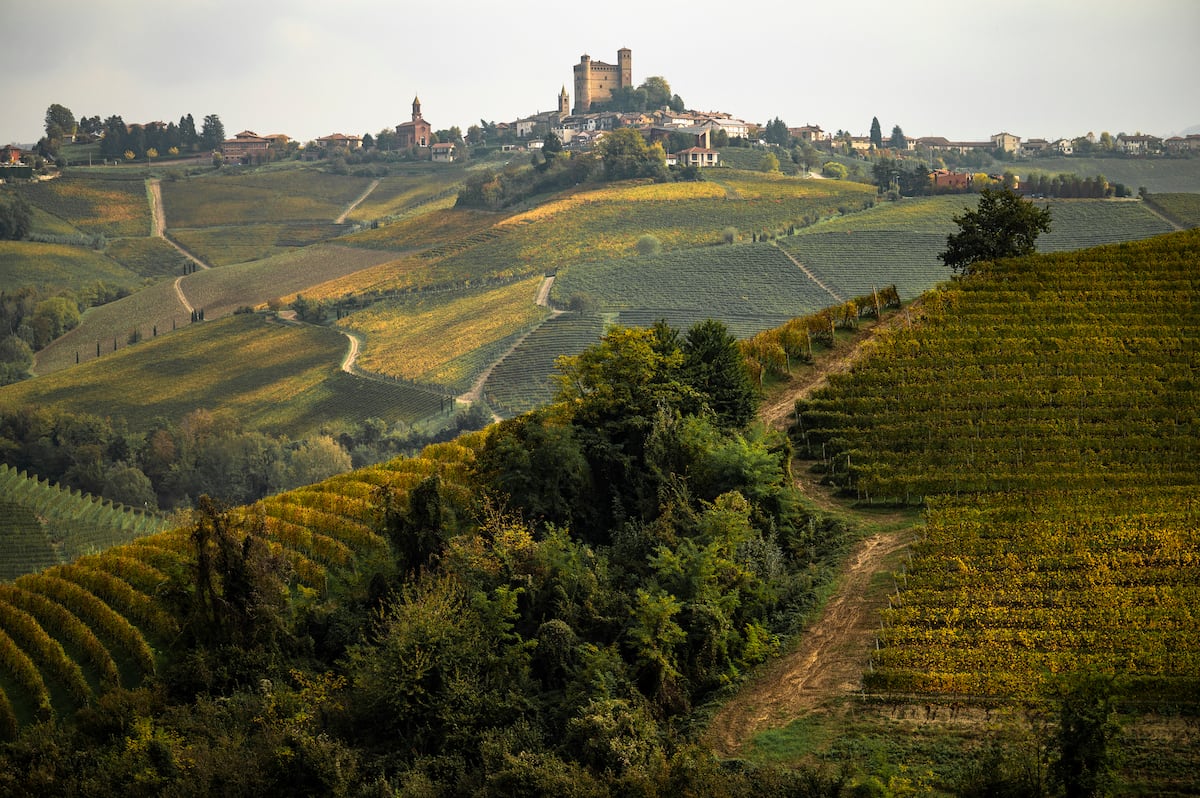
Nebbiolo is a fussy, thick-skinned red grape. Its superpower is the ability to capture the signature of the village, hill, soil, microclimate – even the specific plot it grows on and carry those signatures through to the glass. Nebbiolo plays in the same league as Pinot Noir: both grapes are light coloured, terroir-obsessed and perfumed. But Nebbiolo’s tannins – assertive, grippy – are very different to Pinot Noir’s finer tannins. Both wines have serious staying power. Geologist Edmondo Bonelli led us on a field trip to Treiso, one of the communes in the Barbaresco wine-growing area, just outside Alba. The hills lay beneath a thin veil of fog – nebbia in Italian, and one possible origin of Nebbiolo’s name.Bonelli explained that the old, shallow, poor soils of the Langhe hills started forming 15 million years ago, when the hills we stood on were still underwater. Composed of limestone, marl, clay and sandstone, these soils give the wines structure and backbone. Change the composition, and the wine adapts. Roero, for example, sits on much younger sandy soils (just 7 million years old), and its wines come out lighter and more fragrant. Easier to drink on a Tuesday.