SpaceX wants to put up to 1 million satellites in orbit. Not for internet access this time, but to build the world’s largest AI data center, floating in space and powered by the sun. There’s just one catch: none of it works without Starship.
The company filed its FCC application for the constellation in late January 2026, and public comments on the proposal began in early February. The vision is staggering in scope.
What SpaceX is actually proposing
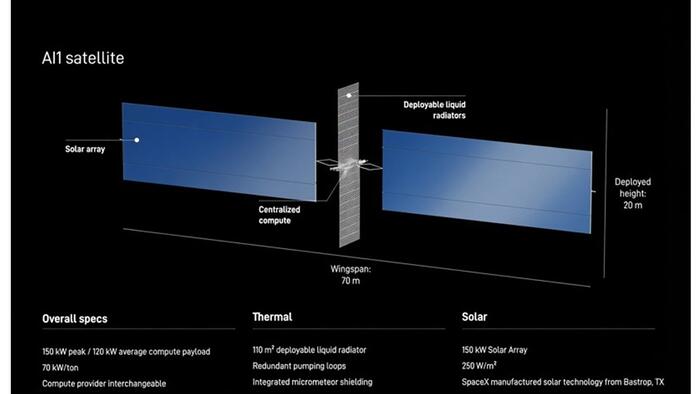
The plan calls for orbital AI data centers equipped with massive solar arrays and passive cooling systems, each satellite sporting radiators with surface areas around 100 square meters for heat management. The initial spacecraft design stretches more than 170 meters in length, which is longer than the Starship V3 rocket that would carry them up.
The company envisions hourly Starship launches beginning as early as 2028, each hauling roughly 200 tons of payload. Initial satellite deployments are targeted for late 2027, manufactured at a new Gigasat Factory in Bastrop, Texas. Musk has claimed the constellation could eventually support AI applications for billions of users, targeting an annual compute capacity of approximately 100 GW.