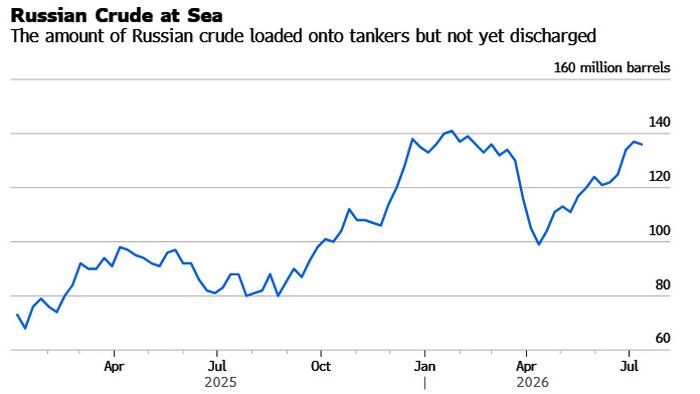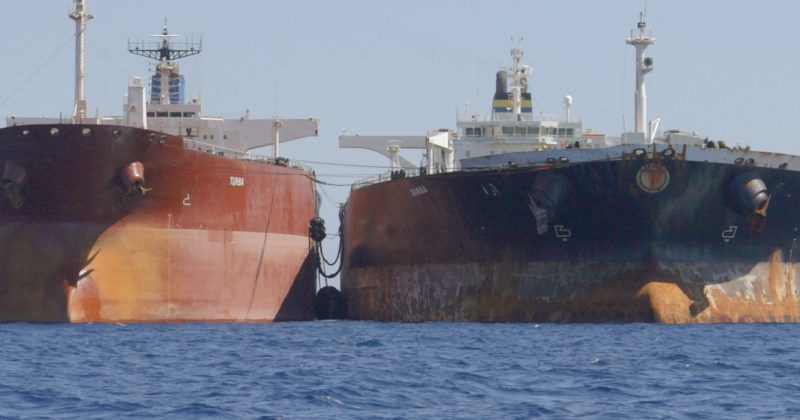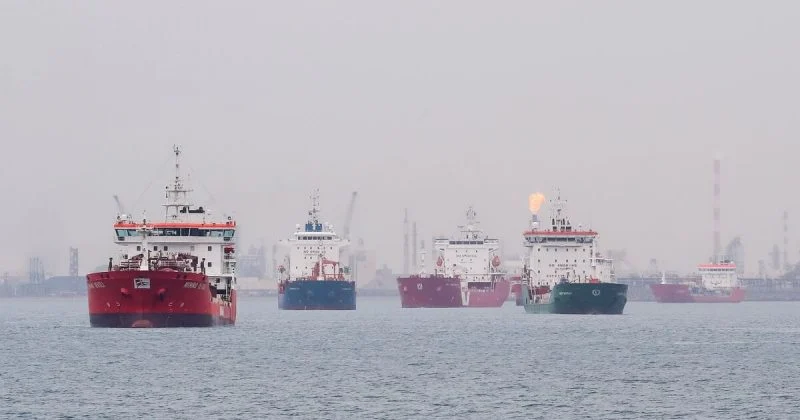
Roughly 135 million barrels of Russian crude oil are currently sitting on tankers with nowhere to go. That is about a month’s worth of typical Russian exports, just bobbing around on the ocean waiting for someone to take delivery.
How the traffic jam formed
Three forces are converging to create this floating parking lot of crude.
First, Ukrainian drone strikes have hammered at least 15 Russian refineries since mid-2025, significantly reducing domestic refining capacity. When refineries can’t process crude, the oil that would normally be consumed domestically gets redirected to export markets.
Second, US and EU sanctions enforcement has gotten meaningfully tighter, specifically targeting the so-called “shadow fleet” of aging tankers that Russia has relied on to circumvent Western price caps. Longer voyage durations and higher operating costs have become the norm for these vessels. Ships that once moved relatively freely now face port rejections, insurance complications, and extended waits at discharge points.