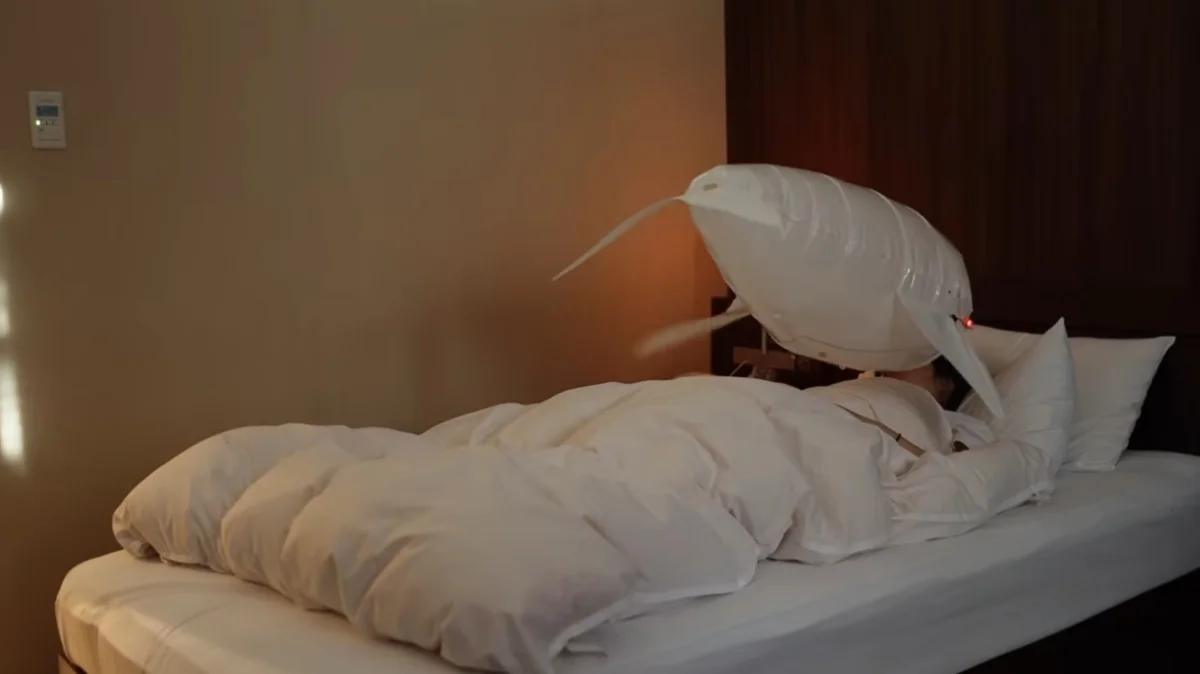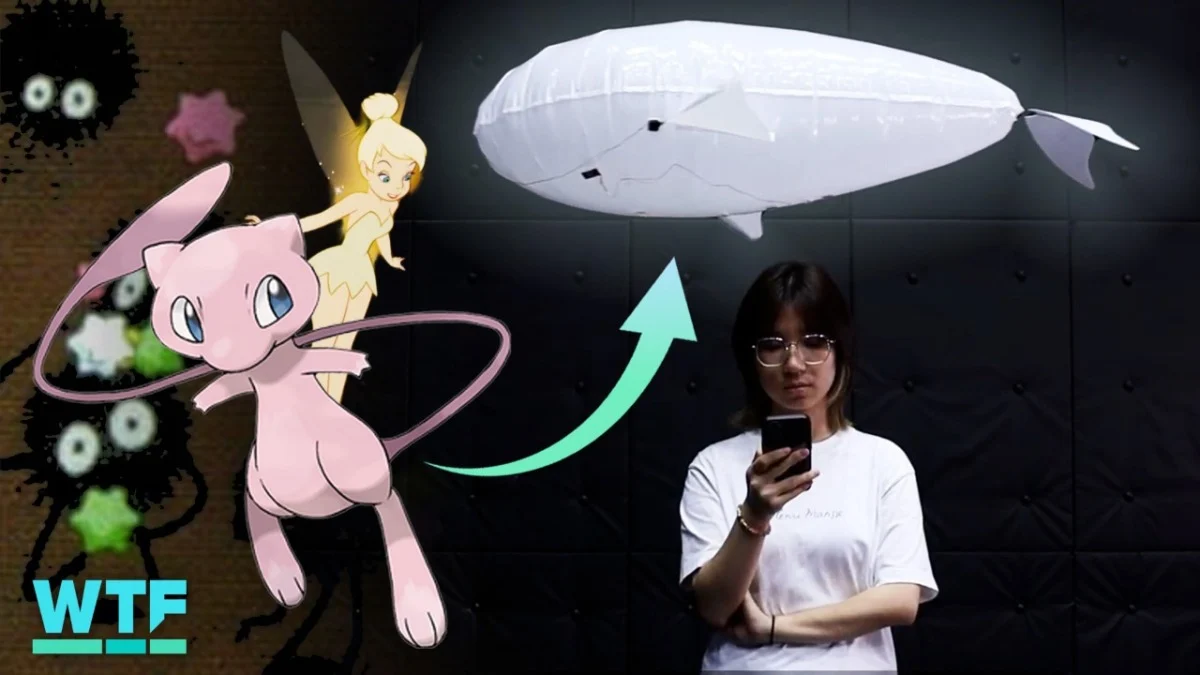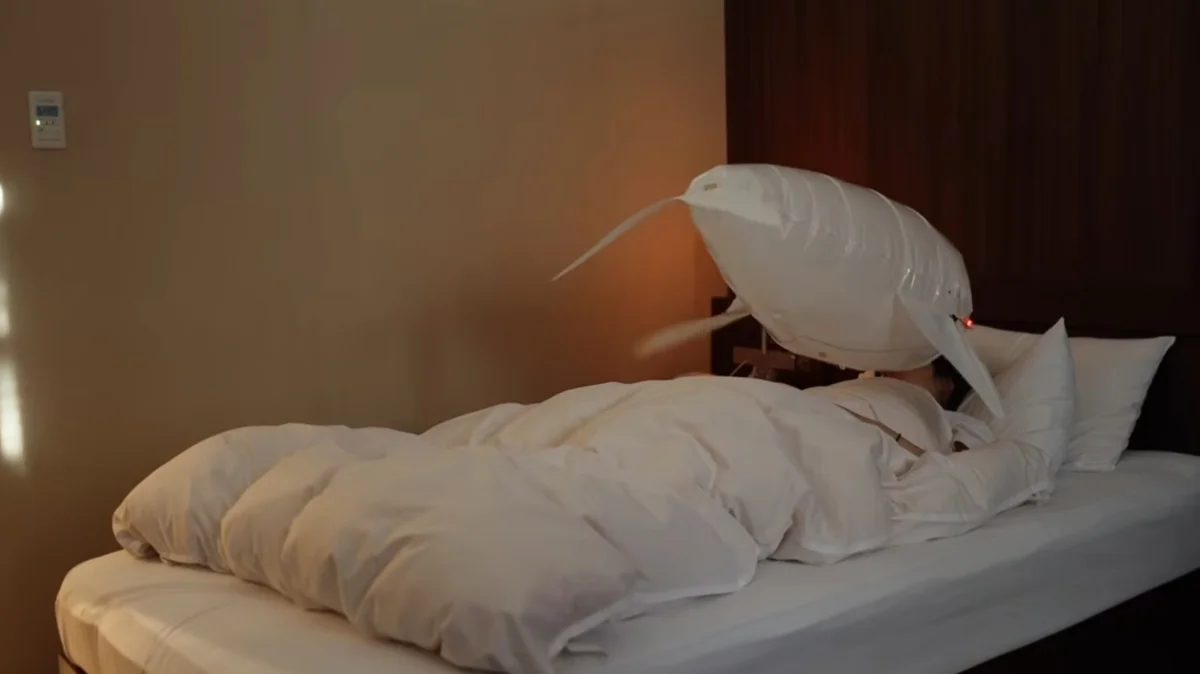
Researchers at Japan's Keio University compare their whale-shaped companion robot to Tinkerbell, the small flying fairy in Disney's Peter Pan. The helium-filled flying robot is intended for indoor use. Since the Soft Floating Robot (SFR) operates without noisy propeller drives, it floats quietly around, for example, to remind its users of appointments, to help with learning, and to dance with them.
Mini-Zeppelin with Flapping Wings
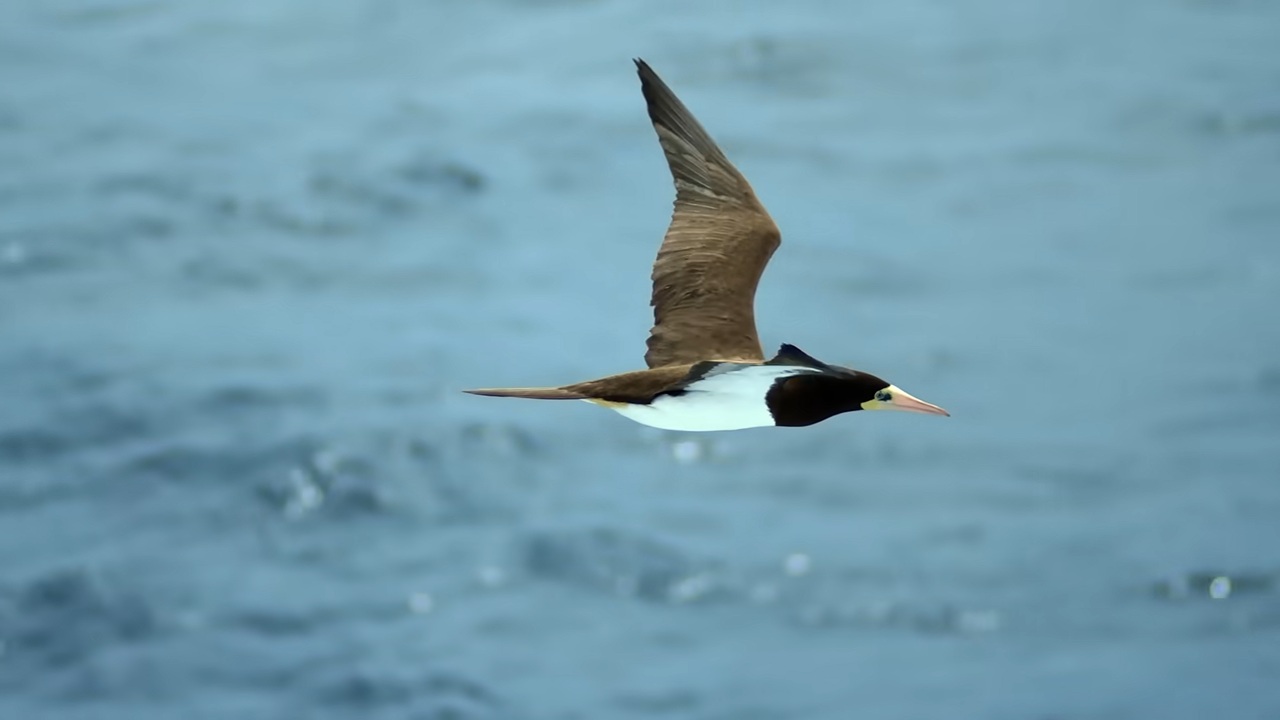
The SFR from the Japanese scientists consists of a helium-filled shell and resembles a flying mini-whale in the style of a Zeppelin. Buoyancy is achieved via flapping fins, which also serve as control surfaces. This flight propulsion concept has two decisive advantages: it operates quietly and requires little energy. The concept is in stark contrast to quadcopters, which, with their noisy propellers, require considerable energy to fly, are too loud as companion robots in a domestic environment, and literally make “too much wind.”
The SFR's flapping wings are made of carbon fiber to keep the robot as light as possible so that the helium inside the body can keep the flying robot afloat. Approximately one liter of helium can support one gram. The flapping wings are driven by control electronics from lightweight micro-servos. A compact lithium-ion battery provides the necessary energy. The flapping wings generate the necessary propulsion through symmetrical wing beats. Asymmetrical wing movements allow the SFR to maneuver in space. The control is very precise.