Image copyright: Raphael Zufferey.
By Jennifer Chu
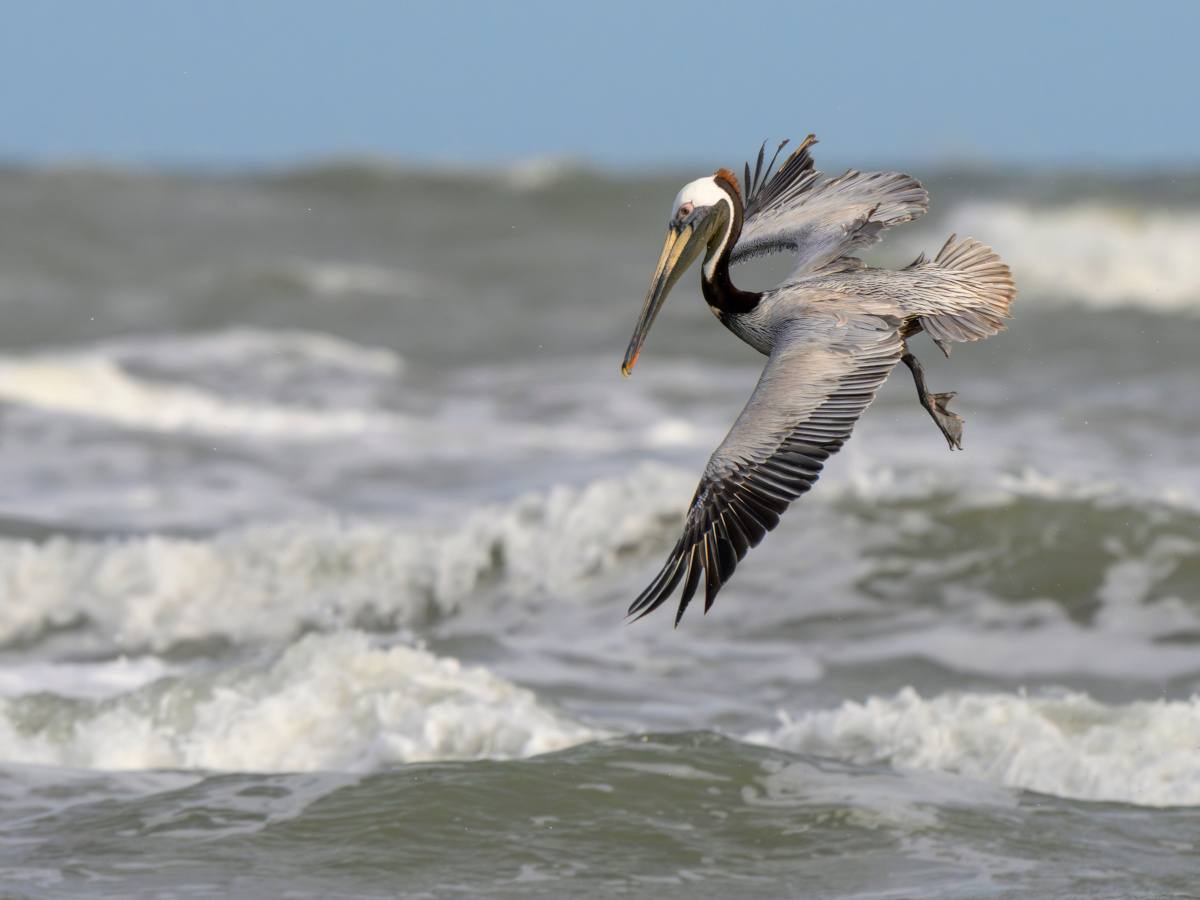
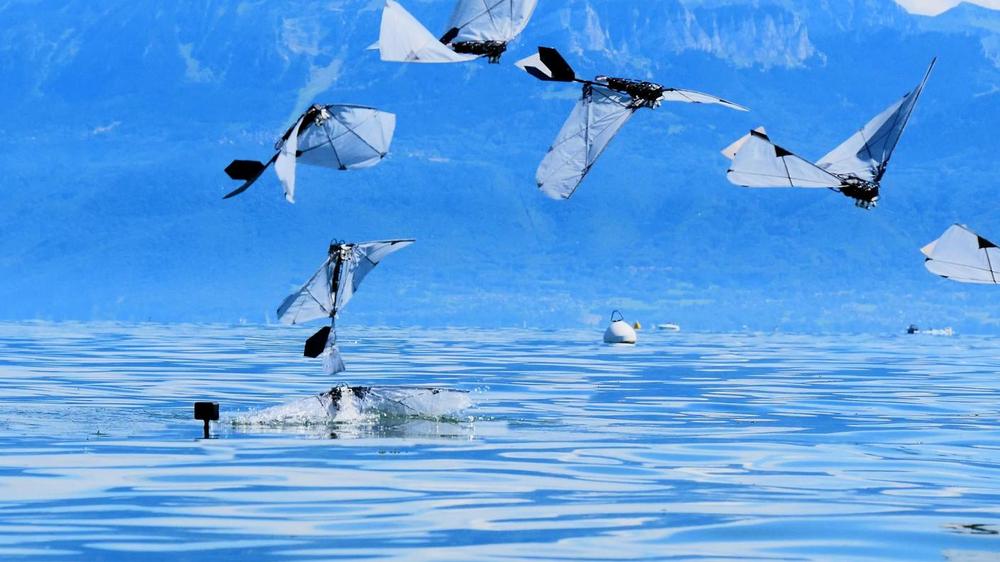
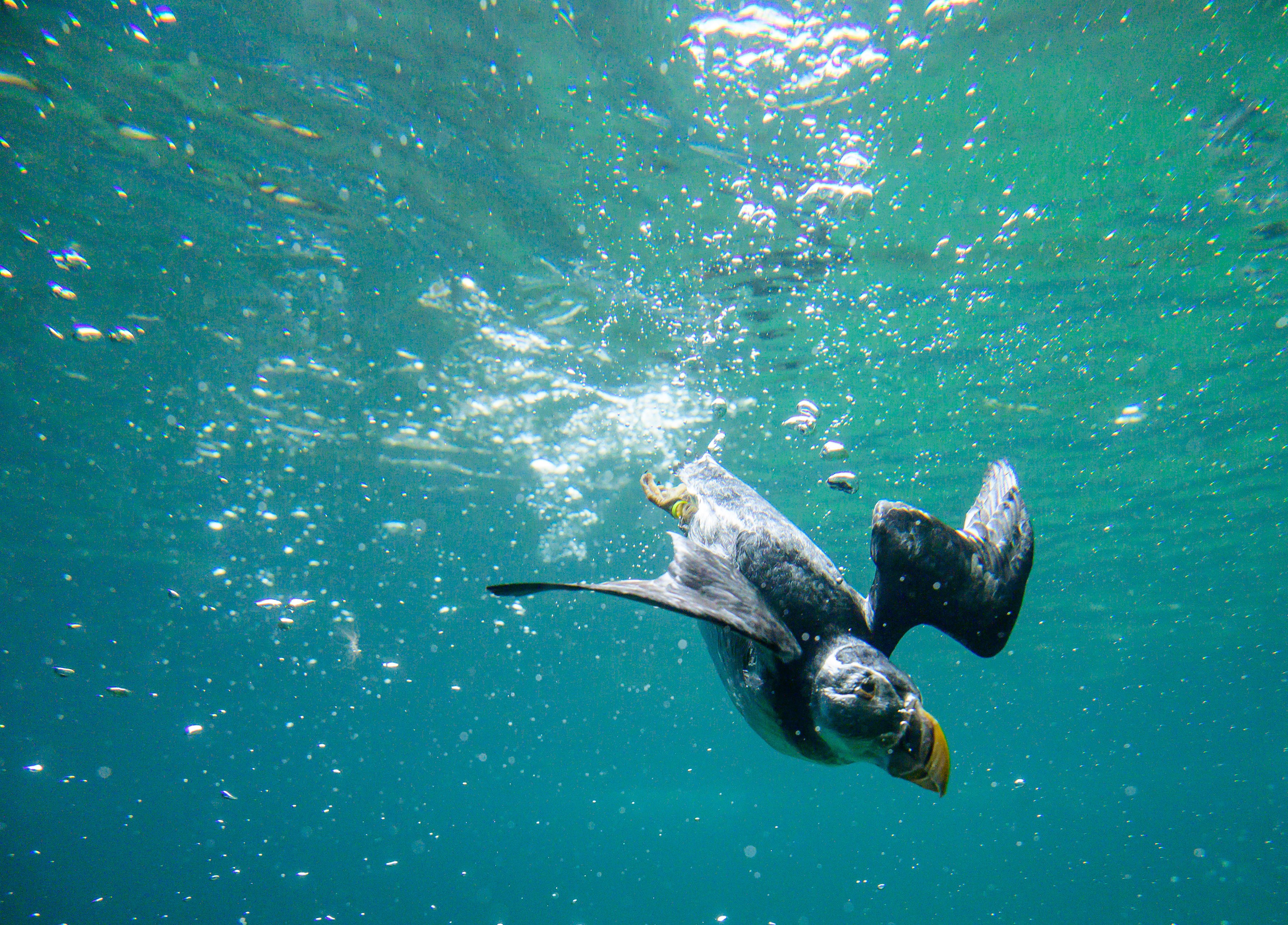
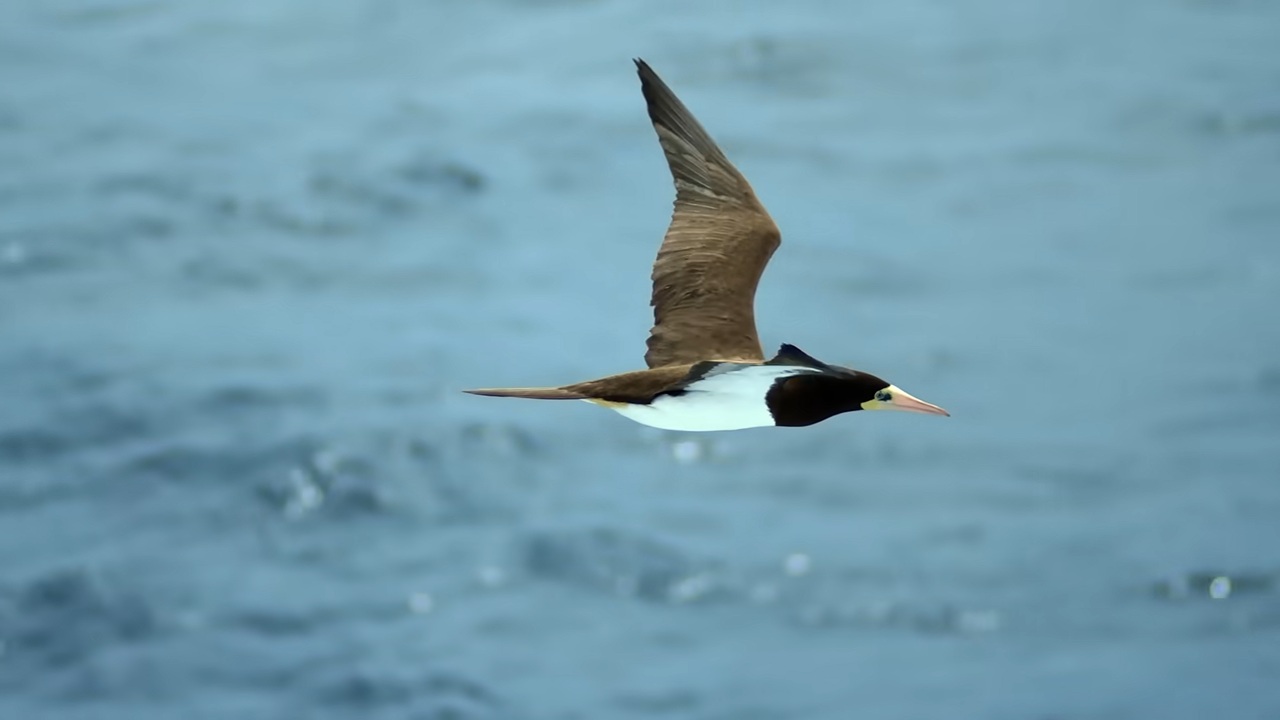
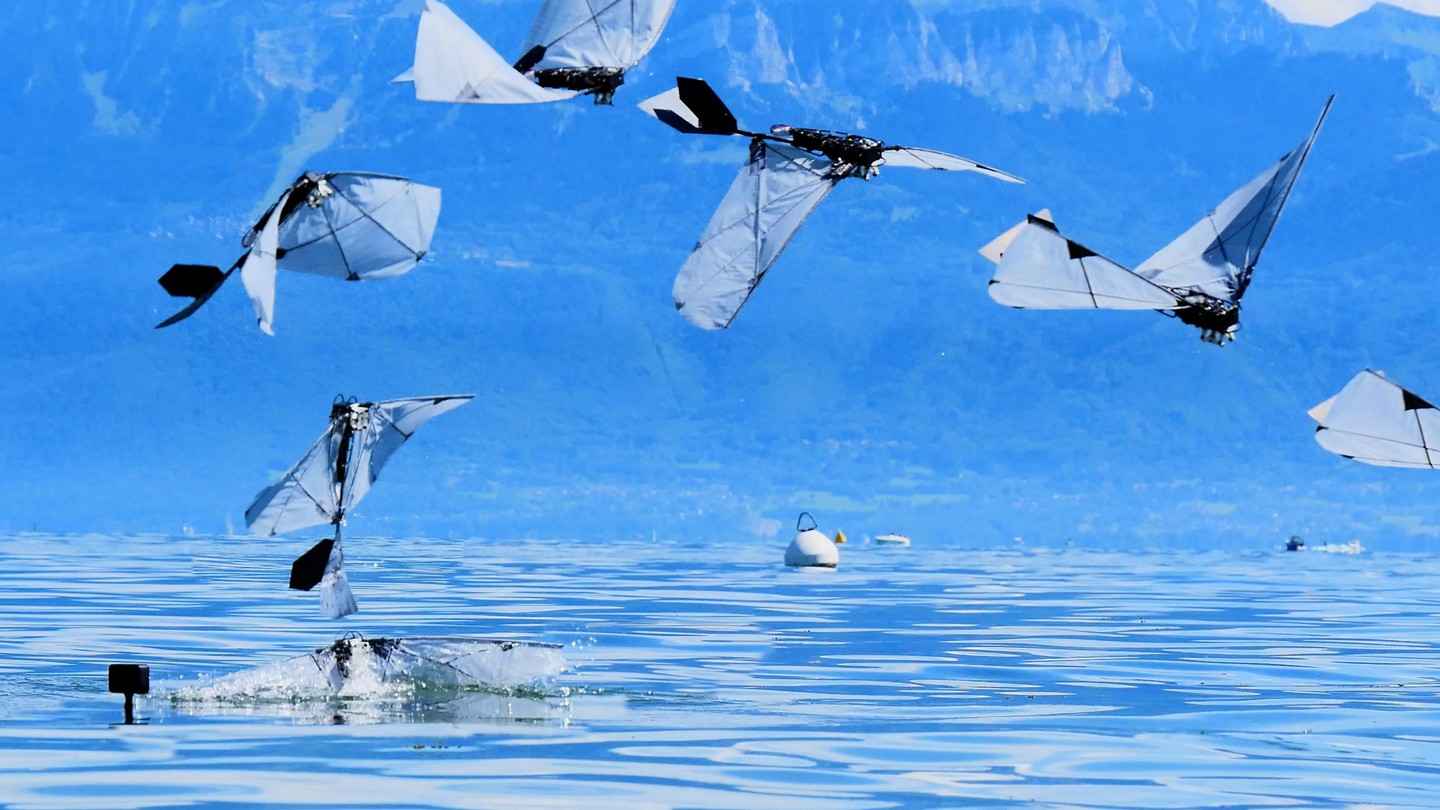
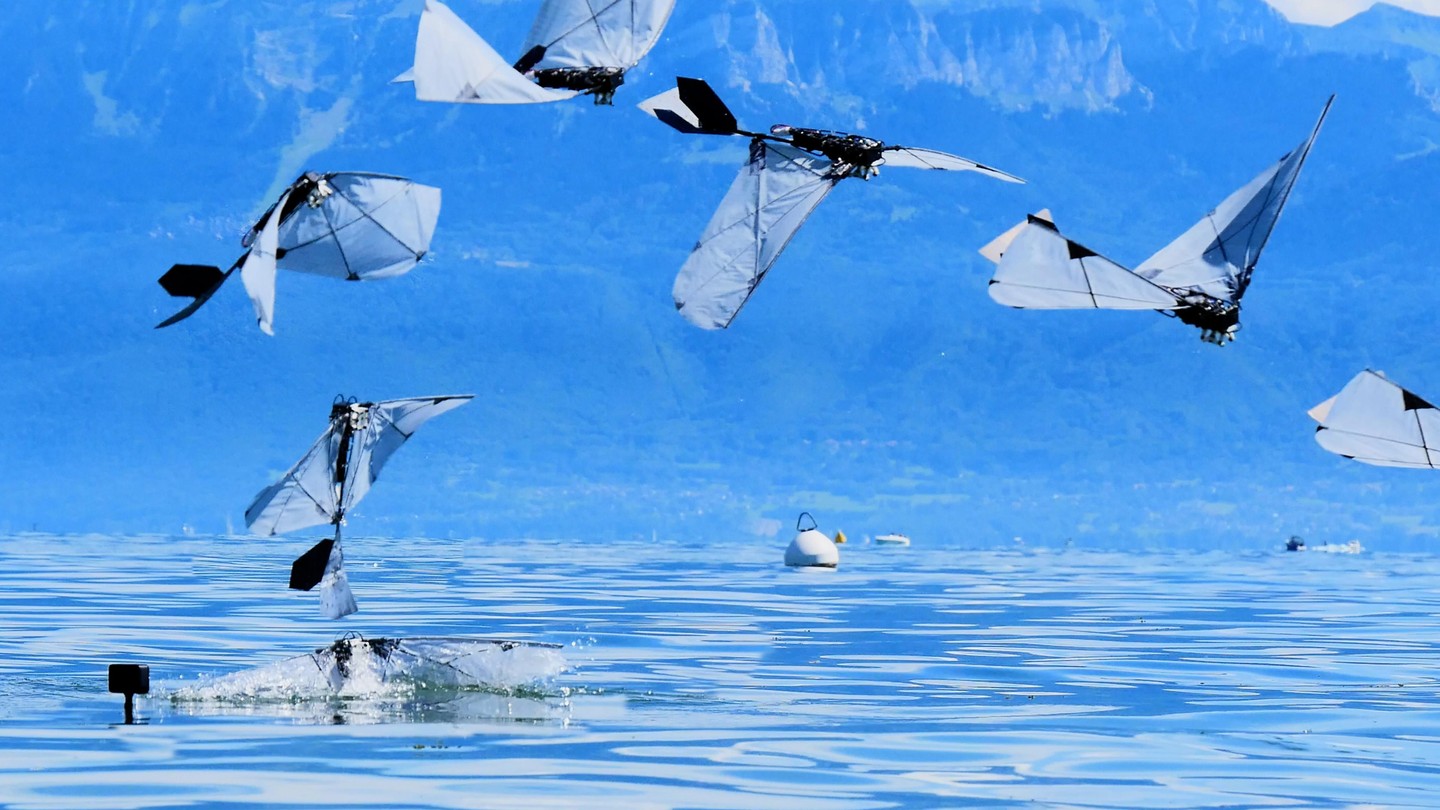
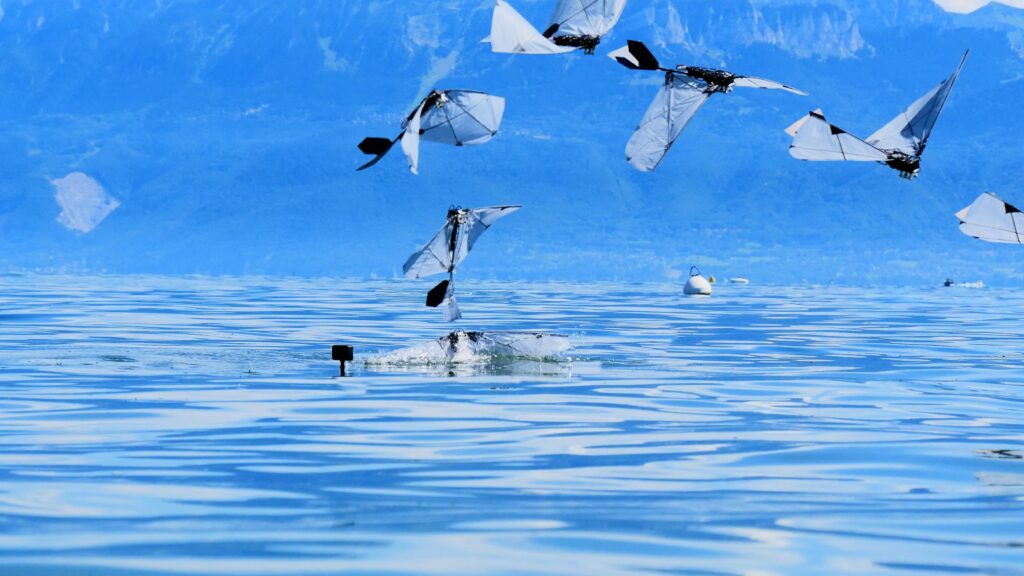
Loons, gulls, puffins, and petrels are some of the 100 species of birds that can both fly and swim. These diving birds can plunge in water to swim after prey, and then leap back into the air to fly away. Now, inspired by these naturally aquatic aviators, engineers at EPFL and MIT have designed a robot that can swim underwater, and flap out of the water to continue flying through air, much like diving birds.
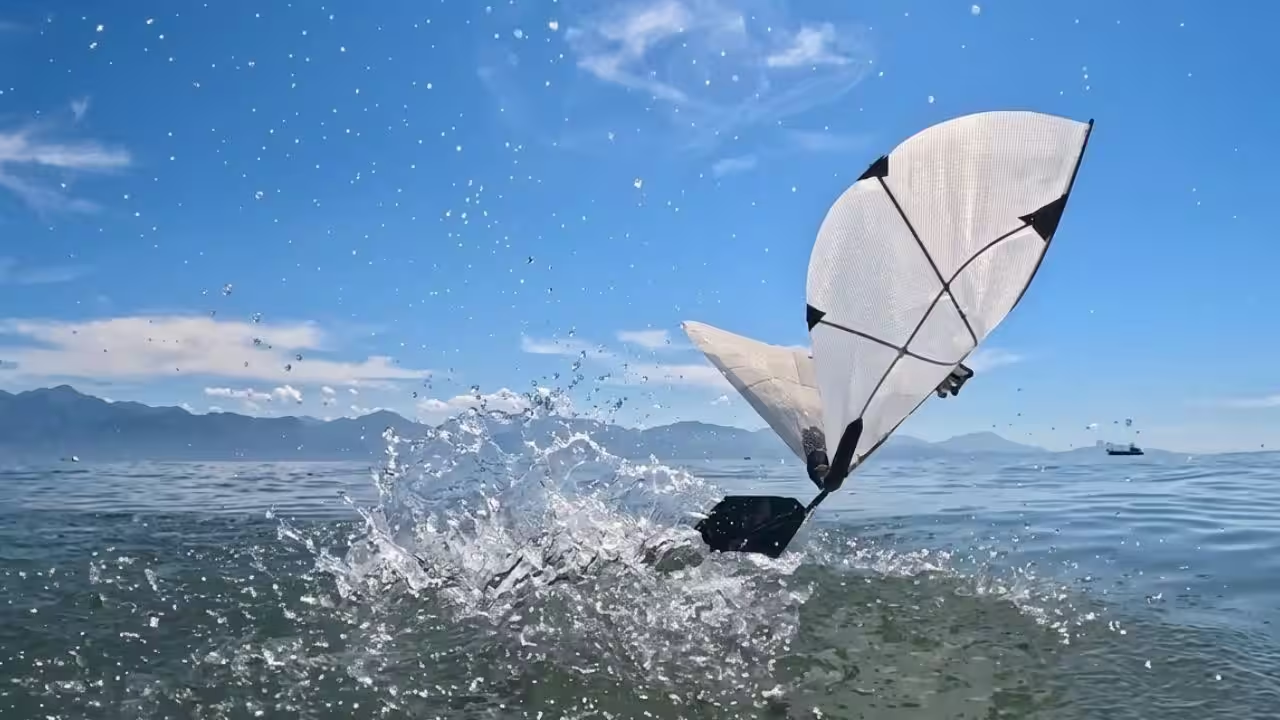
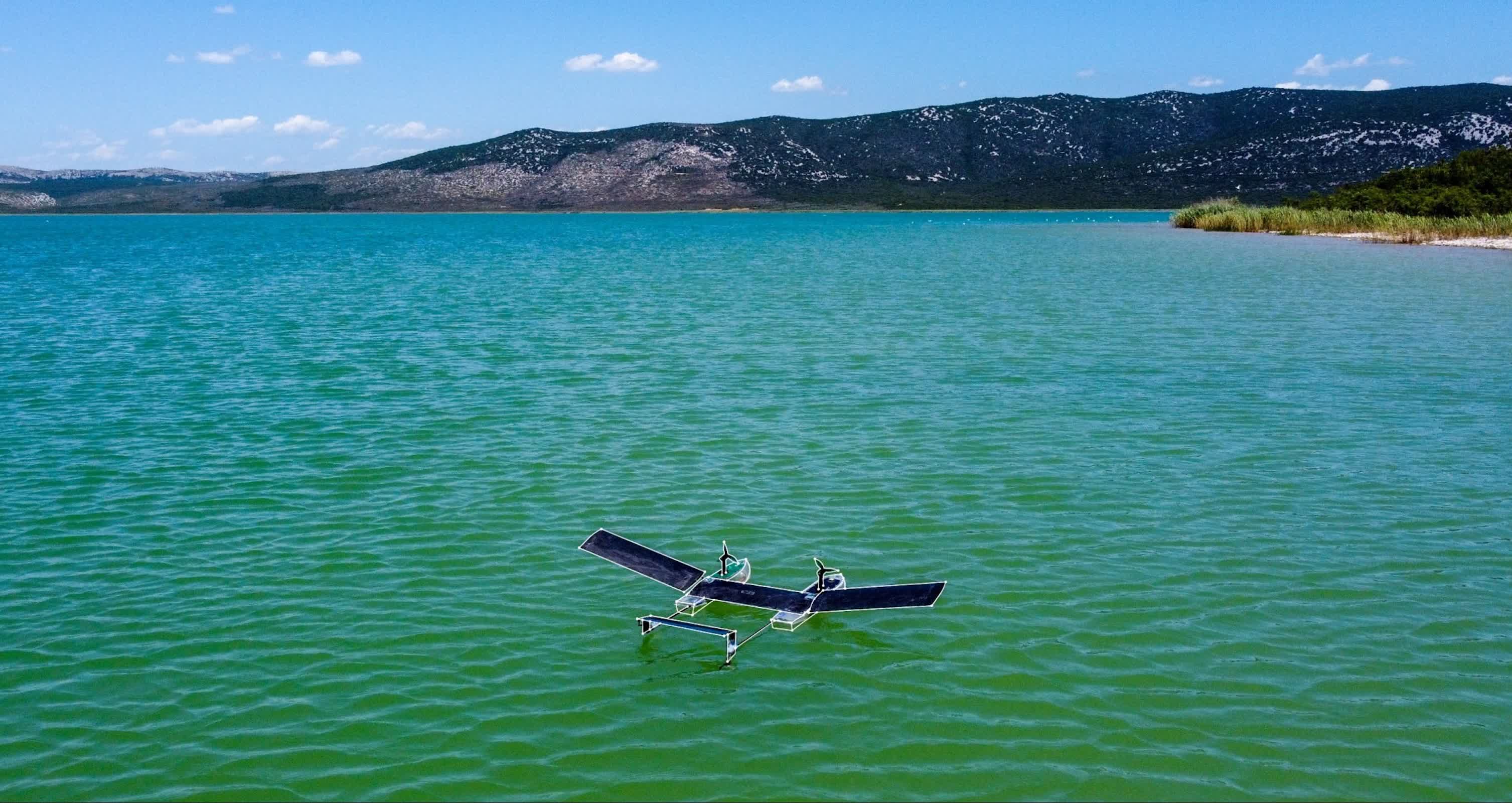
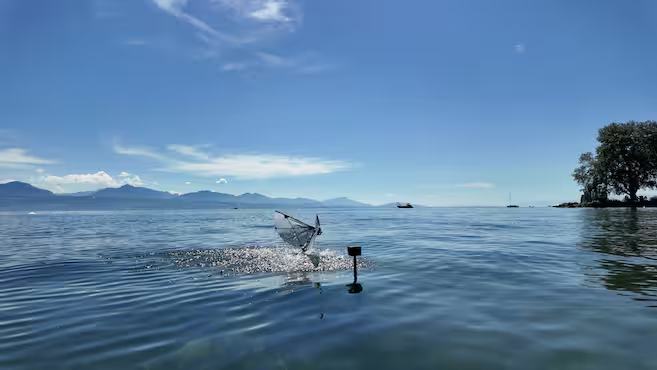
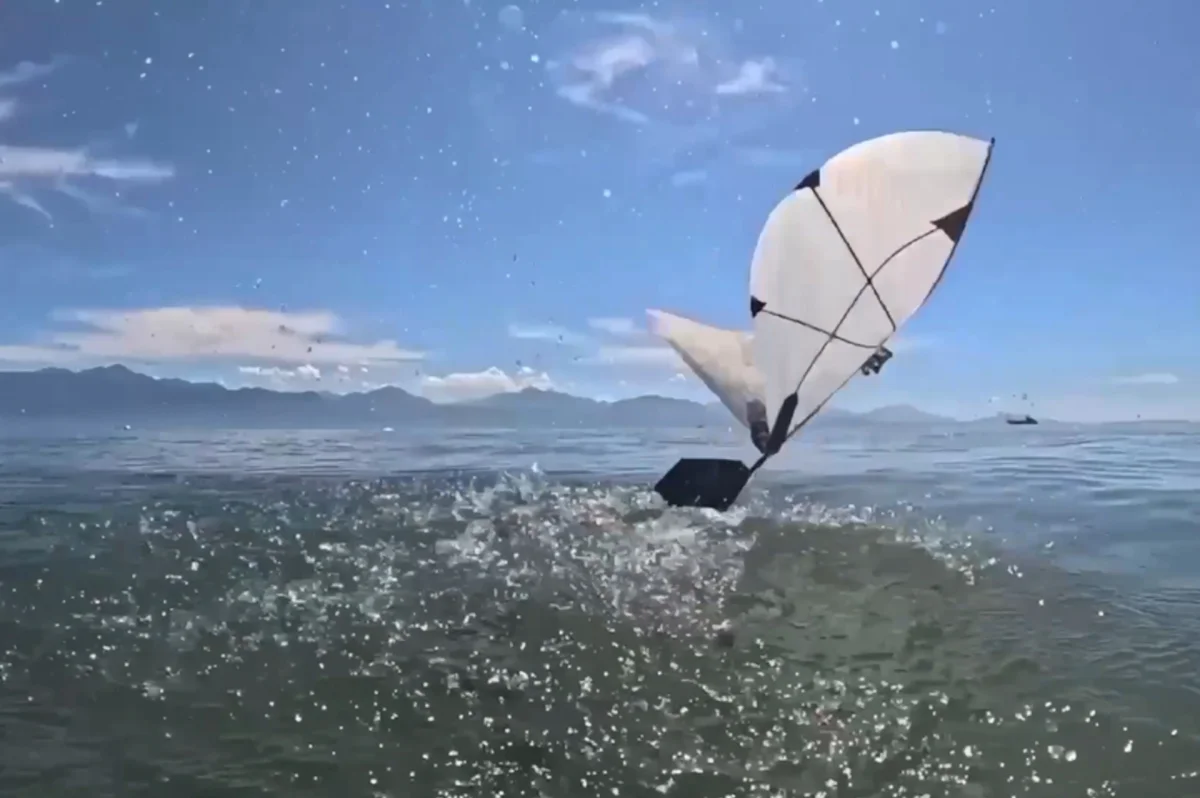
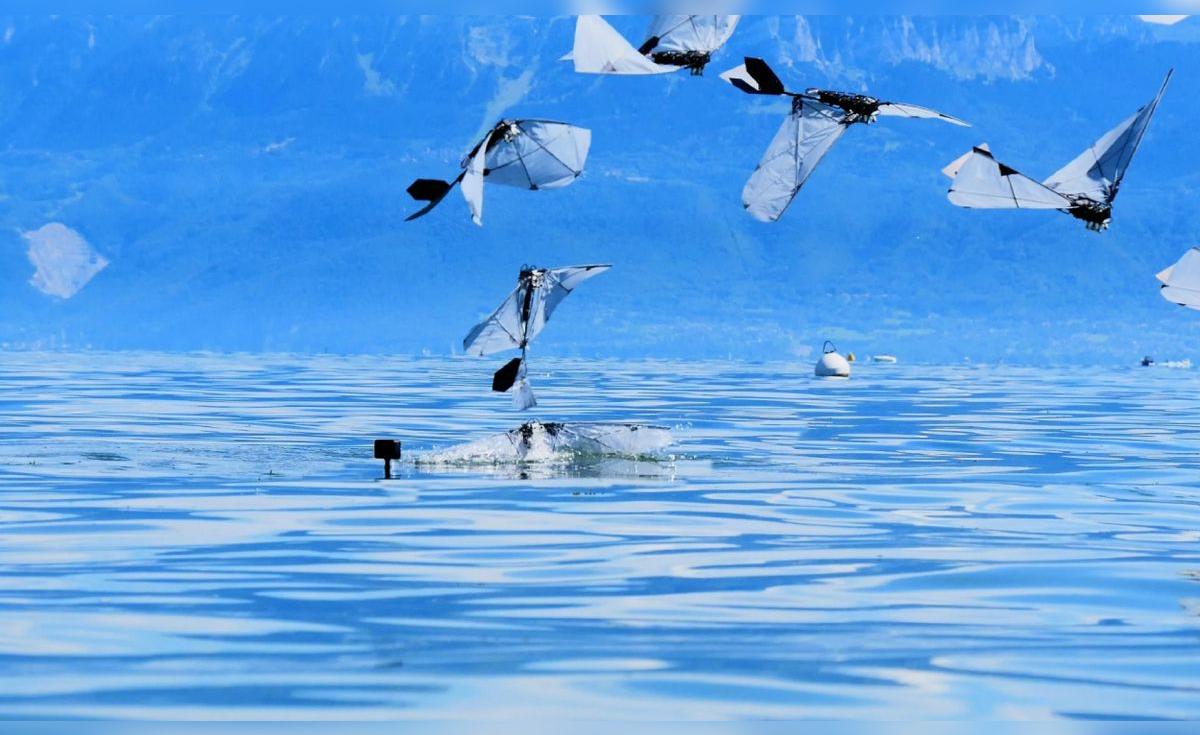
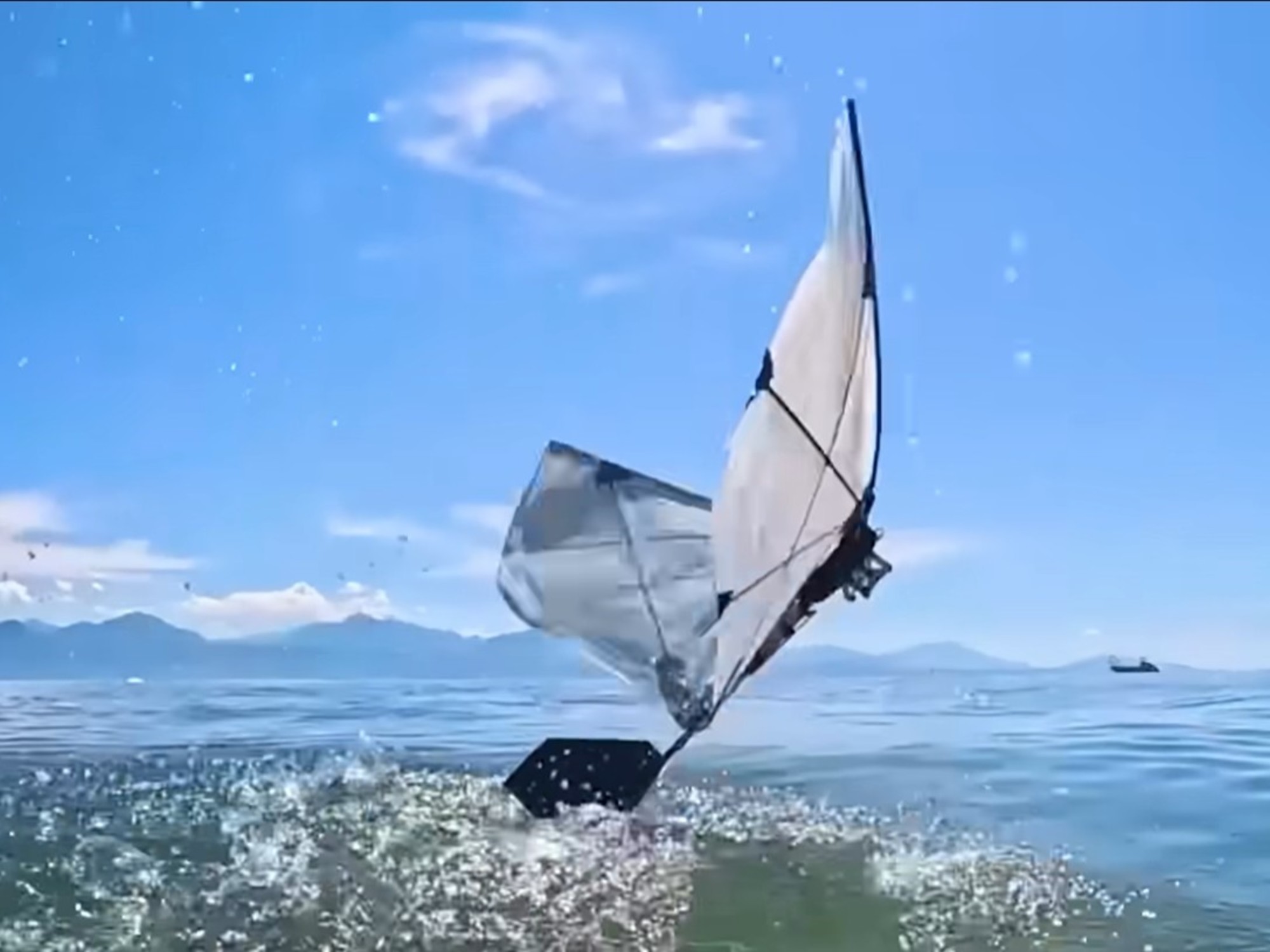
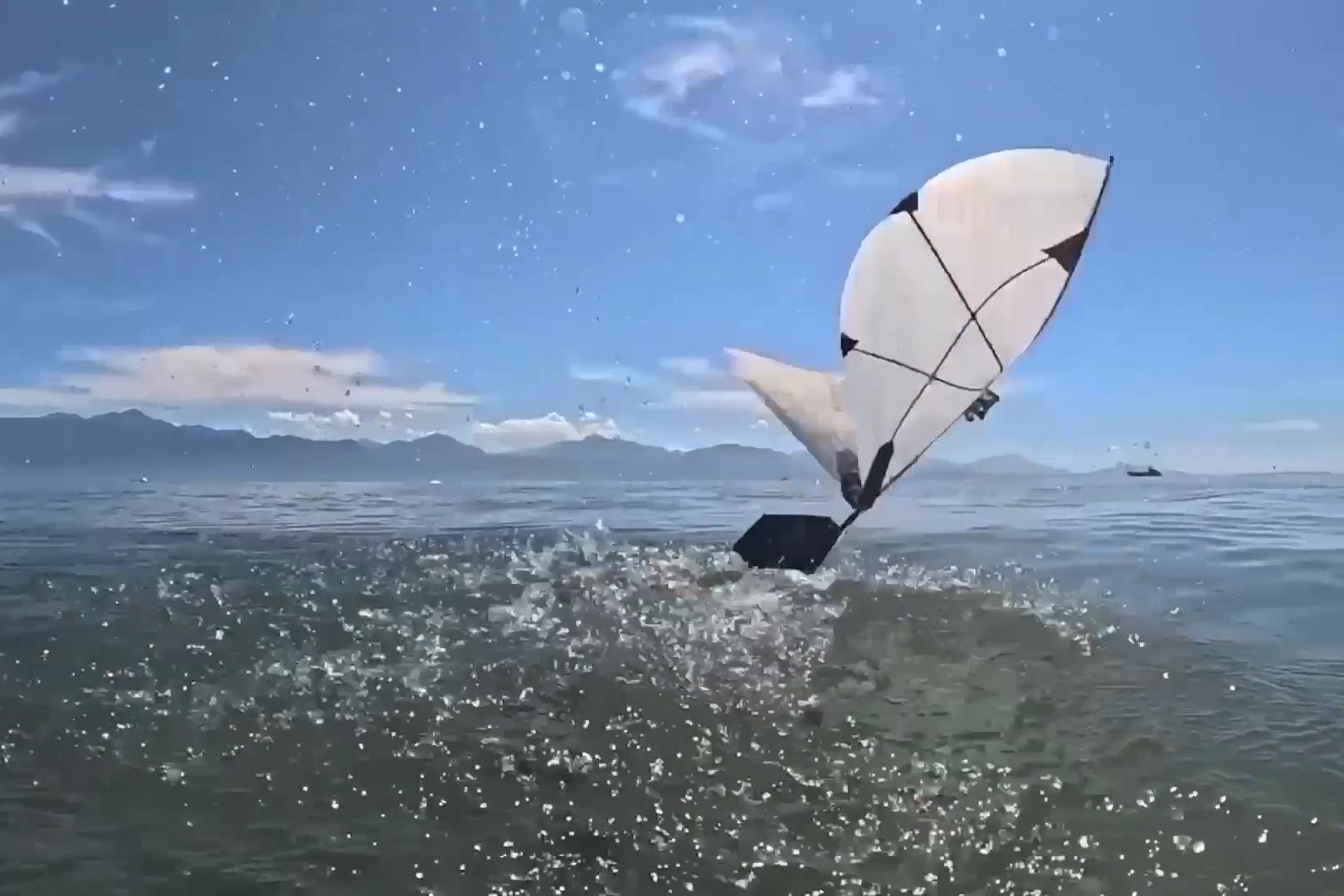
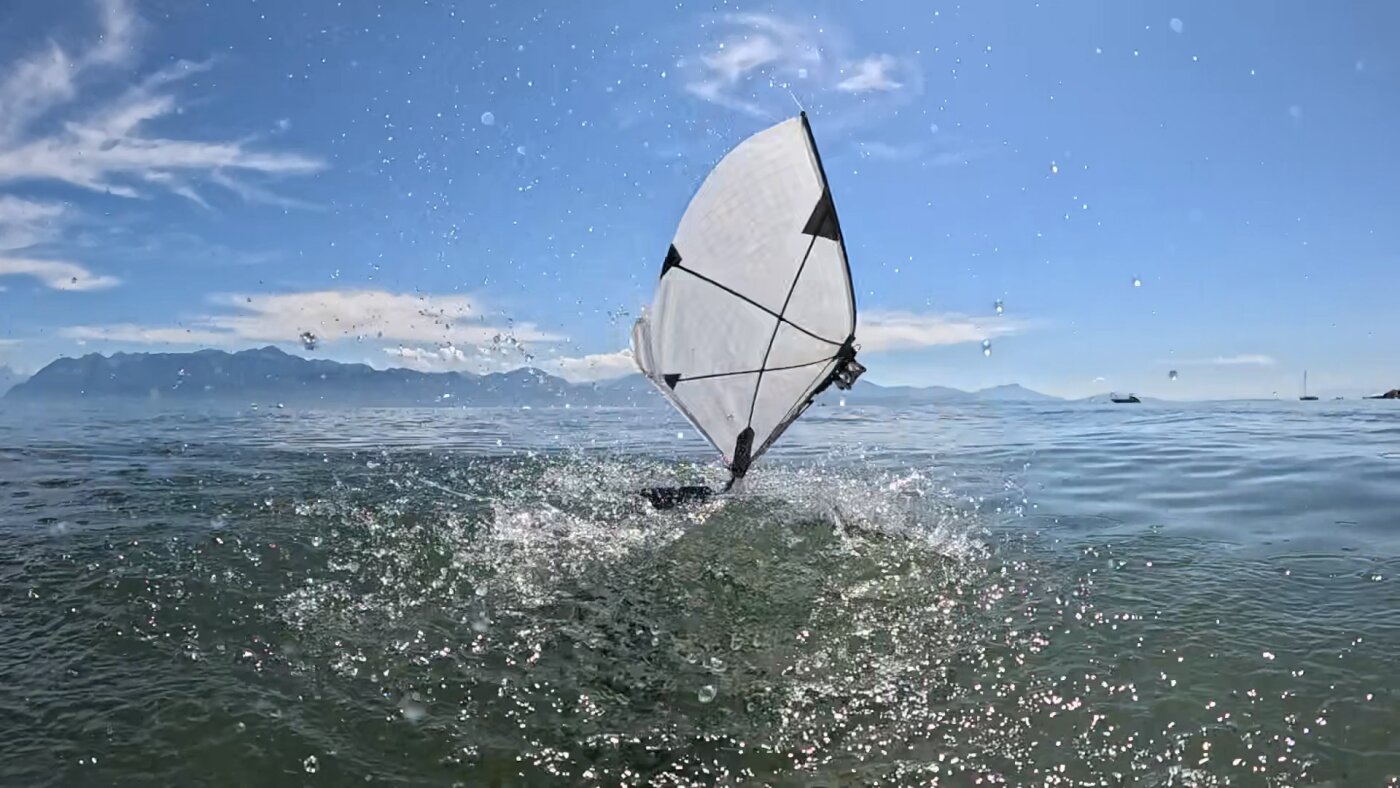
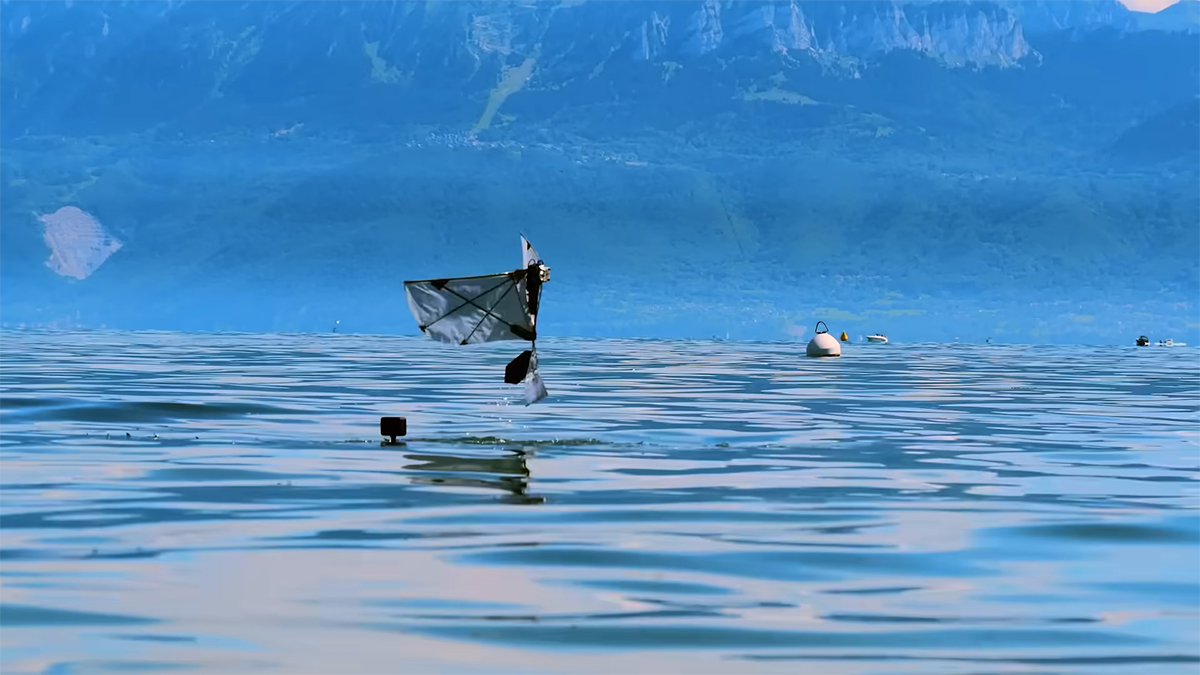
The “flapping-wing aerial-aquatic vehicle,” or FAAV, weighs less than 300 grams and is designed to help scientists study the mechanics that enable diving birds to fly through air and water. The robot has a central body, or fuselage, two flexible, flapping wings, and a steerable tail. The wings and tail can be swapped out for different sizes. In experiments carried out in a water tank and a lake, the engineers identified combinations of wing size, flapping frequency, and tail angle that enable the robot to smoothly transition from swimming through water, to breaking through the surface, to flying through the air.
Their results, published in Science, can help scientists understand how diving birds adapt their flight mechanics to move through air and water, which have very different physical properties. The design could also launch a new class of aerial-aquatic drones and vehicles. The researchers envision such winged robots could be deployed to fly to and sample from aquatic regions that would otherwise be too dangerous for traditional ocean vessels to access.