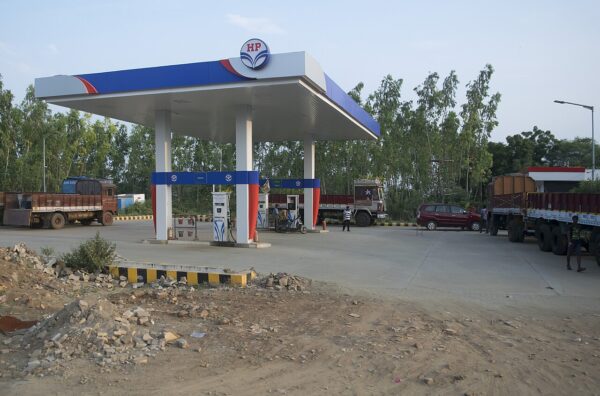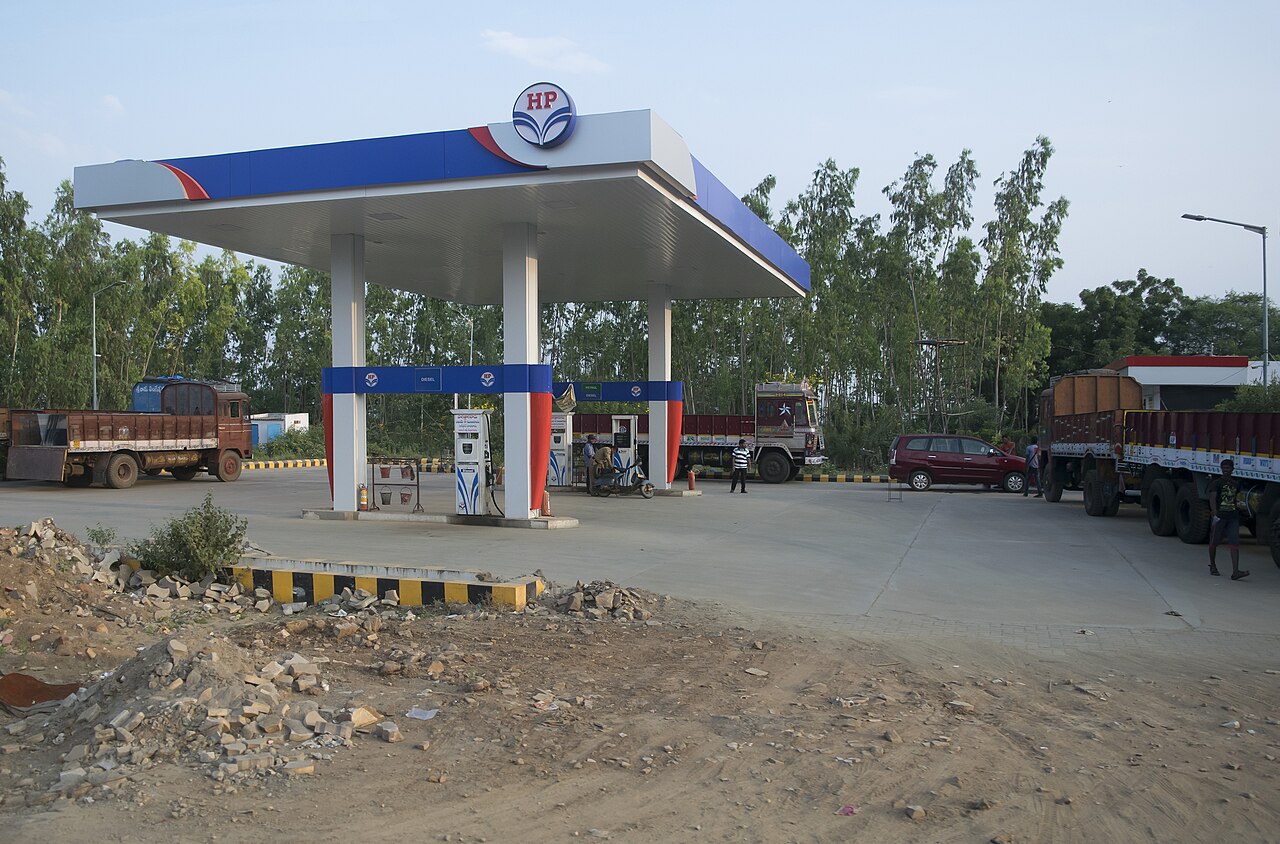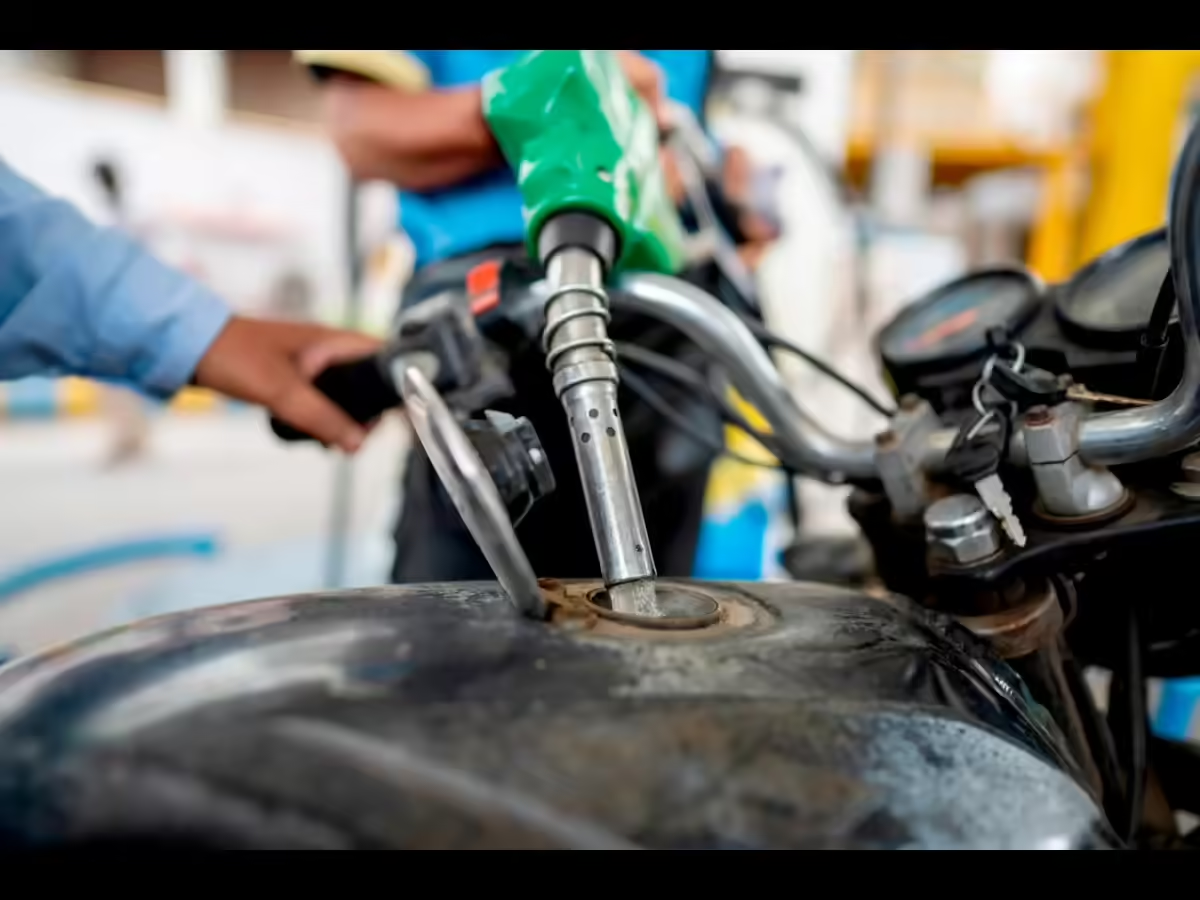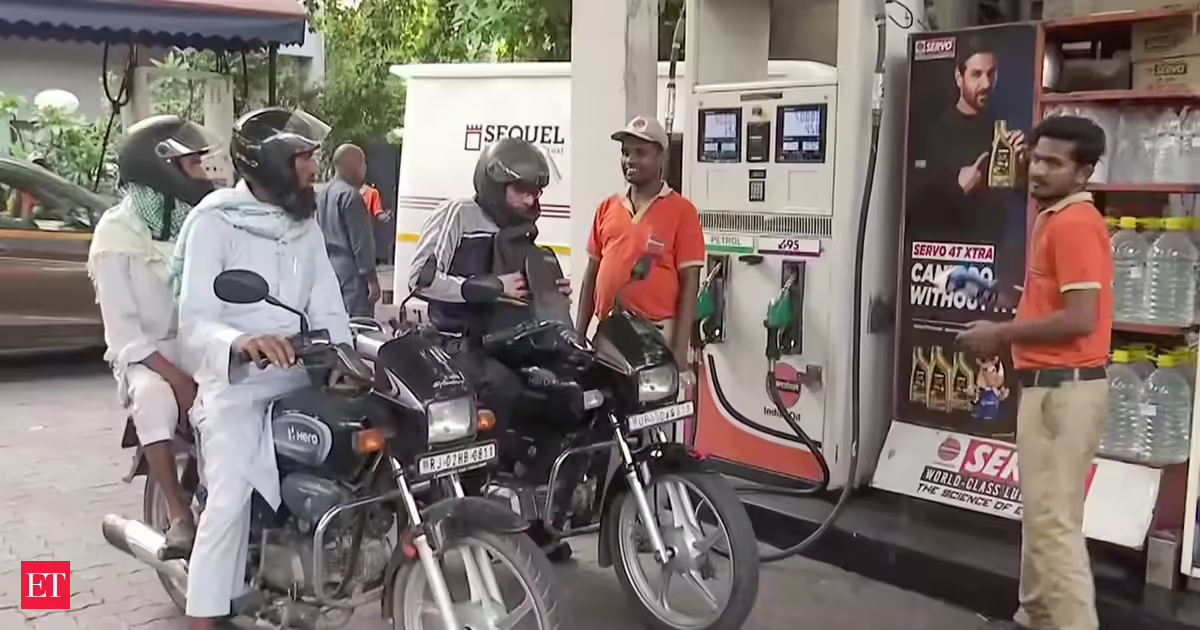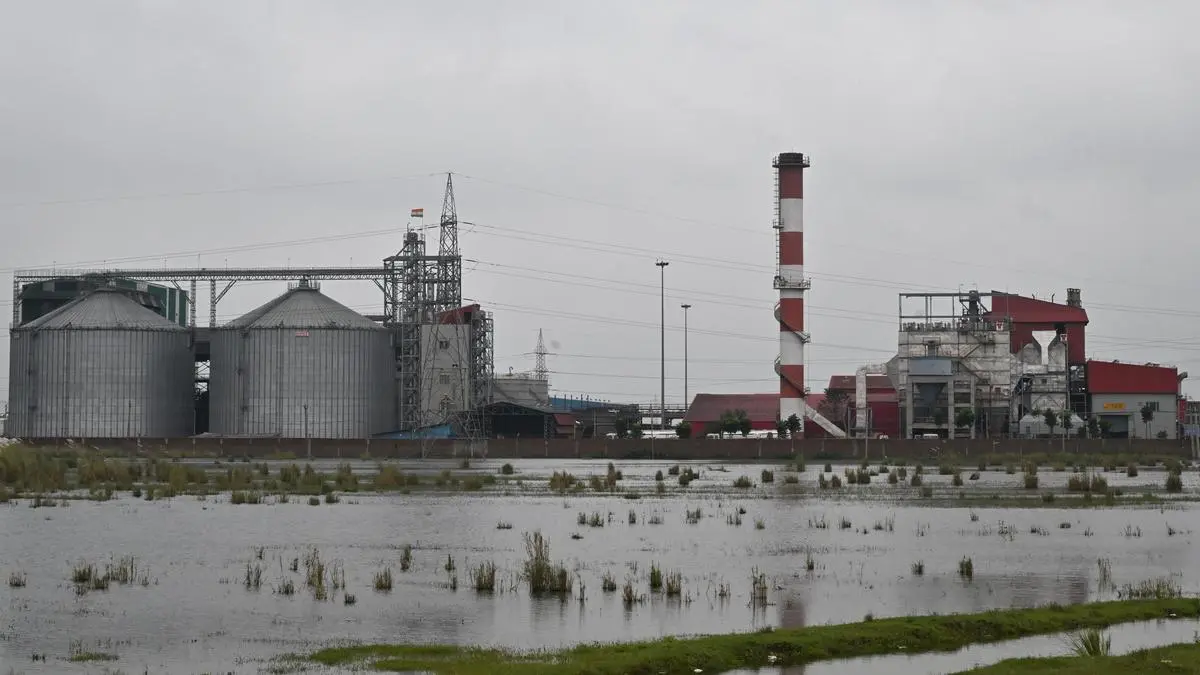
In ancient times, alcohol was used either as a safer source of nutrition than contaminated water, or to reduce noxious effects of bacteria by mixing it with water in a fixed proportion. Not too dissimilarly, countries like Brazil, battered by the 1973 oil crisis, turned to ethanol as an alternative sustainable fuel, or as an additive to dilute the devastating impact of any future oil shock.Today, alcohol has outlived its purpose as a water decontaminant. And ethanol — despite its value as a greener feedstock replacement for petrochemicals, and as a core ingredient in sustainable aviation fuel (SAF) — is increasingly being passed over as a cleaner-burning or sustainable fuel for ICE, in favour of new technologies.So, two questions need to be considered in the context of India’s current push for E20, blend of 20% ethanol and 80% petrol: Will ethanol drive higher vehicular efficiency and lower emissions? Ethanol has a high-octane rating — it offers greater acceleration and better anti-knocking (uncontrolled auto ignition) performance in an engine’s cylinder.But this is only discernible in high-performance or turbocharged engines. Furthermore, while ethanol is safe to use in both new and older vehicles (of BS IV and BS VI vintage), it is hygroscopic (affinity to absorb moisture) and can corrode metal parts. Higher the proportion of ethanol, greater the chances that rubber hoses and gaskets in older cars will be damaged.On the flip side, because ethanol burns more cleanly than fossil fuels — emitting less CO2 and almost no CO — it is more environmentally friendly, both in its pure form and as a blend, than petroleum fuels. But since it has a 33% lower fuel density than petrol, mileage is affected in equal measure.As a result, under perfect driving conditions — in India, the outlook is somewhat worse — E10 and E20 are likely to show mileage degradations of 3.5% and 6.5%, respectively. Since fuels are not priced in India based on energy content, this impact will become much more perceptible in the future if ethanol proportion increases.None of these are, however, deal-breakers. By following the Brazilian model of phasing out older vehicles, providing consumers with choice at the pump — as road transport and highways minister Nitin Gadkari reiterated this week in a ToI interview — and offsetting any loss of mileage through differential pricing, GoI could take care of these issues.But India in 2026 is not Brazil in 1976. Its growth objectives are tied to energy, food and environmental security, which cannot depend on older technology that provides an incremental benefit to one area while adversely affecting another. On the face of it, ethanol — of which India consumes some 11 MMT annually — is the perfect antidote to India’s oil addiction. The country can fully depend on its domestic production capacity, which is expandable and renewable, to reduce the energy import bill, allow farmers to earn more from a cash crop and demand fewer subsidies, and utilise a cleaner biofuel. Economics, however, is a subset of the natural environment, not conventional mathematics. Nothing is boundless or infinitely sustainable. To produce 1 MT of ethanol requires about 2.6 t of maize or 12.5 t of sugarcane.The trade-off lies in the fact that, for India to have achieved its E20 target 5 yrs ahead of the 2030 target date set by National Policy on Biofuels, 2018, 13.7 mn ha and 5.4 mn ha of land were allocated for maize and sugarcane production, respectively. Since GoI intends to divert another 8 mn ha by 2030 to meet domestic growth requirements, ethanol feedstock will command a fifth of India’s net sown area.Moreover, the impact on India’s fast-depleting water table may be even more concerning. It takes between 2,000 and 10,000 l of water to grow and process feedstock for 1 l of ethanol compared to, say, a similar amount required to extract lithium and produce an EV battery.Consequently, pursuing a strategy that develops even more highly concentrated ethanol fuels and promotes flex-fuel vehicles (FFVs) to justify their use, or increasing production area and volume to export ethanol to countries with feedstock deficits, will be counterproductive.Is ethanol a credible answer to India’s energy security dilemma? Because of the points mentioned above, no.India’s long-term energy security goals will be best served by investing in renewables for tomorrow’s wholly electric, solar, nuclear or hydrogen-powered world. In the short term, it could balance some of its energy security needs by issuing oil bonds, while meeting consumer vehicular demand by subsidising and promoting mild, full and plugin hybrids.Ultimately, a commitment to fund ethanol production and expansion today is akin to building massive alcohol vats for potable drinking water. With cleaner and cheaper technology on the horizon, abstinence may be cheaper than the cure.(Disclaimer: The opinions expressed in this column are that of the writer. The facts and opinions expressed here do not reflect the views of www.economictimes.com.)
Don’t become an alcoholic: India’s ethanol push risks solving one problem while creating another - The Economic Times
India's push for E20 fuel presents both benefits and drawbacks for vehicular efficiency. Ethanol offers cleaner burning properties but reduces mileage due to lower fuel density. Producing ethanol requires substantial land and water resources, impacting food and environmental security. The country's long-term energy needs are better served by investing in renewable technologies. Future energy security will rely on electric, solar, nuclear, or hydrogen-powered solutions.
810 words~4 min read