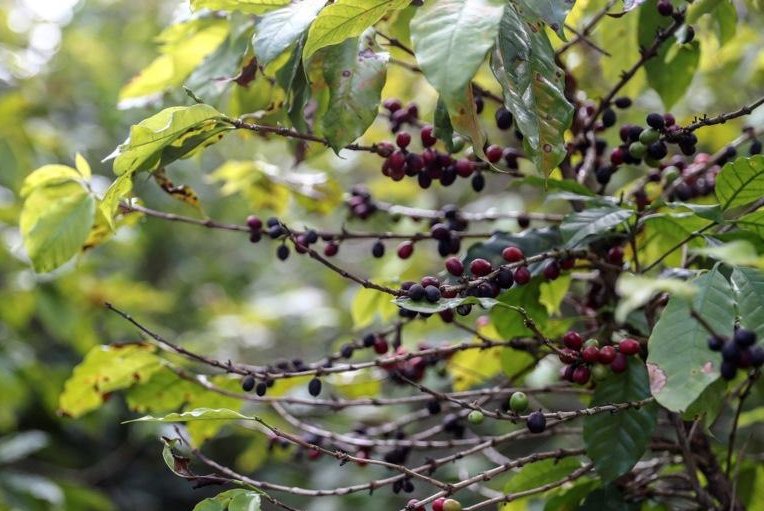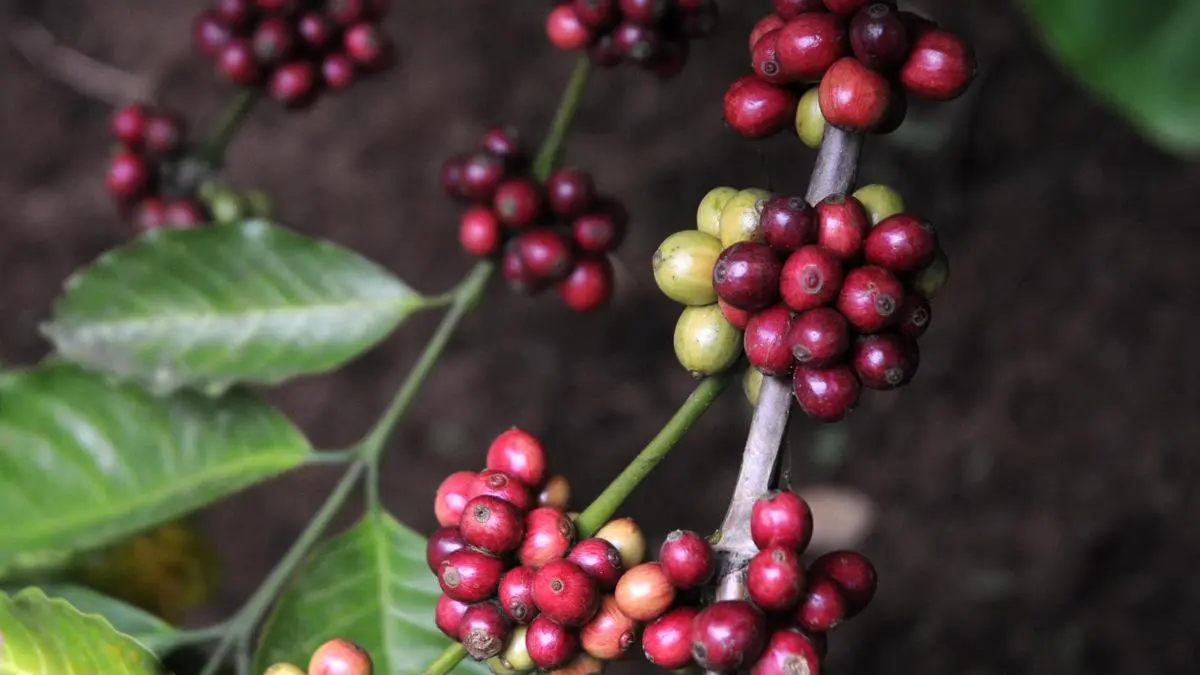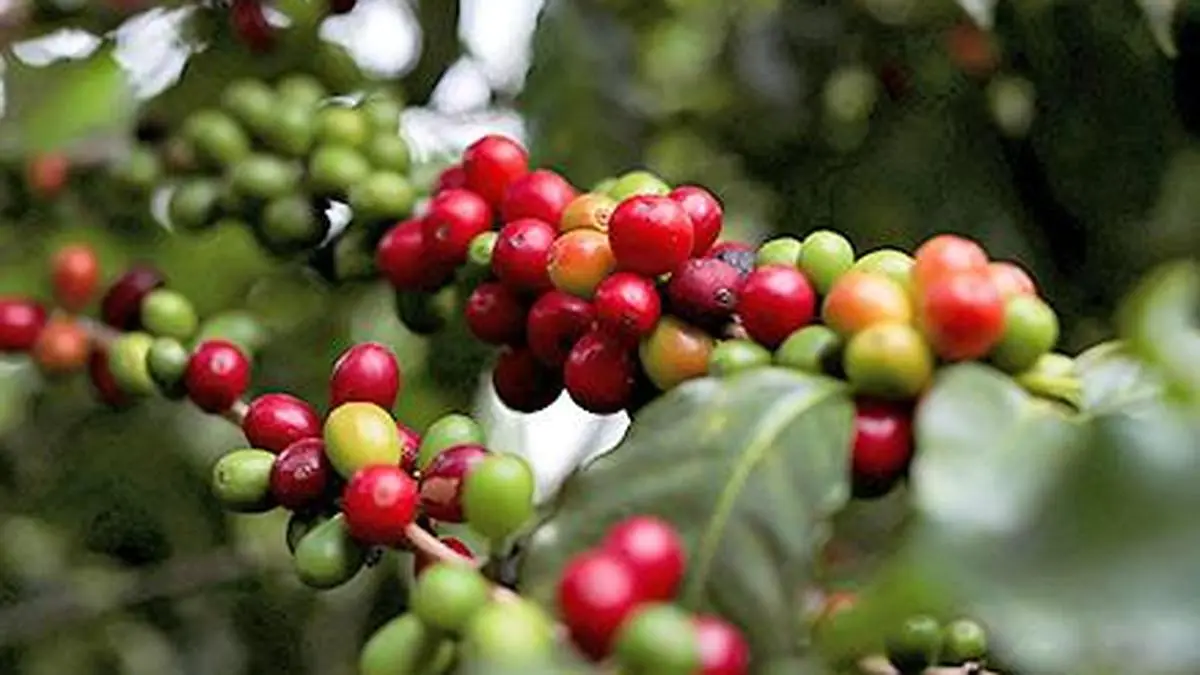
FILE PHOTO: Coffee berries are seen on a tree at the Biological Institute plantation in Sao Paulo, Brazil May 8, 2021. Picture taken May 8, 2021. REUTERS/Amanda Perobelli/File Photo
| Photo Credit:
Coffee production for the 2026-27 crop year, beginning in October, is projected at 4.04 lakh tonnes, about 8 per cent higher than the final estimate of 3.73 lakh tonnes (lt) for 2025-26, according to the Coffee Board’s post-blossom estimate. The post-blossom estimate, based on flowering triggered by pre-monsoon showers and initial crop setting, is the Board’s first production forecast for the season. The final output typically turns out to be lower than the initial estimate.For 2025-26, the Board had initially estimated production at 4.03 lt, but the final estimate was lowered to 3.73 lt. For 2026-27, arabica production is estimated at 1.2 lt, up from the final estimate of 1.11 lt last year, while robusta output is pegged at 2.84 lt against 2.62 lt.Karnataka leadsKarnataka, the country’s largest coffee-producing State, is projected to harvest 2.79 lt, up from 2.56 lt last year, with higher production expected across Kodagu, Chikkamagaluru and Hassan. Arabica output in the State is estimated at 84,015 tonnes (79,145 tonnes), while robusta production is pegged at 1.95 lt (1.77 lt).In Kodagu, the largest producing district, total output is projected at 1.31 lt against 1.21 lt last year. Arabica production is estimated at 20,720 tonnes (20,060 tonnes), while robusta output is seen rising to 1.10 lt from 1.01 lt.In Chikkamagaluru, arabica production is estimated at 43,295 tonnes (41,185 tonnes) and robusta at 58,860 tonnes (53,575 tonnes). Hassan is projected to produce 20,000 tonnes of arabica (17,900 tonnes) and 25,700 tonnes of robusta (22,850 tonnes).Gains in Kerala, APKerala’s coffee output is estimated at 84,570 tonnes, up from 80,350 tonnes last year. In Wayanad, the State’s largest coffee-growing district, robusta production is projected to increase to 72,450 tonnes from 68,800 tonnes.Tamil Nadu’s production is expected to remain largely stable at 19,720 tonnes, marginally lower than last year’s 19,975 tonnes.Among non-traditional growing regions, Andhra Pradesh is projected to produce 19,650 tonnes, up from 15,290 tonnes, while Odisha’s output is estimated at 550 tonnes (470 tonnes). Production in the North-Eastern region is pegged at 235 tonnes, compared with 220 tonnes last year.Weather concernsThe key coffee-growing regions of Karnataka and Kerala received uneven pre-monsoon showers this year, resulting in scattered blossom. Timely rainfall during March and April is critical for triggering flowering in coffee plants.The Coffee Board’s estimate contrasts with the outlook from the US Department of Agriculture’s Foreign Agricultural Service (FAS) in Mumbai, which recently projected India’s 2026-27 coffee production at 3.68 lt, about 4 per cent lower than the previous year due to weather-related yield losses.FAS Mumbai estimates Arabica production at 93,600 tonnes and Robusta at 2.74 lakh tonnes. It expects Arabica output to decline because of below-normal monsoon rainfall and unusually high temperatures affecting flowering and fruit set, while Robusta production is likely to remain relatively resilient to weather variability. Robusta accounts for more than 75 per cent of India’s coffee production.Published on July 15, 2026