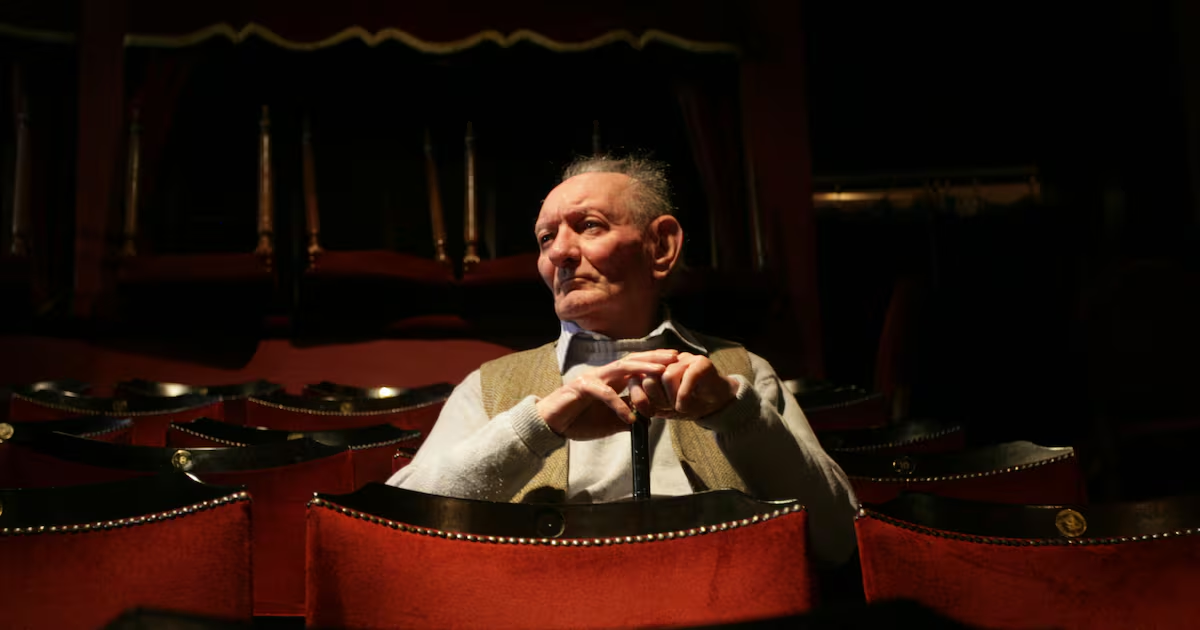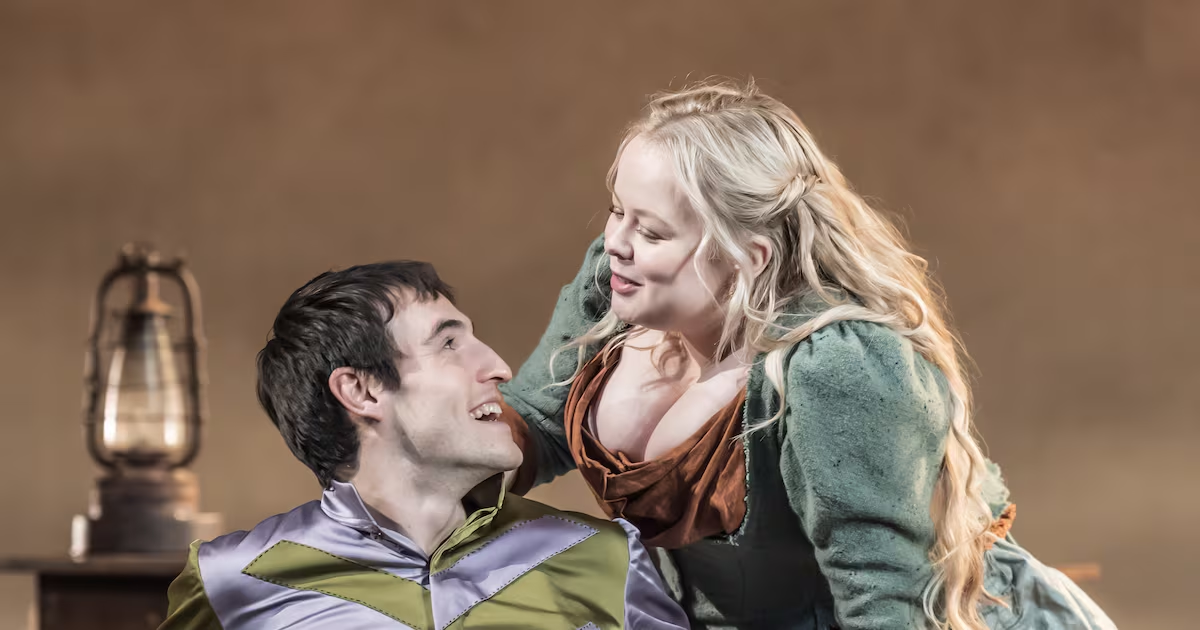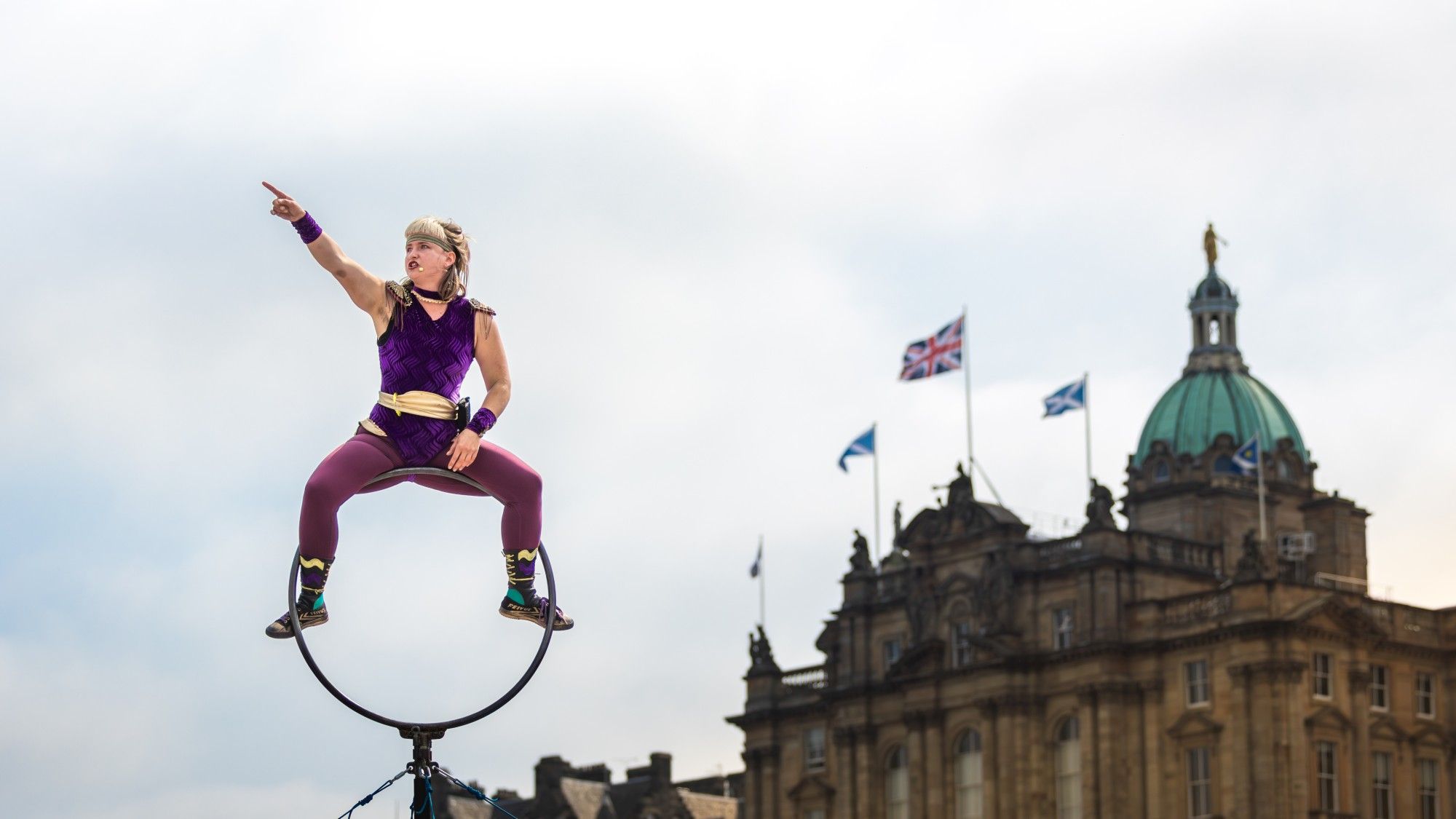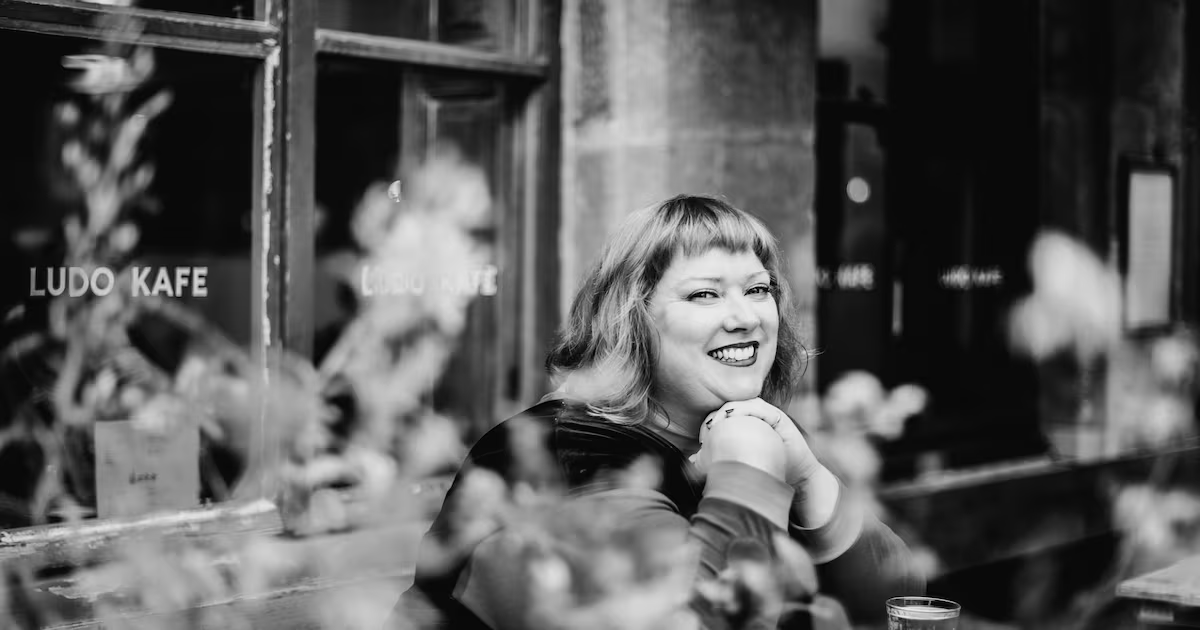
Róise Goan still remembers her first experience of theatre. She was 10, standing in a haze above the audience at Project Arts Centre, in Dublin, solemnly reciting the names of Japanese technology companies.“‘Yamaha. Mitsubishi ...’” she says, laughing. “I was just staring into the mist saying all these manufacturing companies.”The experimental production, directed by Ray Yeates in 1991, cast Irish-speaking children as ghostly memories from a summer in the Gaeltacht. Goan, who grew up in a family of musicians, had landed the role almost by accident simply because the company was looking for children who spoke Irish.She barely understood the play, which was expressing a nascent form of our anxieties about technology and what would become the internet. “I didn’t really know what I was doing,” she says. “But I liked the weirdness. I knew I was part of conjuring something intangible. That was incredibly exciting.”She went home determined to do it again, pestering her parents until they agreed to drama classes.The career that followed hasn’t moved in a straight line. Before taking over Dublin Theatre Festival, last year, Goan worked as a writer, director, producer and television writer, often all at once. At 27 she became director of Dublin Fringe Festival, where she began to think about programming as a creative practice in its own right.“I realised that programming was this interesting space of dialogue between artists and audiences. That grew out of a desire to create better conditions for artists to make better work. It wasn’t something I’d set out to enjoy, but it became the main thing. Everything I’ve done since has somehow come back to that.”Her job, she says, isn’t simply choosing productions she likes; it’s making connections: between artists and audiences, between one show and the next, between Dublin and the wider world.“The world feels so fractured now, and there’s so much competing for our attention. I love the creative challenge of finding ways to tell people, ‘This might capture your imagination,’ ‘This might help you find community,’ ‘This might connect to something you’re already thinking about.’ There’s something about being a connector that I really enjoy.”Her guiding question: “What’s the most exciting theatre being made in the world right now, and how can audiences experience it over 18 days in Dublin?”Dublin Theatre Festival, which has been running since 1957, has always been shaped by the world beyond the stage. In its first year Samuel Beckett withdrew his work in protest at censorship; later editions charted the changing preoccupations of a nation. [ Samuel Beckett vs Archbishop McQuaid: Why an infuriated Nobel laureate withdrew his play from Dublin Theatre FestivalOpens in new window ]Goan is acutely aware of that inheritance. “Each programme becomes a snapshot of its moment,” she says. Some of the themes she has noticed coming to the fore this year are about power and identity. Organised into thematic strands rather than genres, Dublin Theatre Festival 2026 moves between international premieres, Irish work and fresh takes on the theatrical canon.One of its defining strands, The Troublemakers, brings together artists questioning inherited systems of power through different theatrical languages. Dublin Theatre Festival 2026: Tanz, by Florentina Holzinger. Photograph: Nada Zgank Tanz, by the Austrian choreographer Florentina Holzinger, arrives in Dublin for the first time. Framed as a dance class led by the renowned Beatrice Cordua, the first ballerina to perform The Rite of Spring nude in a German opera house (she died last year but was performing in Tanz in her 80s), the production follows an all-female cast ranging in age from their 20s to their 80s as they train in what Holzinger calls action ballet: flying, hanging from their hair, performing stunts. It’s a work filled with nudity, live cameras and motorcycles that dismantles ballet’s obsession with beauty and perfection.Dublin Theatre Festival 2026: The Brotherhood. Photograph: Mayra Azzi Then there’s The Brotherhood, the second part of the acclaimed Cadela Força trilogy, by the Brazilian artist Carolina Bianchi, which arrives in Dublin after making waves across Europe’s major festivals. Drawing together art history, sexual violence and the structures that uphold patriarchy, the work is as interested in the cultural canon as it is in the personal. It asks what comes after #MeToo.“It’s thinking about the actual labour of dismantling patriarchal structures,” Goan says. “How do we rebuild?” For a production dealing with sexual violence, she adds, “there’s something incredibly optimistic about it. There’s a real sense of possibility.”Dublin Theatre Festival 2026: Let Me In. Photograph: Jilly McGrath Irish work sits naturally within that conversation. Esosa Ighodaro’s Let Me In responds directly to contemporary Ireland, exploring the rise in arson attacks on accommodation centres through the perspective of a black Irish woman while weaving in the story of an interracial relationship.Running alongside The Troublemakers is The Matriarchy, a strand offering, in Goan’s words, “a different lens on the world”. At its centre is Rébecca Chaillon’s La Parabole du Seum, or Parable of the Sour, the name of which puns on Parable of the Sower, the novel by Octavia E Butler. Dublin Theatre Festival 2026: La Parabole du Seum, or Parable of the Sour. Photograph: Marikel Lahana Goan groups Chaillon with Holzinger and Bianchi as artists whose work is formally adventurous without ever becoming austere.“They’re so expansive, so spectacular and so uncompromising,” she says. “But they’re also great craic. None of it is worthy. It’s thrilling.”The programme has a good sprinkling of classics, from Tom Creed’s new staging of Sarah Kane’s 4.48 Psychosis to “Irish Icons”, including Druid’s staging of A Moon for the Misbegotten, by Eugene O’Neill, and Refuge, a new play by Deirdre Kinahan.The echoes between productions are intentional. Kane’s writing echoes through Bianchi’s work; Marty Rea’s solo performance in 4.48 Psychosis offers a striking counterpoint to his appearance in Druid’s large-scale Moon for the Misbegotten. Dublin Theatre Festival 2026: Refuge, by Deirdre Kinahan. Photograph: Andreas J Etter The pleasure of a festival, Goan believes, lies not just in individual productions but also in the relationships that emerge between them. “When I talk about creating an eclectic festival, that’s what I mean: building a programme with multiple points of entry.“There isn’t one public and there isn’t one audience. There are many audiences, with different experiences, different interests and different ways of engaging with theatre.”That idea shapes everything from the artists Goan invites to the venues she programmes. Representation matters, she says.“Every day I’m asking: Who is this programme for? Who sees themselves on stage? Who doesn’t? And how do we bridge that?”Some of that work is practical. Every production in this year’s festival includes at least one accessible performance, whether through Irish Sign Language interpretation, captioning or touch tours. Some of it is financial. The festival’s €10 ticket scheme for under-30s, unwaged audiences and freelance artists has been expanded this year, making it easier for people to go to more than a single production.Goan is equally interested in the less obvious barriers. She talks about building stronger relationships with venues beyond the city centre, pointing to Lourdes, at the Civic Theatre, in Tallaght, as a model: a queer musical with an international aesthetic that can also resonate with audiences with experiences of pilgrimage.“I don’t think any festival can be everything to everyone,” she says. “But I do think it should offer something for everyone. Our job is to create a compelling invitation. If you do that, people are often much more adventurous than you expect.”One of the biggest expansions in this year’s festival is the Festival Forum, a programme of talks, discussions and events.“I think audiences want more than a performance,” Goan says. “They want a space to reflect, discuss and connect ideas. Theatre doesn’t end when the curtain comes down.”At a moment when public debate is increasingly flattened by social media and spaces for nuanced criticism are shrinking, she sees the festival as somewhere people can think collectively. The expanded talks programme, made possible with support from Culture Ireland during Ireland’s presidency of the Council of the European Union, is intended to create that space.The festival’s international outlook extends beyond the programme itself. This year Dublin Theatre Festival hosts the annual meeting of the Prospero New European Wave network, bringing together more than 20 of the continent’s leading theatres and festivals. For Goan it’s another expression of the festival’s role as a meeting point between Irish artists and the wider world.“We present international work not just because it’s exciting but because cultural exchange matters,” she says. “We want the world to feel bigger, not smaller.”That belief in encounter runs through everything she says about theatre. In an age of algorithms and personalised feeds, Goan sees the auditorium as one of the few places where strangers still gather to experience something together.“Theatre asks something different of us,” she says. “It asks us to sit alongside strangers, encounter ideas we may not agree with and experience something collectively.”Before the pandemic, Goan says, that sense of collective experience was easy to take for granted. Now it feels fragile, and all the more precious for it.What’s happening on stage is only part of the event. Goan has become increasingly aware of the audience itself: the ripple of laughter, someone crying a few rows away, the tension when an entire room falls silent, even the occasional person getting up and leaving. Those reactions become part of the performance. “Anything can happen,” she says. “And that’s the magic.”Ruth Negga, Blindboy and Xnthony: More from the line-upDublin Theatre Festival 2026: Ruth Negga stars in Radio Bette. Photograph: Mitchell Polonsky Radio Bette, with Ruth NeggaThe Irish Oscar nominee collaborates with the New York-based Goat Exchange on the world premiere of Radio Bette, inspired by a rare rehearsal recording of a 1951 Bette Davis radio broadcast. Gaiety TheatreAnimals, adapted from BlindboyDan Colley adapts the short stories of Blindboyboatclub in what’s billed as a riotous and kaleidoscopic world premiere. The cast includes Emer Dineen and Pat Shortt. Abbey TheatreA Moon for the Misbegotten, staged by DruidDruid presents Eugene O’Neill’s sequel to Long Day’s Journey into Night, as part of its Strange Country: Ireland in America season. Gaiety TheatreTestament, by Tarik O’Regan and Colm TóibínIrish National Opera stages a new opera by Tarik O’Regan with a libretto by Colm Tóibín, adapted from his novella The Testament of Mary. Gaiety TheatreDublin Theatre Festival 2026: Cyclone. Photograph: Patricio Cassinoni Cyclone, by Louise LoweAnu’s new immersive production pieces together the untold story of a man who left his mark on Dublin forever. 1 Railway CourtTanz, by Florentina HolzingerThe choreographer, director and performance artist makes her Dublin debut with a visually spectacular work that pushes the boundaries of dance and performance. O’Reilly TheatreLa Parabole du Seum/Parable of The Sour, by Rébecca Chaillon After bringing the sell-out Whitewashing to the festival in 2025, the acclaimed French theatremaker returns with La Parabole du Seum, an ambitious new work that fuses science fiction and performance to explore resistance, community and hope. Project Arts CentreThe Brotherhood, by Carolina BianchiThe Brazilian theatremaker Carolina Bianchi explores masculinity, power and the systems that perpetuate violence against women. O’Reilly TheatreLourdes, The Musical!, by XnthonyThe company behind Oliver Cromwell Is Really Very Sorry stages an irreverent musical “packed with holy bangers and emotional belters”. Civic TheatreHeroes of Tomorrow, by BrokentalkersDublin Theatre Festival 2026: Heroes of Tomorrow. Photograph: Ste Murray A meditation on art, power and protest. Project Arts Centre Let Me In, by Esosa Ighodaro Explores the difference between being welcomed and truly belonging in today’s Ireland. Dublin Municipal Theatre, Smock Alley Zinc, by Dead CentreThe company return to the festival with the Irish premiere of this coproduction, exploring borders, bodies and the desire for the natural resources they create. O’Reilly TheatreDublin Theatre Festival 2026: Rebellious Hope. Photograph: Luca Truffarelli Rebellious HopeCompany Philip Connaughton and Once Off Productions bring together seven dancers aged 46 to 86 with the composer and musician Mel Mercier for a live performance “charged with urgency and defiance”. Project Arts CentreDignityIn a reimagining of the deaf playwright Teresa Deevy’s radio play, Amanda Coogan, with Lianne Quigley and Alvean Jones, and Dublin Theatre of the Deaf, invite audiences to follow bodies, movement and sign as they reveal what happens beyond the reach of sound. Project Arts CentreTheatre for ChildrenDublin Theatre Festival 2026: Pram People. Photograph: Theresa Harrison This year’s programme presents two outdoor experiences: the Irish premieres of Bees (National Botanic Gardens) and Pram People (location to be announced) by the Australian company Polyglot Theatre, in partnership with the Ark.Dublin Theatre Festival runs from Thursday, September 24th, until Sunday, October 11th
‘What’s the most exciting theatre in the world, and how can Irish audiences experience it?’
Róise Goan, the head of Dublin Theatre Festival, on the themes and values behind the upcoming 2026 edition
2,077 words~9 min read