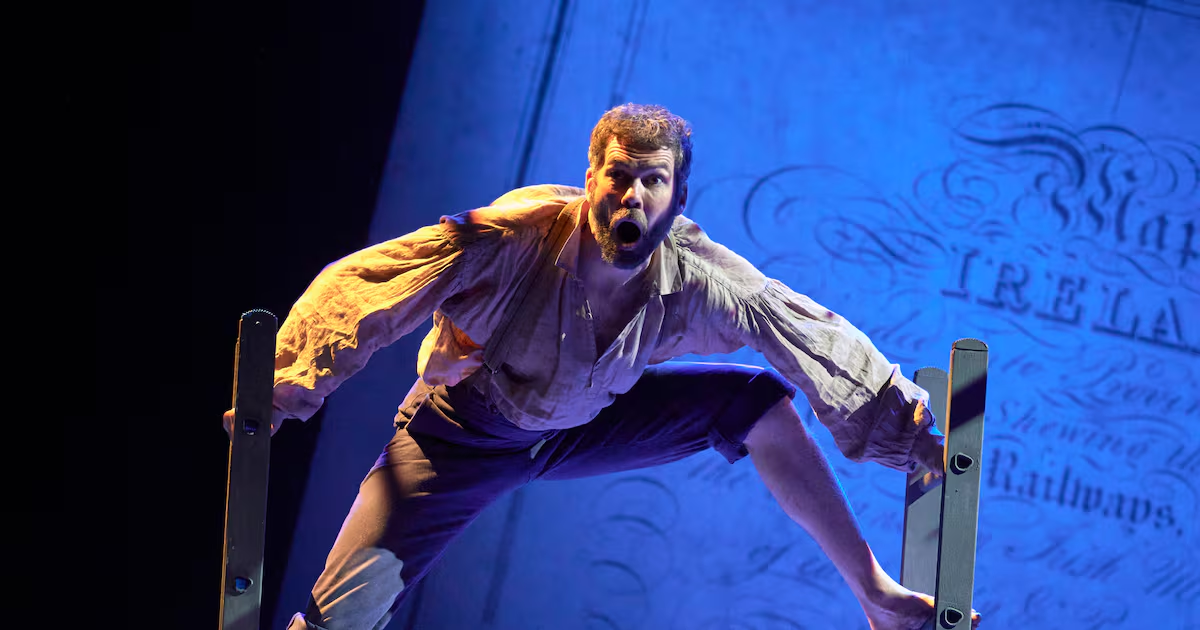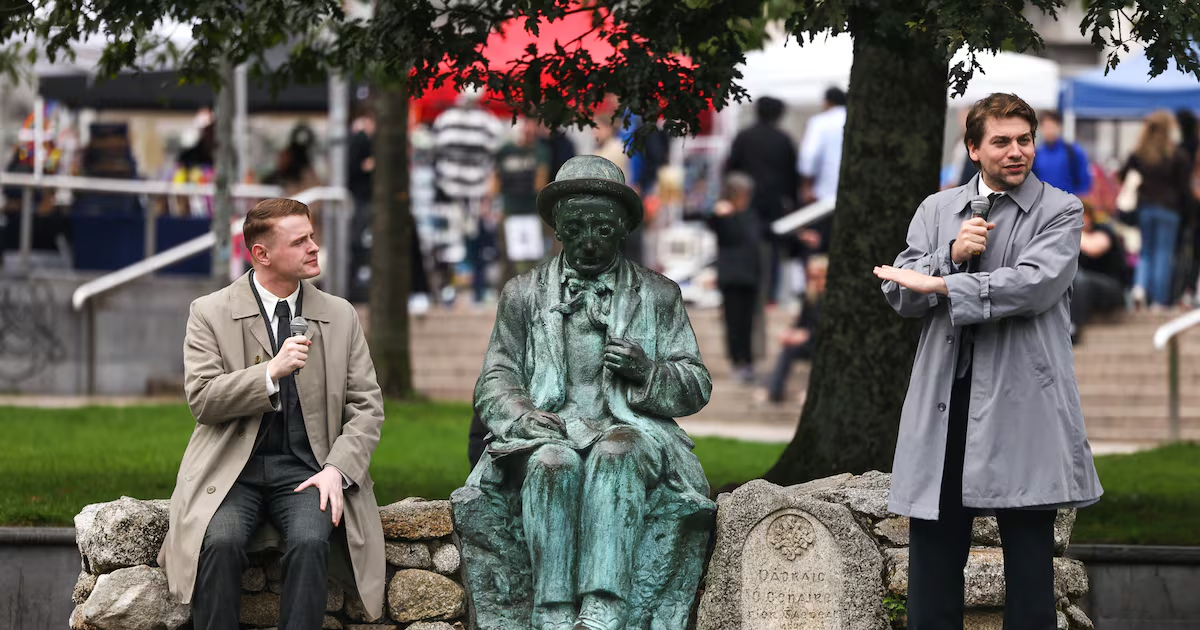
PádraicínEyre Square to Spanish Arch, Galway★★★★☆ In an era of overtourism, the arrival of another tour group clogging busy streets may represent an irony: is the best way to discover a city’s culture really to block its arteries?There is a sense in Pádraicín, Brú Theatre’s sublime promenade, that passersby are only looking at the surface of things. We gather at the Festival Garden on Eyre Square, resembling yet another tour group donning wireless headsets, and stumble into a 1960s campaign to relocate a statue of Pádraic Ó Conaire, a writer whose feather-ruffling realism ran contrary to the romanticism and clericalism of the Gaelic Revival. “People love this little statue,” says a patronising journalist, who doesn’t go into detail about Ó Conaire’s prose.If Ó Conaire has been belittled or derided – his statue has been vandalised at least twice – a more respectful and protective voice comes from a present-day street performer (Raymond Keane), for whom the city occasionally resembles a sound stage inhabited by Ó Conaire’s characters.That becomes the conceit of Pádraicín’s directors, James Riordan and Rodrigo Pardo, as they shuck free Ó Conaire’s characters from his prose and send them scattering through the city. We join the young emigre (Fionnuala Doyle Wade) of Nóra Mharcais Bhig, a culture-rattling short story from 1909, in a liberating escape from rural Galway to London that chills into a nightmare of homelessness and alcoholism.“You liked your misery,” Keane’s street performer remarks about Ó Conaire. That too seems to be the production’s note. In a window above a bustling street, the champagne-drinking scenester (Caitríona Ní Mhurchú) of M’fhile Caol Dubh (My Poet Dark and Slender), published in 1918, recalls her encounter with a poet at a party – a dance that weaves through crowds on streets below, in a superb duet by Stephanie Dufresne and Gerard Headley. Pádraicín: Fionnuala Doyle Wade. Photograph: Emilijah Jefremova That short story becomes something more complicated, delving into a secret affair and the poet’s storied past with women, but Brú linger only on its electrifying seduction.Ó Conaire’s realist fiction (which is attracted to sudden, life-changing injuries and changed circumstances) gets acknowledged as a “theatre of the real” in the song of a busker (Eoin O Dubhghaill) whose vision of delighting audiences recalls the maimed circus performer of Deoraidheacht (Exile), the writer’s novel from 1910. That’s an intriguing continuum from the unpredictable, derailing experiences of the world in the writer’s fiction to the city’s contemporary street performers and their blurring of performance and reality. It’s also a mixed inheritance. We see Keane’s street performer question how long he can live and perform in the city, and whether he’ll end up destitute like Ó Conaire. (Like another play this summer, Pool (No Water), Pádraicín is about the excruciating self-doubt of being an artist.)A final scene hears from Ó Conaire’s London-based daughter, who felt something “real” in seeing him located back in Galway. Bru’s production also feels like a revelation, a trip deeper than the city’s many tours. In the din of busy streets, Galway’s artists make reality big and messy. They’re Ó Conaire’s successors.Pádraicín runs from Wednesday, July 22nd, until Sunday, July 26th, as part of Galway International Arts Festival, with performances at 11.30am and 1.30pm each day
Pádraicín review: A sublime tour through Galway, where artists make reality big and messy
Galway International Arts Festival 2026: Brú Theatre’s promenade production sends Pádraic Ó Conaire’s characters scattering through the city
537 words~2 min read