EDITOR’S NOTE: In Snap, we look at the power of a single photograph, chronicling stories about how both modern and historical images have been made.
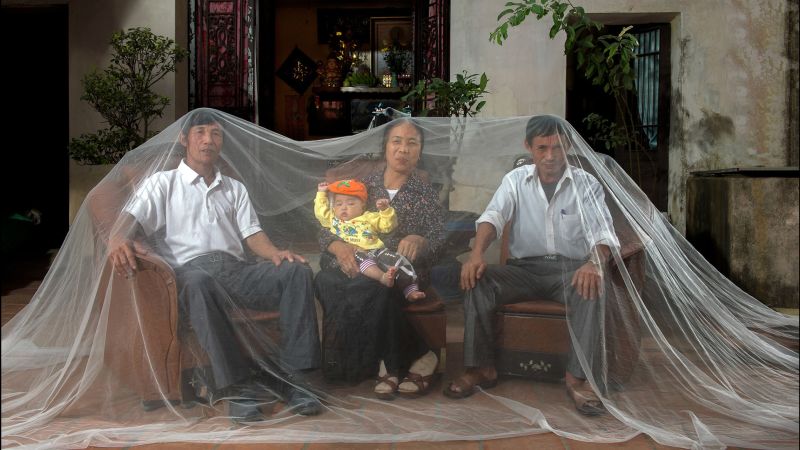
Beneath a diaphanous white veil, four family members sit together on tan leather chairs, the woman in the center holding a baby in her arms. They gaze pointedly at the viewer, their concealed-yet-visible state a potent metaphor. Now in their 60s, they are the children born from a Japanese soldier and Vietnamese wife in the years that Japan occupied Vietnam during World War II. Like others born from these taboo unions, they have dealt with social hardships and the lifelong absence of their father. Though some troops stayed after the war, many families faced forced separation by the mid-1950s, when soldiers were required to return.
That was the case for the family of Lê Thị Xuân and Yoshiharu Shimizu (whose Vietnamese name is Nguyễn Văn Đức), who had two sons and one daughter, pictured above. When photographer Phan Quang took this portrait of the siblings in 2014, the family spanned four generations – including a great-grandchild seated on the woman’s lap. The image belongs to a larger multiyear series, “Re/cover,” which Phan embarked on to tell these families’ stories and completed a decade ago. In each of the portraits, his subjects are draped by the white veil, both a symbol of matrimony and silence. Part of the work is exhibiting at the Rencontres d’Arles photo festival in France this summer and fall.