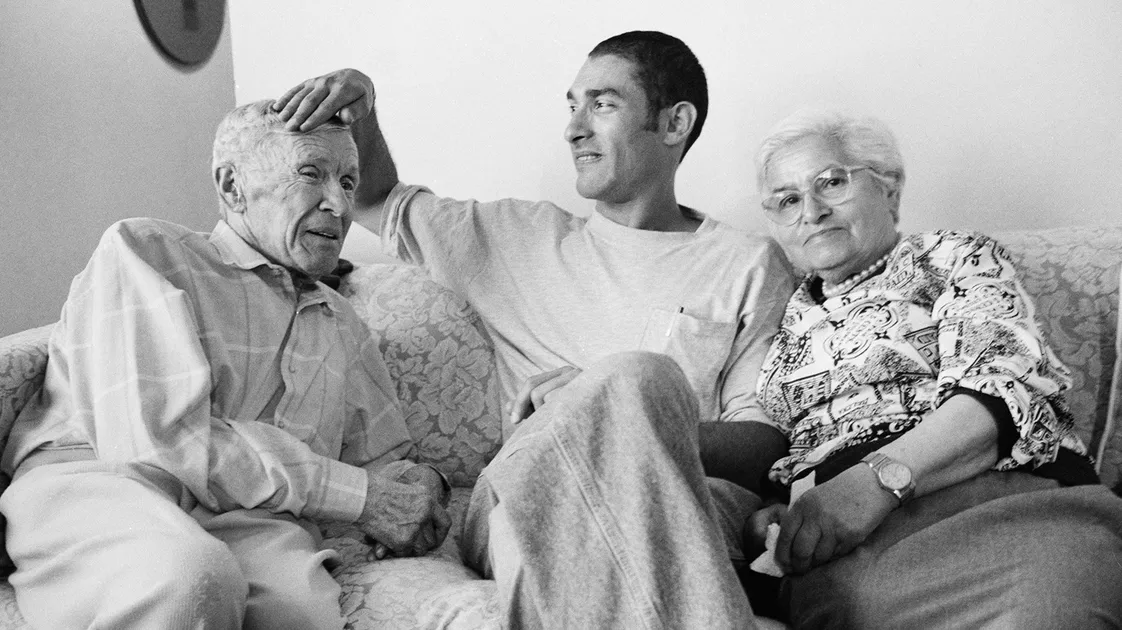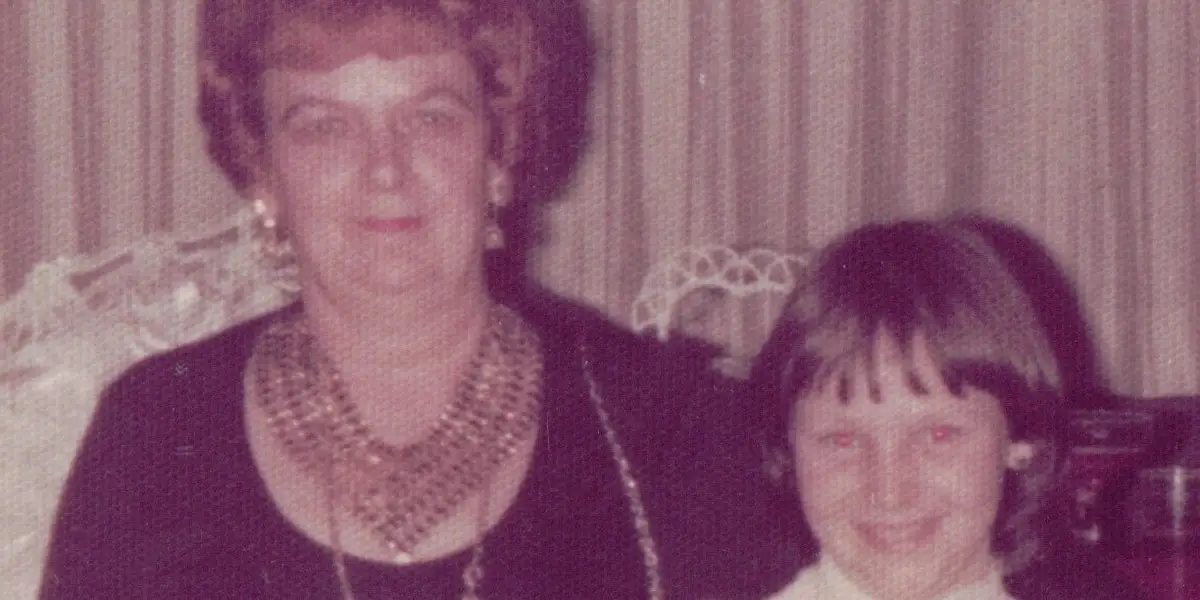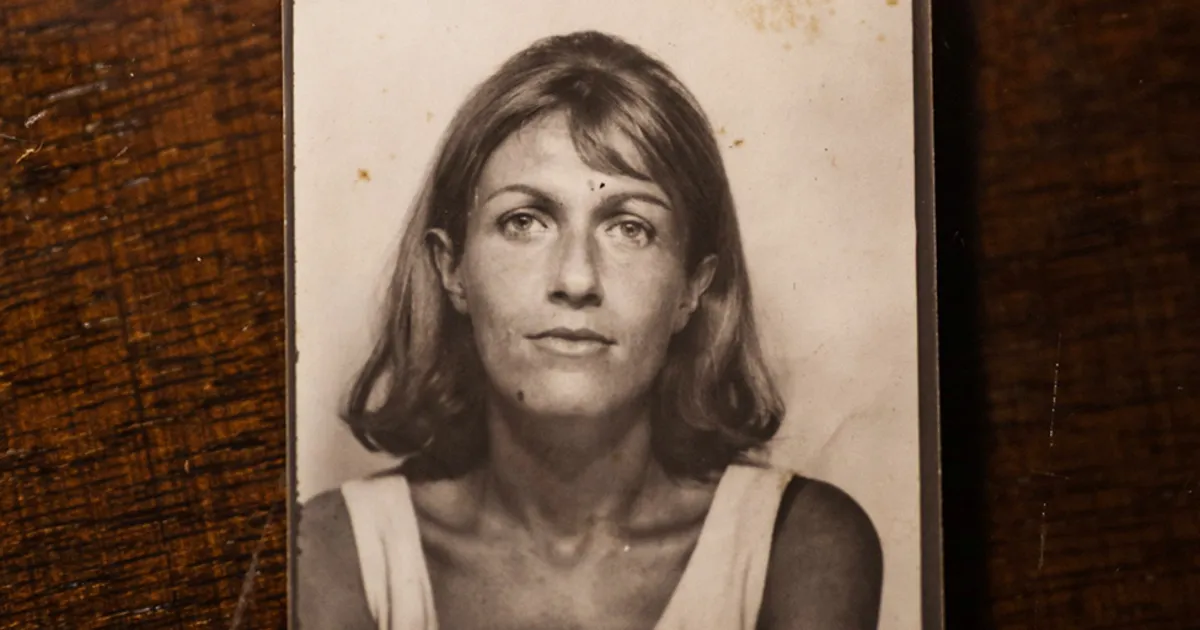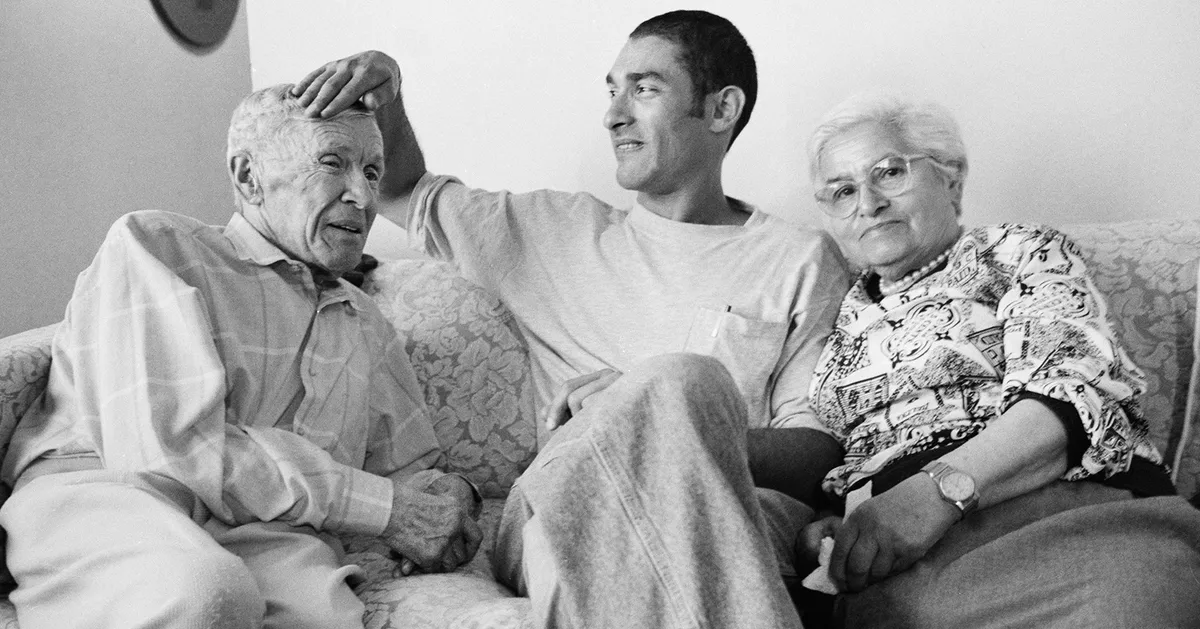
Words never came easily to me, but pictures have always given me a way to hold a feeling without having to explain it. When I was 13, I was diagnosed with dyslexia. Instead of reading “The Great Gatsby” or “The Catcher in the Rye,” I would sneak away and look through National Geographic magazine, finding meaning in images that captured the drama of life in faraway places. During my senior year of high school, I begged my father to buy me a Nikon camera.In college, as I studied the great photographers and documentarians, I began to understand there is no such thing as a detached observer — how I see the world through my lens is how I will express my feelings about it. I learned how to develop my negatives and spent countless hours in the darkroom perfecting my prints. And when life got too big, I would retreat into my ritual: load the film, feed the spool, engage the sprockets, pull the lever, press the shutter. A clean, controllable moment.In my photojournalism class, I was given an assignment to take a portrait of someone that I was close to. My father suggested my grandparents. “They lived through tragic times,” he said. “You can learn something from them — maybe something about love.”Tsipachka — or Tsipa, as my father endearingly called his mother — was a very short, sweet woman with soulful eyes and large apple cheeks. Her oversize glasses made her look like an adorable frog. To me, she was a tight little fist of unconditional love. Tsipa had one simple rule when I came over for lunch: “You sit and eat, and I’ll ask a few questions.” It was a soft, loving Jewish interrogation. As I ate her matzo ball soup — my favorite dish of fluffy floating matzo balls with shredded chicken and soft veggies — she would begin with, “So, how was your day?”“Good, very good,” I said, knowing her matzo ball truth serum would break my will to hide the truth. “Really?”“Yes...” “So, you are over her now?” she asked.“Hmmm, almost. She really broke my heart. ... It’s complicated.”“Daneechka, love needs to be earned. It takes commitment and work. When you argue, you need to work it out,” she told me. “If she didn’t want to work on it, she was not committed to the relationship. It’s a good thing she left. You deserve better.”Then Tsipa placed a few dark almond nougat See’s candies on the table.“This will help you forget her.”When I arrived to take my grandparents’ photo, Tsipa was toiling away in the kitchen while my grandfather, Volf, sat on the couch in the living room, singing Yiddish songs into an old tape recorder. He loved to sing and tell jokes. It was a way for him to cope with a childhood injury that over the years had deformed him into a hunchback. Volf turned everything into a joke, including the unspoken theme of his arranged marriage to Tsipa, which occurred after both of their spouses and children were killed during World War II. “We went through fire and water, and copper pipes!” he would proclaim. Later we learned the tape recorder was his way of trying to hold on to his memory, which was being eaten away by Alzheimer’s. As I loaded the film, Tsipa walked over and sat next to Volf. I asked them to scooch a little closer as I focused my lens. Then I turned to Tsipa and asked, “You’ve been living with Volf for 49 years — do you love him as your husband?”“She’s my life!” proclaimed Volf. Tsipa placed her hand on his knee to quiet him.“What is love? You can only love once in your life,” Tsipa said. “My first husband carried me in his arms and kissed me. I had a different life. With grandfather, we lived a very difficult life. We lived through fire and ice together. One thing that you must learn is that romance comes and goes, maybe it comes back, maybe not. In the end it’s all about conscience and commitment to each other. I show my love by cleaning and cooking for him.” “So, Grandpa, how do you show your love to Grandmother?”“I eat. When she calls, I go eat for her.”They both laughed. Volf put his arm around Tsipa and kissed her on the cheek.Volf and Tsipa, 1996.Photo by Daniel GamburgOver the years, as Volf’s Alzheimer’s worsened, Tsipa cared for him with steady tenderness and unwavering commitment, and I continued to film and photograph their story. At the dinner table, Tsipa would recall her childhood, her first love and the war. As we talked, I realized that these conversations became a kind of balm for the trauma that she experienced. Volf, the author, and Tsipa, 1997.Photo by Jona FrankAnother year passed and Volf’s condition worsened. My father and sister came over and lowered my grandparents’ bed. We all took turns shopping and cleaning, but Tsipa insisted on handling the burden of cleaning, dressing and feeding Volf herself, until she couldn’t anymore.One day at Safeway, Volf wandered out of the store and Tsipa couldn’t find him. Hours later, the police located him and brought him to the station. They found my father’s business card in Volf’s jacket pocket. When my father brought him home, Volf broke down crying. He wanted to find his way back on his own but couldn’t remember the address. I had never seen my grandfather cry. He was embarrassed and afraid, and I felt a deep sadness as I thought, this is the beginning of the end.My father tried to lighten the air. He asked Volf if he’d like to have his picture taken, to help his memory. Volf said nothing. He stood there looking off into space, lost in thought. As I focused my camera, my dad stepped into the frame and put his arm around his father. “Papa, look at the camera...”The author's father, Michael (left), with Volf, 1997.Photo by Daniel GamburgWhen Tsipa needed a break, we took Volf to a special-needs adult daycare center.Volf at senior daycare, 1997.Photo by Daniel GamburgAt first, Volf just sat there, next to the other patients, most of whom were in a somewhat catatonic state. During one of these visits, the song “Jitterbug” came on. One of the nurses reached out her hands and asked Volf to dance. He grabbed her hands and she pulled him out of his chair, and they began to sway to the music together. For those few minutes, the music provided an alternative pathway, bypassing the damaged areas in his mind and restoring his sense of humor and play. It was a joy to witness. Volf at senior daycare, 1997.Photo by Daniel GamburgOn another day, when the adult center was closed and Tsipa needed a break, my father watched Volf while doing his taxes. To make sure he wouldn’t wander off again, he placed two brass bells around Volf’s neck so he could hear him from a distance.Volf watched me load my camera. My father looked up from his numbers and said, “Memory is everything. It shapes our stories and gives us meaning — we are nothing without our memories.”Michael and Volf at home, 1997.Photo by Daniel GamburgI heard the bells ringing on the backyard porch. I stepped out and found Volf staring up into the sky. He closed his eyes as though he was trying to remember something.Volf at home, 1997.Photo by Daniel GamburgA few months passed and Tsipa’s and Volf’s younger son, David, made an impromptu visit. My uncle worked in Moscow and visited us in San Francisco a few times a year. Unlike my father, who took on the caretaker role and witnessed Volf’s rapid decline, his younger brother didn’t expect his father to not recognize him. When David approached his father, Volf did not react or greet him.“Papa ... papa?”He tried to make eye contact, but Volf did not look at him. Then David did the only thing he could — he reached out and kissed his father on the cheek, and then held him close for a long time. The author's Uncle David (right) with Volf, 1997.Photo by Daniel GamburgEventually, Volf reached the stage where he needed to be in an assisted living facility. Even though Tsipa knew he had already forgotten who she was, she insisted on visiting him as often as possible, especially at dinner. I drove her there and helped her feed him. With every spoonful she repeated her mantra: “Love is conscience and commitment, conscience and commitment...”Tsipa, Volf and the author at the Jewish Home for the Aged, 1999.Photo by Daniel GamburgMy father joined us on one of our visits, and I asked him to take a photo of me with Tsipa and Volf. Peering through the viewfinder, he called out to his father in Yiddish, “Zeh nor, zeh nor!” (Look here, look here!) But Volf couldn’t hear him. He looked upward, mouth slightly agape.Then my father asked to switch places and have me photograph him with his father. As I advanced the film and framed them, my father bent down to Volf’s wheelchair.“Zeh, zeh…” (look, look…) he said, then placed his hand on Volf’s chest to prop him up for the camera, but he would not budge. Volf’s hump had calcified his spine into a permanent curve. After a few attempts my father turned toward my lens and forced an unconvincing smile.Michael and Volf at the Jewish Home for the Aged, 1999.Photo by Daniel GamburgBy then I knew that when I photographed Volf, he had no feelings about what I was doing. Alzheimer’s had taken him away. But I did not feel comfortable photographing him in the final stage, shriveled in a hospital bed, unable to consent or to refuse. So, when my father called and asked me to join him for the final visit, I did not bring my camera.When we reached Volf’s room, my father paused, tapped lightly on the door, and then pushed it open. Volf lay under a white sheet, eyes closed, his shrunken body curled in on itself. My father placed a hand on his shoulder and spoke softly in Russian. “Papa ... do you hear me?” Volf’s eyelids opened slowly, revealing the crystal, aqua blue eyes I remembered from childhood.My father’s voice was stern but wavered at the end of each sentence. He traced Volf’s left arm down to his bony, cold hand and gently gripped it.“Papa, do you understand me? If you understand, squeeze my hand...”Volf stared blankly at him. My father knew it was futile. Watching this exchange between my father and his father, who did not recognize him, was uncomfortable and painful. I felt like I was intruding on a very private moment. I realized that I was not looking at my father, but at someone else’s son — just a kid who was searching for a way to mourn the inevitable death of his father.My father released Volf’s hand, tucked it back under the sheet, and stroked his silver hair with his fingers. Then he turned around and we quietly left.That night we had dinner at our family’s favorite Chinese restaurant. Over a plate of potstickers, my father tried to lighten the mood by recalling a story about his father. When my father was 3, some boys who were peeing next to him at the urinal pointed at his penis and laughed and called him names.Volf gently sat him down and explained, “Mishachka, you must understand, because we are Jewish, we are circumcised. It has a very special meaning. You and I have a tulip. It’s like a beautiful flower and they are just very, very jealous!”We both laughed. Then my father’s phone rang. He flipped open his Motorola and stepped outside into the rain. Through the window, I watched the dripping rivulets distort his face as he pressed the phone firmly to his ear. He hung up and came back in.“That’s it,” he said. “Volf has left us.”He sat down and we drank tea in silence, staring out the window. The rain had stopped.Michael, age 2, with Volf in Jurmala, Latvia, 1948.Photo courtesy of Daniel GamburgTsipa had prepared herself for this moment. At Volf’s funeral she stood over his grave as the rabbi recited the Kaddish. When he finished, she leaned forward and tried to jump in. My father grabbed her and held her tight as she cried.A year after Volf died, Tsipa was admitted to the same home. For the next few years, she buried herself in helping others, making sure that her neighboring patients were getting their needs met. She would sit patiently and hold her friends’ hands as they grieved the loss of their loved ones. Tsipa at the Jewish Home for the Aged, 2000.Photo by Daniel GamburgAnother year had passed and Tsipa had turned 90. This time Parkinson’s had tightened its grip on her, a small tumor had formed in her breast, and she was losing her fight with pneumonia. In her final days, she begged my father to tell the doctors to stop treatment. She was not afraid of death. She was ready to let go. She had lost her first husband and two young boys during the war, outlived all six of her siblings, and finally lost Volf — the man with whom she climbed out of despair to create a new family.On May 11, 2003, my father called and asked that I go see Tsipa.“This is it. Probably your last opportunity to say goodbye,” he said, his voice heavy. I was 33 and in my sixth year of documenting my grandparents’ story. I didn’t want the story to end, but now it had to.Unlike Volf, Tsipa was fully conscious and aware of my photography. When I asked her, yet again, if she minded, she said, “From beginning to the end, Daniel, you have my consent.”I dreaded this day. As I walked down the familiar mashed-potato-smelling hallways of the retirement home toward Tsipa’s room, past paintings of Chagall’s flying Jewish couple, I thought about the long journey from that first portrait — Volf’s kiss on Tsipa’s cheek — to these final moments. By now, I had graduated from film school and was about to complete my master’s program. Film had become a serious part of my identity. I was inspired by photographers like Walker Evans, Robert Frank, Garry Winogrand, and my favorite of all, Dian Arbus, who made me really think, see and feel the world around me. It was one thing to take photos of other people’s lives and find meaning in their drama. This time it was my Tsipachka. Maybe the way for me to cope with the shock of losing the one person who had wrapped me in unconditional love was to filter it through my lens. As I loaded my camera, Susan Sontag’s words crept through my mind: “Photographers ... are also — wittingly or unwittingly — the recording-angels of death...”When I entered Tsipa’s room, my father was sitting by her bedside. Her eyes were closed as she drifted in and out of a morphine sleep. I peered through my viewfinder, wound the shutter, focused and took a photo.Michael and Tsipa at the Jewish Home for the Aged, 2003.Photo by Daniel GamburgAs I looked through my camera, I began to remember our conversations in Tsipa’s kitchen. Her childhood stories came to life. How, as a little girl, she ran after her two sweet, shaggy dogs, Bobeek and Shareek. How she tended to the geese and milked the cows. How she laughed and cried with her brothers and sisters, and how she fell in love with her first husband, Yakov, and celebrated the birth of her two sons, Misha and Sasha. How she played with them and sang lullabies while patting them on their backs until they fell into sweet dreams. Then, the war, and the death and the heartbreak of losing both of her sons and husband, and searching for whatever was left of her shattered family across the never-ending Soviet landscape. How she must have struggled to glue back together her life through an arranged marriage with Volf, who was also grieving the loss of his family, and then, the miracle that kept her sane — the birth of my father, her son Misha, who was now 58 years old, holding her hand, and listening to her shallow, raspy breathing.Michael and Tsipa at the Jewish Home for the Aged, 2003.Photo by Daniel GamburgMy father leaned in and whispered, “Tsipachka...”Her cheeks had sunk. Her skin was paper-thin. He squeezed her hand a little harder.“Tsipachka...?” he asked again. She opened her eyes and turned toward him.Michael and Tsipa at the Jewish Home for the Aged, 2003.Photo by Daniel Gamburg“Misha. Oh, Mishachka,” she whispered with excitement. Her throat was hoarse and dry from the tube that was pumping liquid out of her lungs.“I saw Yakov, I saw him at the train station — he had a long white beard and stood on the train as it started moving. He stretched out his arm, grabbed my hand and said, ‘Tsipachka, everything is going to be all right, jump aboard.’ He begged me to come with him. He was smiling. It was really him. It was my Yakov.” Then she took a deep breath and stared at my father, in silence.He could tell that she was in pain as he gently brushed her brow with his finger. Then he asked the nurse for more morphine and took his mother’s hand and rubbed her arthritic, knobby fingers.Michael with Tsipa at the Jewish Home for the Aged, 2003.Photo by Daniel GamburgHe leaned in, and they looked at each other in silence. A few minutes later Tsipachka closed her eyes and fell back to sleep. In that moment, watching my father stare at his mother, I felt a deep shame that I was recording all of this, trying to document it with my camera, trying to make it a story. I kept telling myself: Put the damn camera down. Sit next to your dad. Be present. This may be your last chance.But I couldn’t. I finished the roll and quietly left the room. Michael and Tsipa at the Jewish Home for the Aged, 2003.Photo by Daniel GamburgThat was the last time I saw my grandmother. The next day, May 12, 2003, Tsipachka — the kernel of love in our family — boarded that train to join Yakov, her sons, and Volf. When the negatives came back from the lab, I couldn’t bear to look at them. I stashed them in an unnamed cardboard box and tried to forget they existed.Twenty-two years after Tsipa passed, my son was born. We named him Sasha, in memory of Tsipa’s 4-year-old boy who died in the war. Now in my 50s, as I cooed Sasha to sleep in my arms, I could not help but think how I would have loved for him to meet my grandparents. I began to unarchive my photography soon after that. The black-and-white prints were as fresh as the day I had printed them. Every moment frozen by light in the silver halide crystals. Now, those negatives from the hospital visit that I had stashed away became so very important, but I could not find them.I crawled through my basement with a flashlight, opening box after box until the dust coated my hands. Finally, I gave up. Months later, while searching for tax files, I found an unlabeled cardboard box stuffed behind a filing cabinet. I pulled it out in disbelief and opened it to find it filled with 35 mm negatives in their plastic sleeves.I stepped out into the sun, raised the negatives to the blue sky and saw my Tsipachka. There they were, those precious black and white frames. A heavy weight lifted from my chest. The shame had long disappeared. That “recording-angel of death” was just a scared kid who was trying to cope with losing his grandparents.Today, as I hold my son close to my chest, I realize that the cycle of life and death has always been gently tapping at my door — and I have finally found the courage to open it. Photography gave me a way to connect with my grandparents, to savor every moment, to hold them, and to love them. Now, these photos have brought them back to me. After so many excuses and my fear of the written word, I found the courage to write these feelings down, to put together the ineffable puzzle pieces of life into something meaningful: stories and memories I can pass to my son.The author and his son, Alexander (Sasha) Gamburg, Jan. 18, 2026.Photo by Daniel GamburgDaniel Gamburg is a documentary filmmaker, photographer and writer based in Los Angeles. He is the founder of Enlightened Pictures Inc. and co-directed “Eight Nights” with Benjamin Goldman, a biographical documentary short that premiered on The New Yorker Documentary Series. His work has screened at festivals worldwide and been commissioned by the California Science Center. He is currently at work on a memoir. “Put Down That Camera” is his first published essay. You can learn more about him at danielgamburg.com.Do you have a compelling personal story you’d like to see published on HuffPost? Find out what we’re looking for here and send us a pitch at pitch@huffpost.com.
I Kept These Photos Of My Grandparents Hidden In A Box. After 22 Years, I'm Finally Ready To Share Them.
“The cycle of life and death had always been gently tapping at my door — and I had finally found the courage to open it.”
3,551 words~16 min read