EDITOR’S NOTE: In Snap, we look at the power of a single photograph, chronicling stories about how both modern and historical images have been made.
Vibeke Tandberg met her husband at the bar. And the next one. And the husband after that. In fact, she met all 11 of her husbands at a bar in Bergen, Norway.
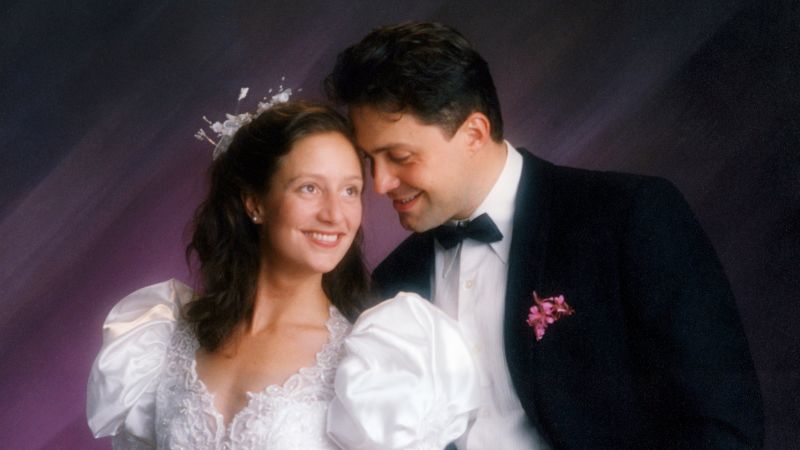
She became a bride in the summer of 1993, with a puff-sleeved gown trimmed in lace in the style popularized by Princess Diana. There was no ceremony, no priest and no guests — just a professional photography studio, a purple backdrop and almost a dozen different grooms.
Tandberg, a prominent Norwegian artist and the subject of a newly opened exhibition at Kode Bergen Art Museum, wasn’t an early pioneer of polyandry. In reality her multiple husbands, although lovely, were fake. She had poached them from the bartop stools of her favorite student drinking hole for a photography series she was working on in her second year at Bergen Academy of Art and Design.
“Bride” began as an exploration of the wedding photography tradition; a genre that tends to flatten female identity neatly into the shape of a white dress. By contrast, Tandberg wanted her version of performed matrimony to be more empowering to women. “I was choosing the men, I was the center of the photograph,” she said during a video call from her home in Bergen. A rotating roster of different men emphasized her “stage position” as the photo’s only constant, she said. Brides were expected, in most cultures at various points in history, to be virginal, pure and dedicated to their husbands. Through her 11 portraits, Tandberg created an inherently subversive character: the promiscuous bride.