Researchers have developed a passive counterweight-and-pulley mooring system for floating PV that automatically tracks water-level changes while significantly improving platform stability. Laboratory-scale testing and numerical simulations showed reductions in surge and sway motions of up to 71.7% and 65.6%, respectively, while achieving a 75% water-level tracking efficiency.
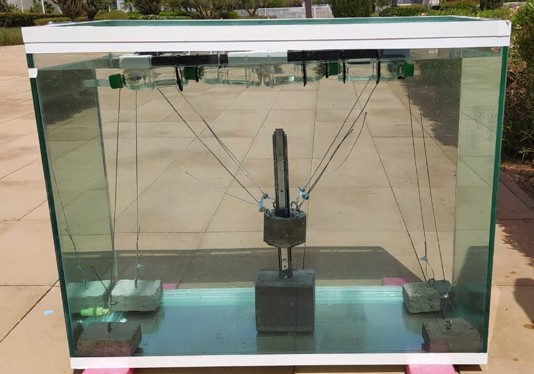
A research team from Morocco has designed a novel mooring system for floating PV (FPV) systems that automatically follows water-level changes while reducing platform motion. The new system, which was numerically simulated and tested on a laboratory scale, is based on a counterweight-and-pulley mechanism.
“FPV systems face two simultaneous mechanical challenges: they must follow water-level variations that can span several meters seasonally, while remaining as stable as possible against wave-induced motion,” corresponding author Nouhayla Sahlaoui told pv magazine. “The novelty of our work lies in a counterweight-pulley passive mooring mechanism that solves both problems in a single, mechanically simple design.”
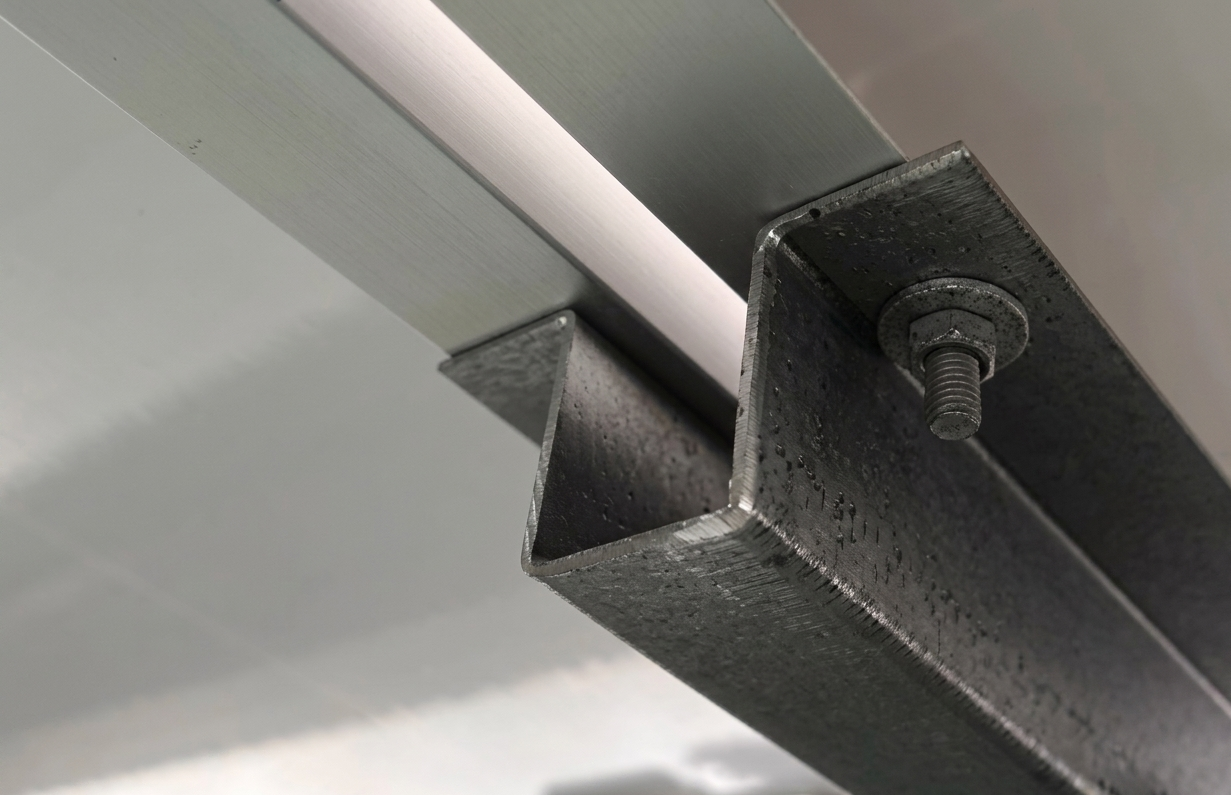
Sahlaoui explained that when the water level rises or falls, the counterweight descends or ascends along a central vertical bar, keeping the platform at the correct depth without any active control or power input. “The same bar acts as a physical stop that blocks the counterweight, and with it the entire platform, from excessive horizontal drift,” she added. “The mechanism is entirely passive: it requires no sensors, no motors, and no external energy, which is a key advantage for the remote, low-maintenance environments where FPV plants are typically deployed.”