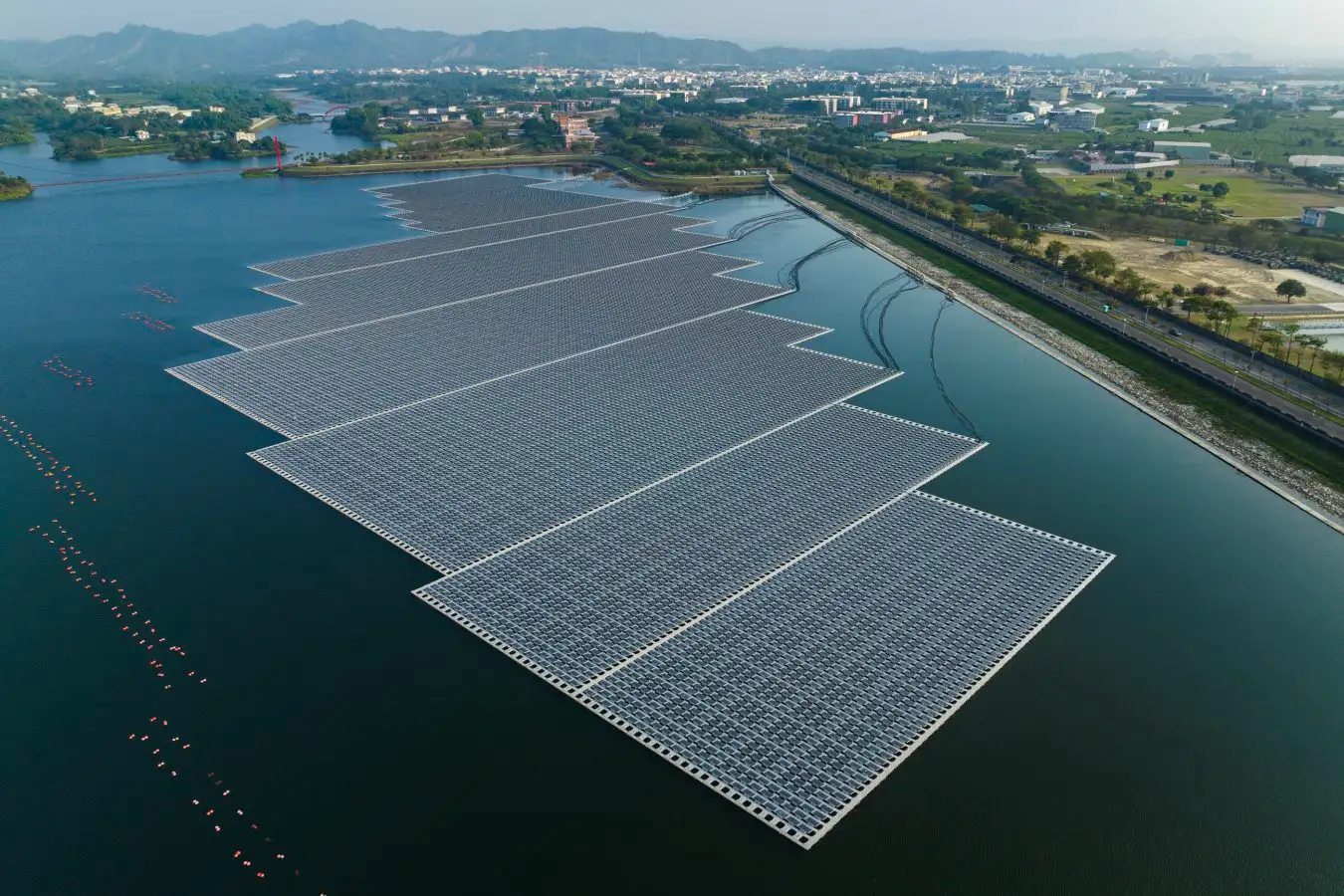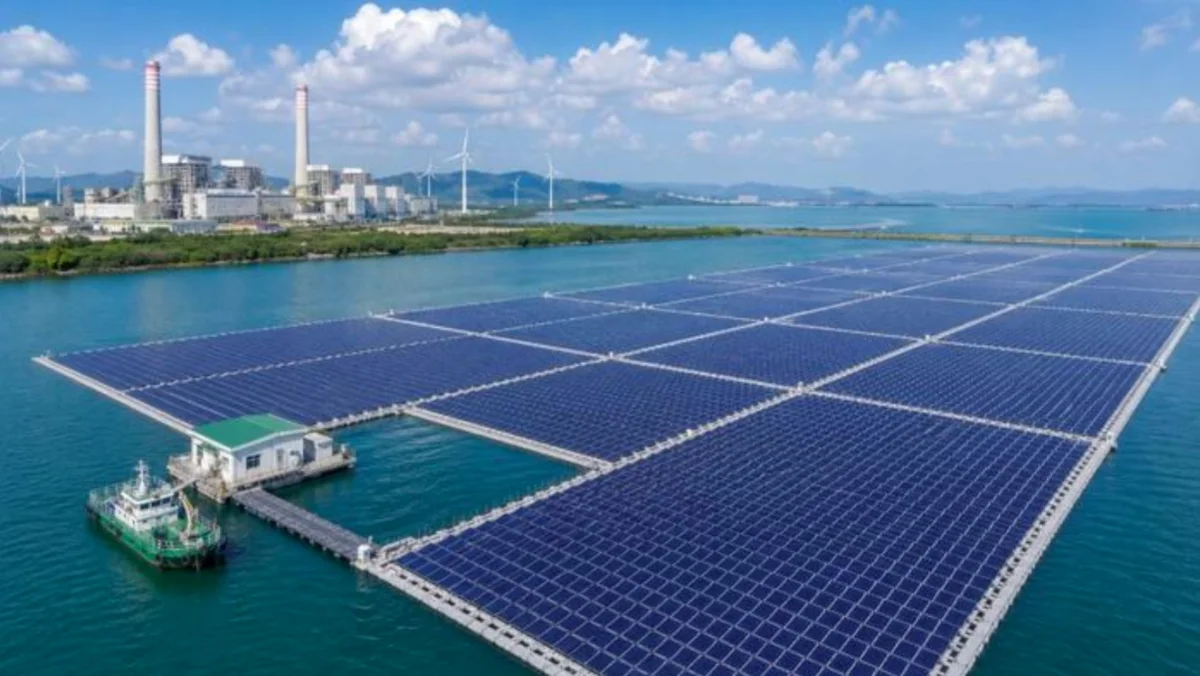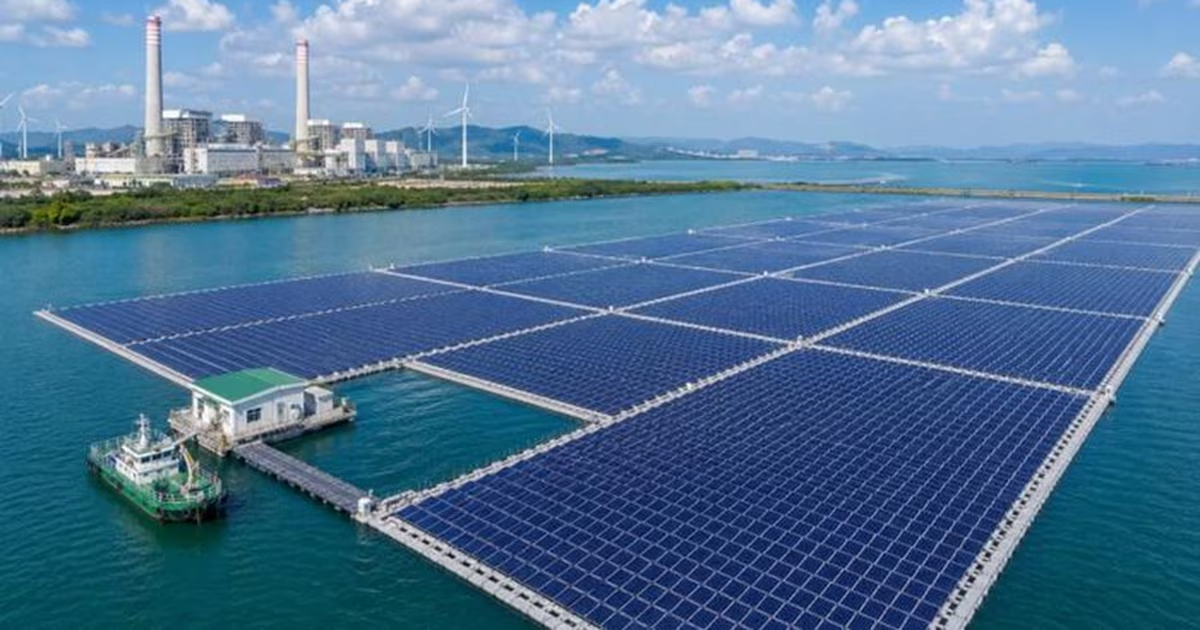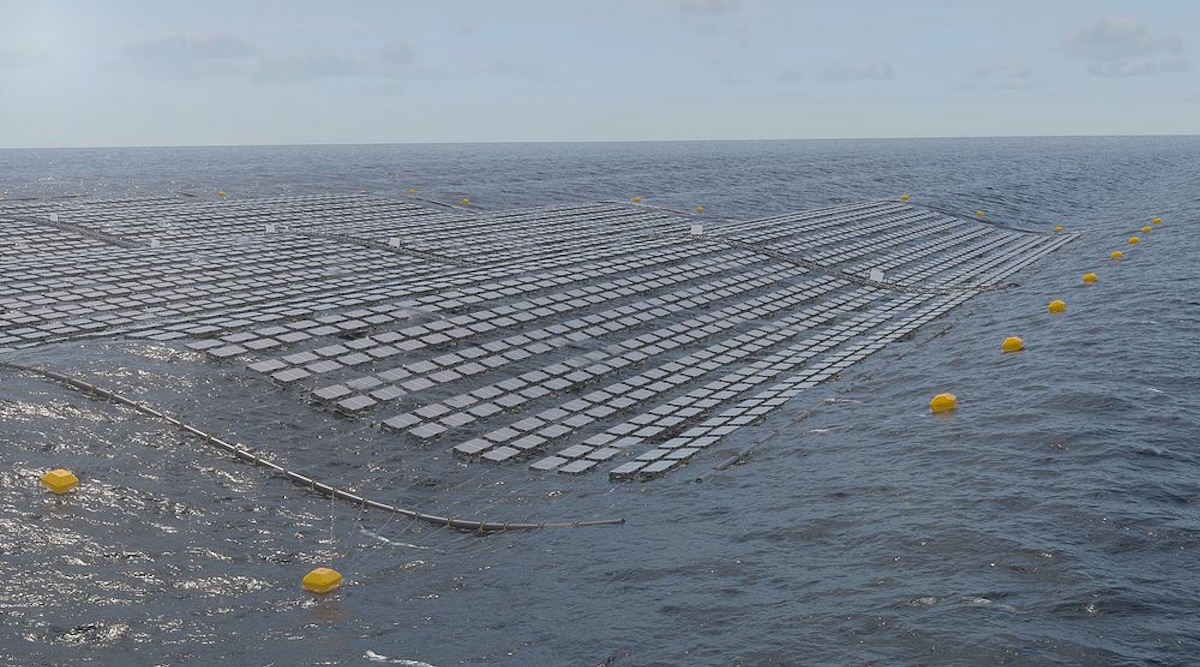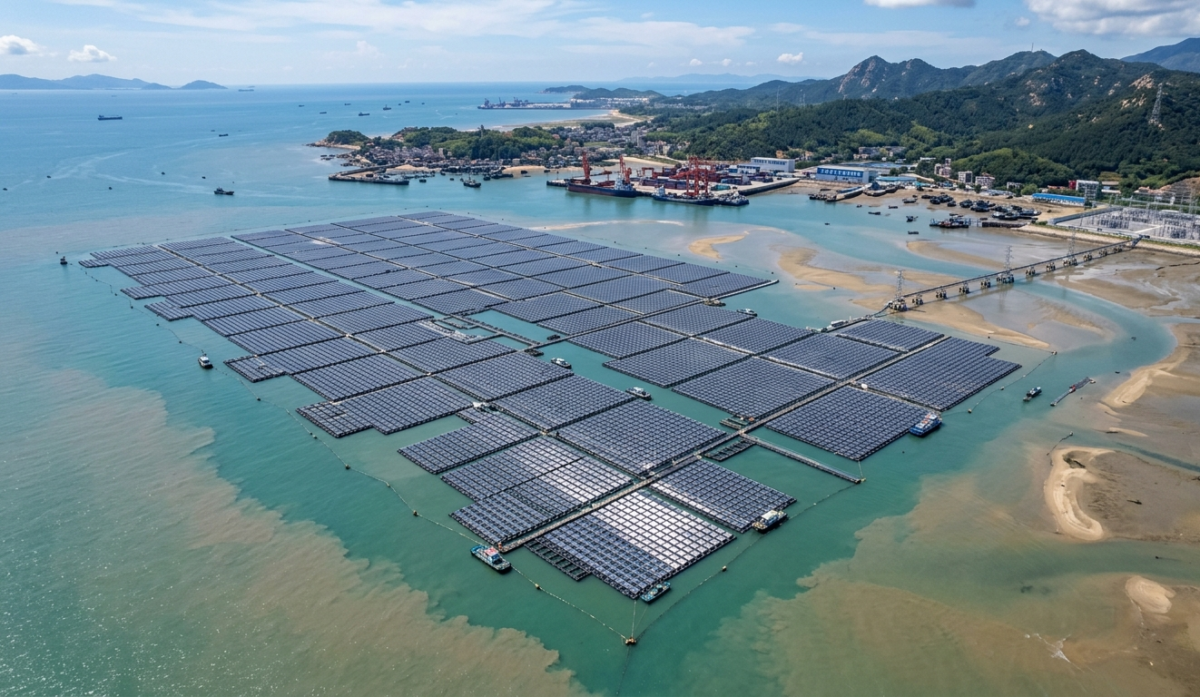
Taiwan researchers compared a 100 MW ground solar plant with a 181 MW offshore floating PV system and found the offshore setup produced about 12% more electricity over its lifetime. They attribute the gain to cooling and intertidal effects, suggesting offshore floating solar is technically viable, although it is currently around 30% more expensive and still faces durability and marine engineering challenges.
May 21, 2026
Researchers from Taiwan’s National Taipei University of Technology have conducted a techno-economic analysis comparing large-scale offshore floating PV plants with conventional ground-mounted solar facilities and have found that offshore installations could achieve 12% higher power generation than land-based counterparts.
The scientists compared a 100 MW ground-mounted facility in Changbin Industrial Park in Taiwan with a 181 MW offshore floating PV project, with the larger offshore capacity used to normalize performance comparisons between systems of different configurations. “This normalization approach enabled a direct comparison of performance metrics — including energy yield, efficiency, and environmental impacts — under equivalent system capacities, while eliminating biases related to differences in project size,” lead author Ching-Feng Chen told pv magazine.