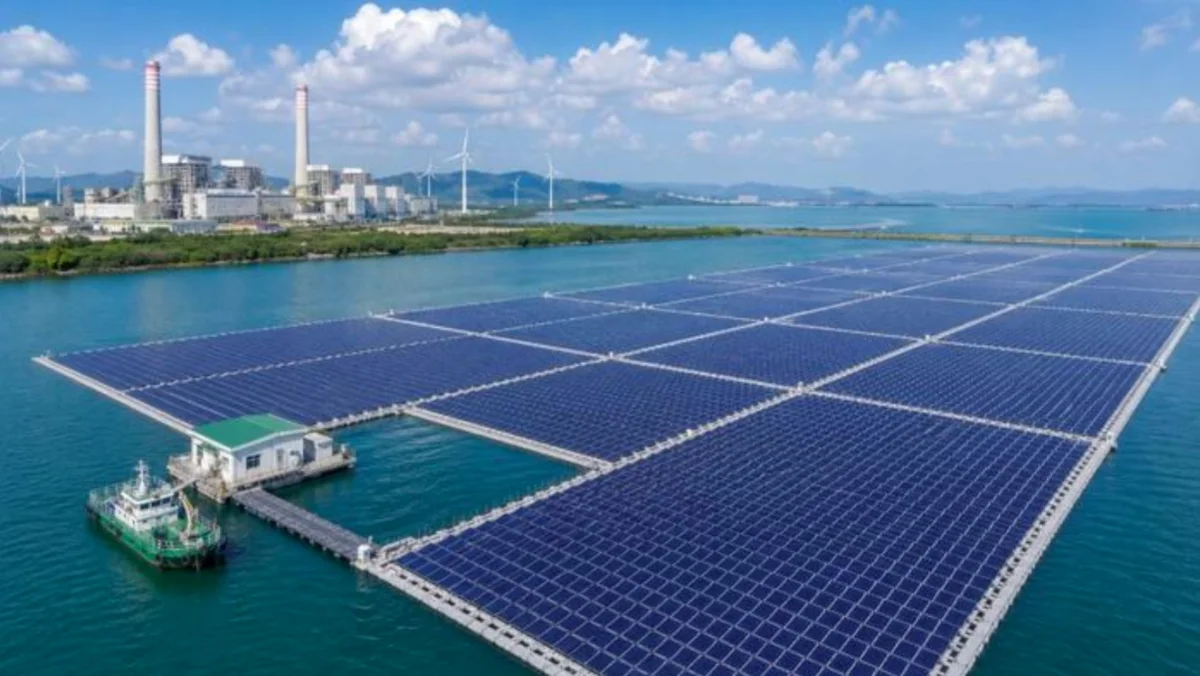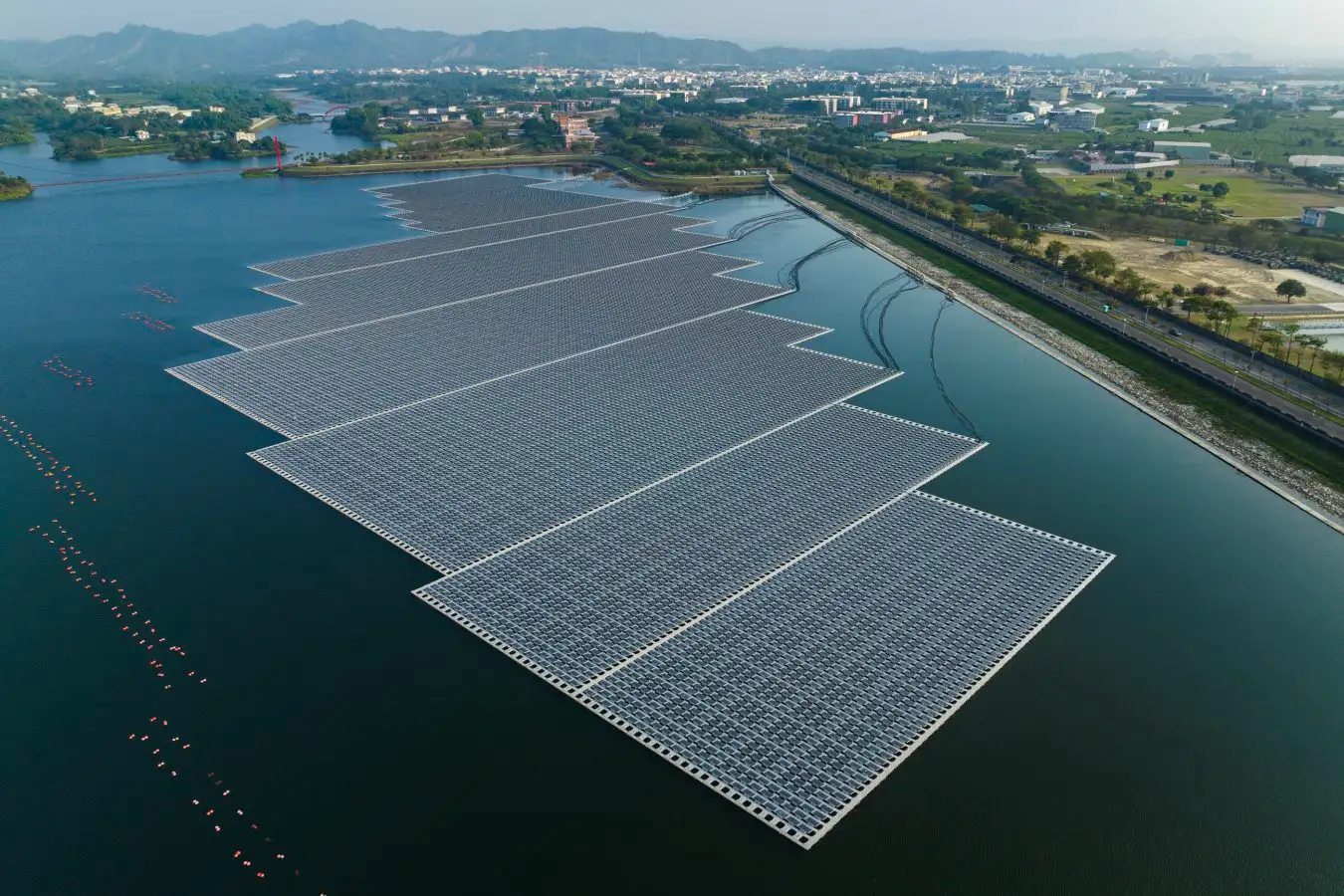
A floating photovoltaic project by Chenya EnergyGetty Images/iStockphoto
The ocean could be the next frontier for the world’s rapidly expanding solar energy industry. That’s the finding of a study showing a floating solar farm off the coast of Taiwan produces more electricity and more profit than a nearby solar farm on land.
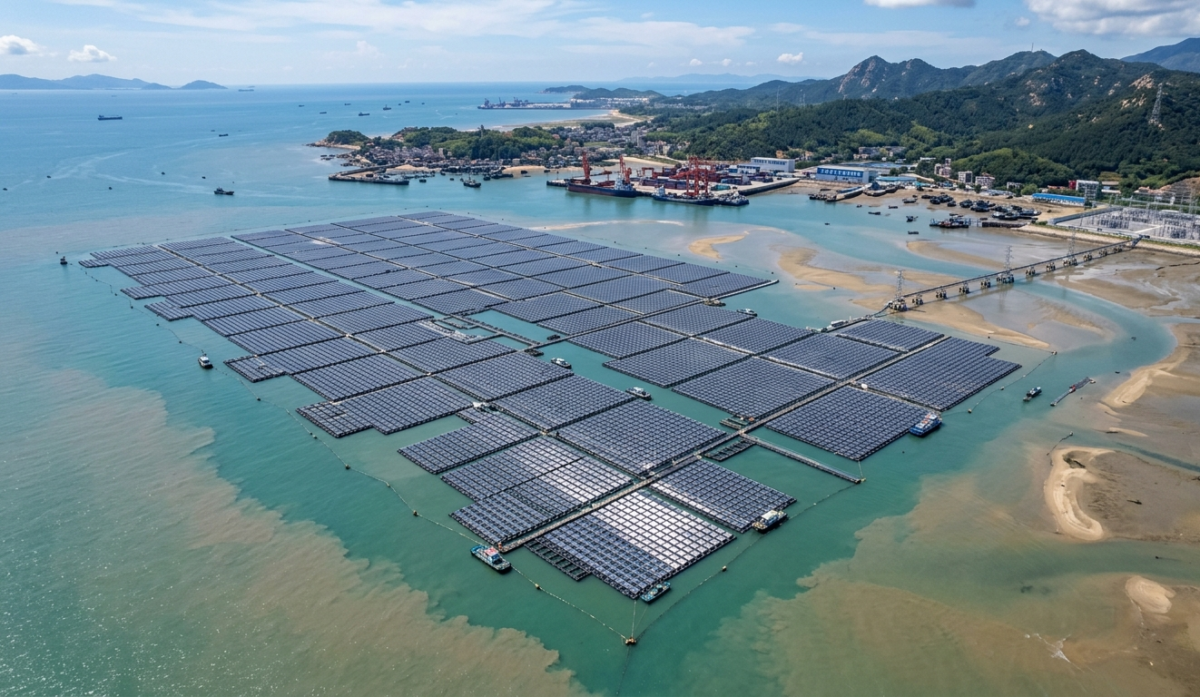
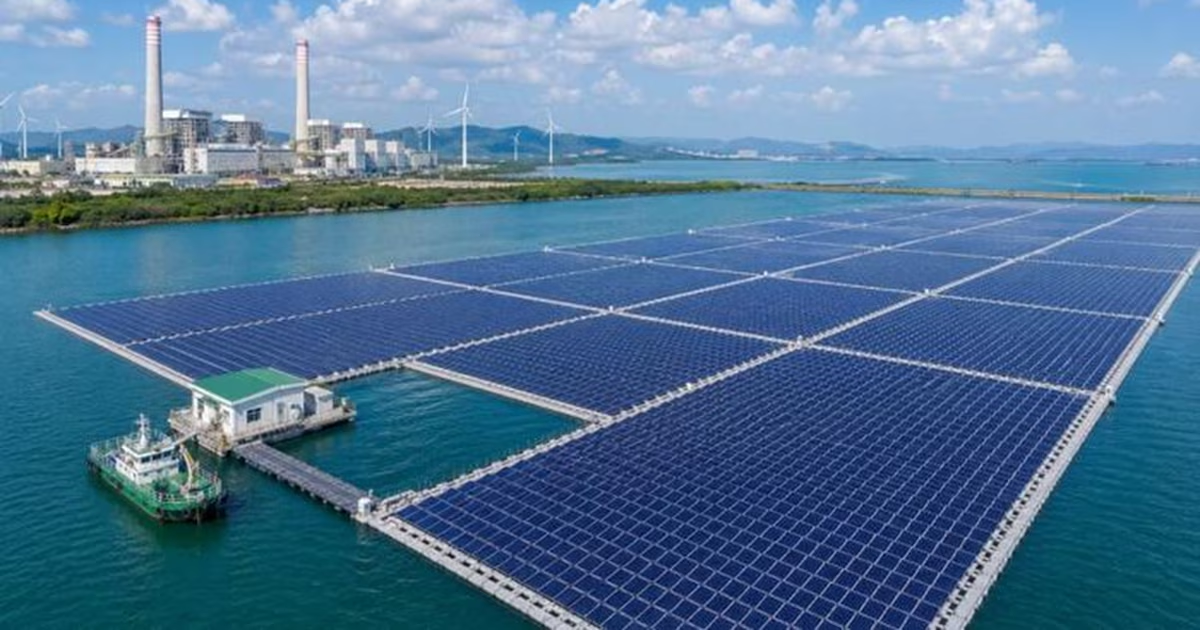
Taiwan is roughly the same size as the Netherlands, but it is mostly mountainous and has 5 million more people, meaning open space is scarce. As a potential solution, Chenya Energy built a 181-megawatt offshore floating photovoltaic (OFPV) project – sometimes called a “floatovoltaic” – on 1.8 square kilometres of water in the protected bay of an industrial park in western Taiwan in 2020-21.
The year before, the Taiwan Power Company had constructed a 100-megawatt land-based photovoltaic (LPV) project on 1.4 square kilometres near the bay, providing an ideal comparison once researchers excluded the additional 81 megawatts of capacity at the floating solar installation.
Pound-for-pound, the floating solar produces 12 per cent more electricity than the land-based solar, they found. Even though it has slightly higher operations and maintenance costs, it generates 11 per cent net profit, as opposed to 8 per cent for the land-based solar.