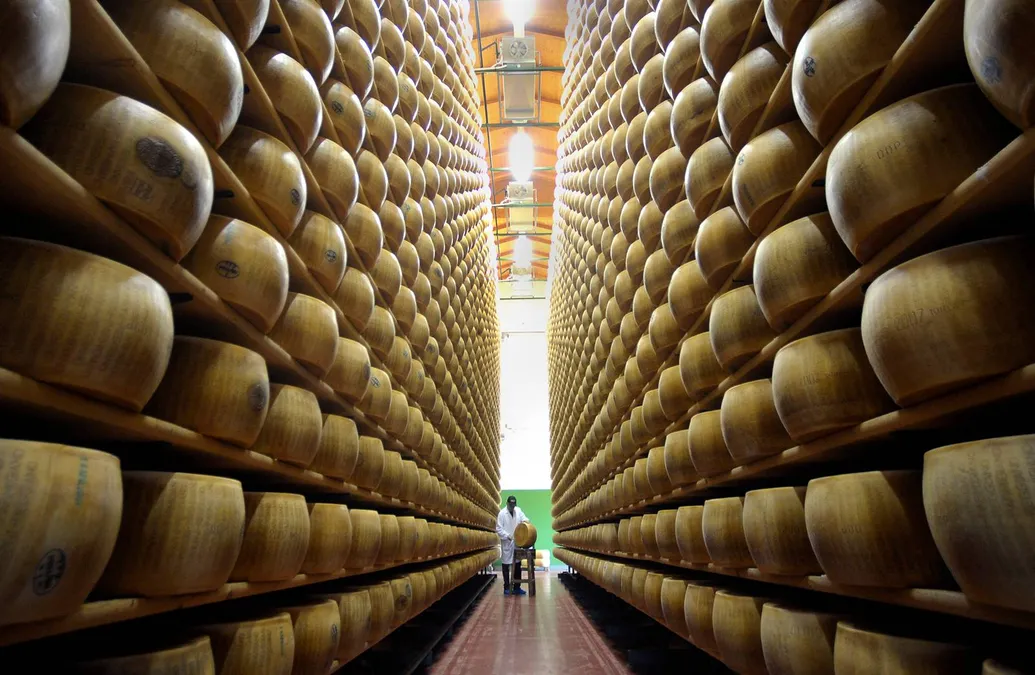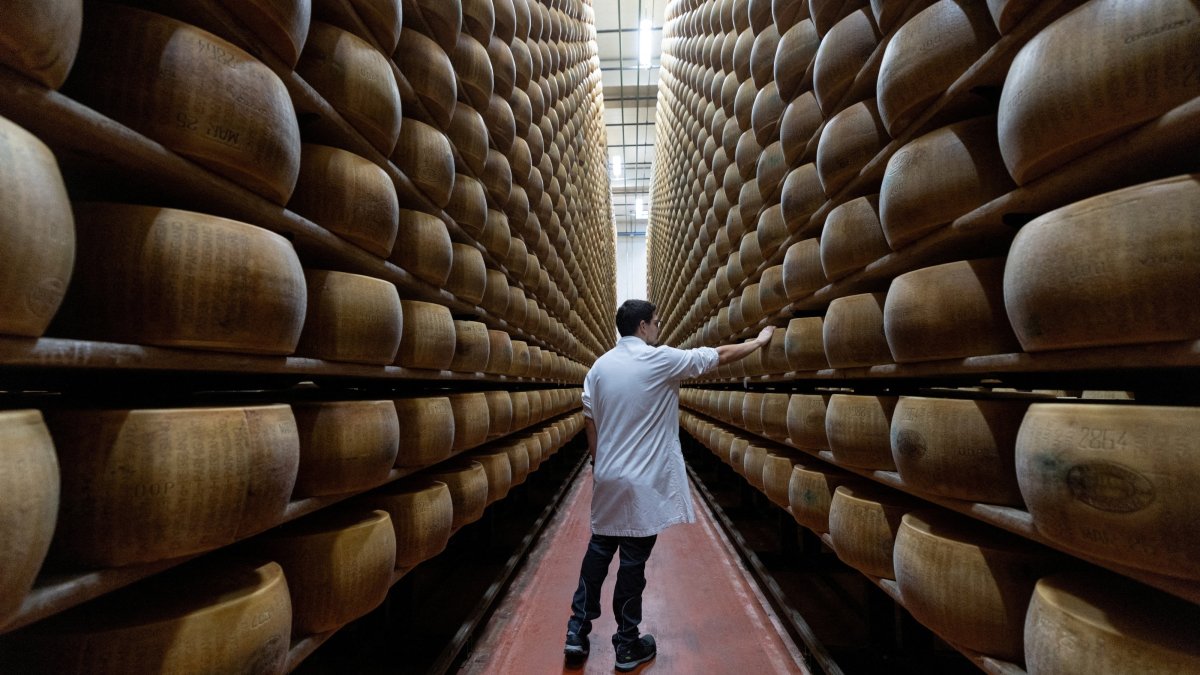
Fifty years ago, farmers in Italy's Emilia-Romagna region used to open the windows in their barns at night during the summer to keep their cattle cool.
Today, as heat waves send temperatures soaring to record highs, those windows stay open round the clock to protect the cows and ultimately their milk, the foundation of the area's centuries-old Parmigiano Reggiano cheese industry.
"Extreme heat impacts milk's quality and quantity," said Nicola Bertinelli, president of the Parmigiano Reggiano Consortium, who also runs the dairy farm that his family founded in 1895 on the outskirts of Parma.
Mounting costs
With temperatures topping 40 degrees Celsius (104 degrees Fahrenheit), cows spend more time lying down, eat less and produce up to 10% less milk, one of the Parmigiano's only three ingredients alongside salt and rennet.