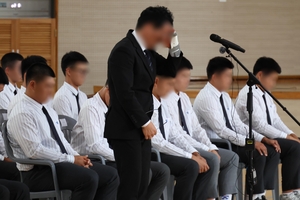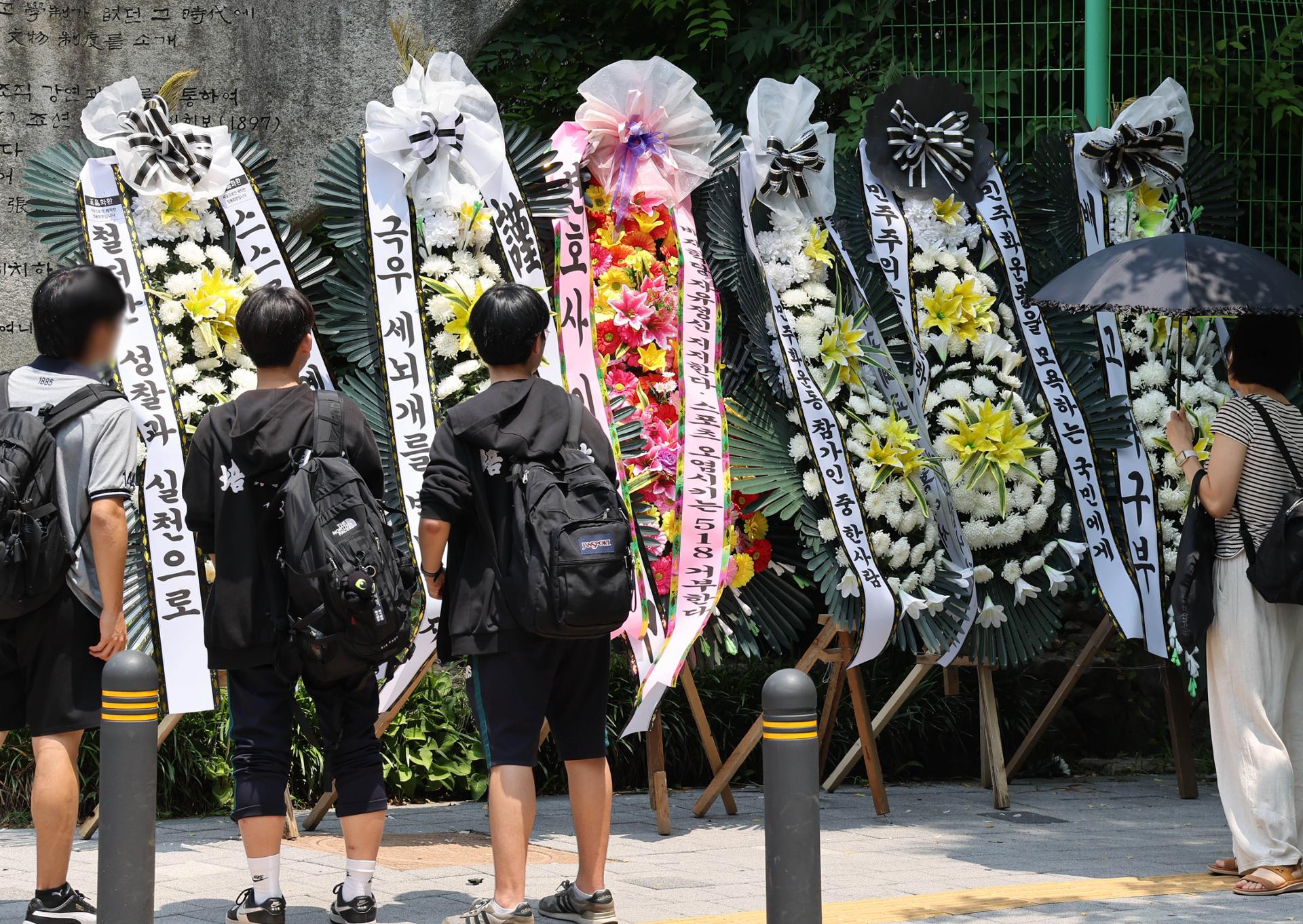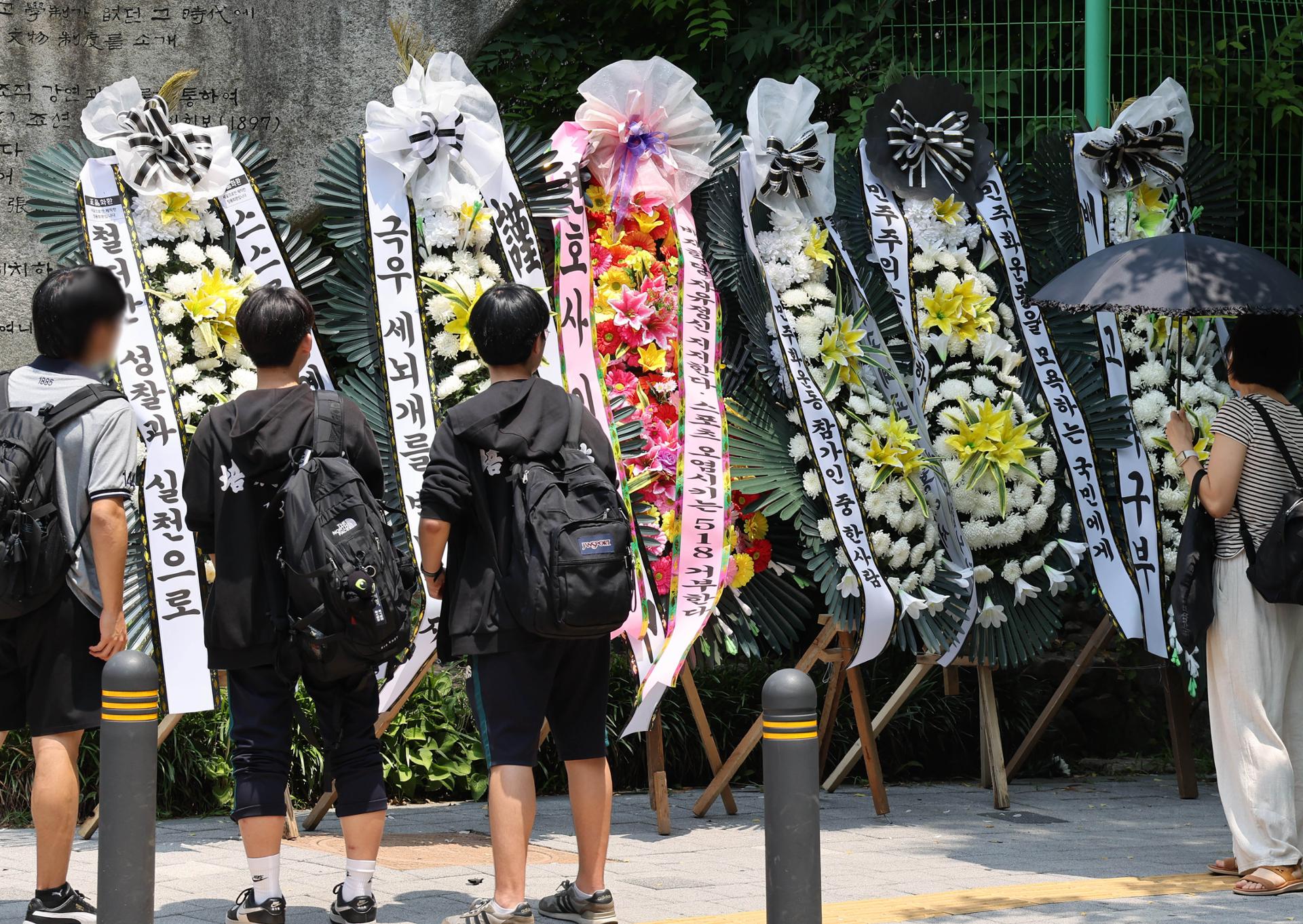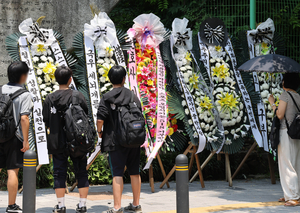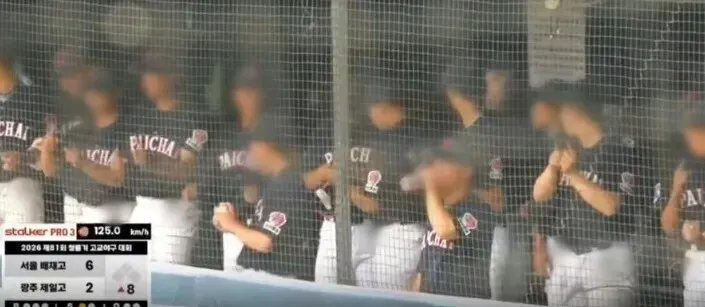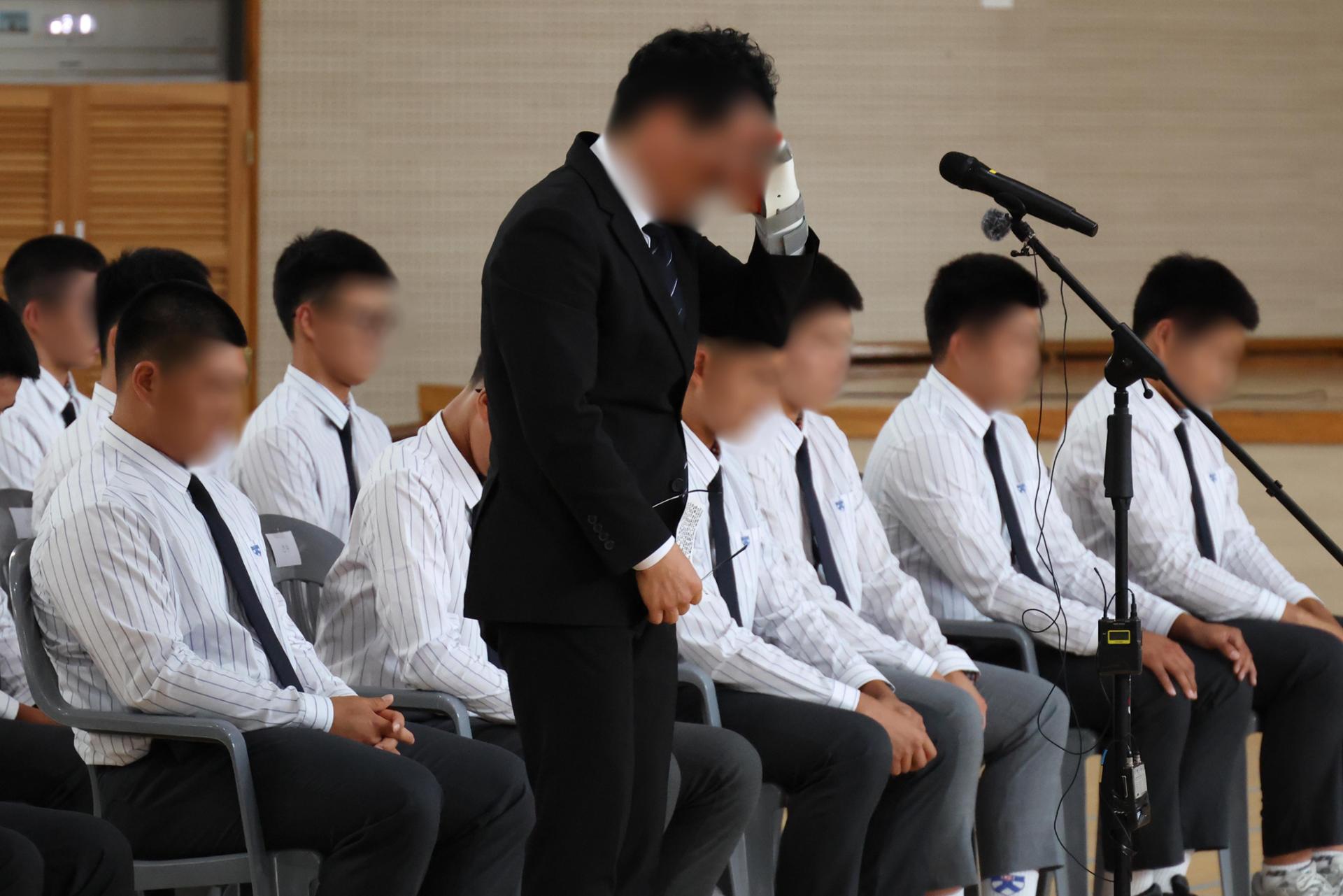
The principal of Paichai High School weeps while reading an apology at Gwangju Jeil High School in Buk District, Gwangju, July 6. Some members of Paichai's baseball team drew criticism last month for chanting "Let's go to Starbucks" during a national tournament, seen as mocking Gwangju's 1980 pro-democracy movement. Yonhap
This is the second in a two-part series on the reality and causes of students' use of hate speech and experts' advice on how to resolve the problem. — ED.
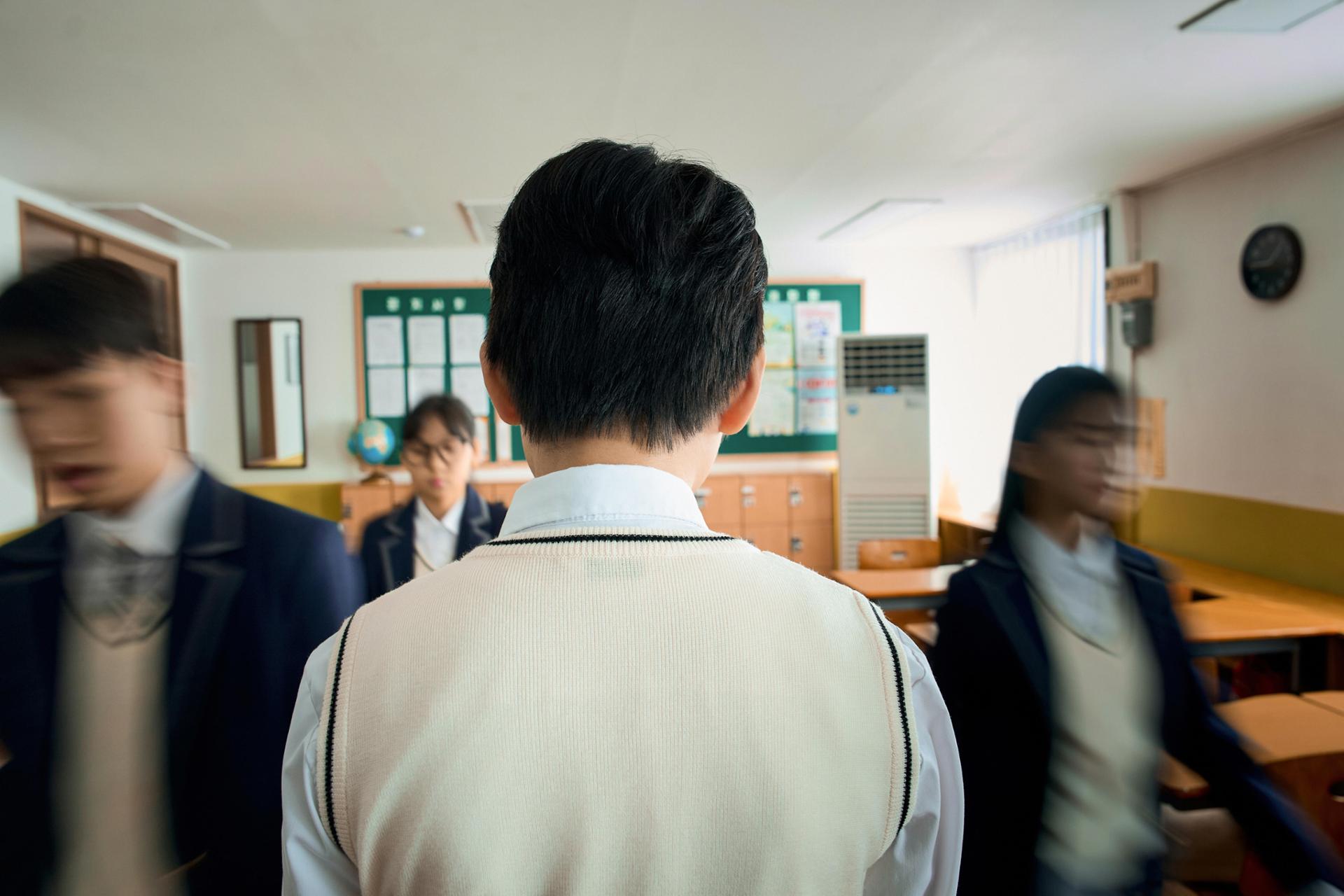
Korean teachers say there is a growing problem with hate speech among teenagers in the classroom that could be addressed by expanding educators' political rights, while experts stress that adults must model responsible language first.
Concern has intensified following a series of controversies, including an incident last month when Paichai High School students chanted a phrase condemned as a direct reference denigrating the 1980 pro-democracy movement in Gwangju, prompting calls for a broader look at how schools address the issue.
A survey by the Korean Teachers and Education Workers' Union, released last week, found that 89.3 percent of 1,109 elementary, middle and high school teachers nationwide had witnessed or heard about students engaging in hate speech, discrimination, historical distortion or anti-democratic expressions in their remarks, assignments or presentations over the past year.