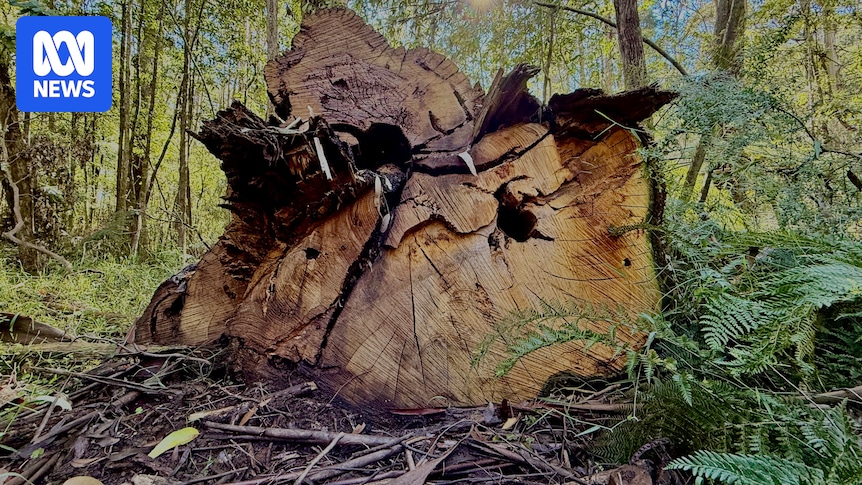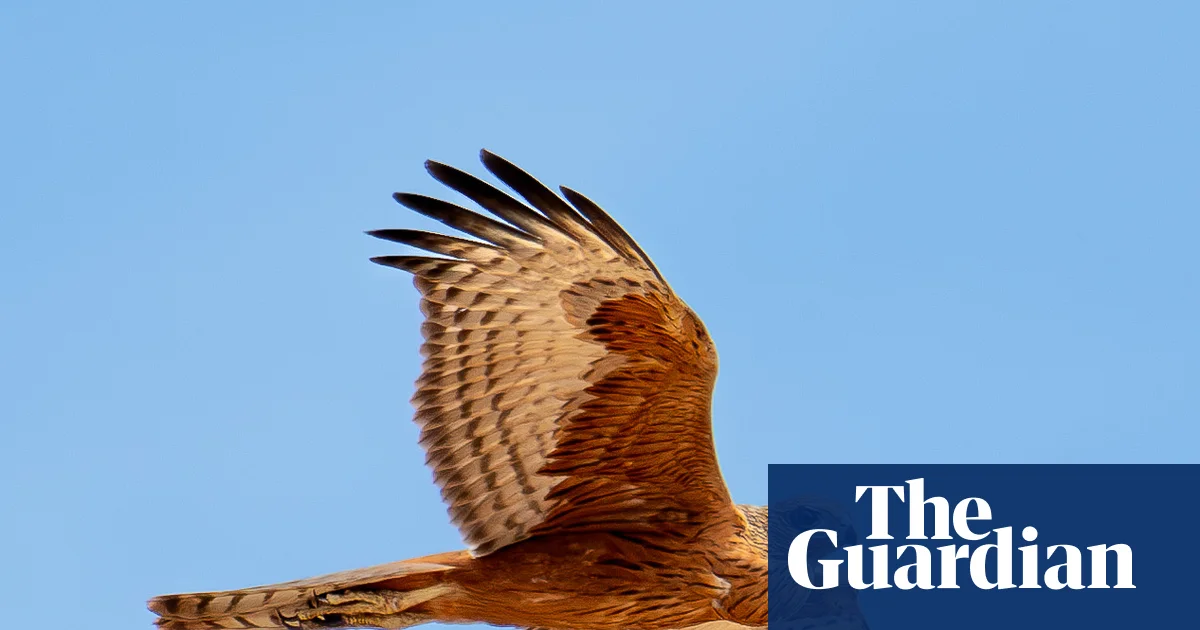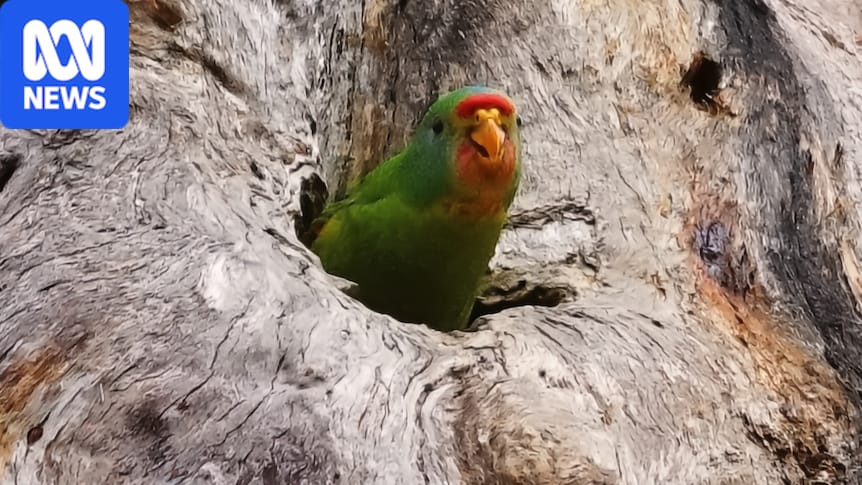
The Tasmanian government's own advice was saying that native forest logging practices needed to be urgently reviewed. But what was the cost of protecting critical habitat when forestry jobs were at stake?It was late 2021 when something started to happen in the native forests of Lonnavale.Ecologists had seen it before, but logging regulators hadn't expected it.The critically endangered swift parrot had arrived, establishing nests and breeding.Each season, the parrots go where the eucalypts are flowering in Tasmania, searching for nearby hollows.It is a crucial period for the survival of the migratory species whose population had dropped to an estimated 500."They require flowering of a few key tree species, mainly blue gum, black gum and Brookers gum," says forest ecologist Matt Webb."But then they also need co-occurrence of really old-growth trees with hollows."Dr Webb spends hundreds of hours following the migratory birds each breeding season, often living out of his car.His data is often relied upon by the government. Ecologist Matt Webb compiles data on swift parrot sightings.(ABC News: Jake Grant) A swift parrot couple fly onto a branch during breeding season at Lonnavale.(Supplied: Billy Rowe)As the flowering varies from year to year, a forest might be ideal one breeding season, then unsuitable the next, so the parrots must find somewhere else.That season, it was around Lonnavale, a patchwork of foraging habitat and hollow-bearing old trees that had been kept standing after previous waves of logging and regrowth in the 1970s.The area the birds had settled in had been undergoing another prolonged period of logging, and much more was planned.The confirmed parrot sightings — more than 100 all up, including new nests — meant the state's regulator, the Forest Practices Authority (FPA), had to act. A fledgling swift parrot in a tree hollow in Lonnavale.(Supplied: Billy Rowe) Swift parrots require tree hollows to be near flowering gums for successful rearing of chicks.(Supplied: Billy Rowe) The presence of flowering blue gum can vary season to season.(Supplied: Billy Rowe) A flock of swift parrots at Lonnavale. They are among Australia's most endangered birds.(Supplied: Billy Rowe)Its officers were directed to assess every native forest logging coupe at Lonnavale in greater detail to try to protect more habitat.But this was stretching staff resources and was "not sustainable", the FPA wrote at the time."[This] places a heavy demand on FPA's biodiversity staff and has led to 'decision fatigue'," the regulator said.The state government had looked into designating the area as a swift parrot important breeding area in 2017, but this never happened, documents obtained under right-to-information provisions show.With three of Tasmania's five wood supply contract holders in the region, millions of dollars were at stake.The logging continued. The logged coupe DN023H in June 2026.(ABC News: Ebony ten Broeke)Coupe DN023HOne of the coupes visited by the swift parrots was known as DN023H.Approval documents, seen by the ABC, show the FPA had tried to give the 49-hectare coupe greater protection due to the extent of old-growth blue gum and other habitat trees. Prior to logging, a map is prepared to guide the contractor's work. It includes streamside reserves and wildlife clumps.(ABC News: Hamed Akrami)They added what's known as a "wildlife habitat clump" along one boundary; two swift parrot nests just outside the coupe received 50-metre setbacks; and stream-side buffers were mapped out.Public forestry company Sustainable Timber Tasmania (STT) agreed to the changes.Logging could begin, involving clearfelling around the areas it agreed to exclude, to be followed by a regeneration burn to create an ash bed for resowing. The logged DN023H coupe in June 2026.(ABC News: Ebony ten Broeke) After logging, the remaining material is subject to high-intensity burning to create an ash bed for resowing.(ABC News: Ebony ten Broeke) Tree stumps, logs and branches that have been cut down and burned in DN023H.(ABC News: Ebony ten Broeke)"It is worth noting that any trees retained within the harvest area will be impacted by the regeneration burn," STT wrote."While care will be taken to minimise this impact through burn prescriptions, we cannot guarantee the level of this impact."STT also promised to keep trees that were wider than 2.5 metres, where "operationally safe to do so".Logging had started by 2024.But then swift parrots started to arrive again.The presence of a critically endangered species is not always enough to halt logging in Tasmania.Advice from the FPA in 2023 shows that swift parrots have appeared in one or two active logging coupes per year."In almost all cases, timber processing has continued in some form whilst the swift parrot sightings were investigated, leading to no or low lost time," an FPA email reads."In most cases, felling could and did continue in a lower-risk part of the coupe."And so, DN023H was ultimately logged. Wilderness Society campaigner Hugh Nicklason stands on a tree stump more than 4 metres wide.(ABC News: Ebony ten Broeke)The logged area included a stump with an estimated diameter of over 4 metres, along with other large stumps near the recognised habitat areas.Few trees were retained in the areas between the streamside buffers; one of these buffers had occasional single trees with interspersed ferns."What is on the map and what you actually see in real life can be starkly different," says Wilderness Society campaigner Hugh Nicklason. Debris in a streamside reserve after logging at Lonnavale.(ABC News: Ebony ten Broeke) Material is piled up after logging in DN023H.(ABC News: Ebony ten Broeke) The logged area, with an area of retained forest.(ABC News: Ebony ten Broeke)Mr Nicklason says promises to protect as much habitat as possible rarely eventuated once the contractor started work."I would argue that these systems don't actually function to protect forests; they function to facilitate logging." Wilderness Society campaigner Hugh Nicklason.(ABC News: Ebony ten Broeke)FPA chief officer Anne Chuter confirmed in parliament last month that it was investigating complaints about the logging in DN023H."Our preliminary information has indicated that some of those large trees have been felled for safety reasons," she said.The result was another patchwork of retained habitat in the Lonnavale forests. Some of the retained forest in DN023H.(ABC News: Ebony ten Broeke)It is unclear why the Lonnavale forests were never declared as a swift parrot important breeding area.But even areas with this added protection have seen substantial habitat loss.Logging has caused the loss of 23 per cent of potential nesting habitat over 20 years in one southern Tasmanian swift parrot breeding area alone, according to a report by Tasmania's Environment Department.In the same period, the parrot's population dropped from 2,100 to 500.Studies also show swift parrots are under threat from introduced sugar gliders preying on nests. Researcher Matt Webb follows swift parrots every breeding season, finding less and less habitat each time.(Supplied: Billy Rowe)"Leaving a little bit [of habitat] here or there, that's not a conservation strategy that is going to work. It's just continual reduction in the availability of habitat," Dr Webb said.It can take at least 100 years for trees to develop hollows.Tasmania's logging cycle is about 40 years; previously retained large habitat trees can be felled for safety reasons once the area around them is logged."Each year we return to the same places, and then there are another 100 hectares gone, go down the road and another 50 hectares gone," Dr Webb said.A 2025 study by the Australian National University highlighted the long-term degradation of native forest in Tasmania, driven by the regrowth forestry industry.Using spatial data, it showed that while forests are regrown after logging, there is a progressive loss of habitat values.'Urgent' review still ongoing years laterThe way Tasmania manages habitat during logging was developed in 2010.It has not been reviewed since.The continued arrival of swift parrots in Lonnavale helped to trigger a new project within the Department of Natural Resources and Environment. A swift parrot nest at Lonnavale.(Supplied: Billy Rowe)"[The system's] effectiveness in meeting the requirements for the species has not been explicitly evaluated," a draft report reads.The project started in 2022."There is an urgent need to review and update habitat management advice about forestry operations and the swift parrot by early 2023."Forestry practices were described as posing a "potentially significant threat to the species". A juvenile swift parrot at Lonnavale. Their chances of survival diminish if appropriate habitat is not nearby, researchers say.(Supplied: Billy Rowe) Swift parrots migrate from the mainland to Tasmania to breed and establish nests.(Supplied: Billy Rowe) Two swift parrots seen at Lonnavale.(Supplied: Billy Rowe)Swift parrot populations have continued to decline in areas where the FPA has tried to protect its habitat, the drafts read."If the current approach is not achieving the desired outcome for the species, it is important to diagnose the cause," the report said.Almost four years later, it's unclear what stage the project is up to, or if broad-scale habitat management changes have occurred.It has since been transferred to the Department of State Growth — now called Building Tasmania — which said an updated plan was expected to be finished in the coming months.The last change to swift parrot habitat management happened in 2022, when Brookers gum was recognised as a foraging resource.Jobs and contracts at stakeThe habitat assessment project involved asking STT about the economic impacts of greater habitat protection.Government economist Elena Tinch was engaged on STT's behalf to work out the numbers, specifically for the Lonnavale forests. The regulator assessed the coupes in greater detail in an attempt to protect more habitat trees from logging.(Supplied: Billy Rowe) The state government estimated the cost of not logging Lonnavale to be in the millions per year.(Supplied: Billy Rowe) Three of Tasmania's five log contract holders are in the state's south.(Supplied: Billy Rowe)It estimated that protecting additional habitat in Lonnavale would reduce STT's revenue by about $1.3 million per year, and $1.1 million per year for its contractors."Should STT walk away from the coupes planned for harvesting over the next three years, the direct loss is expected to be over $12 million in revenue to STT and over $10 million in contractor payments," the report reads.It also raised concerns about contractor jobs."Industry advice is that … harvest and haulage contractors will unlikely be able to move to the other sites, potentially leading to financial and job losses accelerating over time." Logging in the Lonnavale area, including Barnback and Denison, has been extensive in recent decades.(Supplied: Billy Rowe)This advice made its way to cabinet.A cabinet update for Resources Minister Felix Ellis and former Environment Minister Roger Jaensch, obtained by the ABC, stated that the government wanted to provide sawmills with future resource certainty."It is understood that the application of a [swift parrot important breeding area] to the entire Lonnavale region would significantly impact STT's capacity to supply wood from the southern forests," the update said.An important breeding area has not been declared for the region.The note then points to the broader project assessing swift parrot habitat, suggesting it could help Tasmania achieve its Commonwealth obligations.The state's practices are facing increased federal scrutiny.More scrutiny on Tasmania's systemThe Commonwealth is working with the Tasmanian government to assess how the native logging system operates in practice.New national environmental standards — which are yet to be finalised — will be used to determine how it operates in the future. New national standards will come into affect in July 2027.(ABC News: Ebony ten Broeke)"At this point in time, we don't have any indications that the system will need to change," says Vanessa Pinto from Building Tasmania.She told parliament last month that it was a "collaborative" process with the Commonwealth.The new federal standards are due to come into effect in July next year.The industry wants this locked in earlier. Tasmanian Forest Products Association chief executive Nick Steel.(ABC News: Georgia Hogge)"What we really want from the federal government is one clear guarantee that no forest business within Tasmania will be worse off under these reforms," Tasmanian Forest Products Association chief executive officer Nick Steel says.He says he wants "a balance" between environmental, social and economic factors."We believe we've got a very good system, but we don't know what we don't know, and that's the uncertainty," he says.A draft NRE report cites the most recent Commonwealth conservation advice for the swift parrot as preventing further habitat loss, including from forestry. Forestry waste after felling in a Lonnavale coupe.(ABC News: Ebony ten Broeke)Dr Webb says he believes the current system is incompatible with the intent of the new standards."Protecting the swift parrot isn't going to close down the forest industry, but it will require a major change in the way forestry activities are planned and conducted," he says.The Tasmanian government provided $1 million over four years for a swift parrot recovery project, which included more monitoring, spatial analysis of habitat, and protection of habitat on Bruny Island.Resources Minister Felix Ellis said the forest practices system is "science-based" and adaptable to swift parrot seasonal movements.FPA chief officer Anne Chuter said Tasmanian laws require economic factors to be considered when there are significant changes to forestry regulations.STT land management and conservation general manager Suzette Weeding said it relied on research to suggest that sugar gliders were the main threat to swift parrots.In the Lonnavale forests, a further four coupes are planned for clearfelling and resowing over the coming 18 months. Swift parrots follow the flowering of gums in Tasmania during breeding season, establishing nests in hollows.(Supplied: Billy Rowe)CreditsReporting: Adam HolmesPhotography/Videography: Ebony ten Broeke & Jake GrantSupplied photos/videos: Billy RoweVideo production: Hamed AkramiDigital production: Daniel Miller, Adam Holmes & Susan OongDigital editor: Daniel MillerPosted Mon 13 Jul 2026 at 5:19amMon 13 Jul 2026 at 5:19am, updated Mon 13 Jul 2026 at 5:56amMon 13 Jul 2026 at 5:56am
What happened when a rare bird found a place to nest near a logging coupe
It was late 2021 when one of Australia's rarest birds started to arrive in the native forests of Lonnavale. Ecologists had expected it but for a reacting forestry sector, it was "not sustainable".
2,246 words~10 min read