Scientists have uncovered an unexpected source of food in the deep ocean that could change how researchers understand both marine ecosystems and Earth's carbon cycle. A new study from the University of Southern Denmark (SDU) suggests that deep ocean microbes are not living in such a nutrient-starved environment after all.
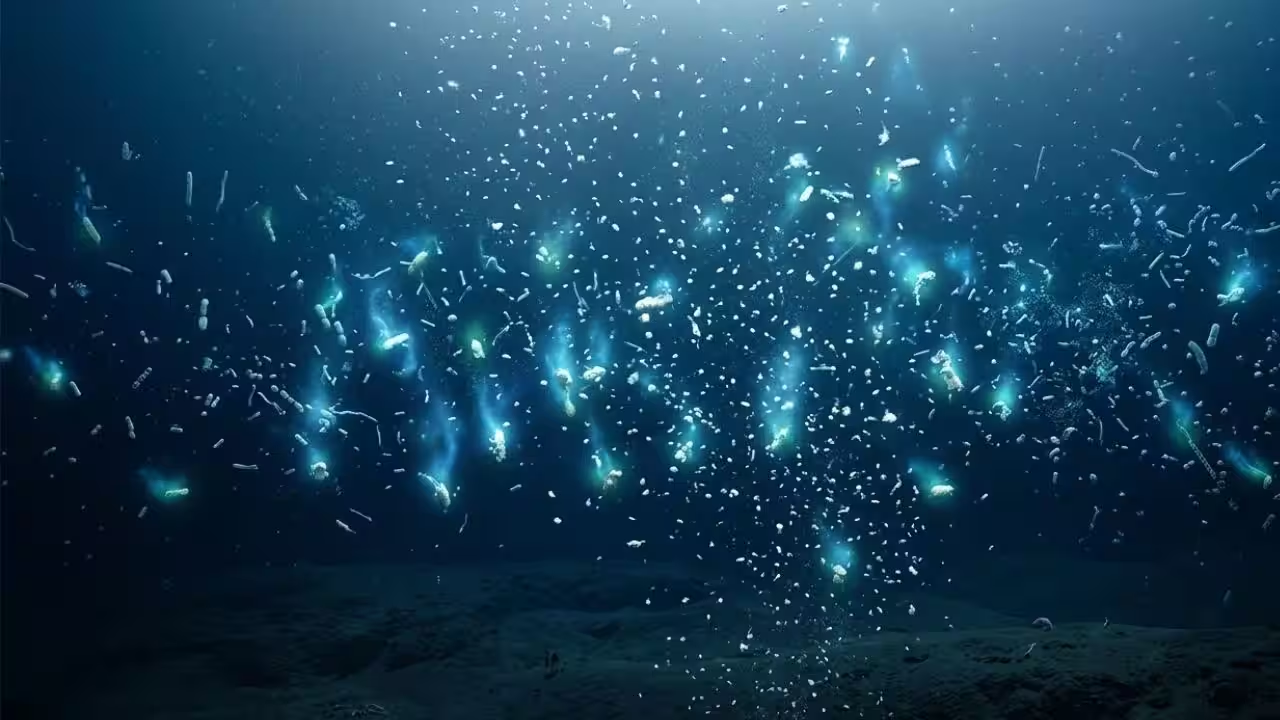
The research found that tiny sinking particles known as marine snow release dissolved carbon and nitrogen as they descend into the deep sea. Those leaked nutrients become an immediate food source for microbes living in the surrounding seawater.
Deep ocean pressure unlocks hidden nutrients
Marine snow is made up of tiny clumps of dead algae, microbes, and other organic material drifting through the ocean. According to the study, once these particles reach depths of about 2 to 6 kilometers, the enormous hydrostatic pressure begins forcing dissolved organic matter out of them.
"The pressure acts almost like a giant juicer," says first author of the study, biologist and Associate Professor Peter Stief from research centers Nordcee and Danish Center for Hadal Research, "It squeezes dissolved organic compounds out of the particles, and microbes can use them immediately."