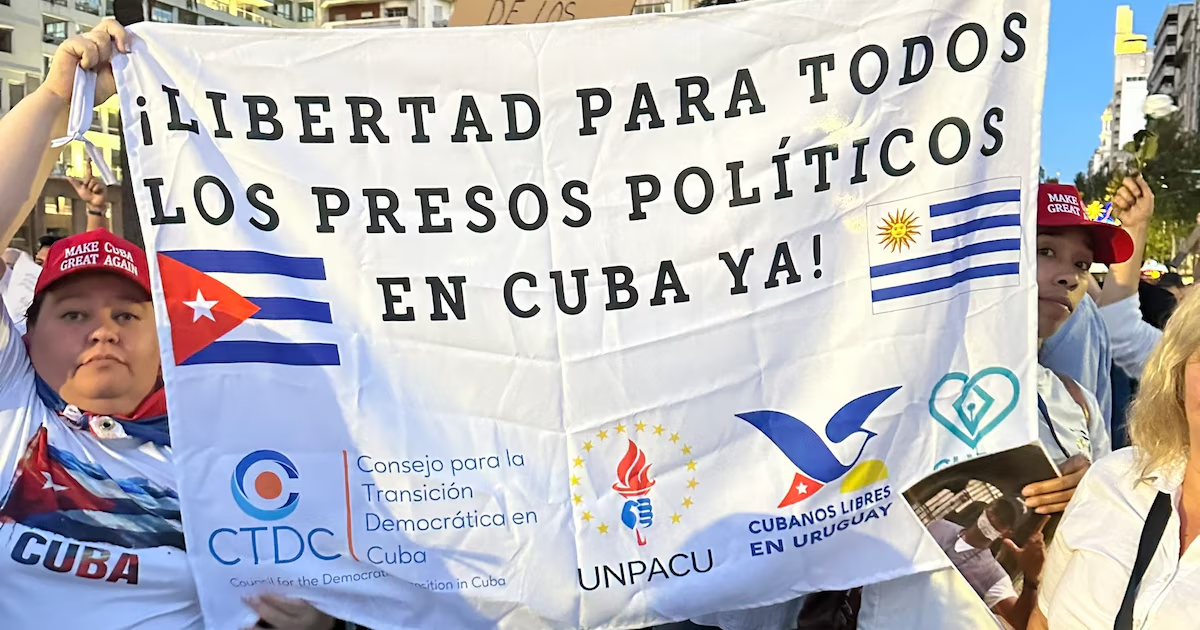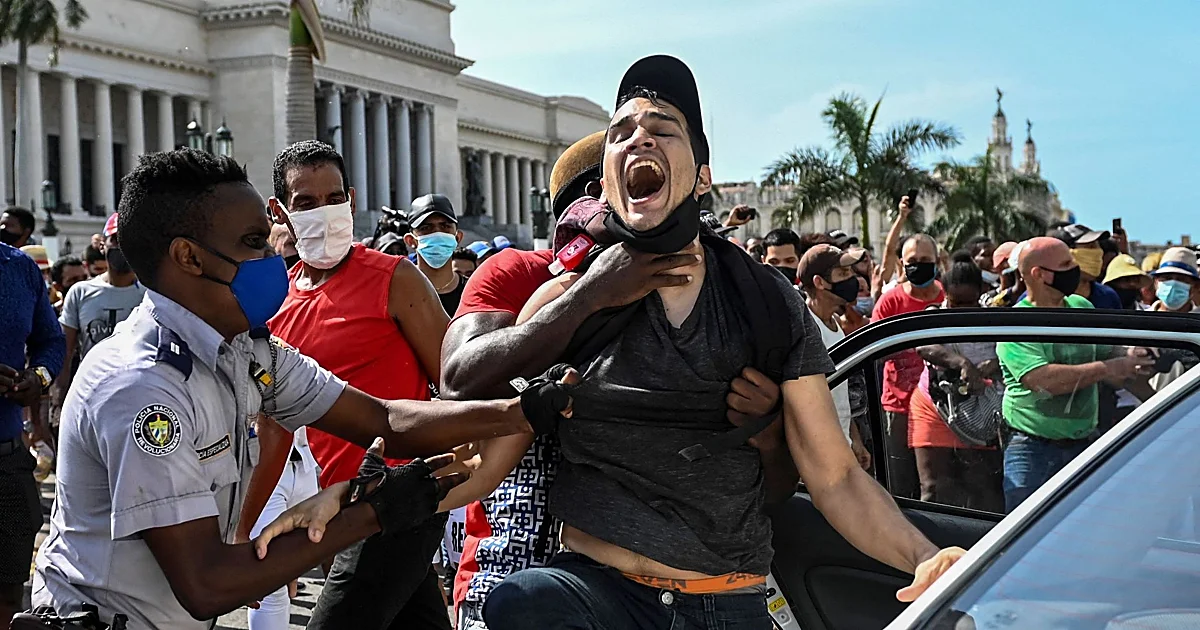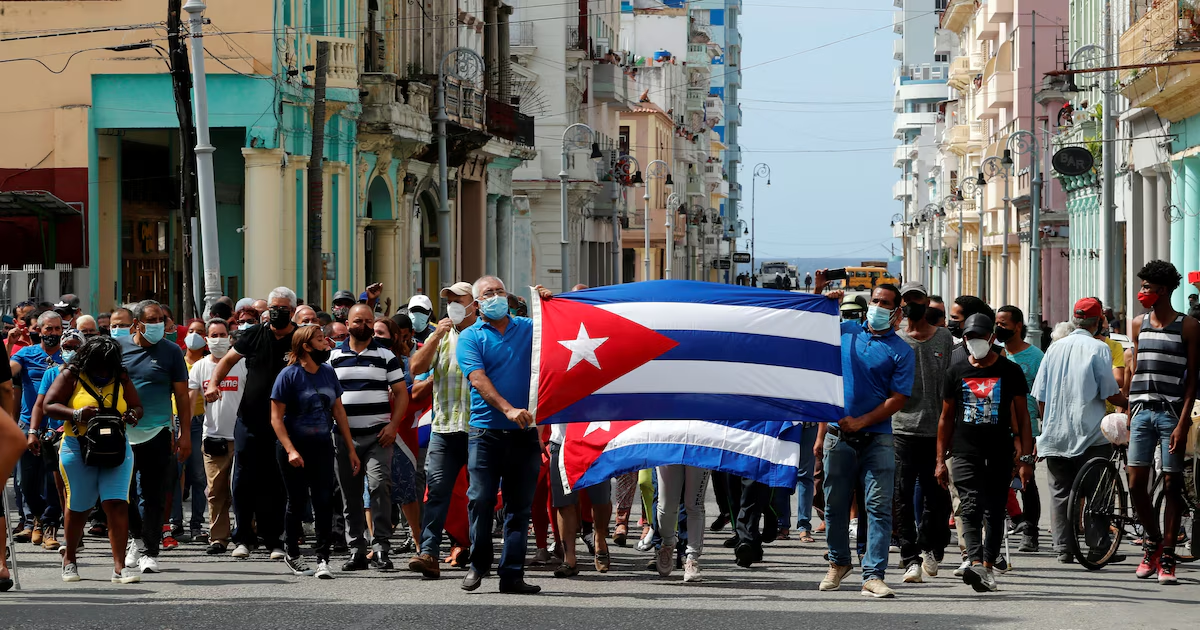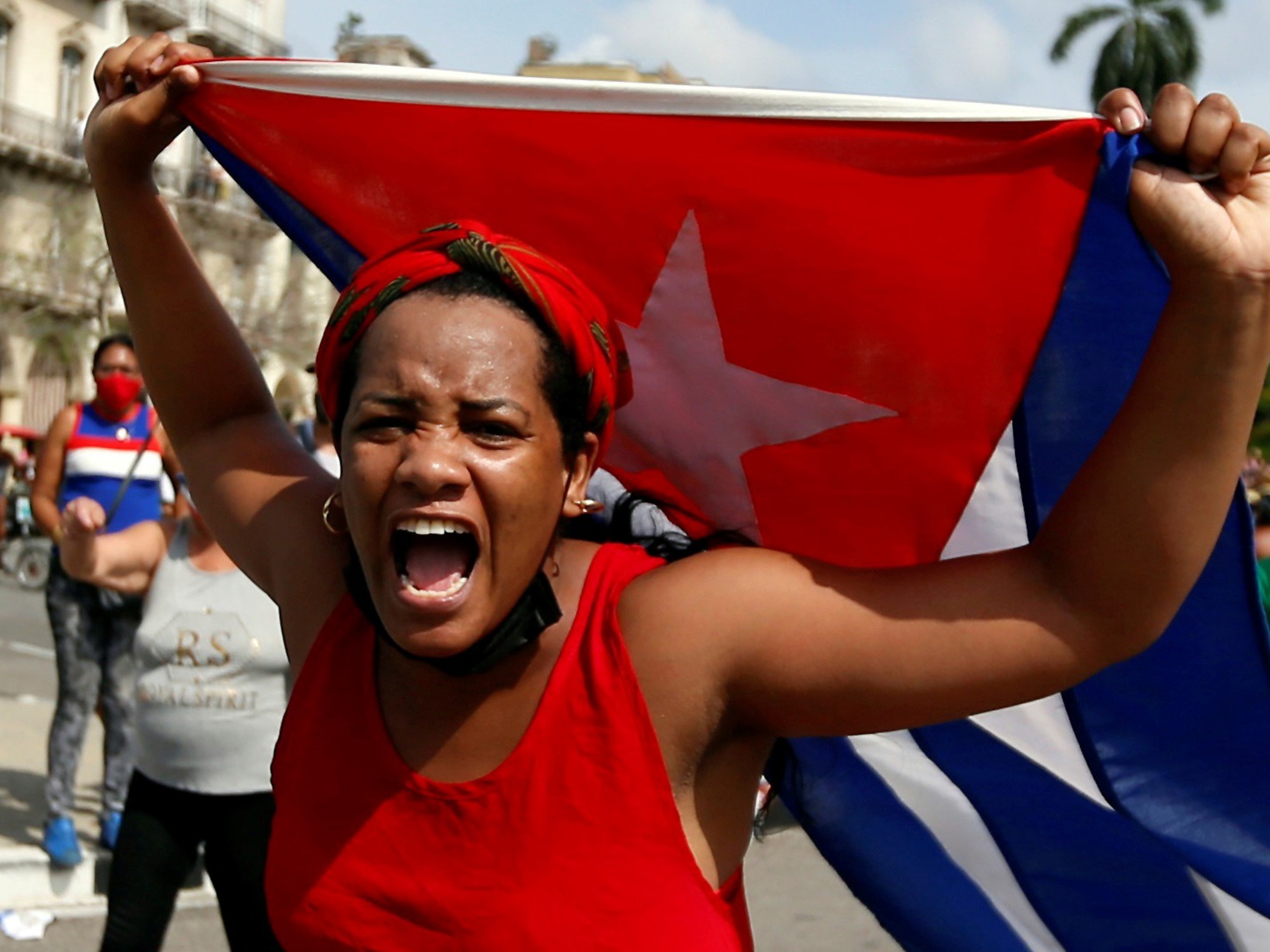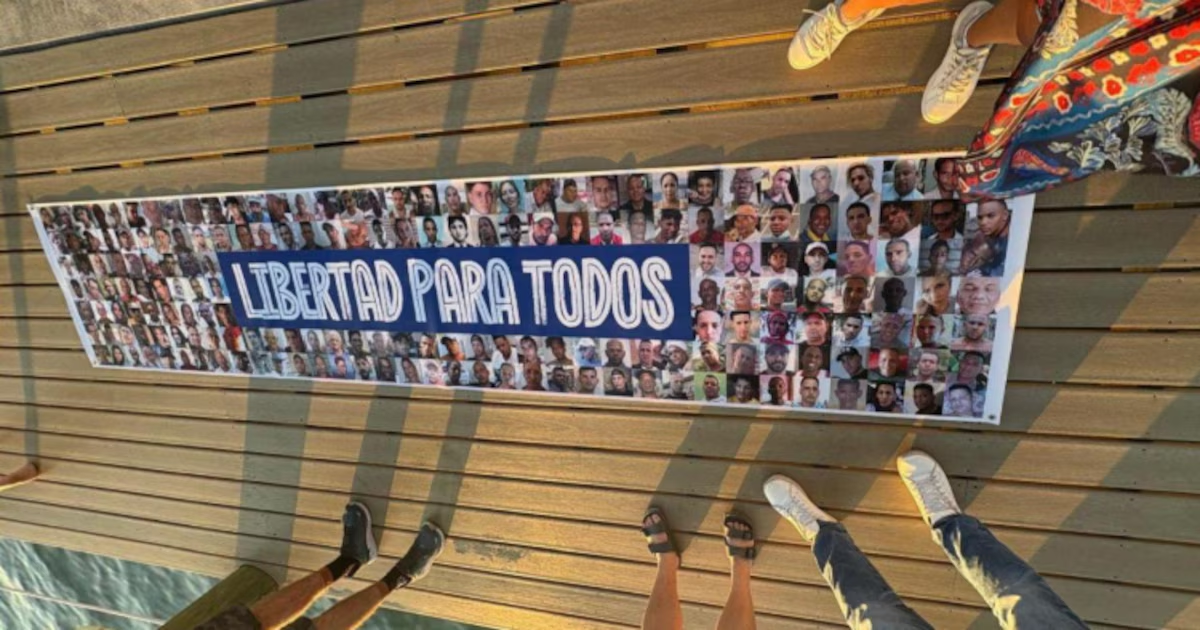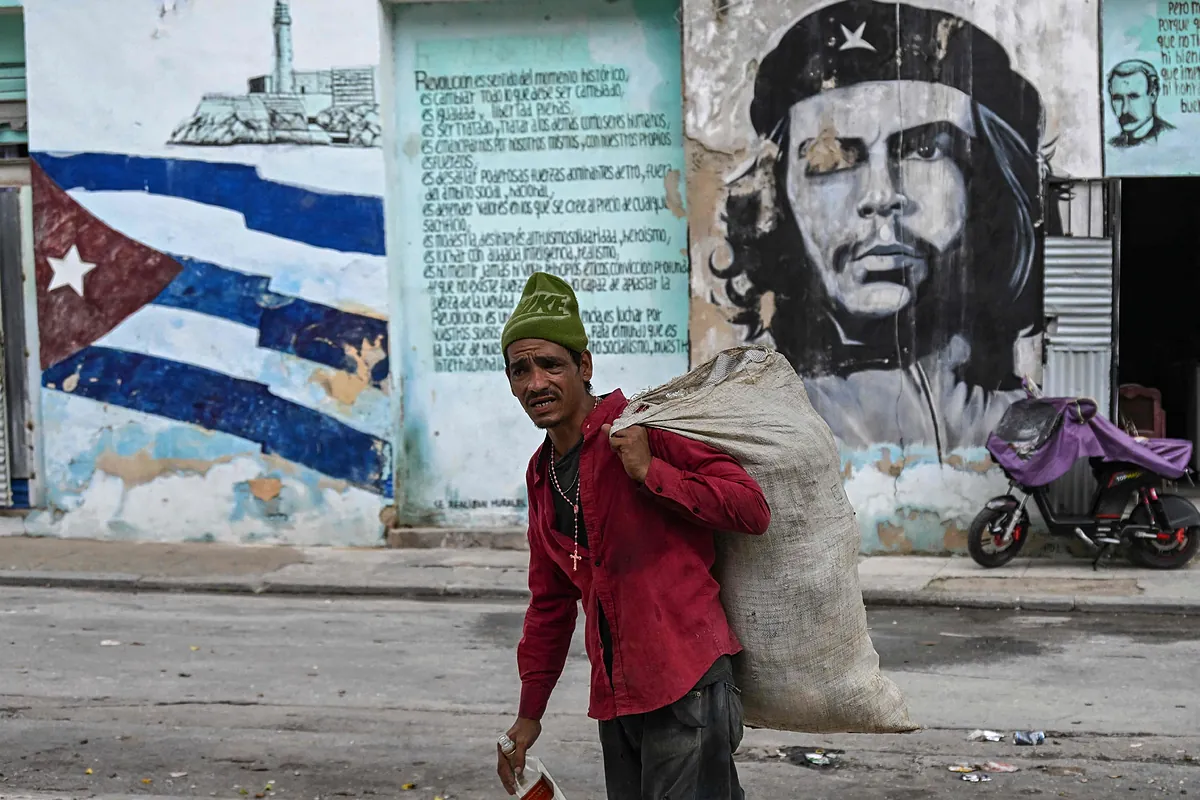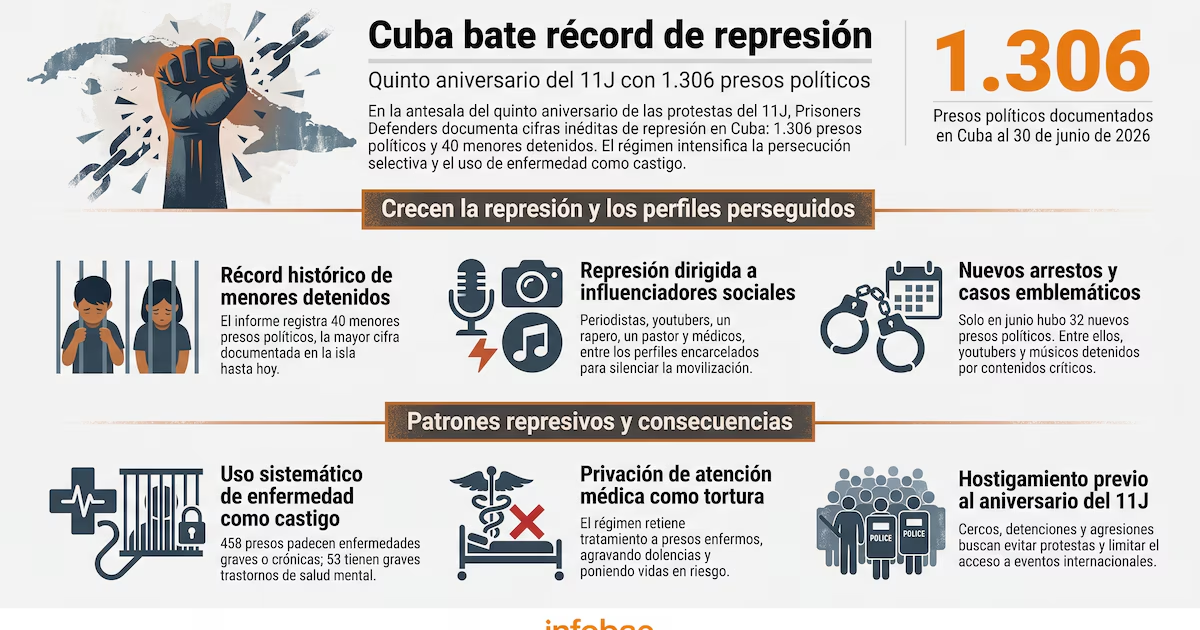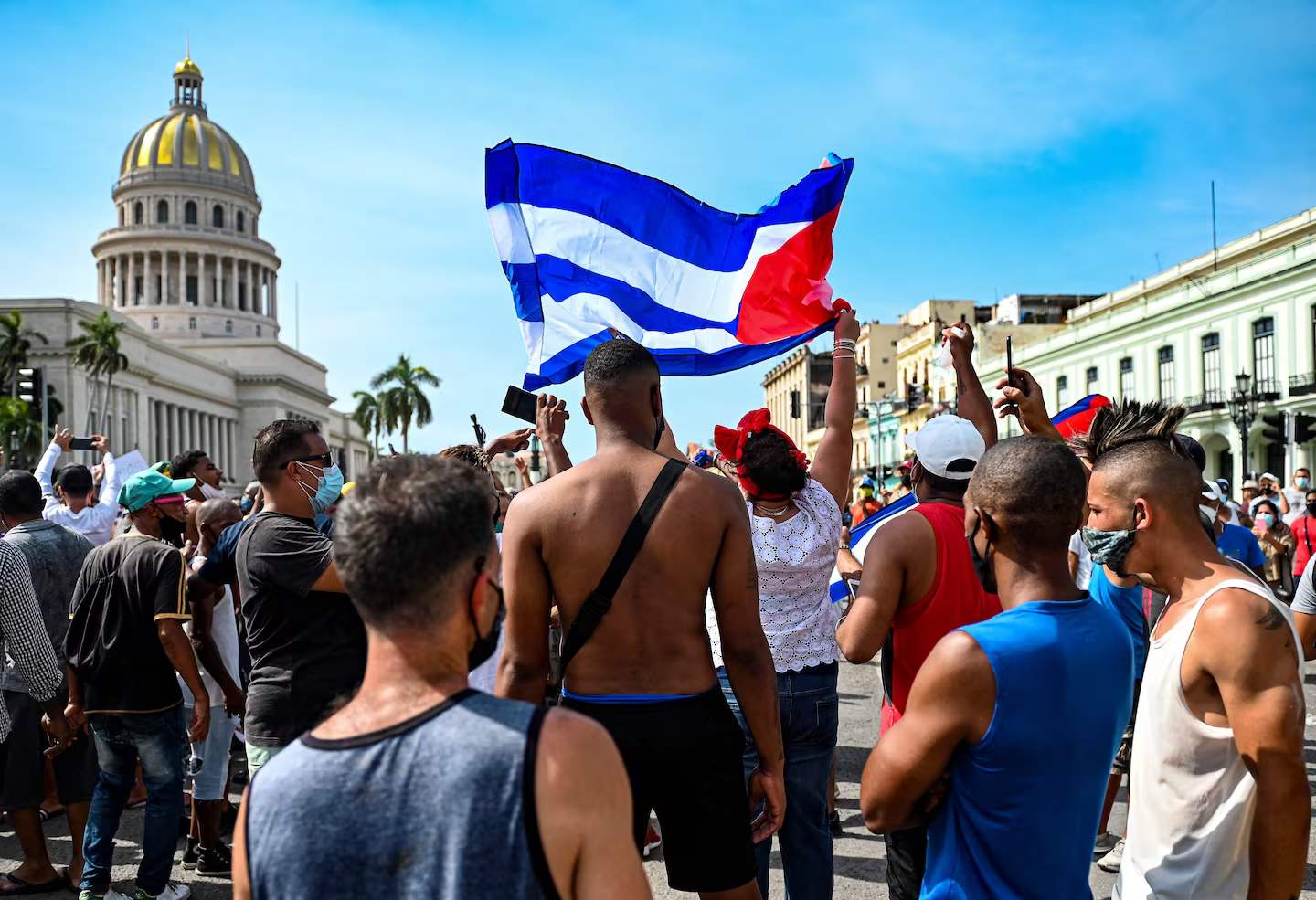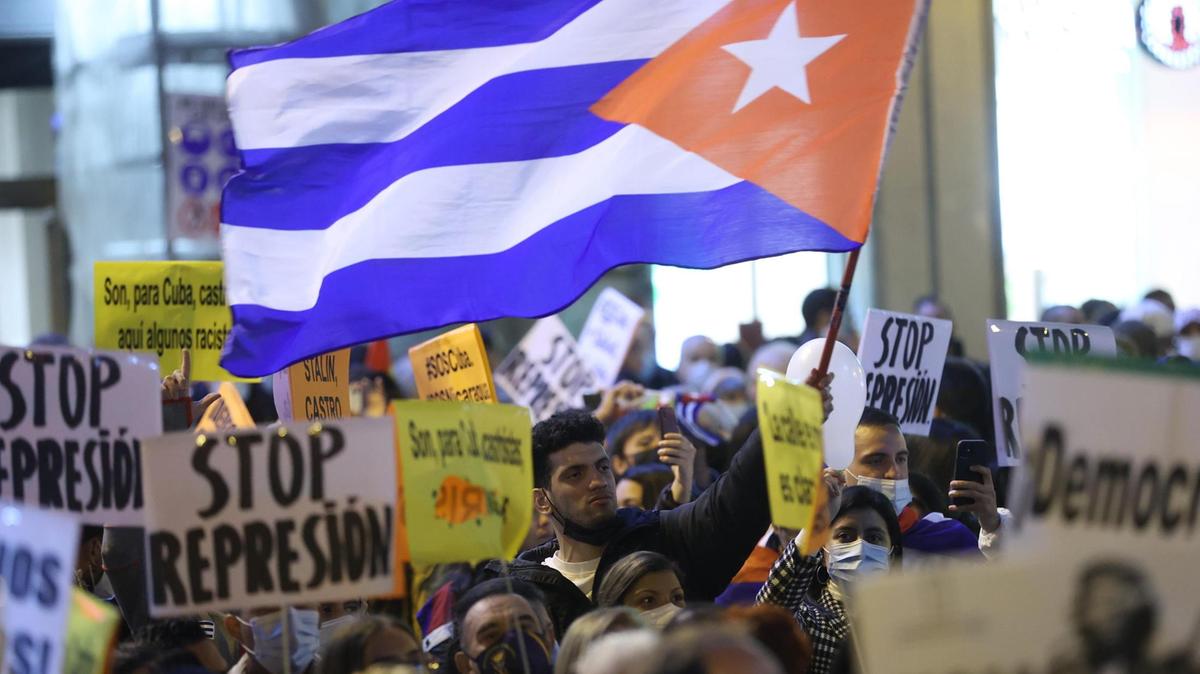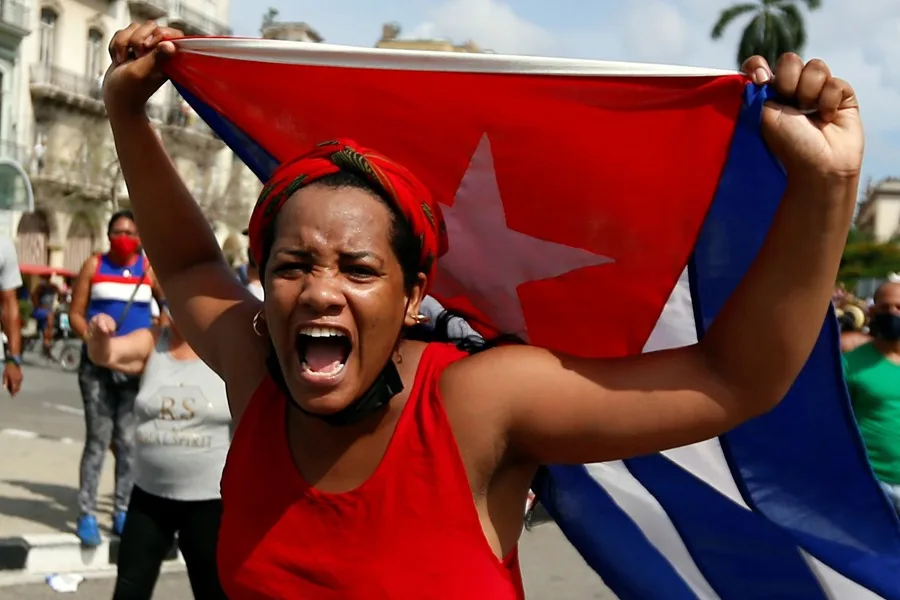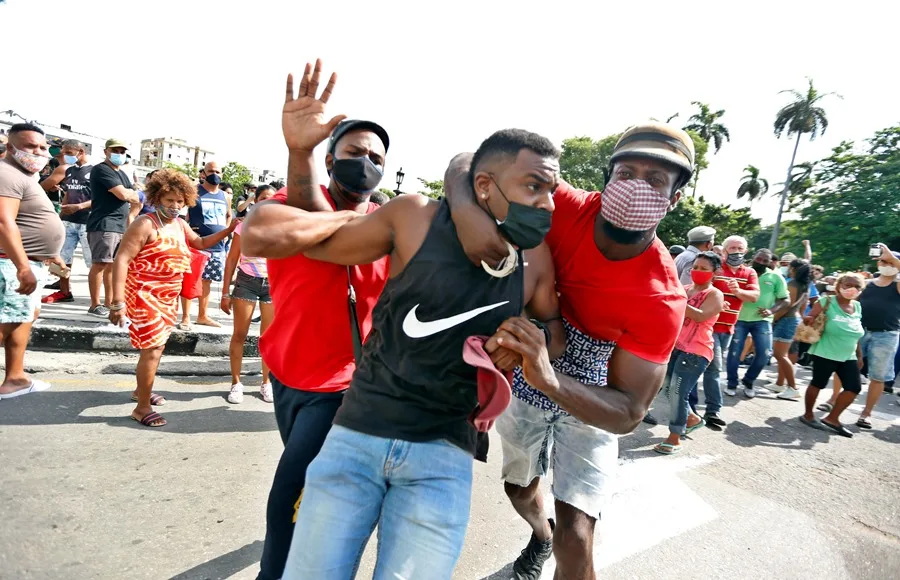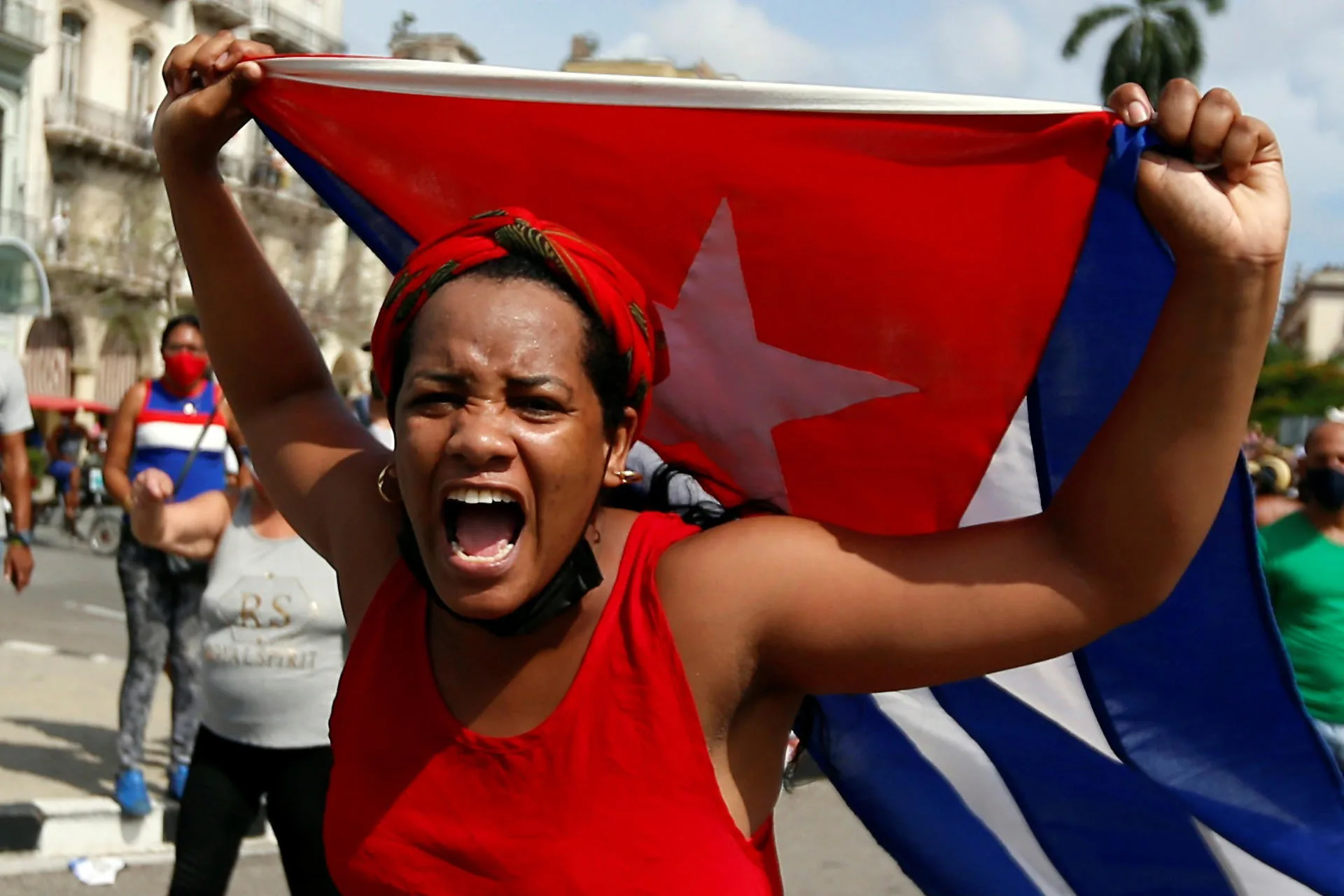
Havana (EFE).- Five years after the historic social uprising of July 11, 2021 (11J), Cuba finds itself gripped by an economic and energy crisis. Daily protests over critical shortages of food and electricity, alongside a mounting count of political prisoners, define the current landscape as the country marks on Saturday this somber anniversary.
The anniversary comes six months after the escalation of pressure from Washington, including an oil embargo, which has paralyzed the island and severely deteriorated the already precarious living conditions, and new sanctions, which are driving away foreign companies.
This week alone, the island has suffered two nationwide blackouts, bringing the total to four so far this year. However, the situation is not much better under normal conditions: Havana receives an average of just one or two hours of electricity per day, and in the provinces, cuts can last up to three consecutive days.
In this context, protests occur daily, usually involving dozens of people who, peacefully, mainly in Havana, demand basic services from the State, such as electricity, water, and food.
Social discontent is expressed through banging pots (cacerolazos), blocking streets, and burning trash.