Academia
As President Prabowo pushes for a massive structural pivot toward state economic sovereignty, Indonesia faces a high-stakes gamble: Can it resurrect the ideals of a Pancasila economy without stumbling into the traps of heavy-handed economic nationalism?
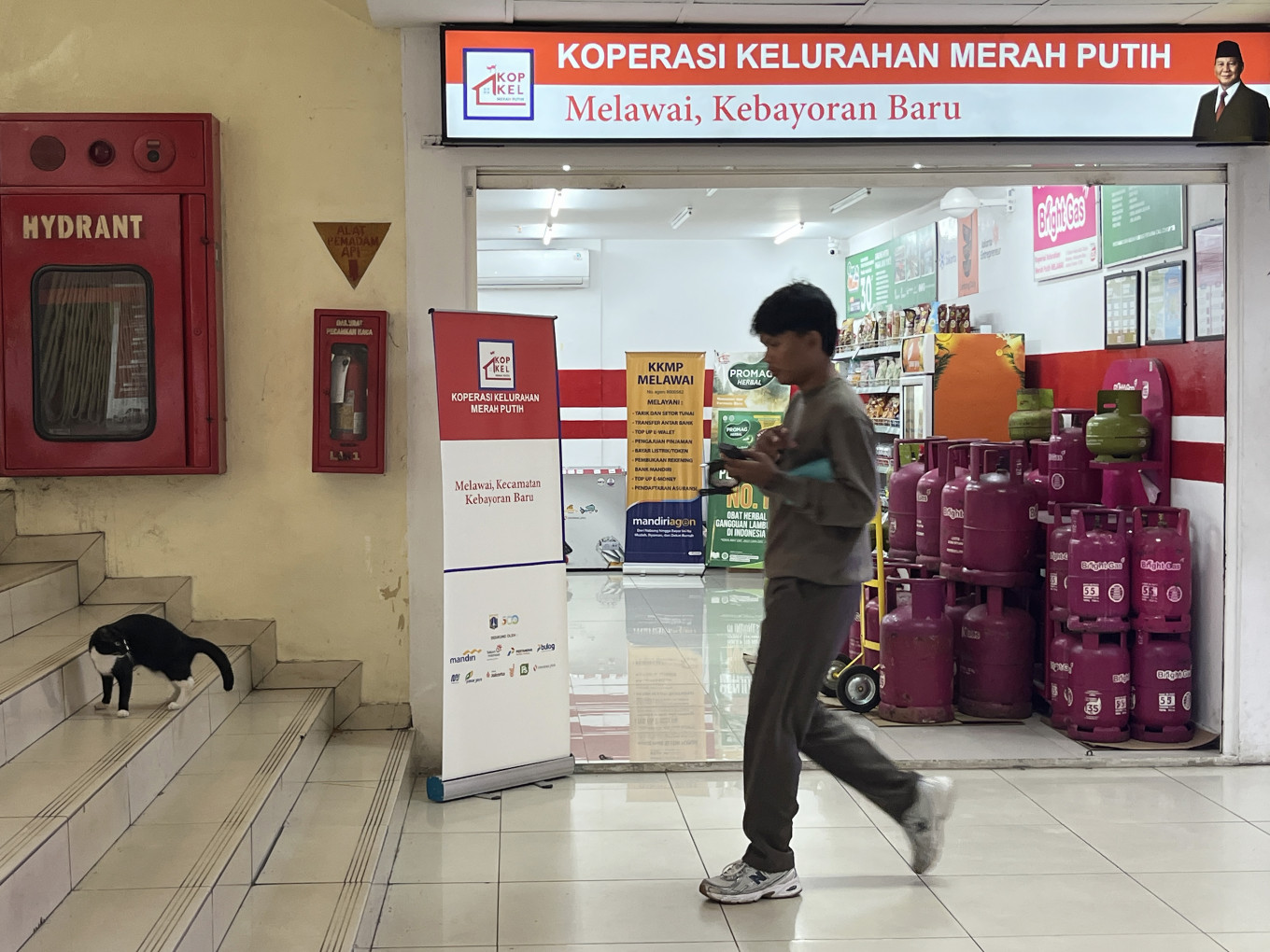
A man walks past a Melawai outlet of the Red and White Cooperatives (KMP) program on Feb. 23, 2026, located in the Blok M shopping and nightlife hub in Kebayoran Baru, South Jakarta. (JP/Iqro Rinaldi)
Just 19 months into the presidency of Prabowo Subianto, a massive shift in Indonesia’s structural trajectory is underway. While previous governments focused their efforts on policy refinement and the continuous improvement of existing frameworks, the current administration aims directly at altering the country's core economic ideology and direction.The ultimate objective is to assert state sovereignty under Article 33 of the 1945 Constitution, steering the nation toward “Ekonomi Pancasila” (Pancasila economy). This strategy involves reining in prominent oligarchs, pressuring them to repatriate wealth and breaking free from an overdependence on traditional foreign market forces.
This represents a major course correction: a deliberate effort by the state to steer the national economy down a completely new path. However, altering an economic ideology typically takes decades, as evidenced by China's gradual liberalization since 1978.