The government’s preference for state-led solutions does not only exacerbate cumbersome governance but also hurts business efficiency – thereby dragging down Indonesia’s global competitiveness.
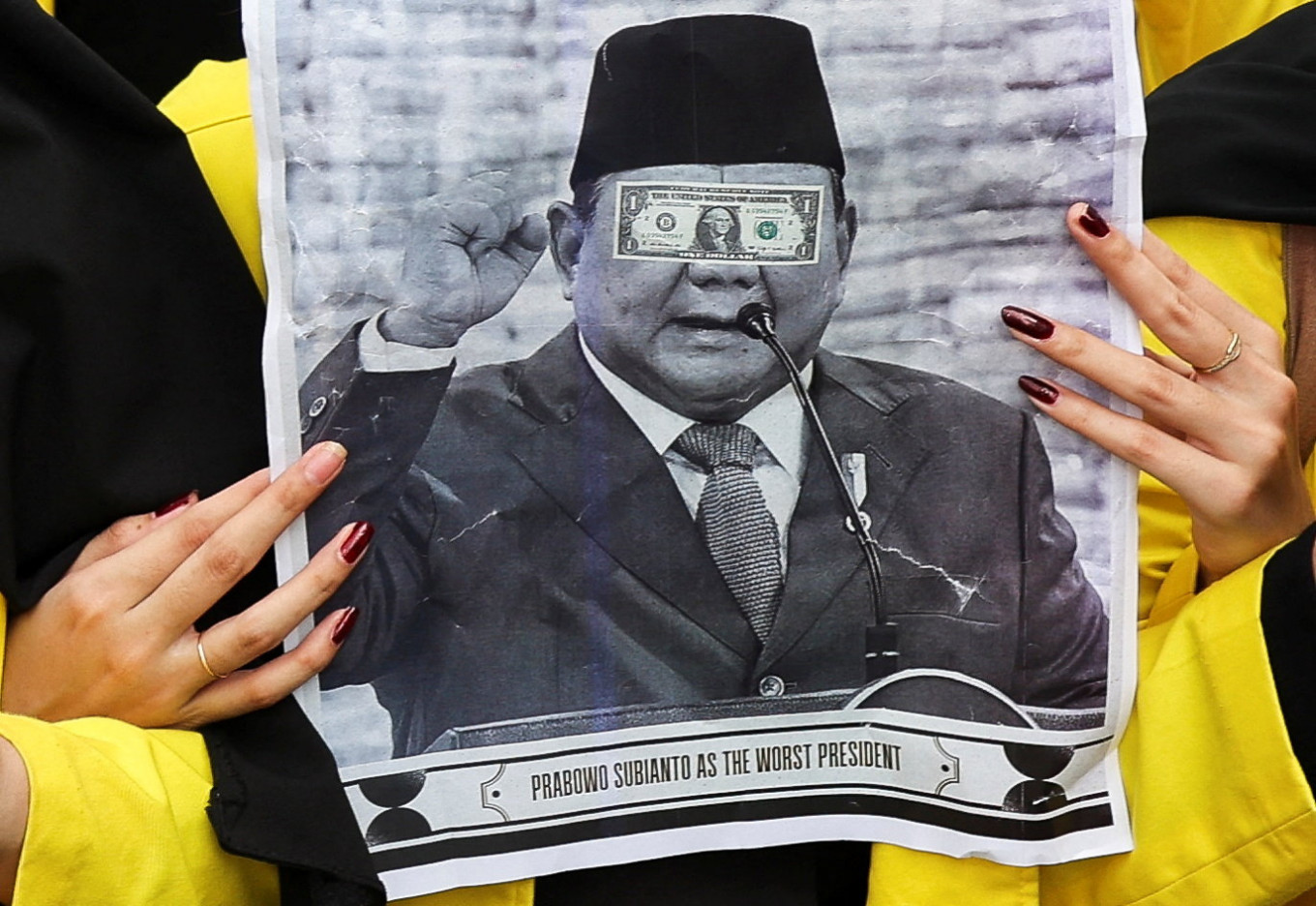
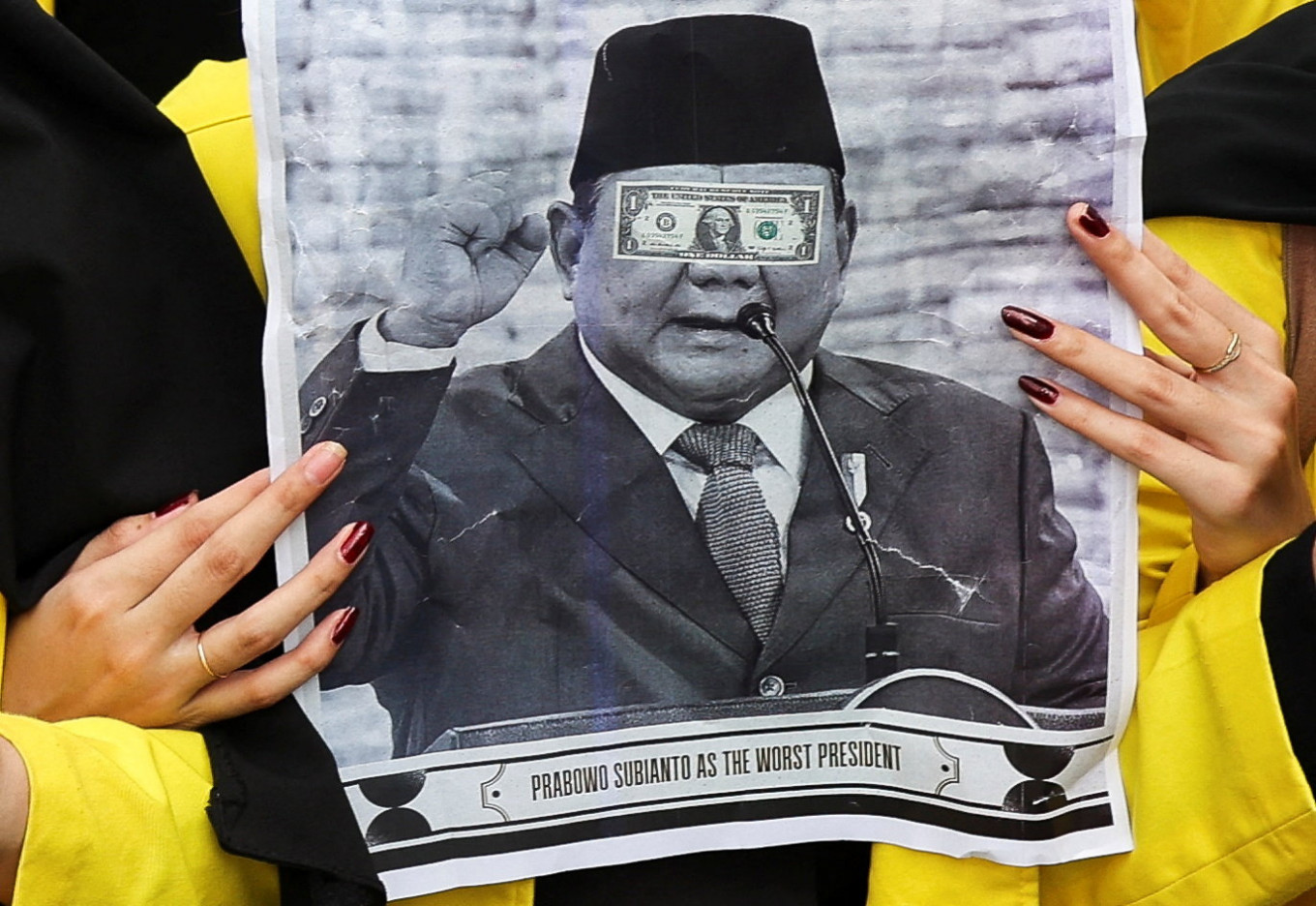
A student holds a poster depicting President Prabowo Subianto during a protest against government policies, including state budget spending, fuel price hikes, the free meals program and expanded military roles in civilian affairs, on June 12 in Jakarta. (Reuters/Ajeng Dinar Ulfiana)
Experts have pointed to the current administration's inclination toward state-centric development as a key factor behind Indonesia’s plunging competitiveness in a recent global ranking, arguing that economic interventionism not only complicates governance but also hurts business efficiency.Economist Intelligence Unit (EIU) Asia analyst Tay Qi Hang told The Jakarta Post on Thursday that external factors did impact the country’s competitiveness, but the drop signified Indonesia-specific concerns born from various policies that “weighed on investor confidence”.
He noted that firms were being “more cautious because the policy direction has become less clear” and big government initiatives reflected how “policymaking is becoming less predictable and more state-directed”.