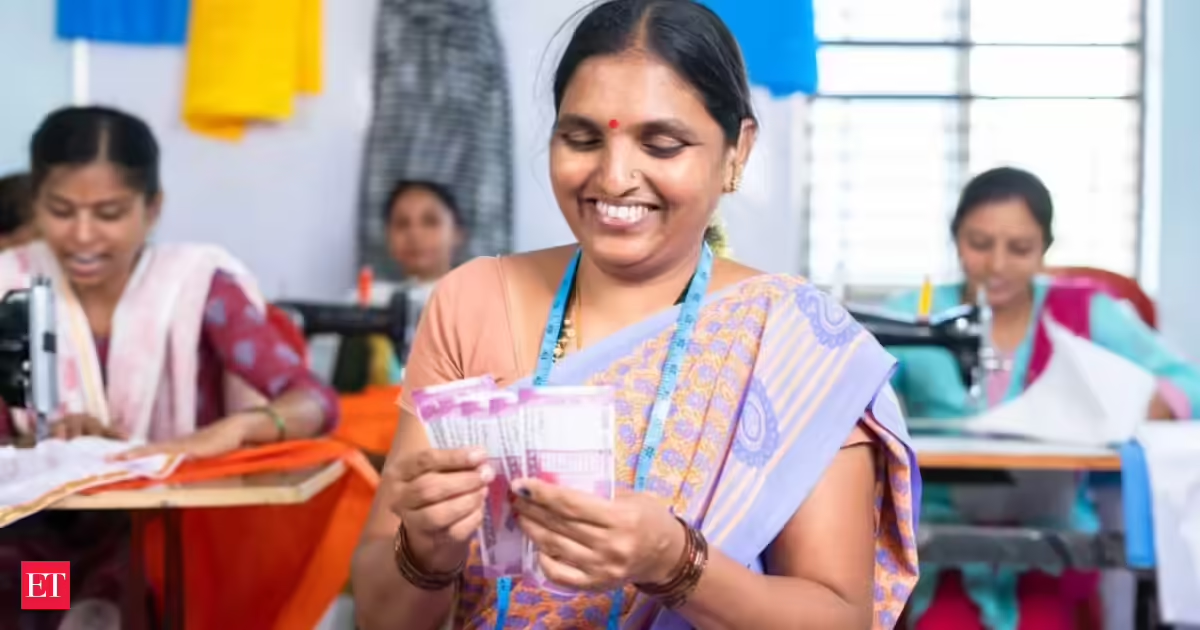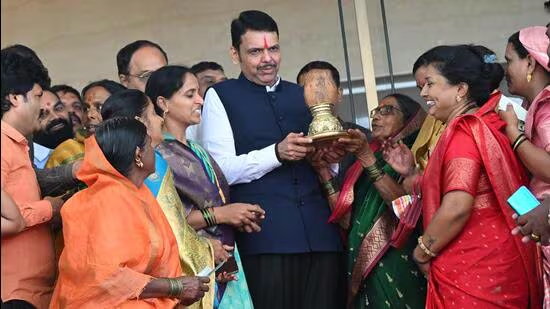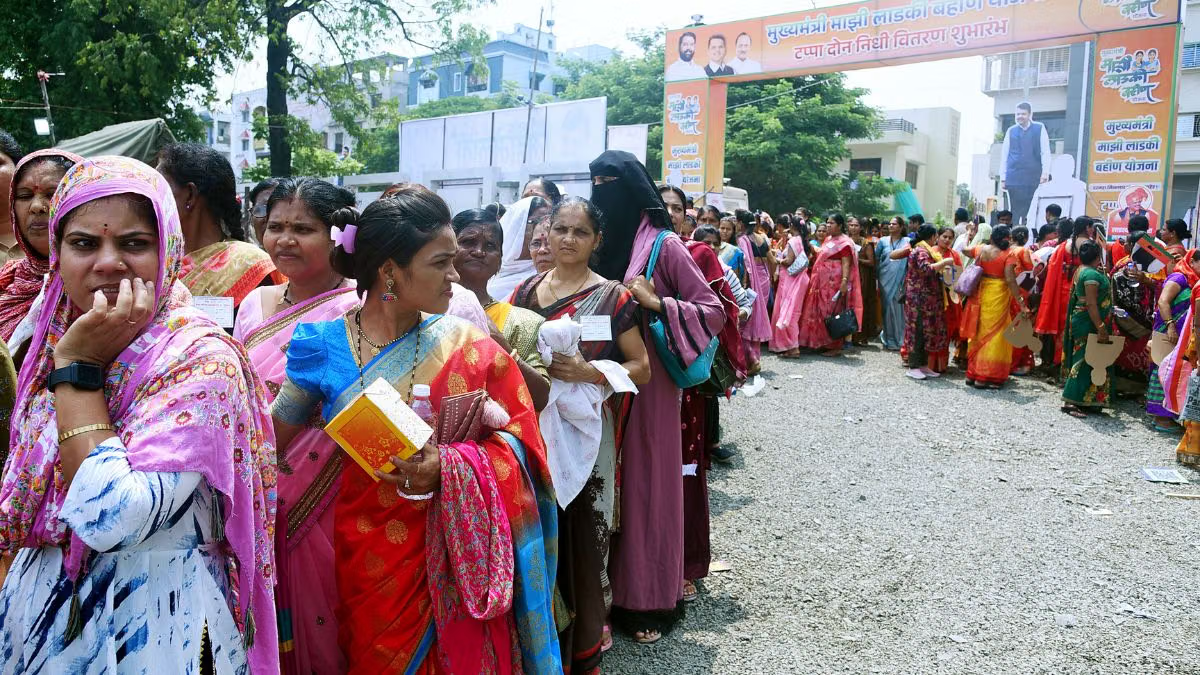
New Delhi: After women in Maharashtra began drawing Rs 1,500 a month under the Mukhyamantri Majhi Ladki Bahin Yojana, the men in their households cut their own spending by nearly half and let their bank balances build up, a working paper published this month by Economic Advisory Council to the Prime Minister has found.
The paper looks at month-by-month bank account data of scheme beneficiaries and the relatives linked to their accounts. It is authored by Soumya Kanti Ghosh, part-time EAC-PM member and Group Chief Economic Adviser at State Bank of India, along with SBI economist Shagishna K.Among male relatives of Ladki Bahin beneficiaries, month-end balances rose 23 percent—from Rs 8,234 to Rs 10,144 on average—while monthly spending fell 49 percent, from Rs 3,124 to Rs 1,607. The authors term this a financial substitution effect. The transfer, they write, “reduces her reliance on male relatives for day-to-day consumption support”.
The fall in male spending, they add, “does not signify any deterioration in household welfare”. It is instead a shift of consumption responsibility from the man to the woman, whose own spending rose 46 percent over the same window.Odisha shows a similar pattern. A 10 percent rise on an average in a Subhadra Yojana beneficiary’s account balance was associated with a 1.9 percent fall in her relatives’ spending. In the Odisha sample, the linked relatives were husbands (40 percent), fathers (21 percent) and sons (14 percent). In Maharashtra, spouses accounted for 68 percent.A separate test in Odisha found no statistically significant link between a beneficiary’s spending and her male relative’s balance. The authors read this as evidence that women are now spending without reference to the men in the house—what the paper calls “emergent financial autonomy”.