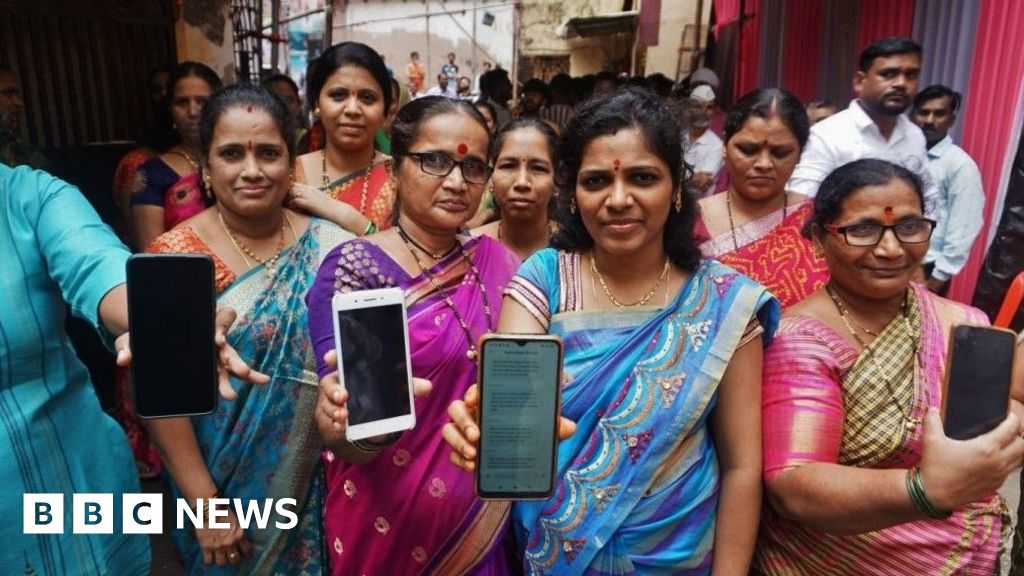
Cash transfers to women boost savings, consumption: EAC-PM reportMUMBAI: Mumbai: Direct benefit transfer schemes targeted at women are yielding disproportionately higher gains in household welfare, nutrition and children’s education, according to a report by the Economic Advisory Council to the Prime Minister, which has recommended that states transition towards a “cash-plus” empowerment framework to maximise developmental outcomes per rupee of public spending.The report, titled Unconditional Women Cash Transfer Programmes in India: Evidence from Maharashtra and Odisha and authored by Soumya Kanti Ghosh and Shagishna K, finds strong causal evidence that income controlled by women leads to superior social outcomes compared to equivalent income in the hands of men. It argues that states should build on existing fiscal commitments by improving beneficiary targeting and layering complementary interventions to enhance long-term empowerment.The study documents a substantial increase in savings among beneficiaries of the Mukhyamantri Majhi Ladki Bahin Yojana in Maharashtra and the Subhadra Yojana in Odisha. In Maharashtra, month-end balances rose by about 84%, translating into an average increase of Rs 6,884 per beneficiary, while in Odisha balances increased by roughly 45%, or around Rs 6,887. The findings suggest that recipients not only spend but also accumulate a meaningful financial buffer.Monthly consumption also rose significantly, with spending increasing by around 46% or Rs 1,349 in Maharashtra and by 28% or Rs 1,920 in Odisha. The report estimates a high marginal propensity to consume of about 0.90, indicating that beneficiary households remain liquidity constrained and deploy most of the transferred cash towards immediate consumption.The analysis highlights behavioural variations across demographic groups. Older women showed a greater tendency to accumulate precautionary savings to hedge against future medical or unforeseen expenses, while women with lower educational attainment were more likely to channel funds towards education-related spending.The programmes also generated positive intra-household spillover effects, improving overall financial stability while easing cash constraints faced by family members. In Odisha, a 10% increase in a beneficiary’s account balance was associated with a 1.9% decline in relatives’ spending. In Maharashtra, relatives’ month-end balances rose by 23% even as their spending declined by 49%, suggesting a substitution effect where direct transfers to women reduce the financial burden on male members.Importantly, the report finds no statistical correlation between a woman’s consumption and the bank balances of male relatives, pointing to greater financial autonomy and independent decision-making among beneficiaries. Spending patterns also shifted away from inferior goods towards healthcare, education and lifestyle-related categories. For instance, education-linked ATM expenditure among Maharashtra beneficiaries rose from 18% to 24%, while lifestyle-related UPI spending increased from 37% to 42%, reflecting greater digital adoption.While the paper does not compute a formal cost-benefit ratio or fiscal multiplier, it situates the schemes within a broader fiscal context. By FY26, unconditional cash transfers for women across 15 states are estimated to cost around Rs 1.7 lakh crore. Maharashtra’s scheme accounts for Rs 26,500 crore in revised outlay, down from Rs 38,310 crore following a digital audit, while Odisha’s Subhadra Yojana entails a budget of Rs 10,145 crore. These programmes constitute about 5.9% and 5.1% of the respective states’ revenue expenditure.The report underscores that the Jan Dhan-Aadhaar-Mobile architecture and the Direct Benefit Transfer ecosystem have significantly improved delivery efficiency by reducing leakages, transaction costs and administrative overheads. It argues that the scale of savings accumulation and the shift towards human capital investment justify the fiscal outlays from a behavioural effectiveness standpoint.Methodologically, the study employs a two-way fixed effects difference-in-differences model for Maharashtra and a staggered difference-in-differences framework for Odisha to isolate the causal impact of the schemes. The econometric analysis confirms that the observed gains in savings and consumption are attributable to the programmes rather than broader macroeconomic trends, with pre-treatment trends between control and beneficiary groups remaining statistically aligned.The findings also reveal demographic heterogeneity in outcomes. In Maharashtra, savings gains increase with age, rising from Rs 1,705 among beneficiaries aged 21–29 to Rs 10,835 for those above 55, indicating a life-cycle shift towards precautionary savings. Similarly, the largest gains accrue to less educated cohorts, including a Rs 7,521 increase in savings among illiterate beneficiaries, suggesting that the schemes deliver the highest marginal benefits to the most vulnerable segments.
Cash transfers to women boost savings, consumption: EAC-PM report
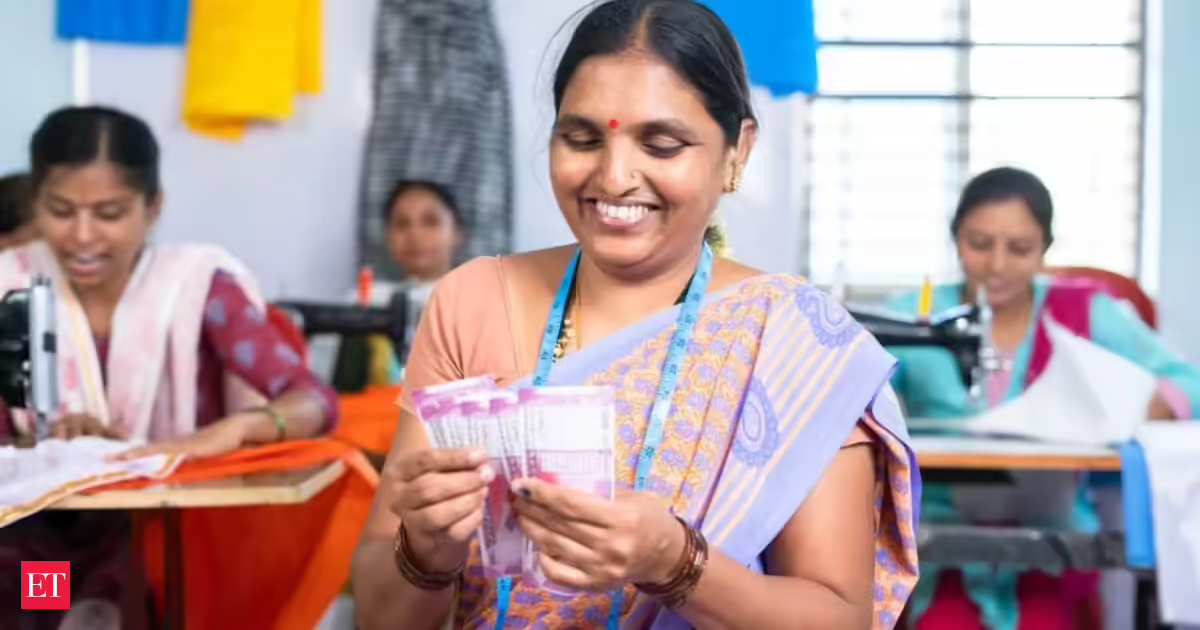
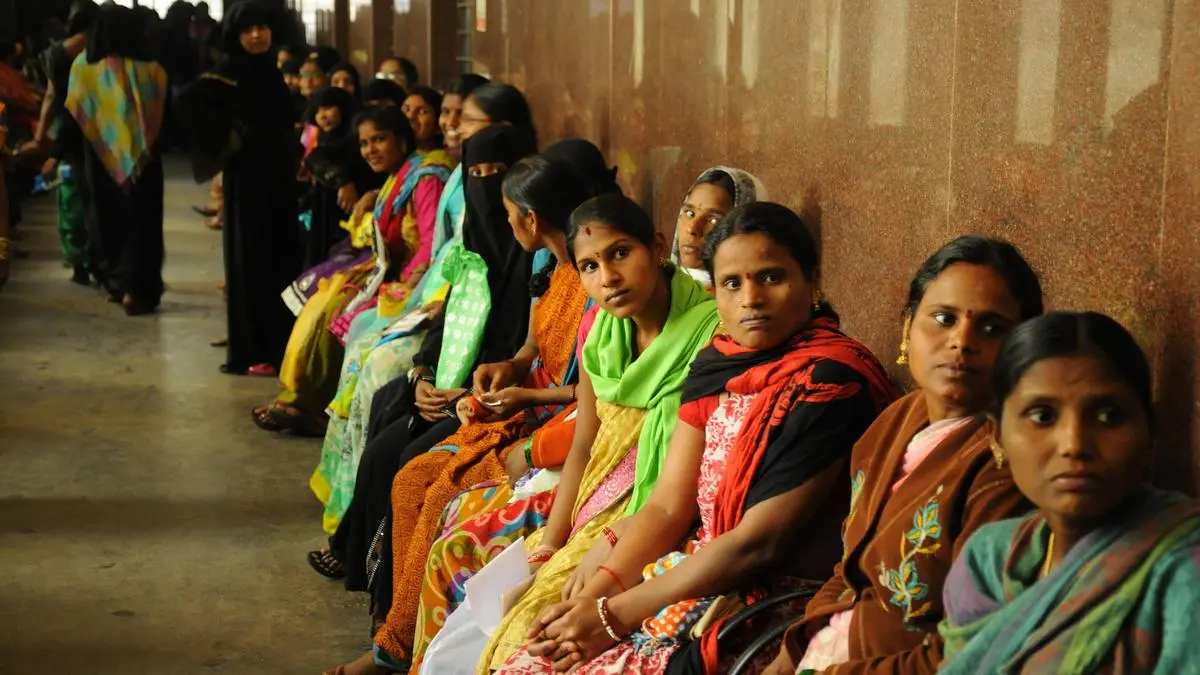
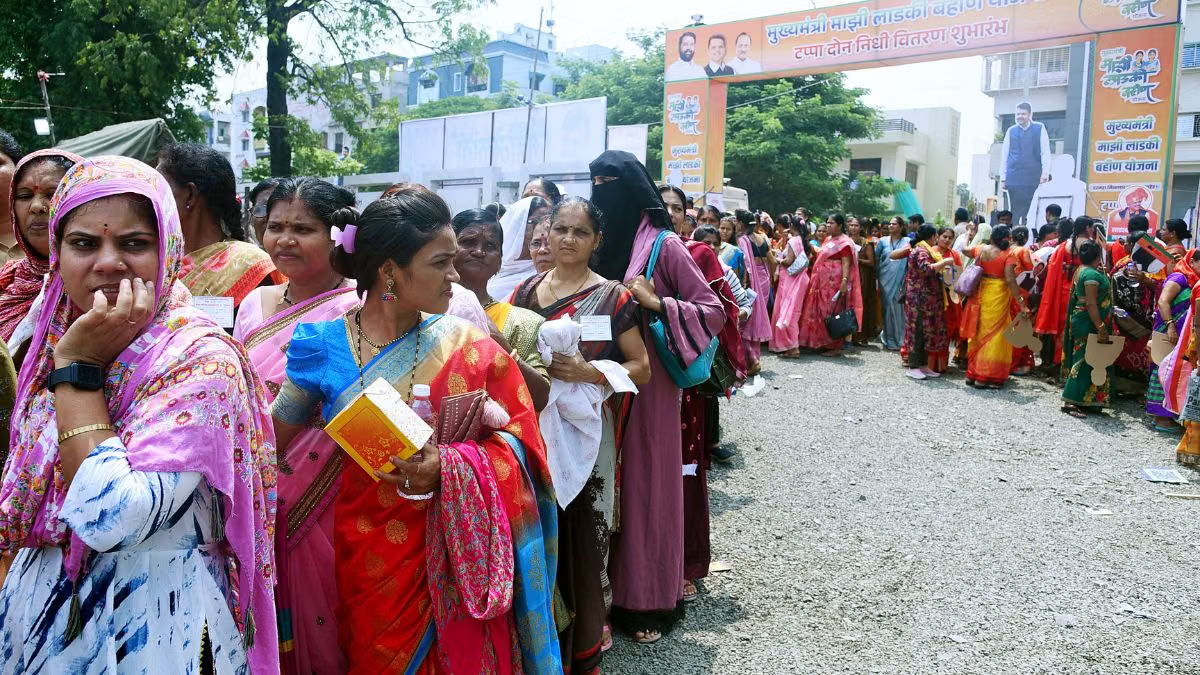
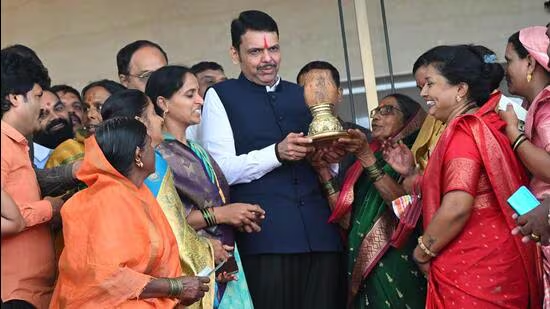
MUMBAI: Mumbai: Direct benefit transfer schemes targeted at women are yielding disproportionately higher gains in household welfare, nutrition and children’s education, according to a report by the Economic Advisory Council to the Prime Minister, which has recommended that states transition towards a “cash-plus” empowerment framework to maximise developmental outcomes per rupee of public spending.
688 words~3 min read