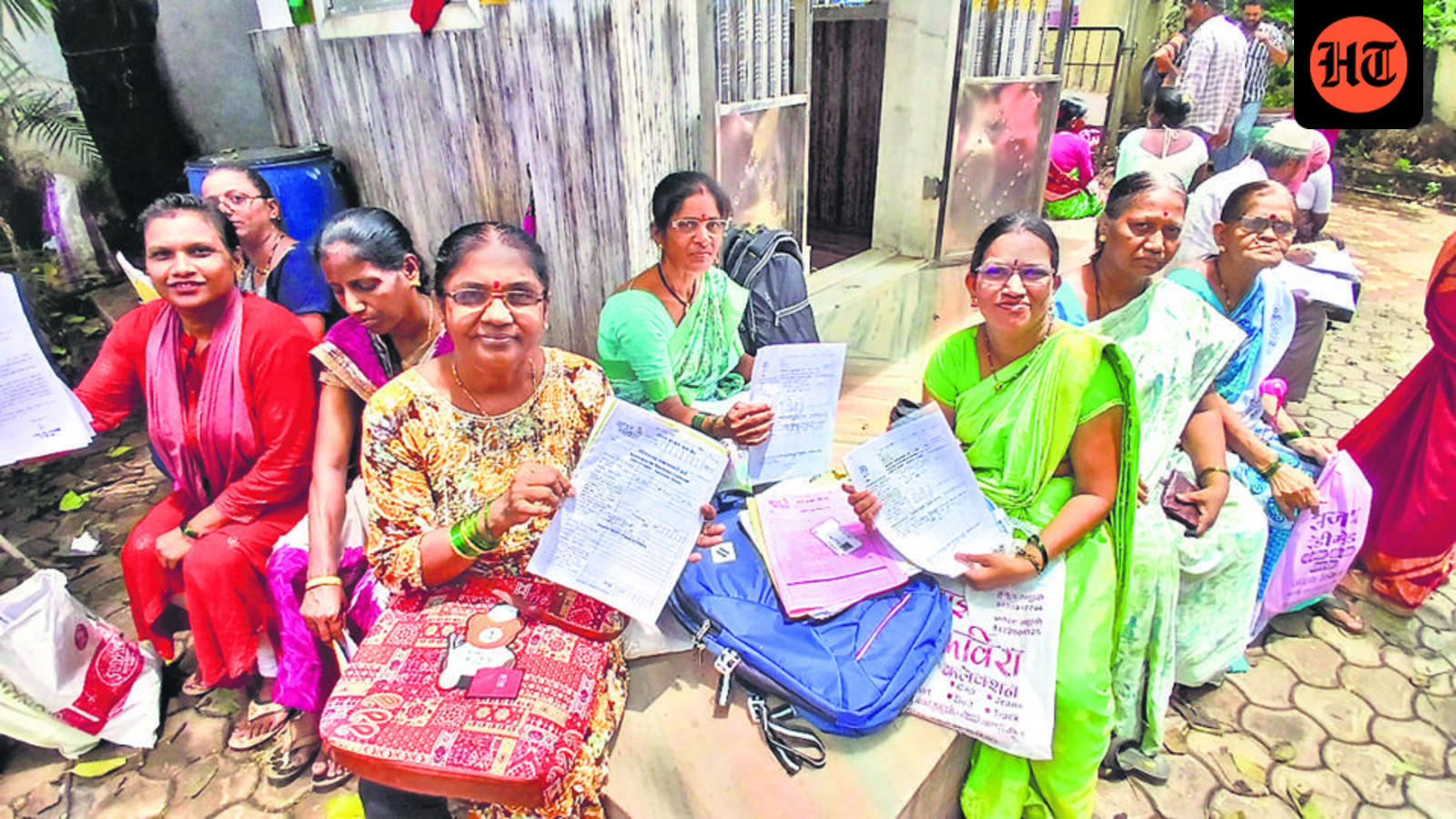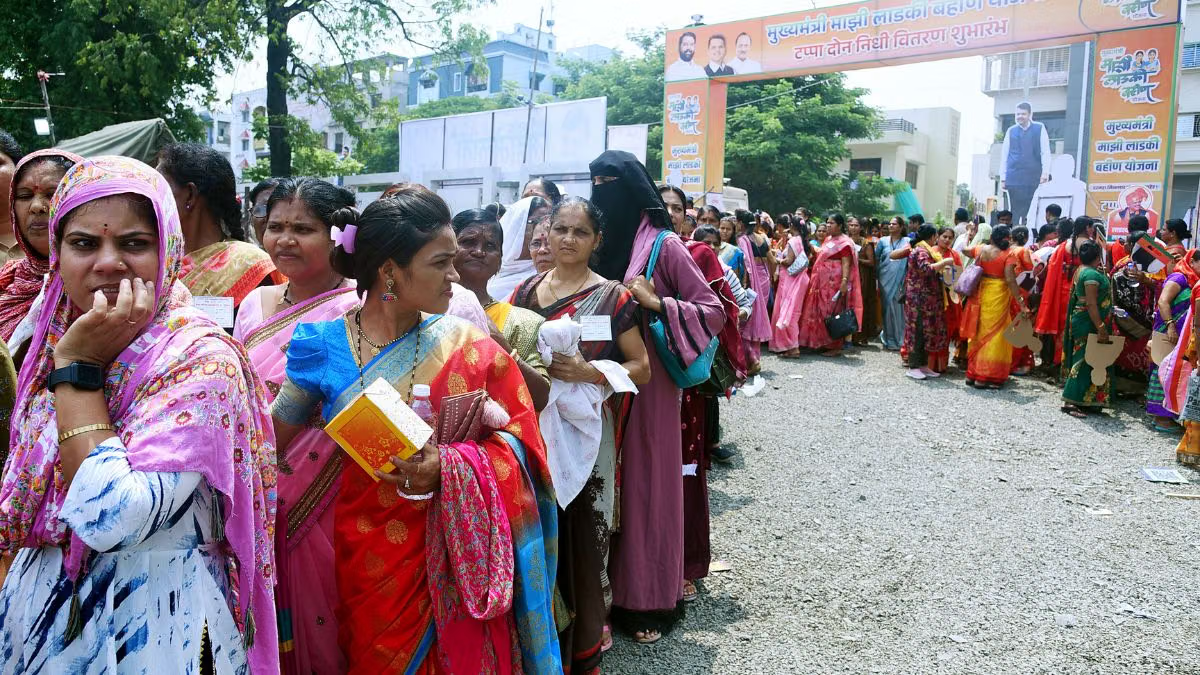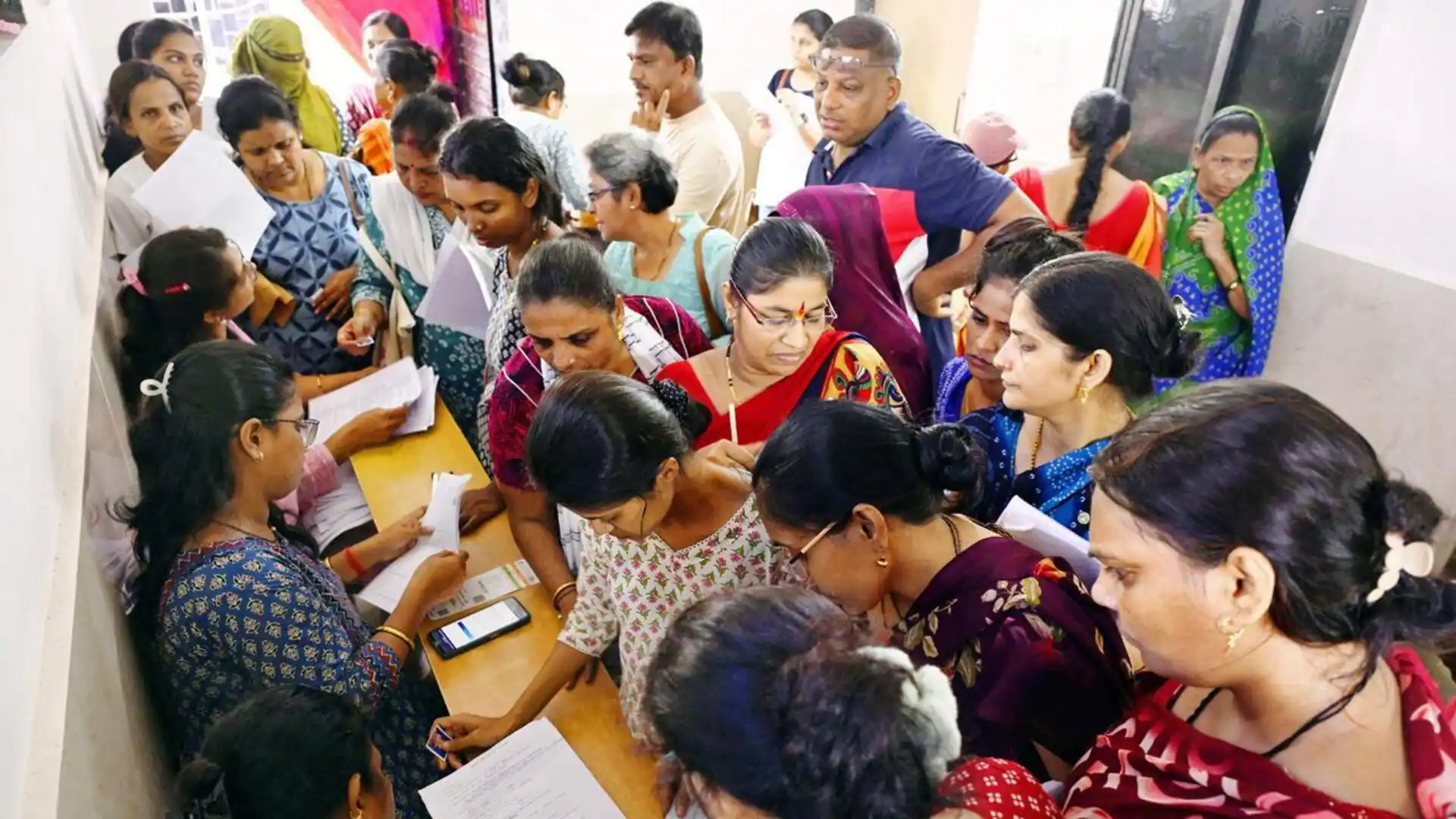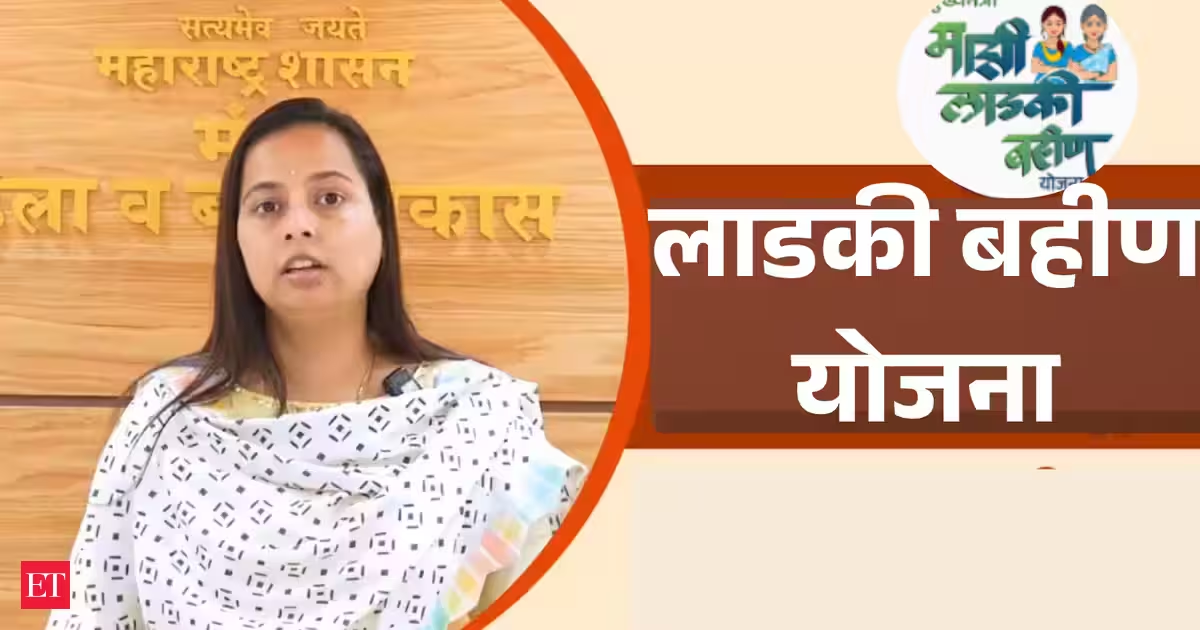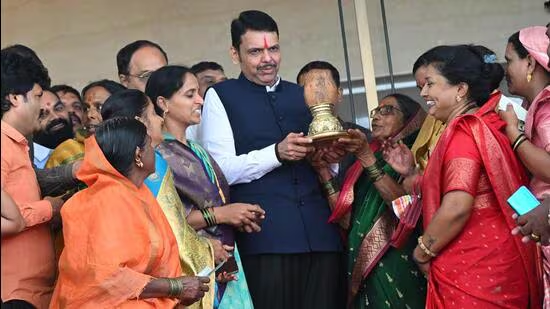
MUMBAI: A report tabled by the Comptroller and Auditor General (CAG) has cautioned the state government that its fiscal sustainability could come under pressure, largely owing to the large spends in the Mukhyamantri Majhi Ladki Bahin Yojana, growing off-budget borrowings, mounting liabilities and large amounts of unspent funds parked outside the consolidated fund.Mumbai, India - July 10, 2026: Women farmers carrying a ceremonial urn filled with soil from their farms arrived at the Maharashtra Vidhan Bhavan to thank Maharashtra Chief Minister Devendra Fadnavis for issuing certificates to women farmers. The women performed a traditional aarti and welcomed the Chief Minister as a gesture of gratitude, saying the soil symbolized the hard work and sweat of farmers. The event took place amid the ongoing Monsoon Session of the Maharashtra Legislature, where agriculture and farmers' welfare remain key issues under discussion, in Mumbai, India, on Friday, July 10, 2026. (Photo by Anshuman Poyrekar/Hindustan Times) (Anshuman Poyrekar/HT Photo)CAG’s report, tabled in the state legislature on the concluding day of the monsoon session on Friday, on state finances for 2024-25, noted that the state recorded a revenue deficit of ₹29,994.76 crore, fiscal deficit of ₹1.24 lakh crore and outstanding liabilities of ₹8.63 lakh crore due to the huge spending on various schemes.“A key factor behind the surge in expenditure was the Ladki Bahin scheme, which led to a surge in the women welfare budget from ₹261.78 crore in 2023-24 to ₹33,554.36 crore in 2024-25. The spending in the social sector expanded significantly while capital expenditure accounted for only about 14% of total expenditure, indicating a shift towards revenue expenditure and cash-transfer schemes,” the report stated.The audit also highlighted Maharashtra’s growing dependence on off-budget borrowings -- by various state agencies from government undertakings as well as funding agencies.“Outstanding off-budget debt rose to ₹28,325 crore by March 2025 after fresh borrowings of ₹18,440 crore during the year, mainly through state-owned entities. Such borrowings understated the state’s actual debt burden and fiscal deficit and reduced transparency because they were not fully reflected in budget documents,” it has stated.Another major finding was the large volume of unspent funds treated as expenditure. The audit found that ₹15,298.83 crore transferred to the bank accounts of 9,148 drawing and disbursing officers (DDOs) remained unspent at the end of the financial year even though the amounts had already been booked as expenditure. The Urban Development Department (UDD) accounted for the highest share of these idle balances.“Maharashtra’s fiscal health is anchored by robust GSDP (Gross State Domestic Product) growth. However, the increasing revenue deficit will necessitate an increased reliance on market borrowing to finance capital expenditure. This generates potential risk to long term debt sustainability. The fiscal balance is further compounded by audit observations regarding undischarged liabilities exceeding ₹27,184 crore, which threatens to both further deepen the fiscal deficit of nearly 22% and revenue deficit,” the report stated.This would impact fiscal consolidation, necessitating cautionary prudence and allocative efficiency in resource management. The report also warned that continued accumulation of such liabilities could create repayment pressures in future.The CAG recommended that the state prepare a medium-term fiscal consolidation roadmap aimed at reducing the revenue deficit, improving expenditure quality and creating greater fiscal space for capital investment. It urged the government to fully disclose all off-budget borrowings in budget documents, minimise reliance on such financing mechanisms and ensure legislative oversight of all liabilities.The audit also called for strict monitoring of funds transferred to banks, timely closure of deposit accounts and return of unspent balances to the consolidated fund. It further recommended linking fund releases to actual expenditure requirements and strengthening fiscal transparency to present a more accurate picture of the state’s finances.
CAG report flays govt over spends in Ladki Bahin scheme
A key factor behind the surge in expenditure was the Ladki Bahin scheme, which led to a surge in the women welfare budget from ₹261.78 crore in 2023-24 to ₹33,554.36 crore in 2024-25 | Mumbai news
607 words~3 min read