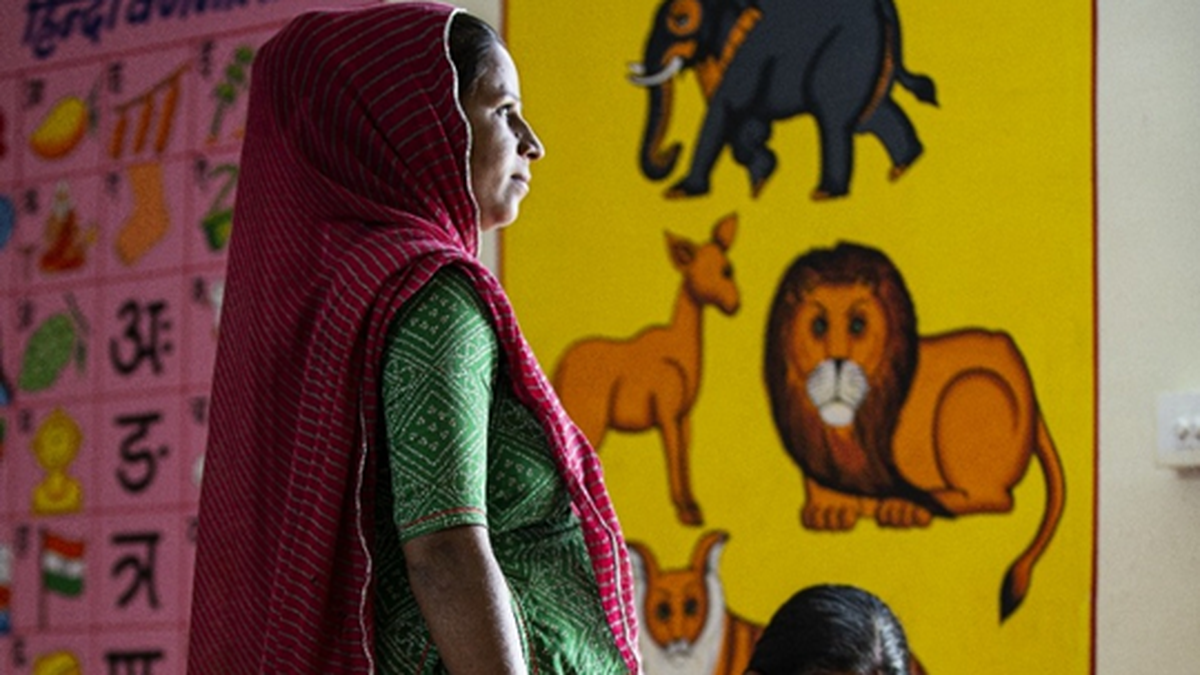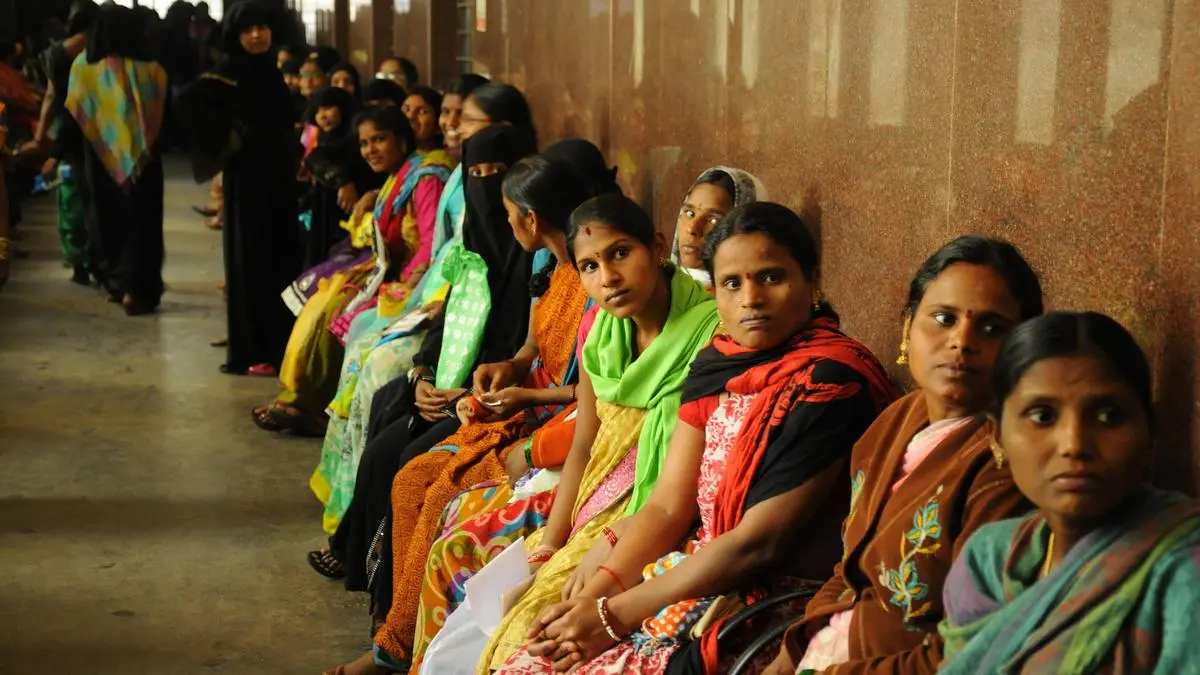
Beneficiary targeting should be strengthened progressively through hybrid multidimensional verification frameworks that enhance precision while ensuring no deserving woman is excluded
| Photo Credit:
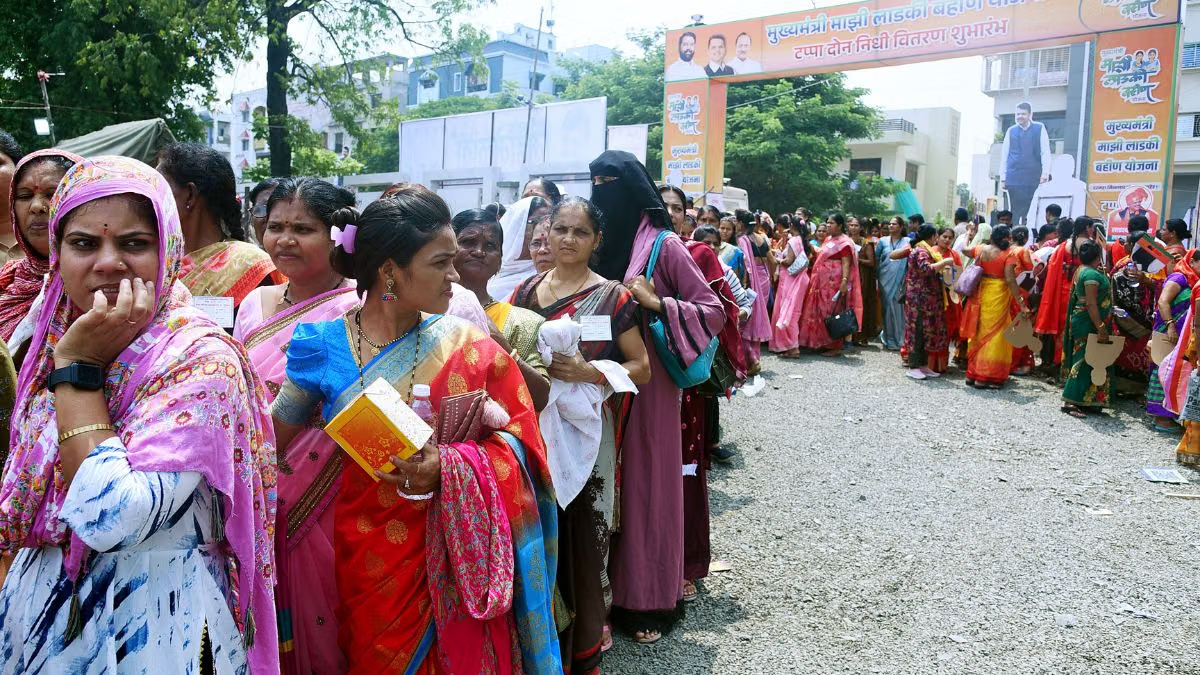
Women-targeted transfers outperform gender-neutral ones, with India’s digital payments infrastructure amplifying the effect, a working paper by Prime Minister Economic Advisory Council (EAC-PM) has found. Authored by part-time member of EAC-PM, Soumya Kanti Ghosh and SBI Economist Shagishna K, the paper recommend a ‘cash-plus’ empowerment model, better targeting combined with outcome-linked incentives such as tying transfers to child nutrition improvements.The paper has examined two schemes — Maharashtra’s Mukhyamantri Majhi Ladki Bahin Yojana ( ₹1,500 per month) and Odisha’s Subhadra Yojana ( ₹10,000 per year, biannual). The Maharashtra programme raised month-end balances by approximately 84 per cent ( ₹6,884 per beneficiary) and spending by approximately 46 per cent ( ₹1,349). The Odisha programme raised balances by approximately 45 per cent ( ₹6,887) and spending by 28 per cent ( ₹1,920).“The Marginal Propensity to Consume (MPC) was around 0.90 for the monthly transfers indicating liquidity constraints. In particular, older women had more urge for precautionary savings while those women having lower education exhibited more urge to spend on education,” the paper said. It may be noted that the MPC is a measure of the proportion of an increase in income that a person or household is likely to spend on consumption.The paper noted that both the programmes generated positive household spillover effects, improving financial positions of family members while reducing their expenditure outflows. “A 10 per cent increase in beneficiaries’ account balances under Subhadra Yojana was associated with a 1.9 per cent reduction in relatives’ spending while in Maharashtra, the Ladki Bahin scheme was associated with a 23 per cent increase in relatives’ month-end balances and a 49 per cent decline in spending.Finally, spending basket analysis reveals a qualitative shift toward lifestyle-related, medical, and educational purposes alongside accelerated UPI adoption for beneficiaries. For example, in Maharashtra for Ladki Bahin beneficiaries ATM related educational expenditure recorded the largest increase from 18 to 24 per cent. In UPI transactions, lifestyle-related expenditure recorded largest increase, rising from 37 per cent to 42 per cent, while medical expenditure increased from 8-10 per cent.“Such results are in conformity with global trends that reveal women-focused transfers generate stronger developmental outcomes than gender-neutral transfers, but in India the digital story has revolutionised such payment mechanisms,” the paper said. It suggested both programmes should be sustained and evolved toward cash-plus architectures that combine the income transfer with voluntary capacity-building, digital literacy, and SHG linkage components. Beneficiary targeting should be strengthened progressively through hybrid multidimensional verification frameworks that enhance precision while ensuring no deserving woman is excluded.“Transfer amounts should be reviewed periodically for adequacy in light of inflation and evolving household expenditure patterns, with efficiency gains from improved targeting deployed to fund enhanced benefits and complementary services for beneficiaries,” the paper concluded.Published on July 6, 2026