Not a single match at the 2026 FIFA World Cup has triggered FIFA’s extreme heat protocol. Zero out of 94 games played exceeded the governing body’s Wet Bulb Globe Temperature threshold of 32°C (89.6°F), according to a Reuters analysis published July 10.
That sounds like good news. Here’s the thing: it depends entirely on whose thermometer you trust.
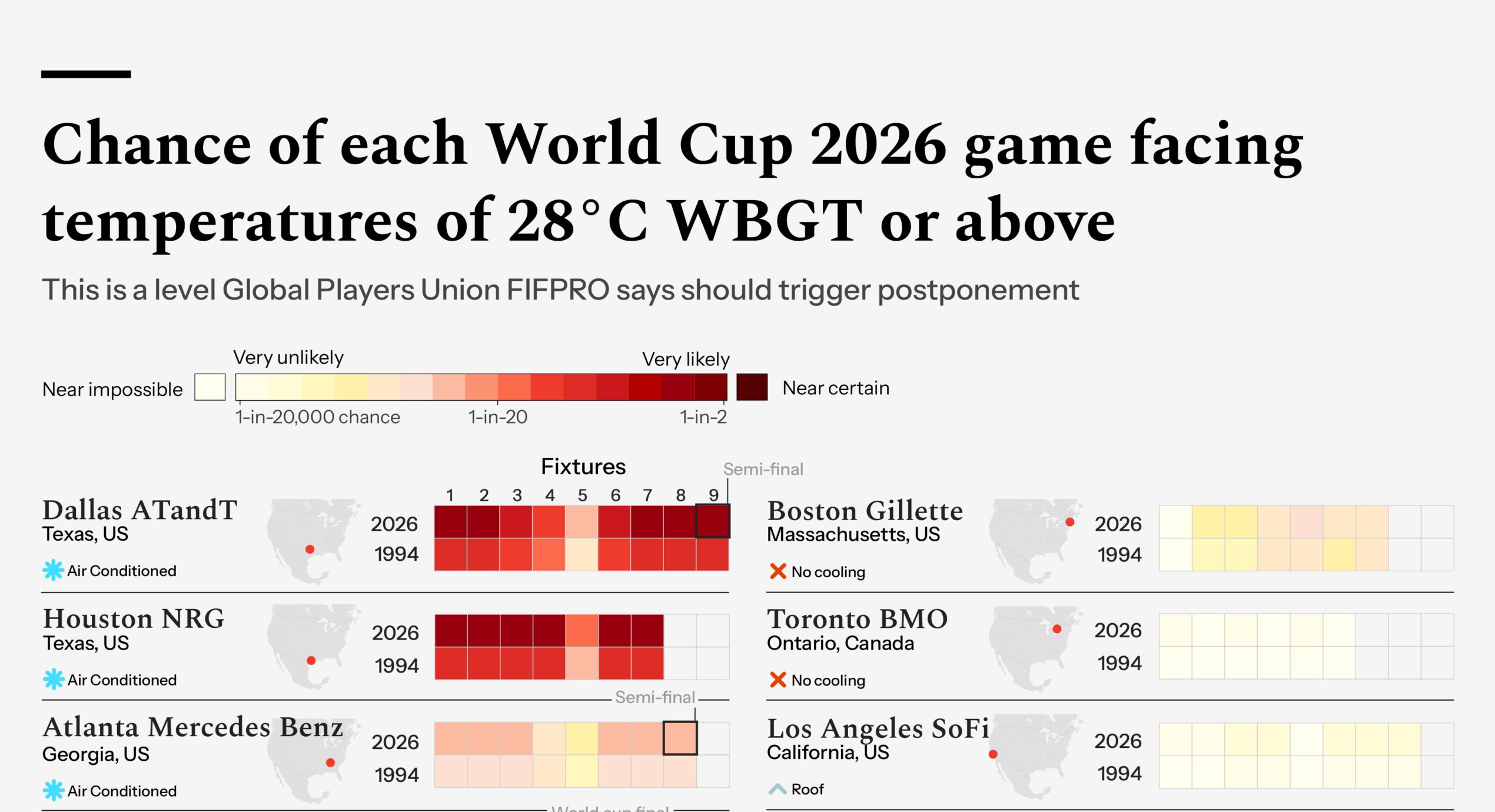
While FIFA’s bar remained untouched, the global players’ union FIFPRO uses a considerably lower threshold for concern. And by their standard, 35 matches exceeded the temperature at which cooling breaks should be mandatory, while 27 breached the level where games should be delayed or postponed altogether. That’s roughly a third of the tournament playing in conditions the union considers dangerous.
Two organizations, two very different definitions of danger
FIFA’s extreme heat protocol kicks in when WBGT, a composite measure that accounts for temperature, humidity, wind, and solar radiation, crosses 32°C. At that point, mandatory cooling breaks and potential schedule changes become necessary. Below that line, the governing body treats conditions as manageable.