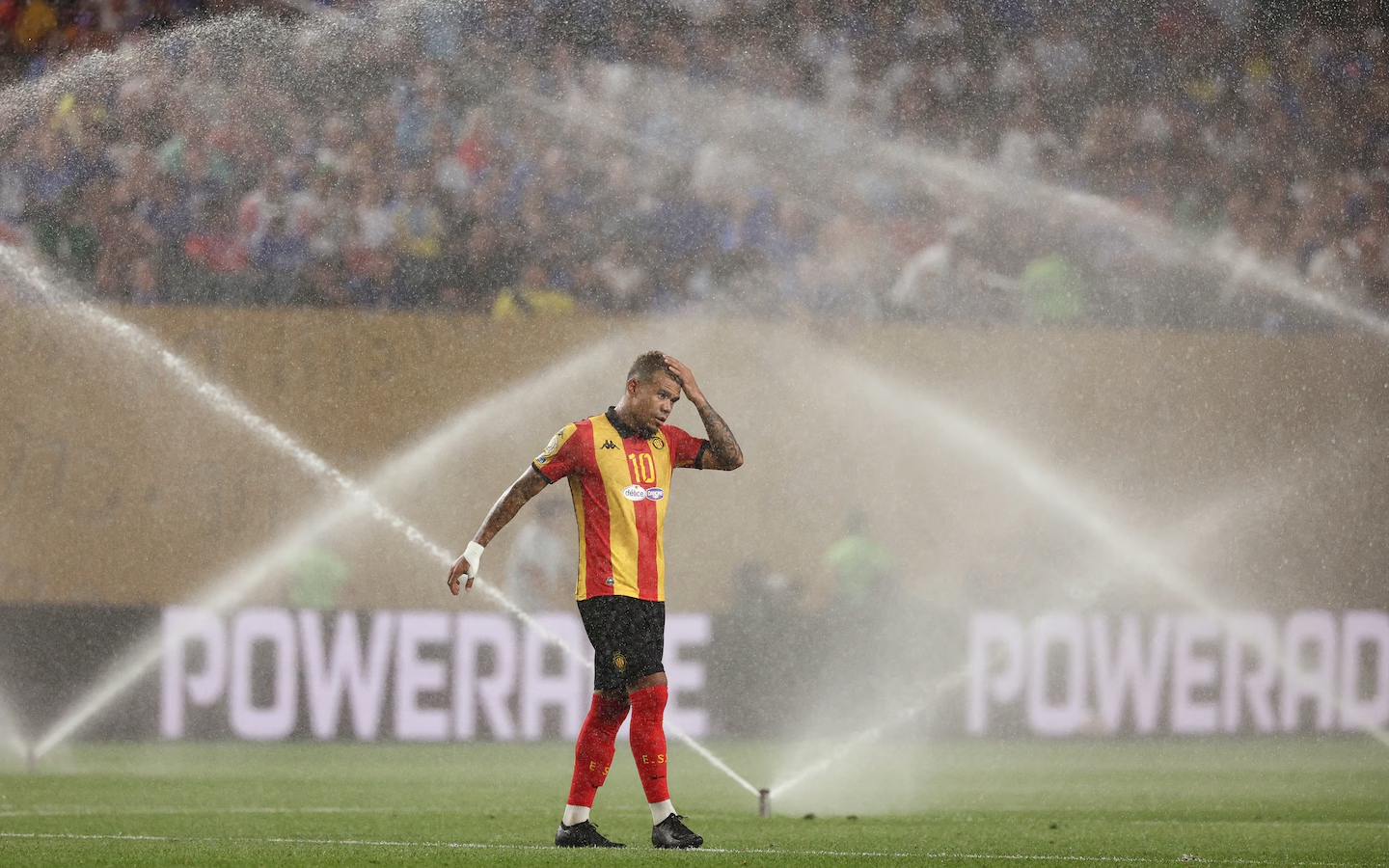
Measures proposed by organizers of the upcoming FIFA World Cup won’t be sufficient to protect players and fans from the significantly higher risk of extreme heat and humidity expected at this year’s tournament, a medical expert warns.
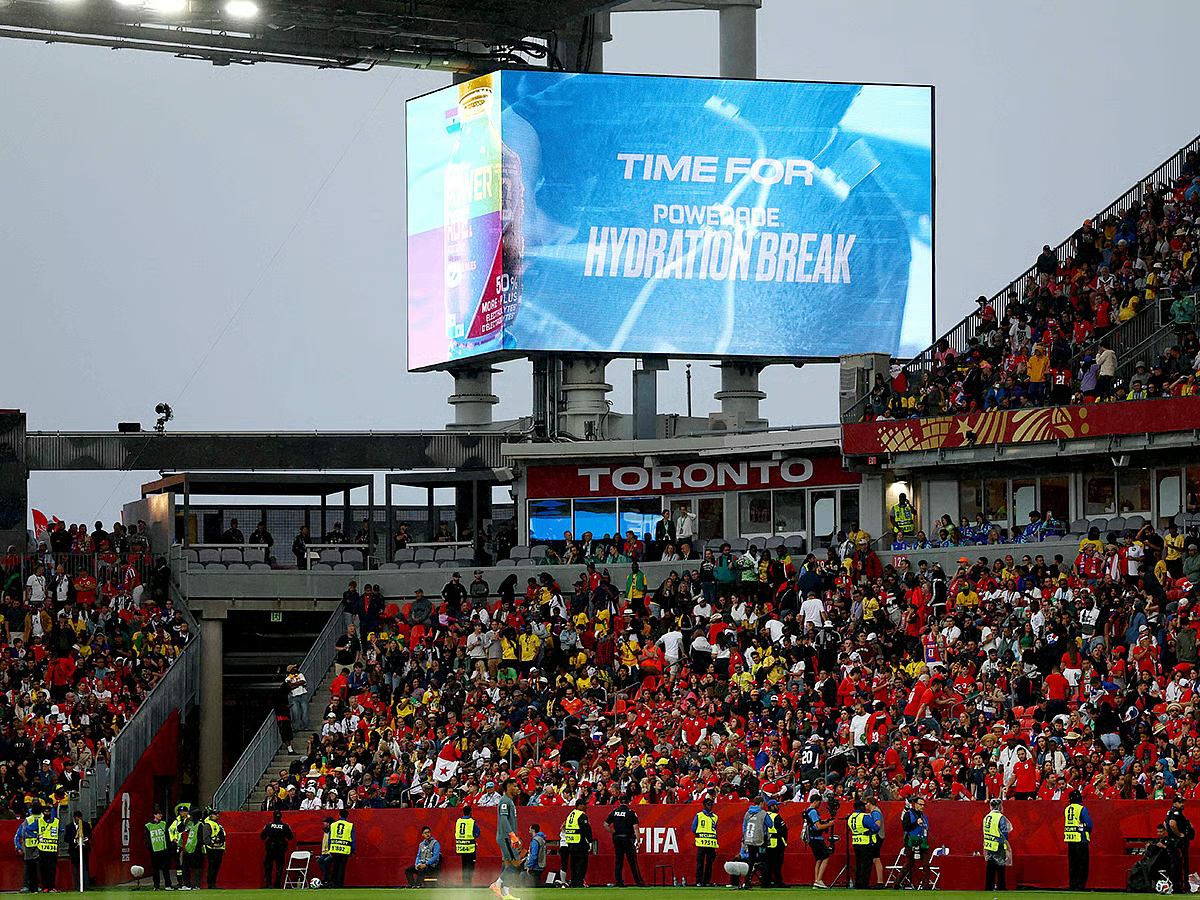
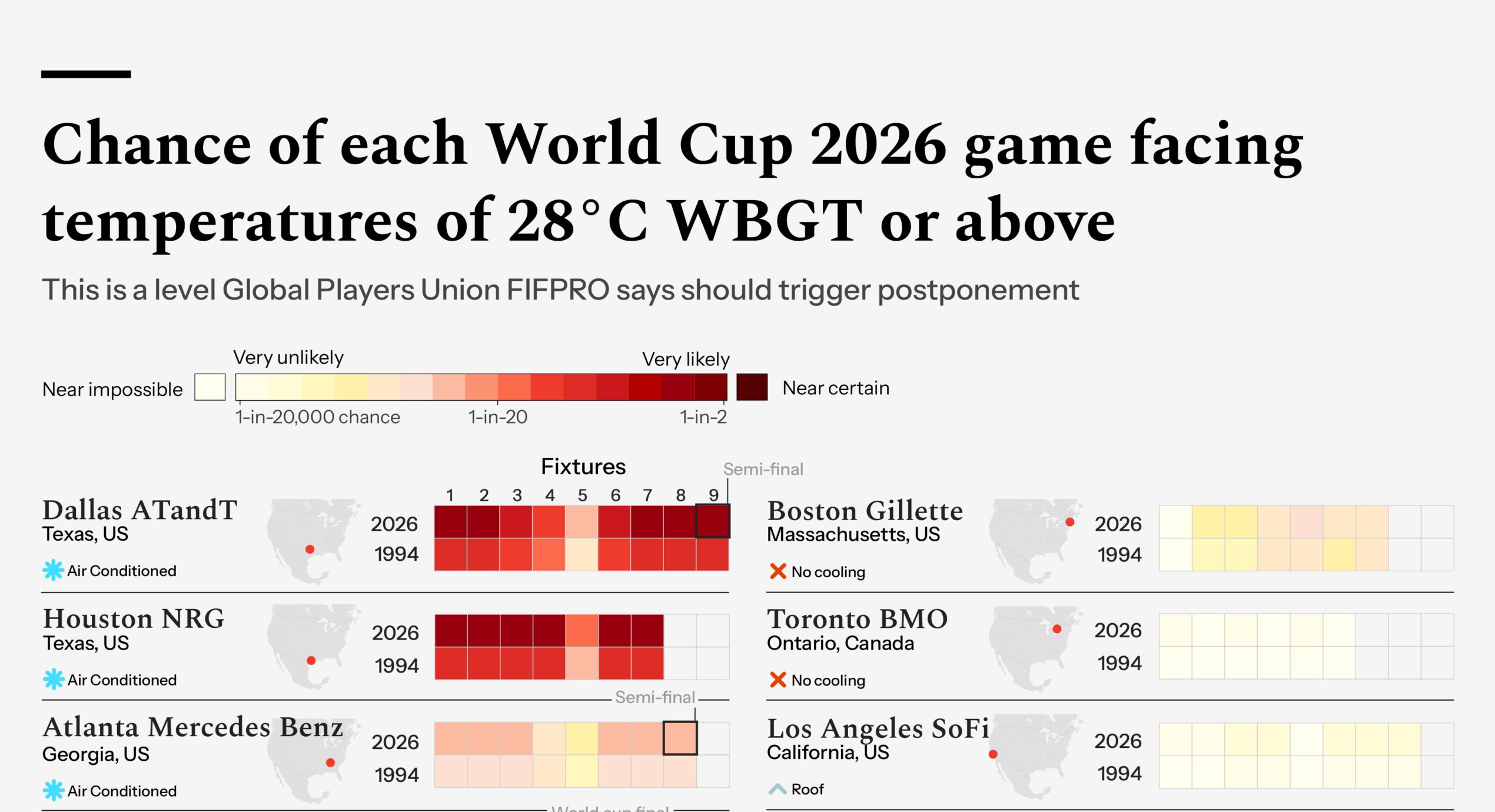
In December 2025, FIFA announced there would be three-minute hydration breaks for players in each half of every game “to ensure the best possible conditions for players”. However, a recent analysis says conditions at the 2026 World Cup, co-hosted by the U.S., Mexico and Canada, will be much warmer than during the USA ’94 tournament. Scientists from World Weather Attribution (WWA), an international initiative studying the role of climate change in extreme events, warn that human-induced climate change has nearly doubled the likelihood of dangerously hot match conditions since then.
That makes it much more difficult for the body to dissipate heat, said Chris Mullington, a consultant anesthetist and clinical senior lecturer at Imperial College London.
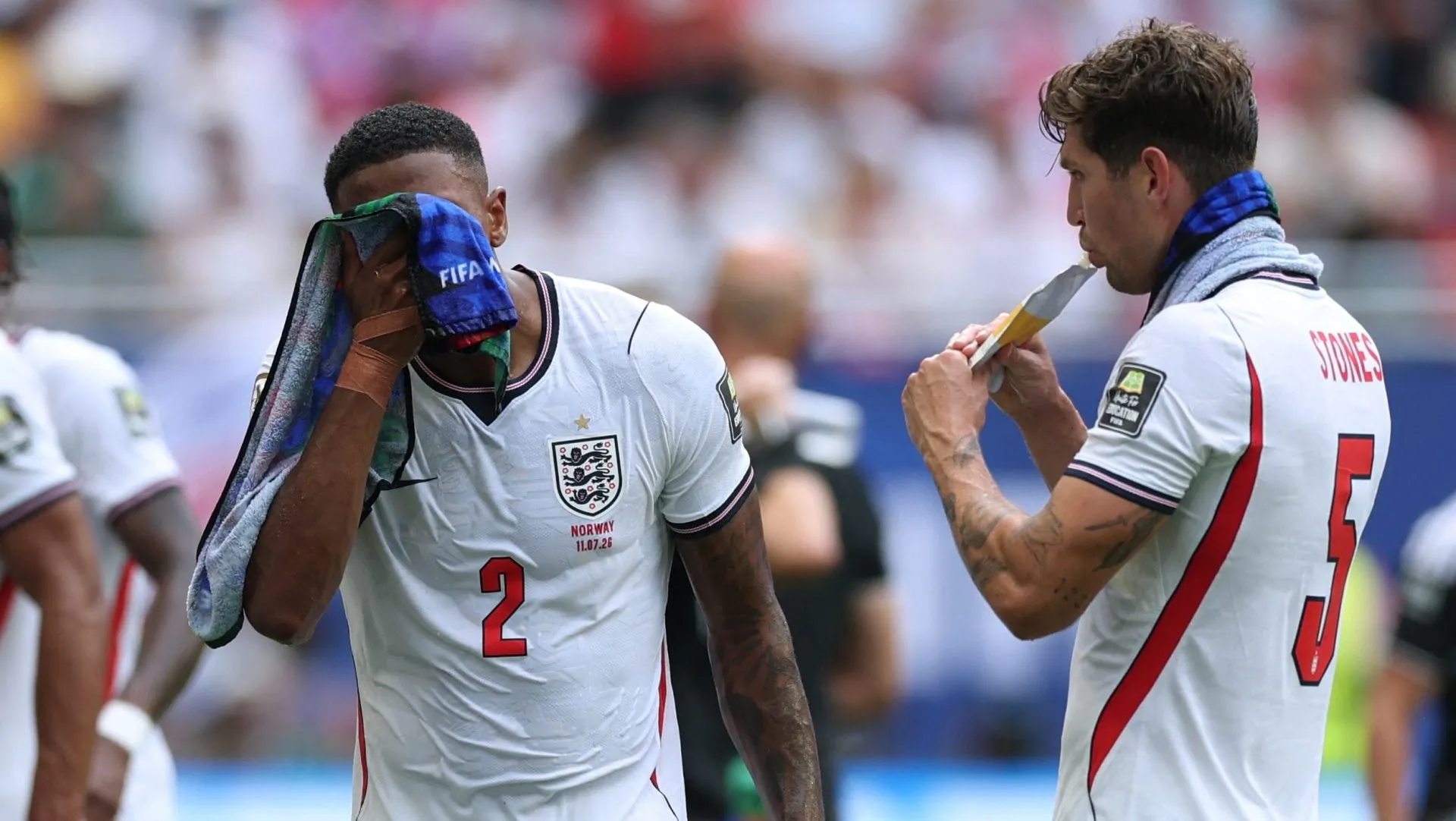
“That matters because footballers generate large amounts of metabolic heat during repeated sprints, accelerations, and high-intensity play,” he said at a press briefing. “As WGBT rises, the body’s usual cooling mechanisms become less effective.”