Sávio Bortolini Pimentel just missed getting on the roster to represent his national team, Brazil, at the 1994 FIFA World Cup in the United States.
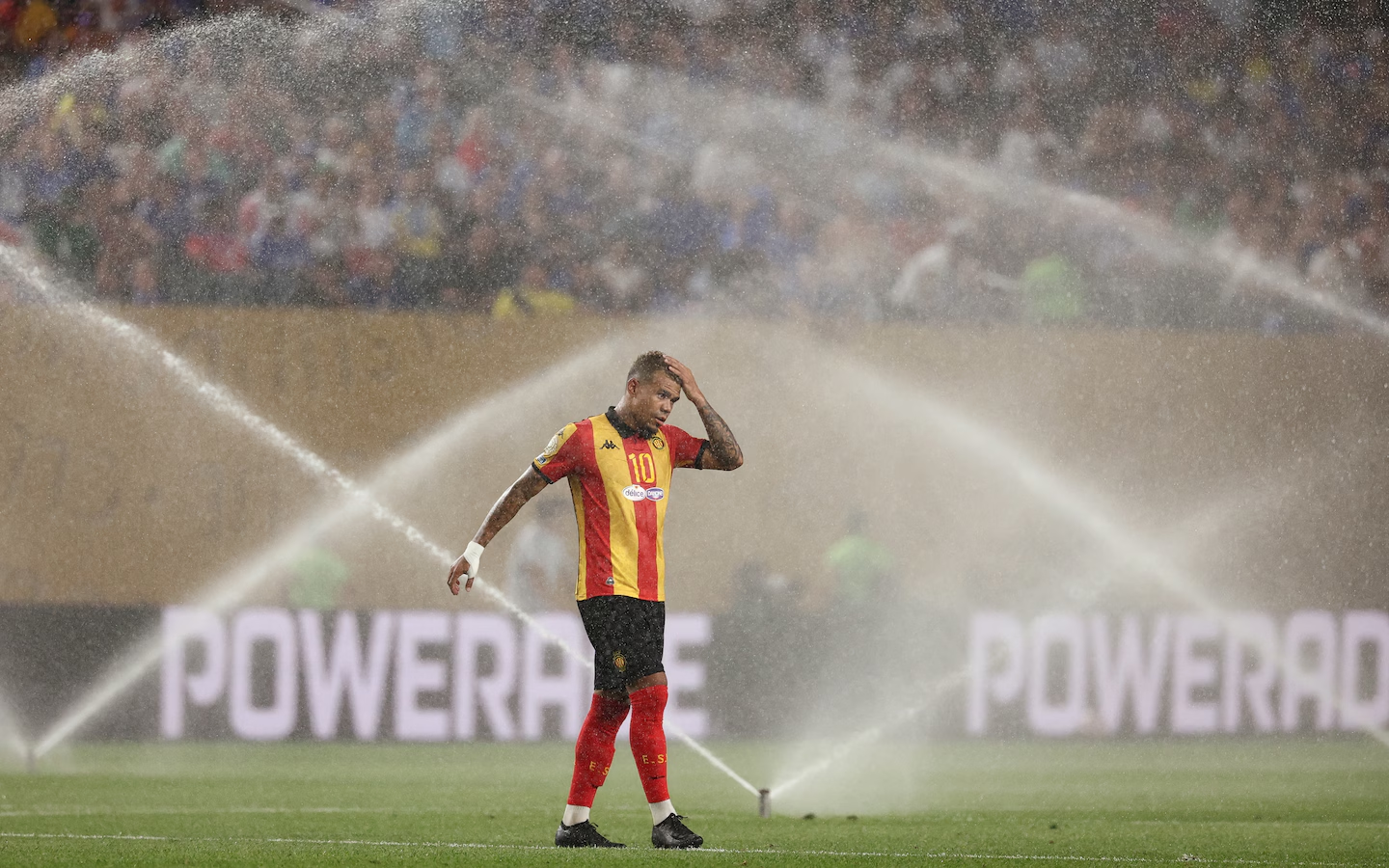
At the time, he was a 20-year-old professional player with the Rio de Janeiro team Flamengo. He recalls other players telling him after the fact that the weather during some matches was just too hot. And the heat was “intense,” they said, during the final match at the Rose Bowl in Pasadena, California, under a 32 degree Celsius (90 degrees Fahrenheit) sun, when Brazil prevailed over Italy.
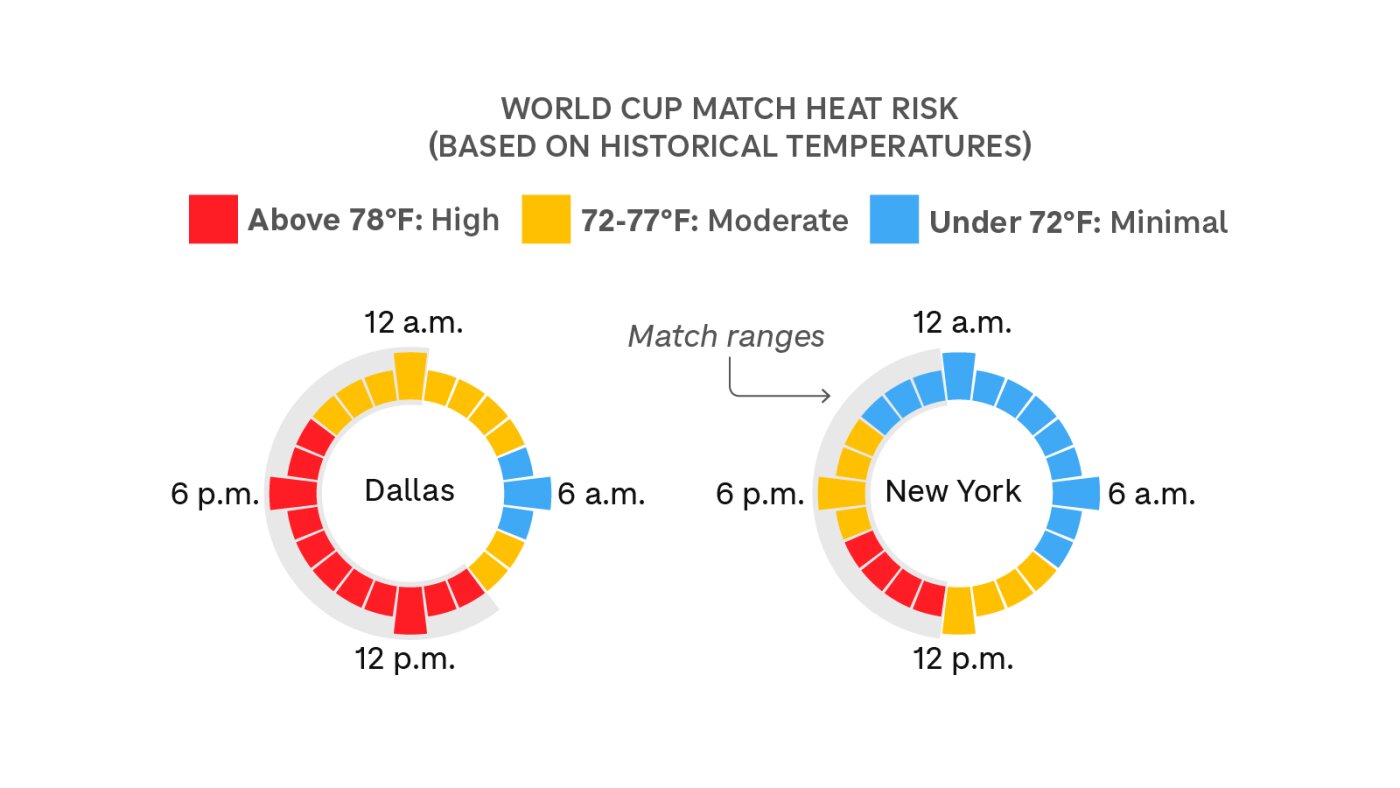
Players in the upcoming 2026 FIFA World Cup in June and July face an even greater risk of unsafe temperatures than they did in 1994, the last time the World Cup was held in the United States, according to estimates from researchers at Imperial College London. Human-induced climate change has made these conditions significantly more likely in the 16 host cities in the U.S., Mexico and Canada, according to the report.
The report predicted that five games could take place in unsafe heat, up from three games in 1994. The report used a threshold for unsafe temperatures that may require postponements based on wet bulb globe temperatures of 28 degrees C (83 degrees F), which is recommended by FIFPRO, the international player’s union. Wet bulb globe temperatures are calculated based on a variety of factors including the sun, humidity and temperature, to show the stress on the human body. FIFA also uses wet bulb globe temperatures, but currently considers postponing matches only at levels exceeding 32 degrees C (90 degrees F).