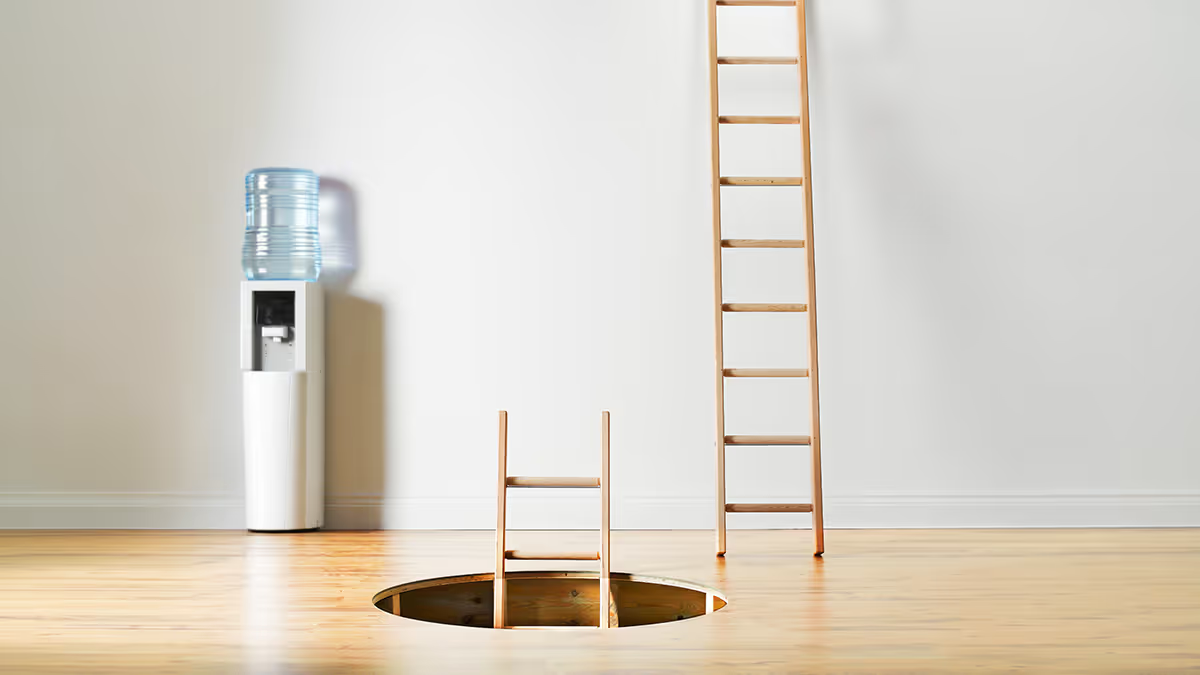
Harvard Business Review LogoJuly 10, 2026Diamond Sky Images/Getty ImagesIn 1965, Harvard Business Review surveyed 2,000 male and female executives to track perceptions of women in leadership. Since then, researchers have replicated that study every twenty years toIn 1965, an article published in Harvard Business Review asked the question: “Are Women Executives People?” The title was deliberately provocative, and the moment warranted provocation: of the 2,000 male and female executives surveyed for the article, a substantially large proportion of male executives viewed women in management unfavorably, not because of their competency to lead but because they felt the executive suite was an inappropriate place for them. Since then, work published in HBR has examined perceptions of women in executive roles at twenty-year intervals, with author teams using nearly identical questions from the 1965 research in both 1985’s “Compensation, Jobs, and Gender,” by Benson Rosen, Sara Rynes, and Thomas A. Mahoney and 2006’s “What Men Think They Know About Executive Women.”
What 60 Years of Data Reveals About How Men and Women Experience Leadership
In 1965, Harvard Business Review surveyed 2,000 male and female executives to track perceptions of women in leadership. Since then, researchers have replicated that study every twenty years to gauge shifting attitudes toward women in top posts. In this latest installment, which includes responses from 193 senior U.S. executives, supported by in‑depth interviews and several new questions, researchers have found some troubling backsliding: Men and women now diverge sharply on whether women are judged more harshly, held to higher standards, and advance through genuinely meritocratic systems. The findings point not to overt hostility but to “underground bias”: informal sponsorship, subjective performance criteria, and unequal access to P&L roles. The researchers argue that organizations possess the tools to fix these gaps but have not yet summoned the will.