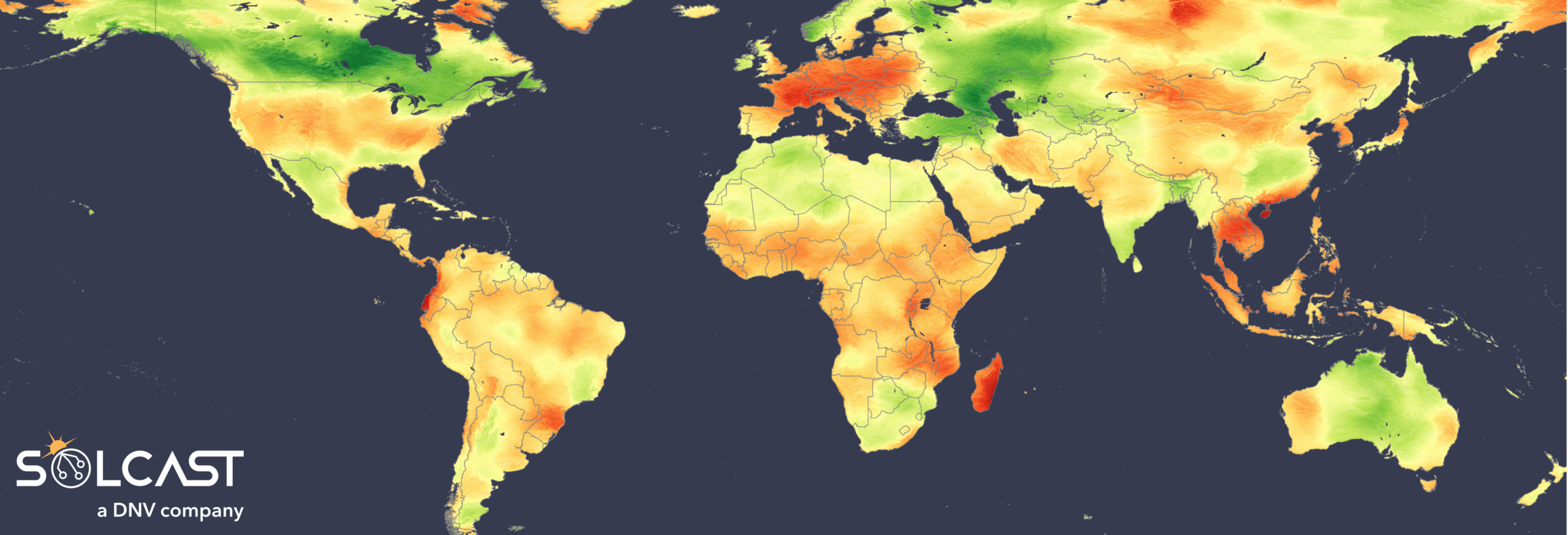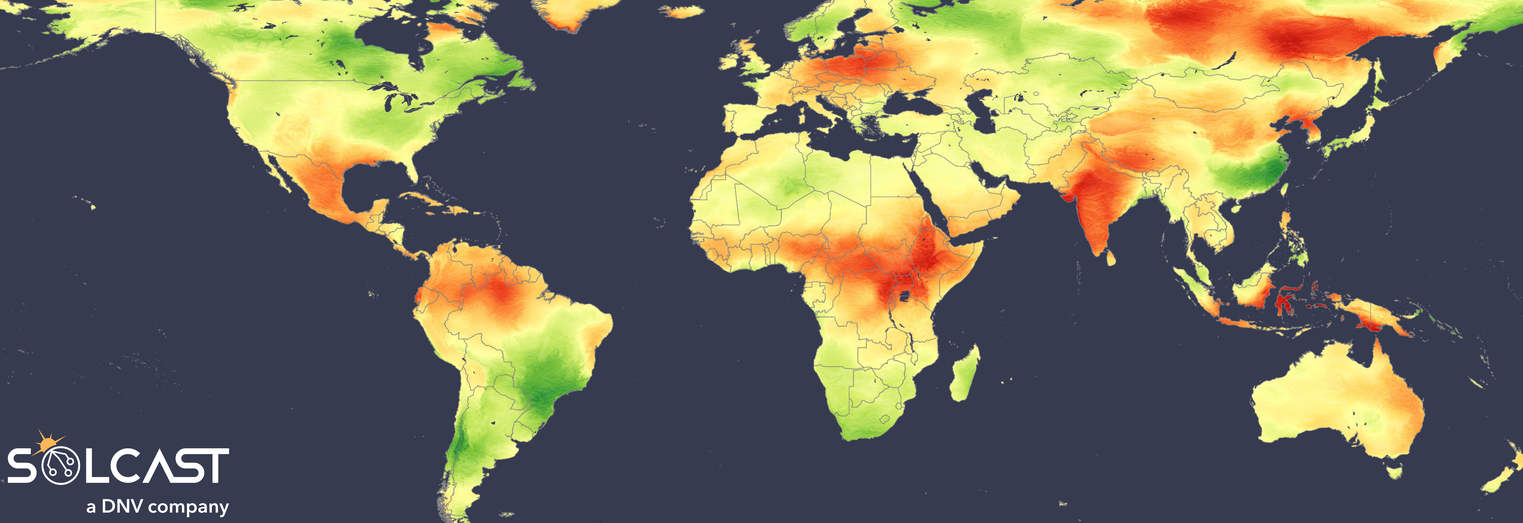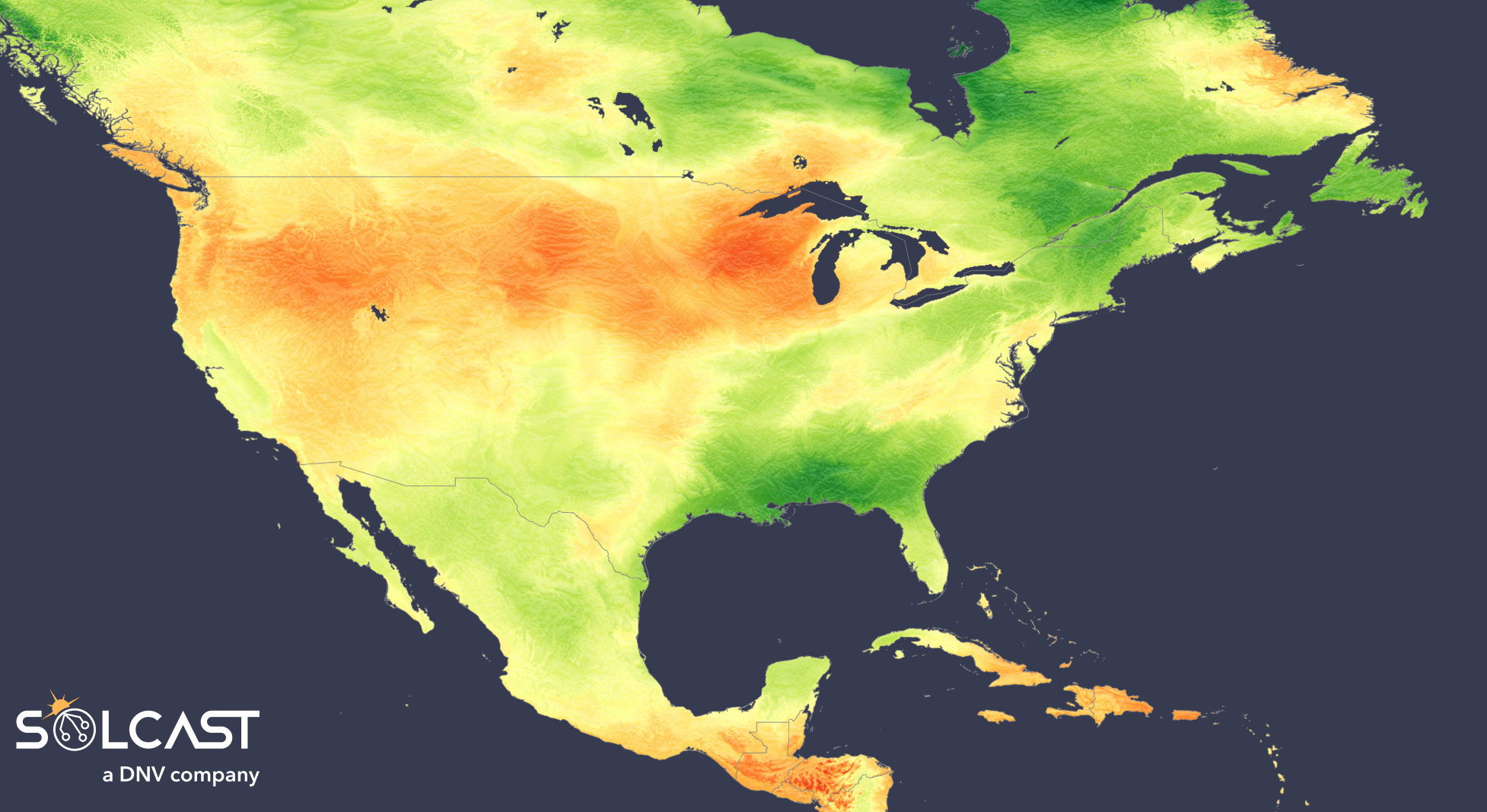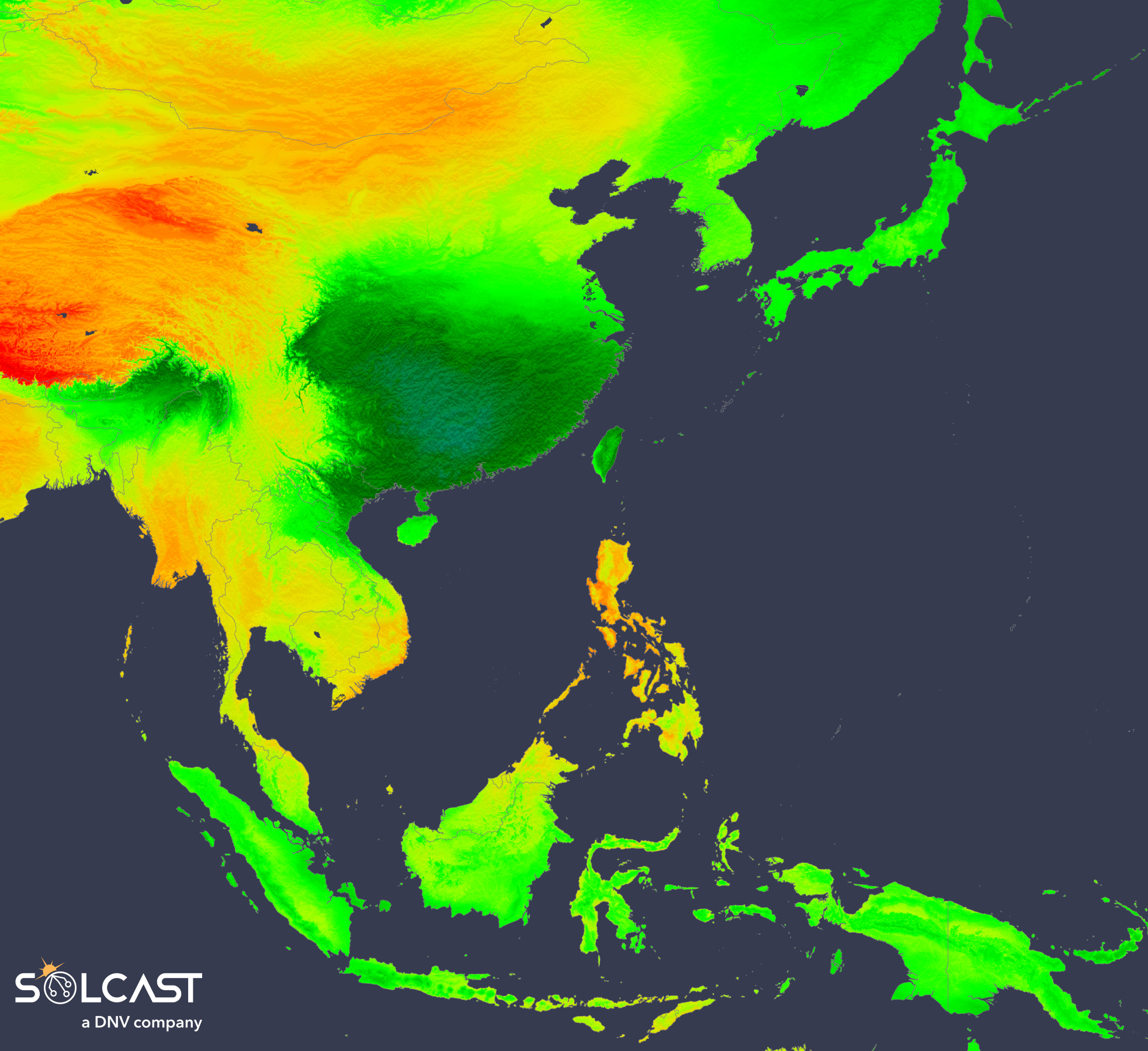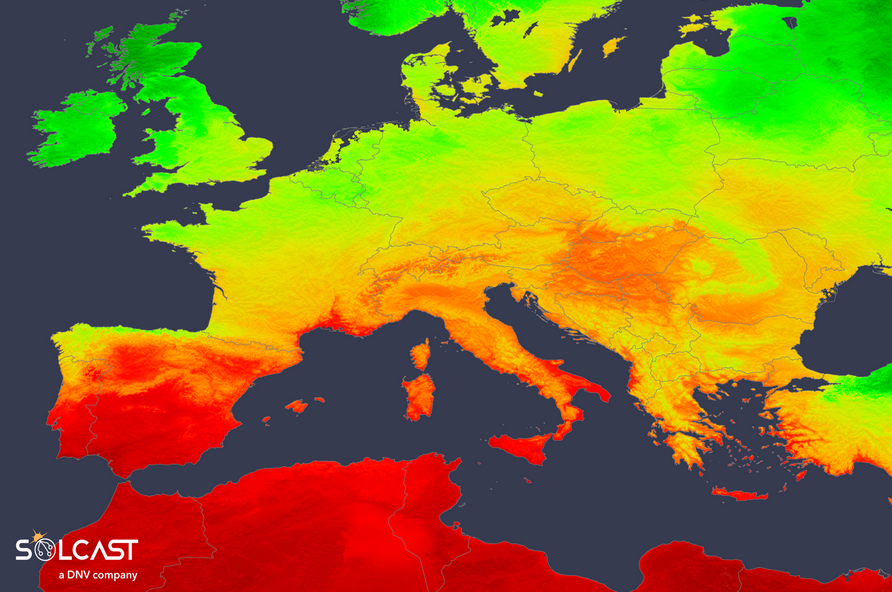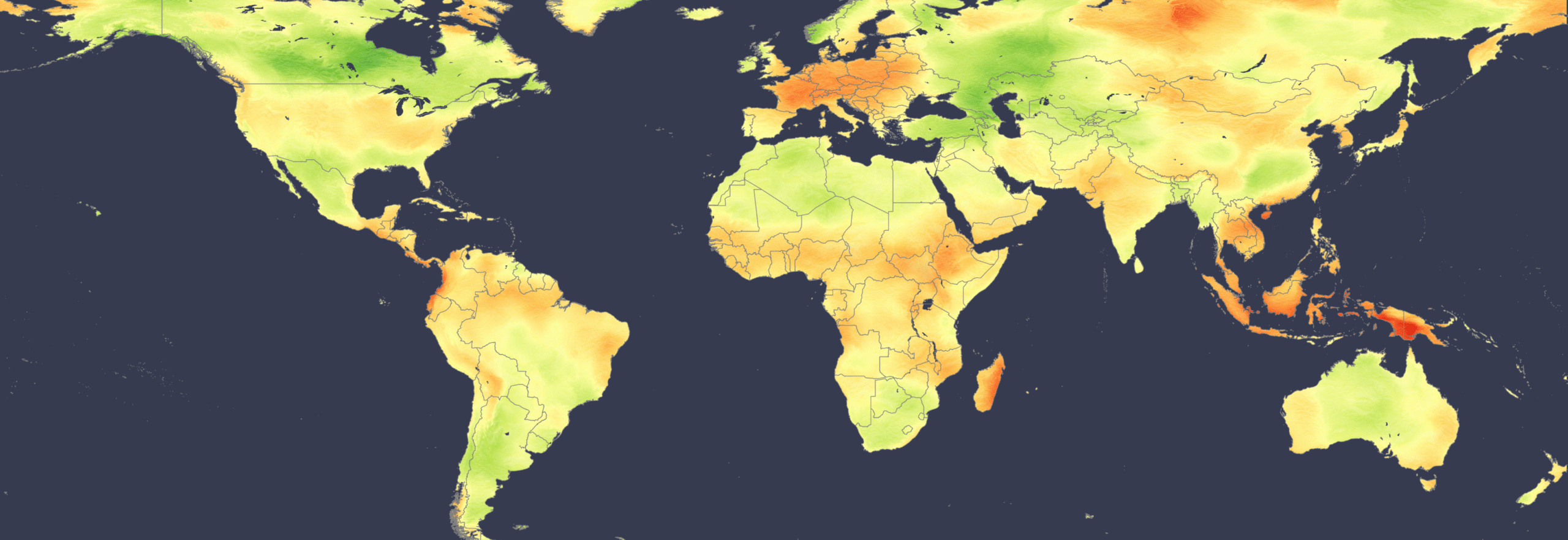
In a new weekly update for pv magazine, Solcast, a DNV company, forecasts that the second half of 2026 will bring above-normal irradiance across much of Europe, Southeast Asia, northern South America and eastern Australia, with the strongest model agreement in Southeast Asia and the greatest uncertainty in North America. Combined with first-half observations, the outlook suggests Europe will finish well above average overall, while regional contrasts persist in the Americas, Australia and Asia.
Southeast Asia is forecast to see the strongest positive solar resource anomaly in the second half of 2026, according to analysis using the Solcast API, as a strengthening El Niño and unusually warm oceans shift cloud and rainfall patterns across the tropics. The analysis of seasonal forecast models also points to above-normal irradiance in Europe, northern South America and eastern Australia, while parts of higher-latitude South America and North America remain more uncertain.
The projection is built by comparing seasonal forecasts for the final six months of 2026 from four major meteorological centres: the European Centre for Medium-Range Weather Forecasts (ECMWF), the UK Met Office (UKMO), the Japan Meteorological Agency (JMA), and the US National Centers for Environmental Prediction (NCEP). Comparing them shows where the models agree and where the outlook is less certain. Southeast Asia shows the strongest model agreement, with all four forecasts pointing to above-normal irradiance. Positive irradiance anomalies also appear across parts of the tropics, including Africa and northern South America. Higher-latitude areas of both continents are forecast to be cloudier. Most models place central and western Europe above the long-term average for irradiance, with India also forecast to finish above normal. North America is where the models diverge most.