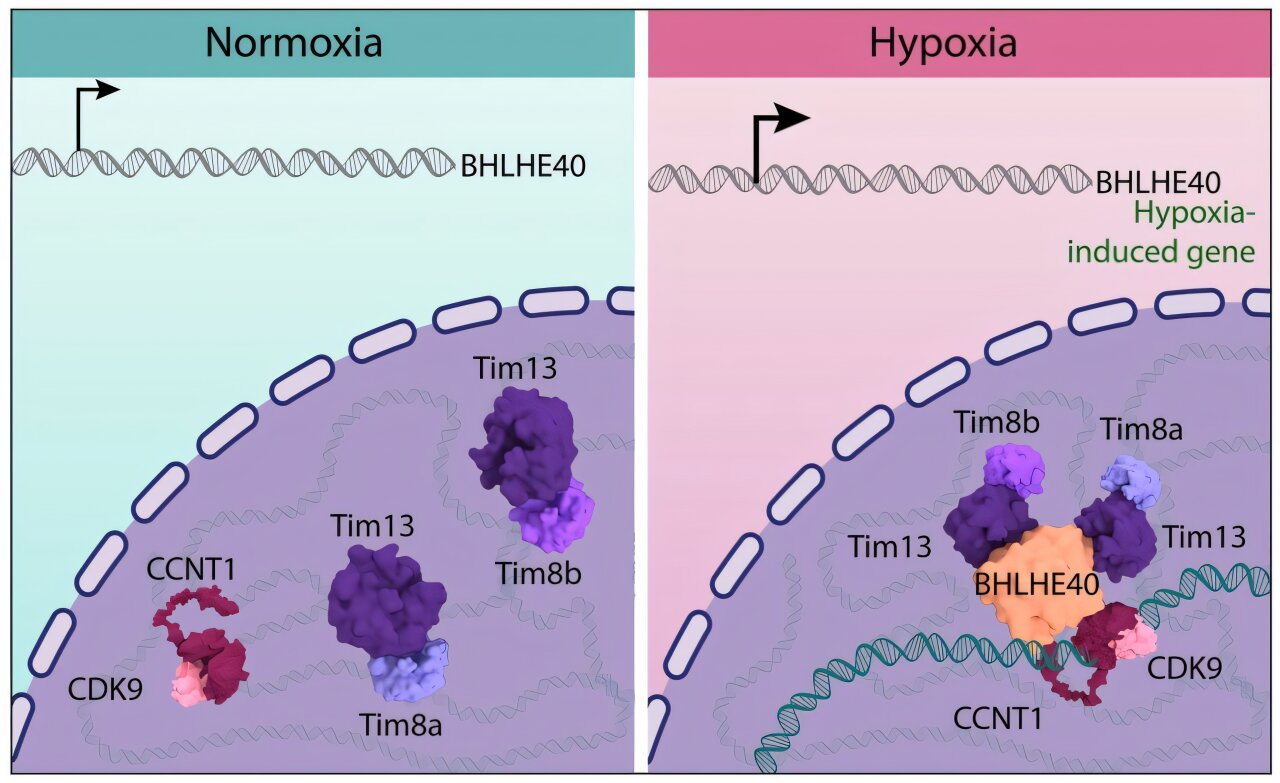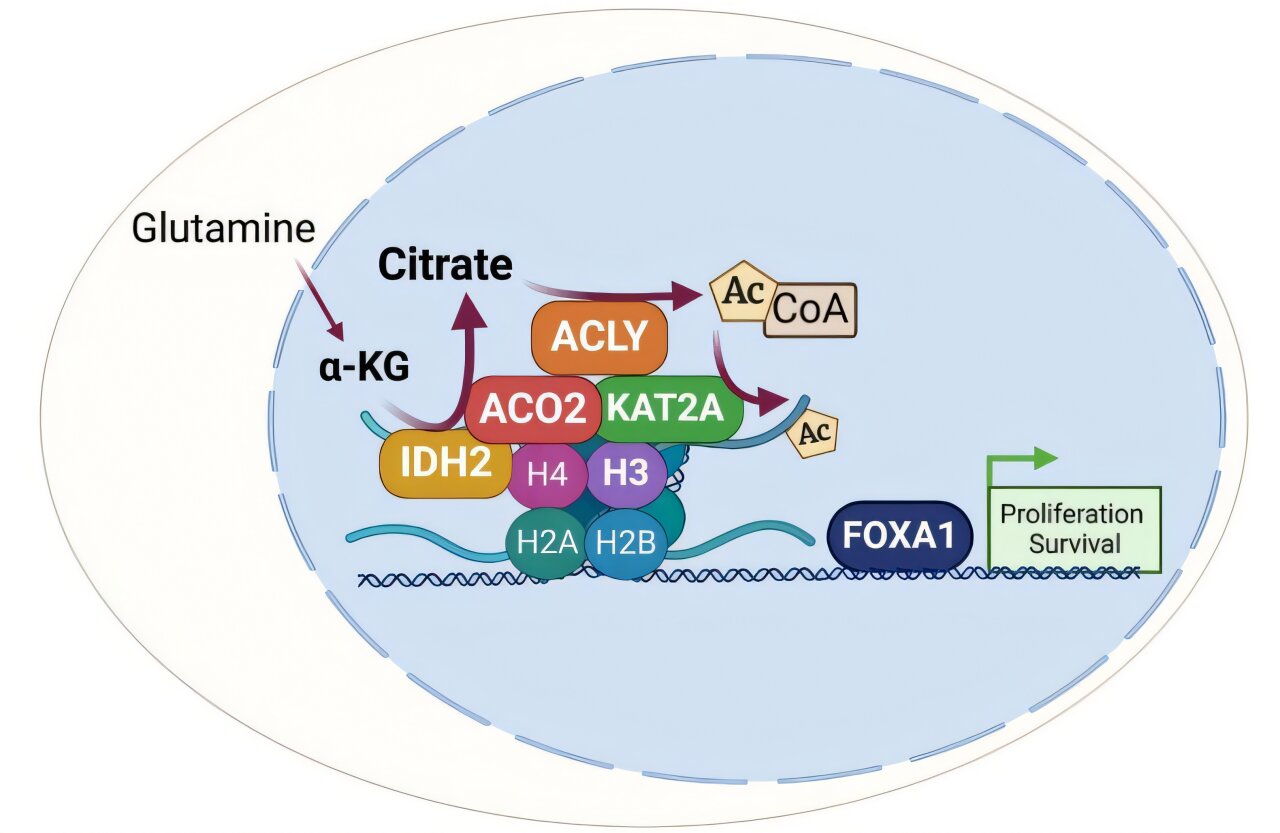
Proposed model of nuclear metabolic complex (NMC) consisting of ACO2, IDH2 and ACLY associated with histones and catalyze reductive carboxylation of α-KG to generate citrate for nuclear acetyl-CoA. Credit: Nature Communications (2026). DOI: 10.1038/s41467-026-74786-3
A team at Roswell Park Comprehensive Cancer Center has identified a novel metabolic pathway that plays a key role in enabling cancer to progress through gene activation. In a new study published in the journal Nature Communications, the researchers show that shutting down the pathway can seriously impair the ability of tumor cells to multiply and spread.
"Our work establishes a critical link between metabolism and epigenetic regulation in cancer," says study senior author Subhamoy Dasgupta, Ph.D., co-leader of the Cancer Stress Biology Program at Roswell Park.
When enzymes typically found in the mitochondria, the "powerhouse of the cell," travel to the nucleus, a nuclear metabolic pathway can help them acquire the ability to interact with DNA and, consequently, control gene activation by flipping genes "on" or "off" to help a tumor grow. Dasgupta and colleagues found that under stress, two mitochondrial enzymes—aconitase (ACO2) and isocitrate dehydrogenase (IDH2)—move to the nucleus and produce a metabolite called acetyl CoA. This metabolite then alters the histone proteins around which DNA is wrapped, making it possible to unwind the DNA to provide needed access for gene activation.