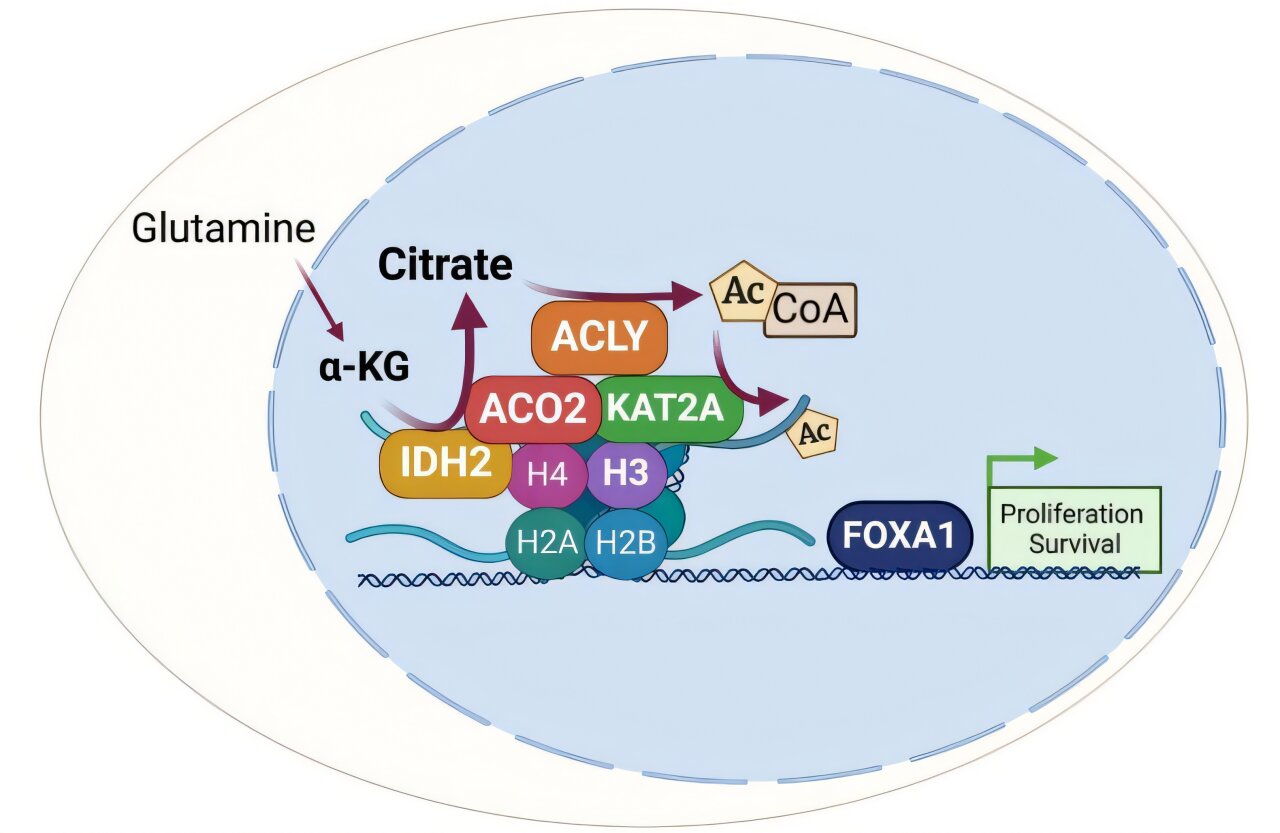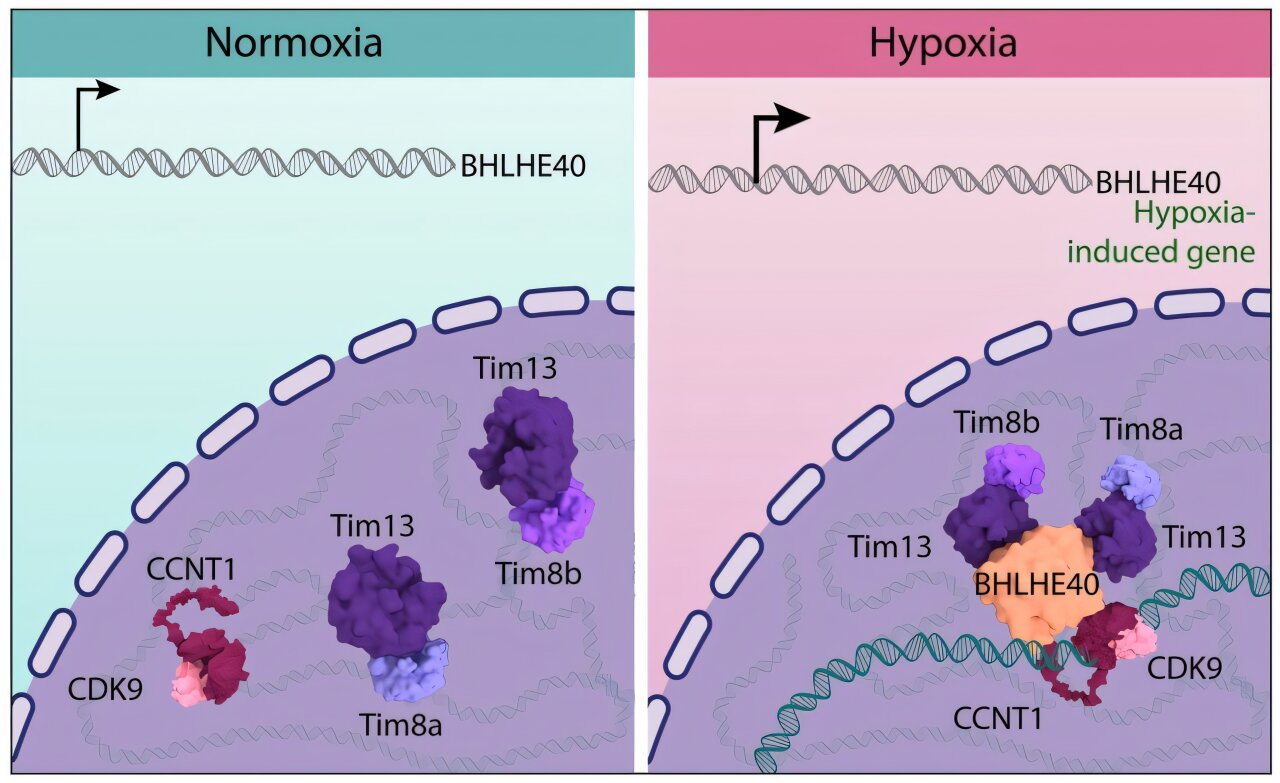
Schematic representation for the role of BHLHE40 in mediating the interaction between TIM8-TIM13 complexes and CCNT1 upon hypoxic stress. Courtesy of Brianna Monroe. Credit: Northwestern University
Northwestern Medicine scientists have, for the first time, described the underlying mechanisms that regulate how cells rapidly change gene expression in response to hypoxia, a key feature of many treatment-resistant tumors, according to a recent study published in Science Advances.
Ali Shilatifard, Ph.D., the chair and Robert Francis Furchgott Professor of Biochemistry and Molecular Genetics, was the senior author of the study.
How tumors switch under hypoxia
The P-TEFb transcriptional kinase complex regulates the pause-release checkpoint step in transcription by RNA polymerase II, a multiprotein complex that transcribes DNA into precursors of mRNA as well as most small nuclear RNA (snRNA) and microRNA.