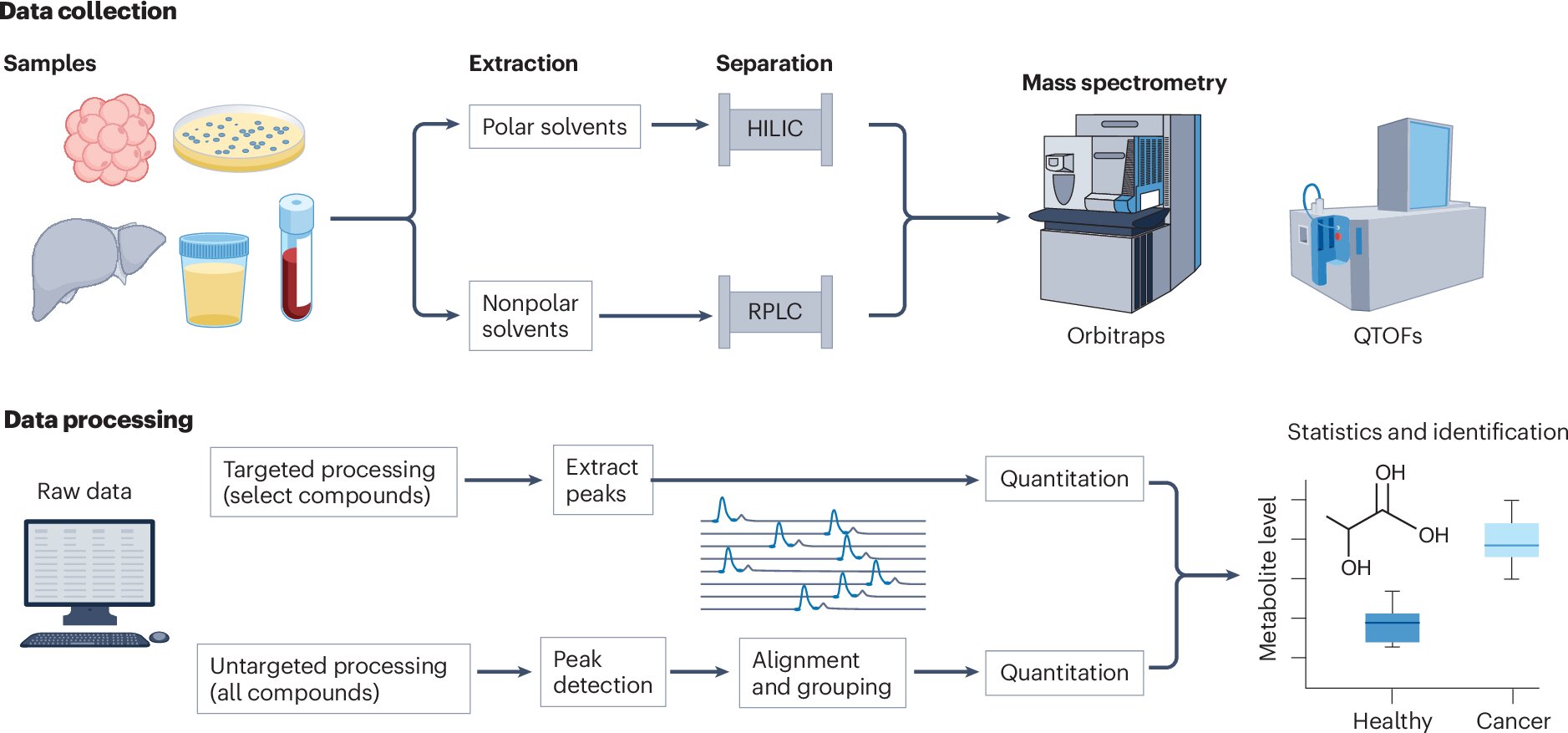
General workflow for liquid chromatography/mass spectrometry-based metabolomics. Credit: Nature Reviews Cancer (2026). DOI: 10.1038/s41568-026-00908-0
By their nature, cancer cells have different nutritional needs than healthy cells. "Cancer cells have a distinct metabolism," said Gary Patti, the Michael and Tana Powell Professor of Chemistry at Washington University in St. Louis and a professor of genetics and medicine at WashU Medicine. Cancer cells are also ravenous eaters. Patti is trying to turn their hunger against them.
Understanding those different needs could open new possibilities for tracking and ultimately defeating the disease. That's why Patti and others at Siteman Cancer Center, based at Barnes-Jewish Hospital and WashU Medicine, are turning their attention to a relatively new frontier of research: cancer metabolomics, the comprehensive study of the small molecules that cancer cells either consume or produce as they attempt to grow and multiply.
Earlier this year, Patti and co-author Joe Rowles, a postdoctoral researcher in the Department of Chemistry in Arts & Sciences and molecular oncology trainee in Siteman Cancer Center's Cancer Biology Pathway Program, explored the latest research and most pressing questions in cancer metabolism in an article published in Nature Reviews Cancer.