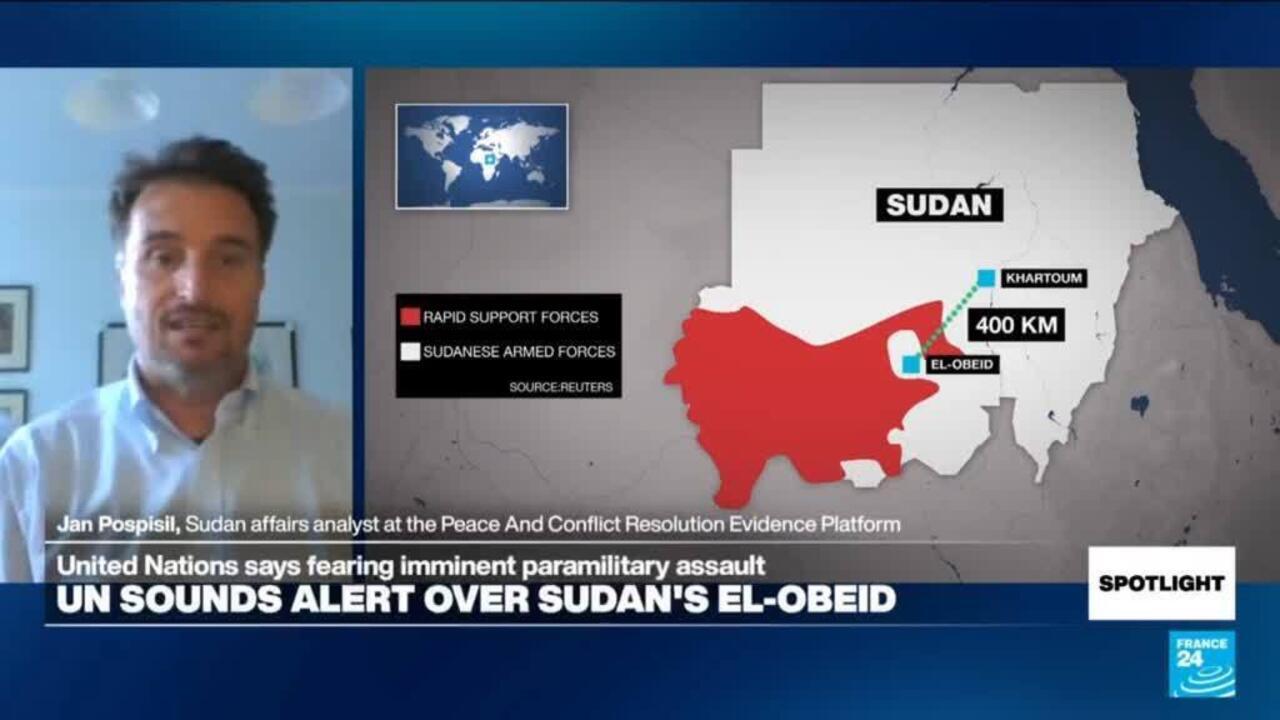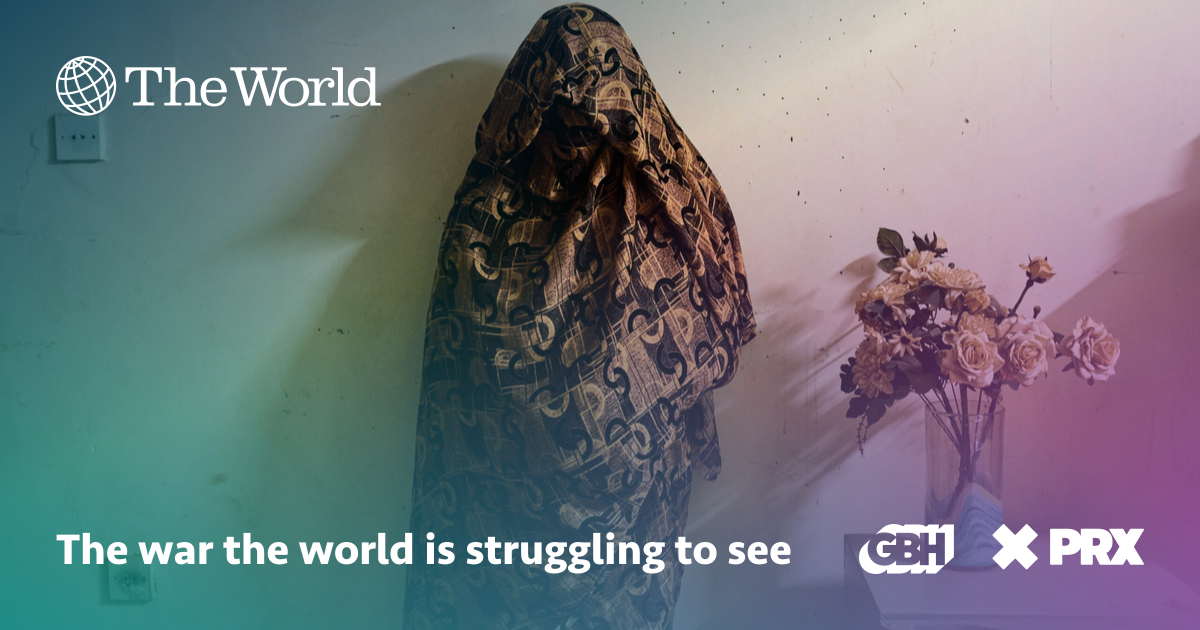
Public radio’s longest-running daily global news program.AboutContactDonateMeet the TeamPrivacyTerms of use©2026 The World from PRXPRX is a 501(c)(3) organization recognized by the IRS: #263347402.The war the world is struggling to seeThe strategic central Sudanese city of el-Obeid is now the focal point in the world’s worst humanitarian crisis. The three-year civil war between the Sudanese Armed Forces and the paramilitary Rapid Support Forces, or RSF, has taken hundreds of thousands of lives. Nathaniel Raymond, of the Humanitarian Research Lab at the Yale School of Public Health, tells The World’s Marco Werman that the fight for the city is an “existential battle” for both sides. 8:21A 50-year-old woman who said she was abducted and sexually assaulted for four months by the Rapid Support Forces, or RSF, before escaping, poses for a portrait after an interview with The Associated Press in Omdurman, on the outskirts of Khartoum, Sudan, Sunday, April 19, 2026. The UN is warning that a catastrophe is unfolding in el-Obeid, a strategic city in central Sudan.The chief of the UN Human Rights Council says the city has faced “relentless” drone strikes — and executions, torture, abductions and sexual violence are also on the rise. This is as the city becomes the latest hotspot in the three-year civil war between the Sudanese Armed Forces and the paramilitary Rapid Support Forces, or RSF. Noah Taylor, head of Sudan operations for the Norwegian Refugee Council, recently visited El-Obeid and described conditions there as bleak:“The fear and apprehension is palpable. People are on edge, people are terrified, and people need a break and survival from this war.”The Humanitarian Research Lab at the Yale School of Public Health has captured satellite imagery of the area. Nathaniel Raymond, the lab’s director, spoke to Host Marco Werman about what the imagery tells us.A Sudanese woman receives an oral cholera vaccine during a 10-day vaccination campaign conducted by health ministry workers in Khartoum, Sudan, Wednesday, Aug. 13, 2025. Marwan Ali/AP/FileAn empty checkpoint where a mannequin dressed as a soldier stands in downtown Khartoum, Sudan, Sunday, April 19, 2026.Bernat Armangue/APThe humanitarian conditions in el-Obeid are egregious, some of the worst we’ve seen, and the suffering of the people of el-Obeid should not be understated. However, comparisons between el-Fasher and el-Obeid, unfortunately, I think, miss the mark. el-Fasher was its own nightmare, and that was really the last battle of the Darfur genocide. The goal of RSF was to liquidate, in Rwanda-style killings, the remaining four Nzagawa tribes who were inside the city to capture a homeland for the ethnic group that’s behind the RSF called the Rizeigat. In the case of el-Obeid, those ethnic groups that were present in the genocidal massacre, according to the UN, in el-Fasher are not present in el-Obeid. That said, if RSF were to capture the city, it would look more like the reprisal killings that happened in 2023 in the cities of Nyala and Zalingei, where those who were seen as collaborators with the government were executed.In this AP file photo, Sudanese soldier from the Rapid Support Forces or RSF stands on his vehicle in the East Nile province, Sudan, on June 22, 2019.Hussein Malla/AP/FileParts of this interview have been lightly edited for length and clarity.
The war the world is struggling to see - The World from PRX
The strategic central Sudanese city of el-Obeid is now the focal point in the world’s worst humanitarian crisis. The three-year civil war between the Sudanese Armed Forces and the paramilitary Rapid Support Forces, or RSF, has taken hundreds of thousands of lives. Nathaniel Raymond, of the Humanitarian Research Lab at the Yale School of Public Health, tells The World’s Marco Werman that the fight for the city is an “existential battle” for both sides.
534 words~2 min read