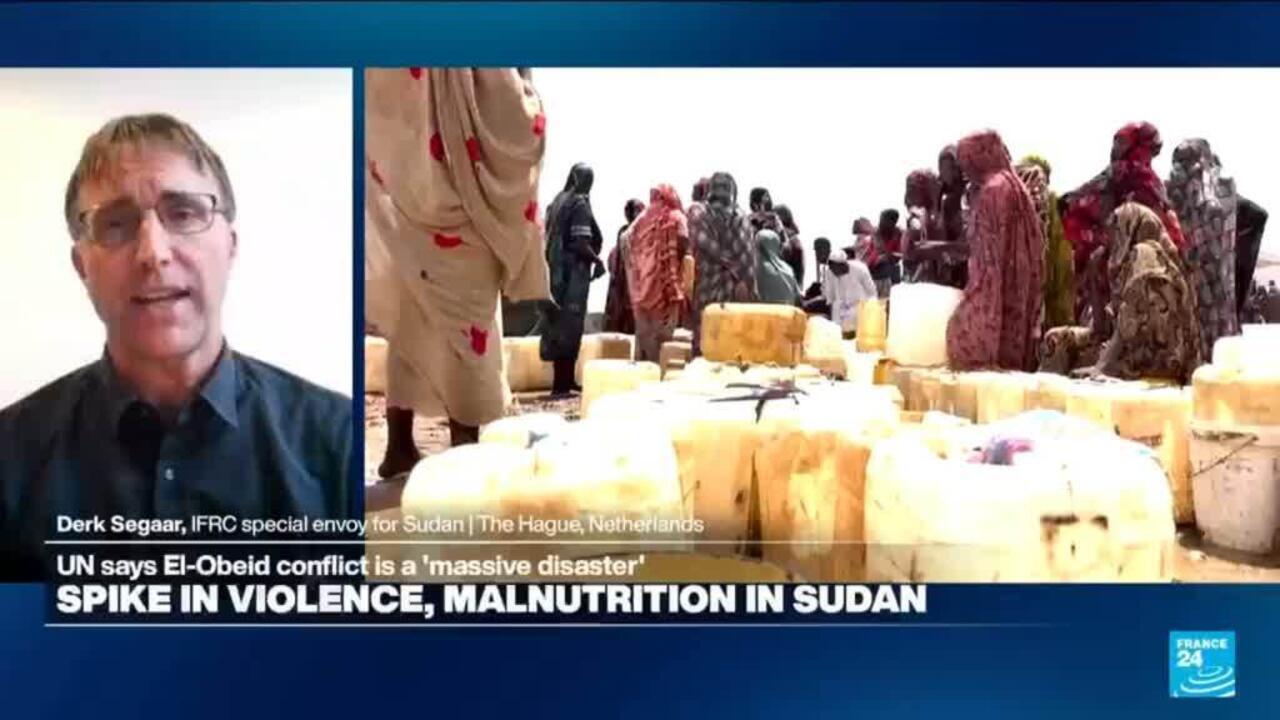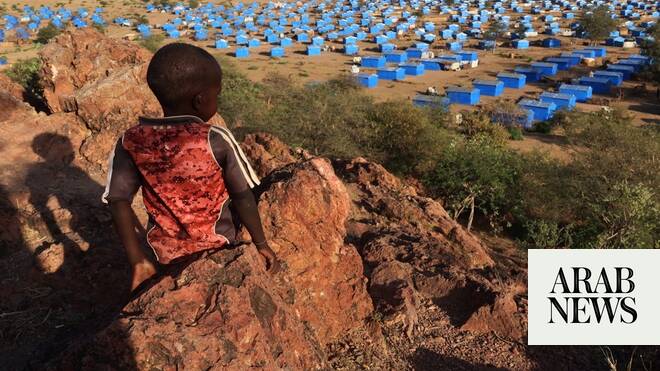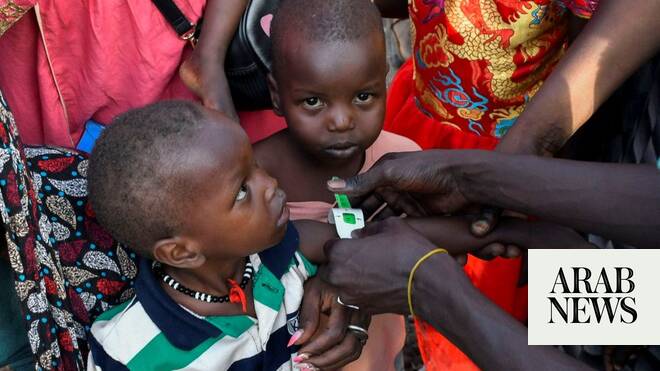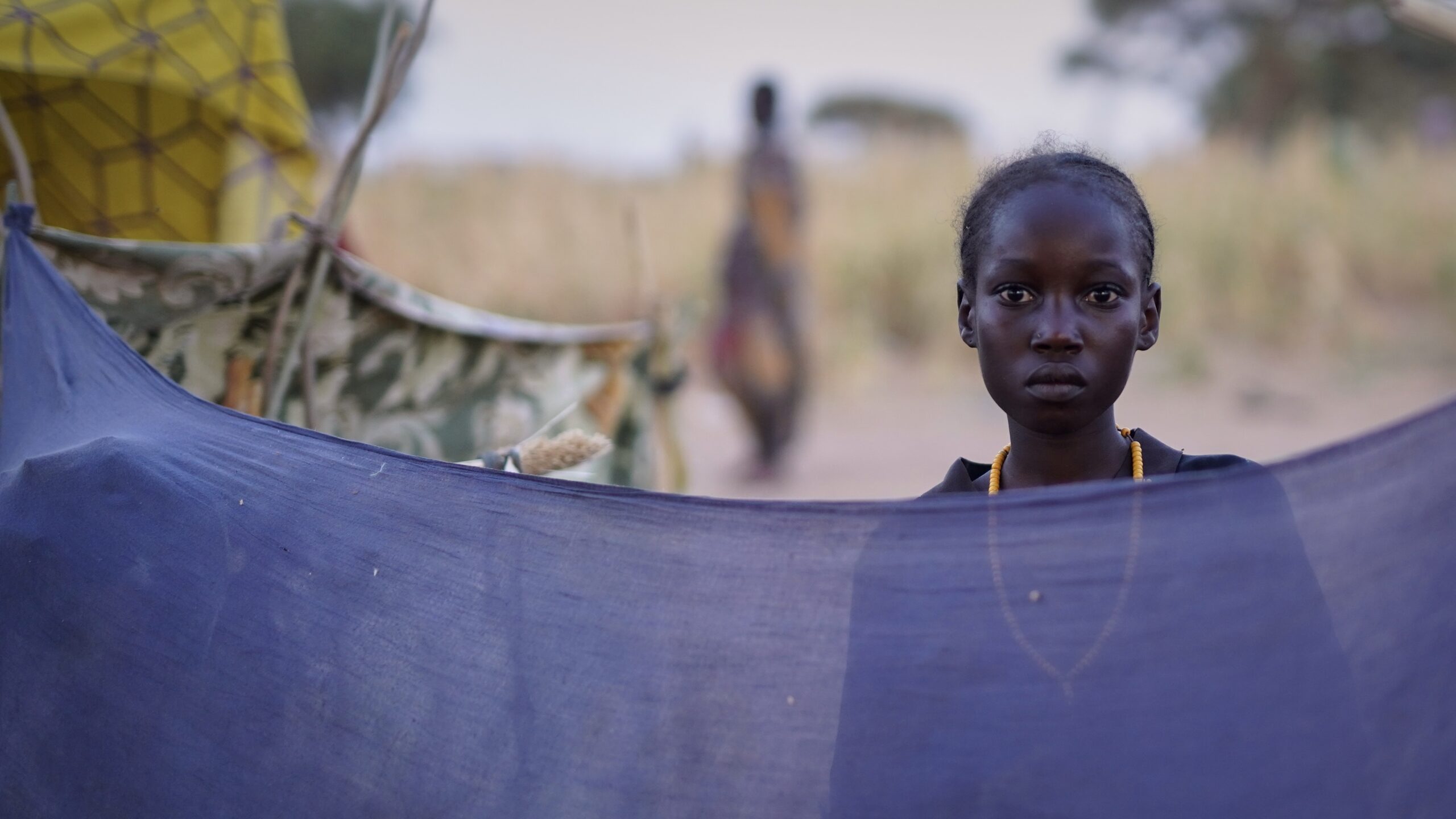
Throughout her years at NBC, distinguished journalist Ann Curry reported from the front lines of some of the world’s most dangerous conflicts. Her fearless storytelling earned her an Emmy for her coverage of the Darfur genocide in Sudan in 2007. Now, over a decade after leaving NBC, Curry has returned to Sudan, this time as a volunteer with the UN Refugee Agency, meeting face-to-face with some of the 14 million people forced from their homes by ongoing violence.A Sudanese who fled el-Fasher city, after Sudan’s paramilitary forces killed hundreds of people in the western Darfur region, ties her tent at her camp in Tawila, Sudan, Nov. 2, 2025.Mohammed Abaker/AP/FileNearly four years into the renewed conflict, a deadly new chapter has begun as drones rain destruction from the night sky. In just the first four months of this year, the UN has counted 880 lives lost to drone strikes.Curry joined The World’s Host Carolyn Beeler in our Boston studio and shared what she witnessed firsthand during her time in Sudan.Carolyn Beeler: You were in a town just across the border, in South Sudan, at a UN center for those fleeing war. Tell me what you saw there.Ann Curry: It was overrun with people, lots of children sleeping out in the open under fabric and shelters crafted with pieces of wood in the elements, and they were hungry. Many said they were traumatized. There was a woman who was studying to be a lawyer. She had gotten her undergraduate degree. She was working on her master’s degree, and when she interviewed with us, she … talked about how the attack happened at night — and this generally is what we’re hearing over and over again that these drones essentially — Sudan is now one of the world’s largest drone wars, and the drone [attacks] tend to happen at night. People are being obliterated by these drones. The largest cause of civilian deaths are these drones.Then after that, [the woman] experiences ground forces, and in these attacks on the ground, people are being shot and women are being sexually assaulted. She left her dorm, and with her fellow students to escape, and she was caught. In her description, she wept and was also glad to be able to talk about what had happened, because she is in a culture where women don’t talk about this for many reasons. I mean, obviously, women who are sexually attacked don’t want to talk about it anytime. But in Sudan and South Sudan, this is a place where women can be made to marry the rapists, right? So, there is a deeper reason and a shame, a feeling that it’s your fault. So, now, she not only wants to become a lawyer, she wants to become a judge, because she says, “Now I really want to stand up for people who are facing these kinds of injustices.”Smoke billows after drone strikes by the paramilitary Rapid Support Forces (RSF) targeted the northern port in the Red Sea city of Port Sudan, Sudan, May 6, 2025.AP photoCarolyn Beeler: You covered the Darfur genocide for NBC 20 years ago. Today’s conflict is a continuation of that one. I know you didn’t go to the same area exactly, but how did what you saw this year compare to what you saw two decades ago?We have learned from the war that happened then in Darfur, largely, that there was the use of a paramilitary called the Janjaweed, who were eventually accused of killing with genocidal intent. And now the Janjaweed has evolved into the RSF. And these two sides are the ones causing this war. They have been unable to share power, and now they’re battling it out. And the civilians are getting hit by both sides. Both sides are being accused of atrocities. You can see similar fingerprints. These are the same two military groups that were accused of the crimes in Darfur. And the same areas have been attacked: The western part of Sudan, where Darfur is, has been hammered. And so, there’s a kind of similar struggle, I think, in that way, a sense of persecution. But the truth is that not only have humanitarians struggled to get inside, but also I think governments have really struggled to get a real, clear idea about what exactly is happening. We’re in the throes of trying to get more information. The truth is, what’s happening inside Sudan is not fully known and is being underreported.A difference between what is happening now and what was happening in Darfur 20 years ago … that caught a lot of public attention. There were whole campaigns to save Darfur. Now, the crisis is getting a lot less attention. You wrote an op-ed in the New York Times with the headline, “Is Caring About Sudan Too Much to Ask?” What are some of the reasons that you think there is such a lack of attention on this issue?Many people are overwhelmed by all the other things happening in the world. I think that in the war that specifically targeted Darfur, there was a rallying because we understood that there was persecution involved. And in fact, that rallying in America did make a difference. It didn’t stop the war, but it increased humanitarian funding. And eventually, it pressured the warring parties to come to a peace agreement. So, there was eventually an impact because of the world’s outrage. In this particular case, this feeling of being overwhelmed by everything else in the world, plus, I think a vulnerability in major news organizations to really cover this story, way far away, very expensive to cover, but also with the perspective that maybe the American people may not be able to care about this.And also a resource question, that’s another factor; a lot of journalism organizations are struggling with having enough resources to cover what they are covering. The upshot is that we are looking at the world’s largest humanitarian disaster, with 14 million people fleeing, where four places have already been identified as having severe malnutrition and hunger, where people are dying in large numbers. And yet most people in America may not know anything about it, or maybe just a little. I’m really not surprised when I hear really smart people who pay attention to the world, and it’s even, who’ve said to me as recently as last week that they didn’t know what was happening in Sudan. And it is, I think, a question we have to ask ourselves: “How is it that we can live with not knowing about the world’s largest humanitarian disaster? And what does that say about what we have come to?”People displaced from North Darfur’s capital, el-Fasher and other conflict-affected areas settle in the newly established El-Afadh camp in Al Dabbah, in Sudan’s Northern State, Sudan, Nov. 13, 2025.Marwan Ali/AP/FileWe’re also in a moment where the UN and other aid agencies have less funding for the work they need to do. You were in South Sudan as a volunteer for the UN Refugee Agency, which has been impacted by these aid cuts, including US foreign aid cuts. How were their operations being impacted by those cuts?In fact, I was also operating at the same time as a reporter because I knew I was going to file for PBS’s NewsHour and other places. And so, I was gathering information, sort of, you know, standing on that line, and everybody recognized that I was going to be asking these sorts of tough questions. And so, I’m in a situation where I’m watching people come across the border, saying that they’re traumatized, clearly hungry, definitely exhausted. More than a million have crossed the South Sudan border alone, and they’re fleeing to all the nations surrounding Sudan. And they are tired, exhausted. They’re coming by foot, by bus, by car, by donkey. And some of them are unaccompanied minors. These humanitarian organizations process them. But because of significant funding cuts, they are not greeted with a warm meal. They’re given a biscuit that is maybe, I don’t know, two [or] three inches long, and it’s a little biscuit, and it is not always available. If they are clearly close to death or suffering from severe malnutrition, then they break open the stocks for something called a “Better Bar,” it’s [actually] called a Plumpy’Nut, and it just soups you up and it saves your life, essentially, and it has been historically incredibly powerful in terms of saving lives, in these kinds of circumstances. People are given two weeks of money to buy their own food in a place where the inflation rate is so high that food is just not available. So, when we went and looked and saw what they were doing, they were sharing, supporting each other through all of this, and they’re hungry and feeding their kids. I asked, “What do you eat when you have no food?” And one person who had been a refugee in the prior war said, “Well, at some point, you know, you start to eat leaves from trees.” But the one thing that you cannot live without is water, and that’s also difficult to find.An injured Sudanese man who fled el-Fasher city, after Sudan’s paramilitary forces killed hundreds of people in the western Darfur region, rsits in a tent at a camp in Tawila, Sudan, Oct. 31, 2025.Mohammed Bakry/AP/FileThroughout your career, you have interviewed countless people during acute crises, wars and natural disasters around the world. This is a journalist-to-journalist question: As journalists, we can listen … we can tell people’s stories, but we are ethically not able to offer any material help. Is that something that has bothered you historically, or does it continue to bother you now when you interview people?A hundred percent. In an earlier time in Chad, I saw three children who were orphaned, and I wanted to take them to safety. They were in a community, and I felt they [would] be cared for, but I worried because they were clearly hungry and thirsty. So, I’ll tell you what we did. After the interview, our team went back to our truck and gathered everything we could. We gave them our bars, our water. We didn’t interview these children, but we did take images of them. And it was after. We weren’t offering to get something. It was after we were done. But I think that there are times when rules are really important, especially in journalism and standards and fundamental ethics. But I don’t know how unethical what we did [was]. I think sometimes you have to do what’s right. And ethics and rules are meant as guides, and you should adhere to them as closely as possible. But there are times when they are not enough, and that was one of those times.You have obviously interviewed some very big names over the years, including [former Sudanese President] Omar al-Bashir. I’m wondering, if you could have the opportunity to sit down to speak with anyone in global news right now, anyone making headlines, maybe including what is happening in Sudan, who would you want to sit with and interview?I think I would definitely want to interview those involved in the current war, not just in Iran but also in Lebanon and many other places. I would want to interview [Israeli Prime Minister] Benjamin Netanyahu. I’d want to interview the leaders of all these nations that have been under attack and have been fueling attacks. Also, I would be very interested in interviewing the leaders of all these nations, and there are many of them, who are providing the drones, providing the military hardware for this war in Sudan. It’s remarkable, the list. I’m not sure I can say every single name from memory, but Saudi Arabia, Turkey, Iran, the UAE, Qatar. Drones are being flown out of, according to a New York Times report, from Egypt. And these are outside interests, with proxy interests, in this area. Now, the thing people don’t realize about Sudan is that it is rich in gold and in oil. And some of these places want those things. It is also because it’s a proxy war that threatens to spread beyond its borders.But I think one of the most important jobs of a journalist is to document and hold those involved to account. Because if you do not, then the truth about what is really happening can be rewritten in time. When you hold people to account, which is one of the reasons why I’ve spent so many years interviewing people, [who] some people might call despots. I would probably want to interview [Russian President Vladimir] Putin, for example, but I would be unwilling to conduct the interview if there were constraints. I don’t provide my questions before an interview, and there are ways you can operate and there are ways you don’t. And so, I’d have to sort of figure that out. But no, the story, the truth has to survive, and it does not survive if we don’t hold people to account.Today Show host Ann Curry,left, and co-host First Lady Laura Bush make an appearance on NBC’s “Today Show” in Rockefeller Plaza in New York, April 22, 2008.Peter Kramer/APDo you think journalism and journalists are doing enough of that?No, I don’t. I think there are a lot of reasons for that. There are fantastic journalists in the world today. But as we all know, it’s a struggle to get especially foreign stories covered, which is one reason why I like your podcast. I learn things by listening to you. I think that we may want to not be affected by what’s happening in other places in the world, but that is an impossible dream. Other places in the world impact us. And we will continue to be whatever stance we take about that. And not knowing about that is a mistake. It was a mistake when we did not do a better job reporting years ago about Osama bin Laden and what happened when the USS Cole was attacked. When we weren’t really reporting about that, when we could have. When people after 9/11 said, ‘Well, what is happening? Why would people want to attack us?” The story was reportable, and we didn’t report it. And the reason it wasn’t reported is that it was so far over there and outside our focus. And that’s a mistake. We have to pay attention to the world, to what’s happening in the world. I think we owe it to the American people to let them be as smart as they can be about what’s happening in the world, so that they can do a really good job figuring out which way we should go, and how we should emerge into the future, how we should protect our children.Parts of this interview have been lightly edited for length and clarity.The story you just read is not locked behind a paywall because listeners and readers like you generously support our nonprofit newsroom. Now more than ever, we need your help to support our global reporting work and power the future of The World. Can we count on you?
The humanitarian catastrophe the world continues to overlook - The World from PRX
Sudan’s civil war has triggered what many describe as the world’s largest humanitarian disaster. It’s a crisis that remains dramatically underreported, according to journalist Ann Curry. She won an Emmy for her coverage of the Darfur genocide in 2007 and recently talked with refugees fleeing into South Sudan. She tells The World’s Host Carolyn Beeler that while Western audiences closely followed the violence in Darfur nearly two decades ago, far fewer people today understand and appreciate the scale of the suffering engulfing Sudan.
2,529 words~11 min read