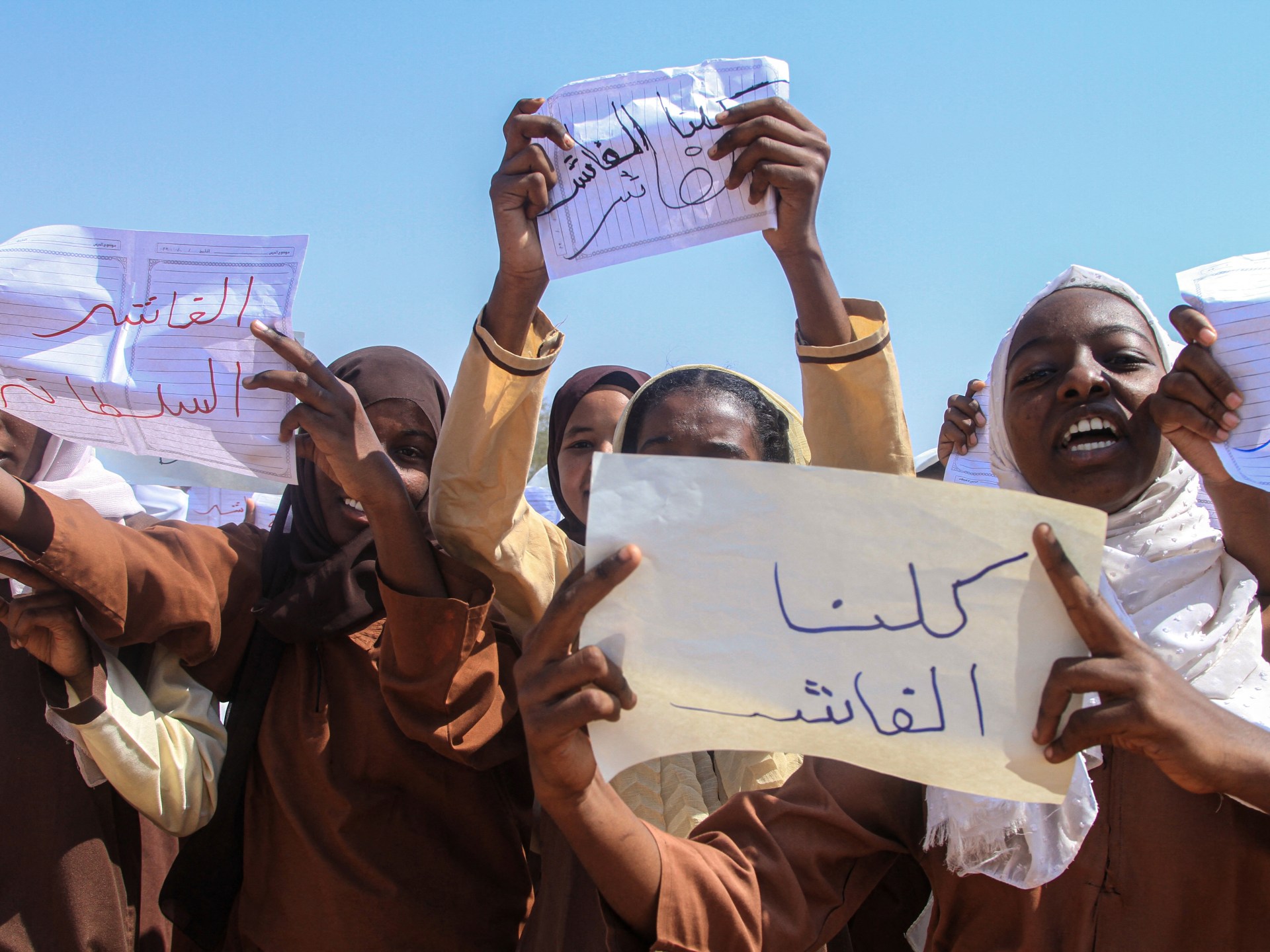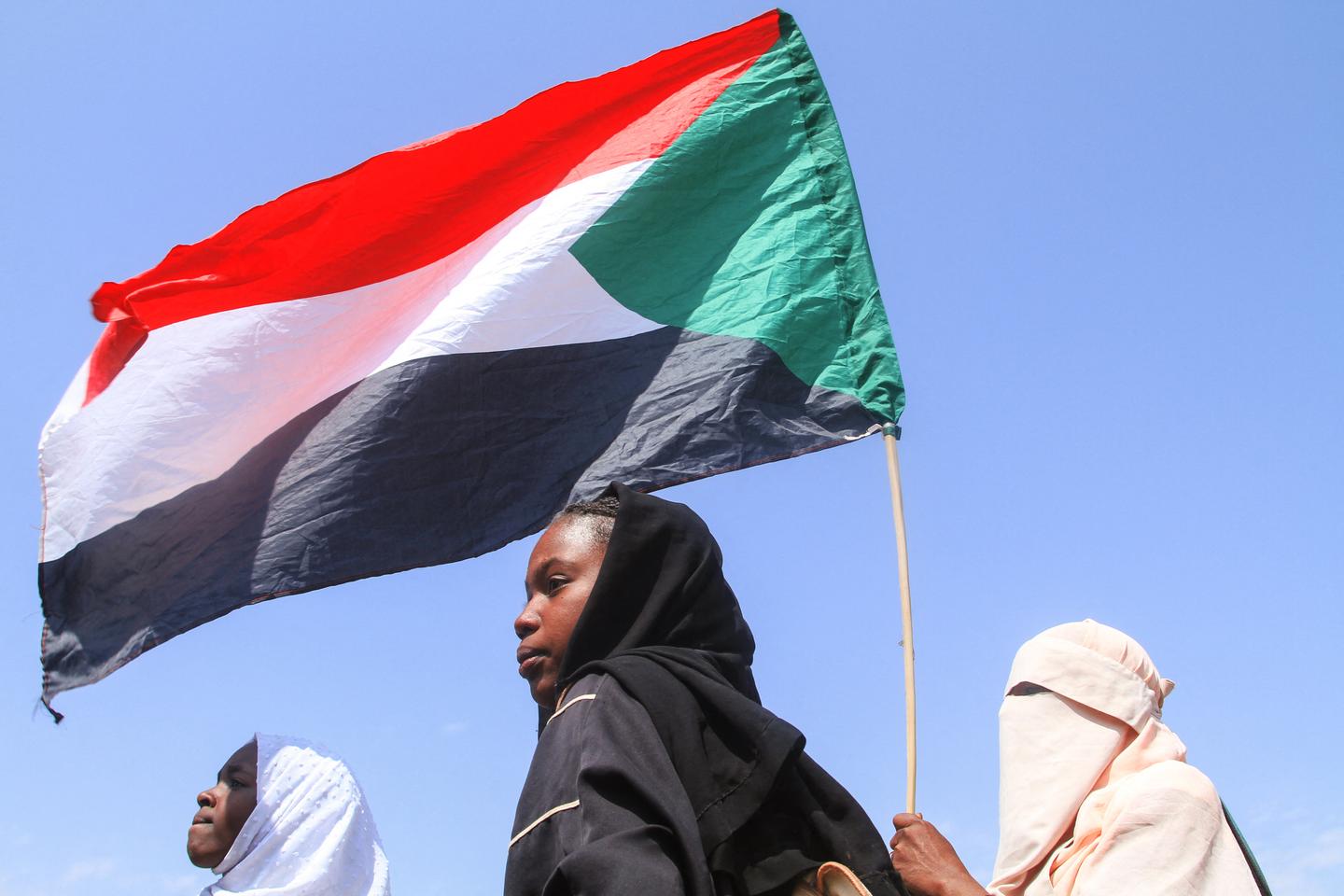
Sudanese students hold up their country's flag during a protest against attacks on residents of El-Fasher, a city that fell into the hands of the paramilitary Rapid Support Forces (RSF) on October 26, Khartoum, November 3, 2025. EBRAHIM HAMID / AFP
T
he international community is finally paying attention. It took the fall of the former capital of Darfur, two and a half years after the Sudanese Civil War erupted in April 2023 – and four years after a military coup in October 2021, which ended a civilian transition put in place by a popular movement that had challenged one of Africa's oldest dictatorships, that of Omar al-Bashir (1989-2019).
The scale of the massacres in Darfur since October 25 has moved public opinion, just as compassion swelled in 2004 in response to recurring mass atrocities in the same region. The political solution promised at that time by international diplomacy never materialized, due to insufficient pressure on the government in Khartoum and the various armed actors in Darfur, because the primary concern then was South Sudanese independence. The focus on victimhood prevailed for western Sudan, with humanitarian aid and compassion overshadowing the difficult resolution of environmental, social and political problems that enabled such carnage – far beyond the impunity of those responsible.