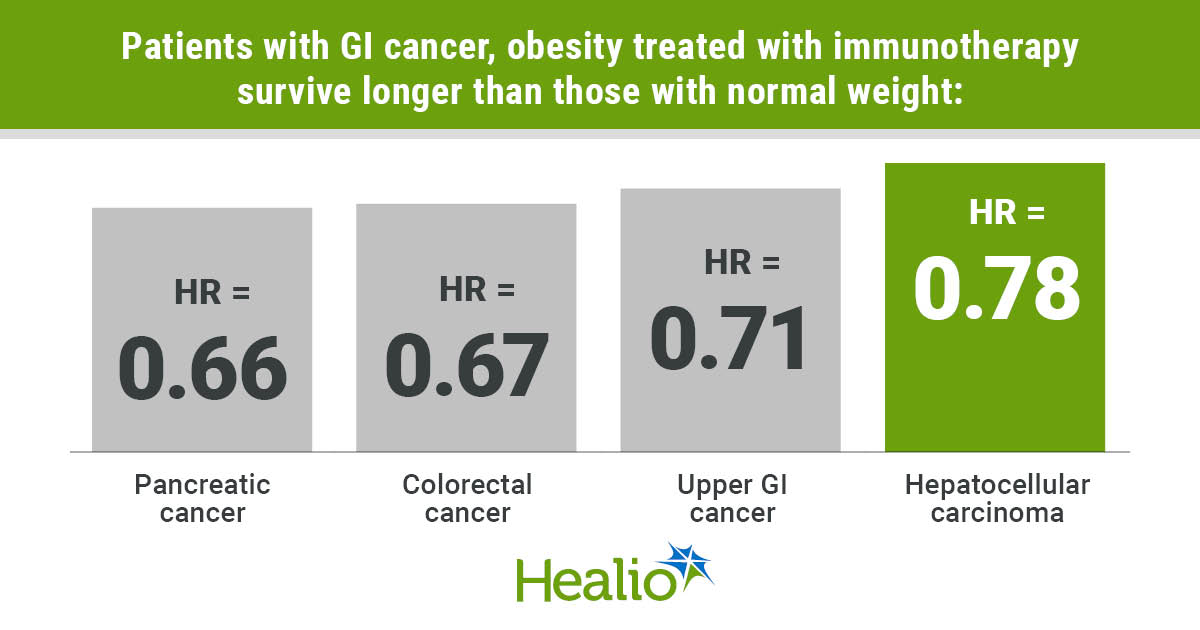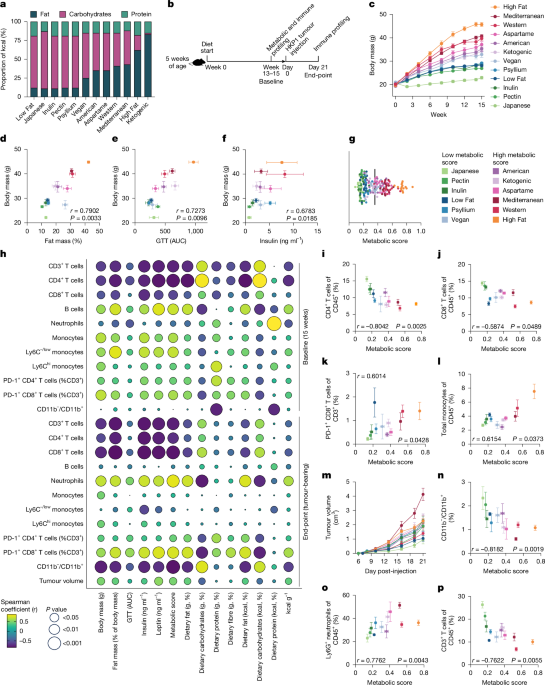
MainIt has been long appreciated that nutrition regulates anti-tumour immunity, predating the recognition of inflammation as a hallmark of cancer7. As the understanding of anti-tumour immunity has evolved, there is renewed interest in tailoring diet to reduce cancer risk and improve treatment outcomes as part of personalized medicine. ICIs have revolutionized the treatment of many cancers, but durable responses are achieved in only a minority of patients, emphasizing the need to identify host determinants of efficacy. Research over the past decade has established the gut microbiota as a targetable regulator of ICI responses, with diet shaping microbial and metabolic states that influence immune function8,9,10,11. Gut dysbiosis is a hallmark feature of obesity that links diet, the microbiome and health risk factors12; yet paradoxically, epidemiological studies have shown that high BMI is associated with improved ICI responses in several cancer types, including lung cancer and melanoma2,3,4,5,6. Given the multifaceted nature of obesity pathophysiology, it has been challenging to disentangle how it contributes to ICI efficacy using current experimental models.A key limitation of common preclinical obesity models is their reductionist nature, which does not capture the complexity of this condition in humans. For most of human history, dietary intake was limited by nutrient availability, but industrialization has enabled ad libitum food access in many populations13, although dietary composition varies greatly. By contrast, behavioural and immunological studies that have moved beyond reductionist approaches at the discovery stage of research have yielded unprecedented insights into organismal physiology14. Leveraging this approach to clarify the relationship between obesity and ICI efficacy, we modelled nutritional intake with greater precision than is conventional by using more realistic and diverse in vivo dietary models to dissect the multifaceted effects of obesity on ICI response, focusing primarily on lung cancer as a central model.Diet shapes metabolic and immune statesConventional mouse models of diet-induced obesity often do not represent the complexity of food consumption and its relationship to body weight across human populations, most commonly relying on a diet of 45–60% kcal of fat from lard15. To overcome this, we designed a series of 12 mouse diets to better reflect variation in human dietary patterns16. In addition to traditional Low Fat, High Fat and Western diets, we used diverse ingredients as sources of protein (casein, soy, fish, egg white, beef and pea protein), carbohydrates (corn starch, maltodextrin, wheat, rice, potato, sucrose, fructose, and fruit and vegetable powders), fat (soybean oil, corn oil, menhaden oil, palm kernel oil, butter, lard, flaxseed oil and olive oil) and fibre (cellulose, inulin, pectin and psyllium) to mimic Mediterranean, Japanese, Vegan, American (with and without Aspartame) and Ketogenic diets (Fig. 1a, Extended Data Fig. 1a and Supplementary Tables 1 and 2). Given the well-established prebiotic activity of fibre, we also designed three diets in which cellulose was replaced in the classic Low Fat diet with Psyllium, Inulin or Pectin (Fig. 1a, Extended Data Fig. 1a and Supplementary Tables 1 and 2). After 15 weeks, we observed a range of body weights across diet models, and a diverse distribution of body composition, glucose tolerance, serum insulin and serum leptin levels (Fig. 1b–f and Extended Data Fig. 1b–j). A composite metabolic score was generated from these parameters, with a higher score corresponding to more severe metabolic dysfunction (Fig. 1g and Extended Data Fig. 1k).Fig. 1: Dietary composition influences metabolic status and peripheral immunity after 15 weeks.a, Proportion of kilocalories from dietary fat, carbohydrates and protein for the experimental diets. b, Schematic of the 15-week diet model corresponding to c–p. c, Body weight over 15 weeks. Japanese: n = 14 mice; all other diets: n = 15 mice; 2 independent cohorts; mean ± s.e.m. d–f, Correlations between average body weight (n = 5 mice per diet) and metabolic assays at baseline, including percentage of fat mass (d; Japanese: n = 9 mice; all other diets: n = 10 mice), glucose tolerance test (GTT) (e; Low Fat, High Fat and Western: n = 10 mice; all other diets: n = 5 mice) and serum insulin (f; Inulin: n = 6 mice; all other diets: n = 5 mice). AUC, area under the curve. g, Diet metabolic score (mean = 0.36 is indicated). Each data point represents one mouse. h, Correlation matrix of blood immune cells, metabolic parameters and nutritional content at baseline (non-tumour-bearing) and end-point (tumour-bearing). Bubble colour represents Spearman correlation coefficient; bubble size indicates the P value. i–l, Correlation between average metabolic score (n = 5 mice per diet) and baseline blood flow cytometry (n = 5 mice per diet) for CD4+ T cells (i), CD8+ T cells (j), PD-1+ CD8+ T cells (k) and monocytes (l). m, HKP1 tumour kinetics by calliper in the 15-week diet model. Pectin, Inulin, American and Vegan: n = 4 mice; all other diets: n = 5 mice; mean ± s.e.m. n–p, Correlation between average metabolic score (n = 5 mice per diet) and end-point blood flow cytometry (Pectin, American and Vegan: n = 4 mice, all other diets: n = 5 mice) for lymphoid:myeloid ratio (n), neutrophils (o) or CD3+ T cells (p). Correlations were calculated using two-tailed Spearman correlation and are presented as mean ± s.e.m. All immune cells are calculated as percentage of CD45+ cells unless otherwise indicated.Source dataThere is a well-established link between obesity, nutrition and immune alterations11,17,18,19. We therefore investigated differences in circulating immune populations at steady state in response to each diet (Fig. 1h and Supplementary Data Fig. 1). Consistent with previous work20, we observed a significant inverse correlation between metabolic score and both CD4+ (r = −0.8042, P = 0.0025) and CD8+ (r = −0.5874, P = 0.0489) T cell abundance in the peripheral blood across diet models (Fig. 1i,j). Moreover, we found a significant positive association between metabolic score and the frequency of PD-1+ CD8+ T cells among total CD3+ T cells (r = 0.6014, P = 0.0428) (Fig. 1k). Within the myeloid compartment, monocytes were significantly correlated with increasing metabolic score (r = 0.6154, P = 0.0373) (Fig. 1l), a relationship that was more evident in patrolling subsets (Ly6C−/low; r = 0.6783, P = 0.0185) than in inflammatory subsets (Ly6Chi; r = 0.4056, P = 0.1928) (Supplementary Data Fig. 1). These changes were of particular interest given the link between these immune populations and ICI efficacy in lung cancer21, and the paradoxical role for obesity in ICI treatment response2,3,4,5,6.Accordingly, we next examined how these systemic immune changes were maintained in the context of cancer. We focused on a KrasG12DTrp53−/− HKP1 model, given the clinical relevance of lung cancer to understanding mechanisms of ICI response, including in the obesity setting4. As expected, we did not find a correlation between tumour volume and body weight, glucose intolerance, serum insulin and leptin levels, or metabolic score (Fig. 1m and Supplementary Data Fig. 2). This confirmed that our model recapitulates clinical observations that obesity does not promote lung cancer progression, unlike many other cancer types22,23,24,25,26. Nevertheless, we observed substantial variation in immune composition across models in peripheral blood and end-point tumours (Fig. 1h, Extended Data Fig. 2a,b and Supplementary Data Fig. 2). Specifically, there was a significant inverse correlation between metabolic score and the ratio of lymphoid-to-myeloid cells in peripheral blood, whereby diets that induced obesity had a reduced CD11b−/CD11b+ cell ratio (r = −0.8182, P = 0.0019) compared with diets that did not induce obesity (Fig. 1n). This ratio was largely driven by an enrichment in neutrophils (r = 0.7762, P = 0.0043) and a reduction of T cells (r = −0.7622, P = 0.0055) in tumour-bearing mice (Fig. 1o,p), consistent with previous findings27,28,29. These observations suggest that although lung tumour growth is not accelerated by obesity, these tumours may be differentially primed for immune-targeted therapies.The diet–gut axis and ICI efficacyDietary nutrients shape the gut microbiome, which is known to have immunomodulatory effects8,30,31. Therefore, we next explored differences in gut microbiota composition across our diet models using bacterial 16S ribosomal RNA (rRNA) gene sequencing. There was a high degree of variation in the predominating phylum (Fig. 2a) and family (Fig. 2b and Extended Data Fig. 3a) for each individual diet, highlighting the diverse biology established in our models. Although it has been reported that obesity is associated with a reduction in bacterial diversity12,32, we observed comparable alpha diversity across diets, with the exception of the nutritionally complex Vegan diet, which exhibited increased diversity (Extended Data Figs. 1a and 3b–e). At the level of individual amplicon sequence variants (ASVs), we found that mice consuming diets with high fat content (diets designated: Ketogenic, American, Aspartame, Western and High Fat) exhibited similarities to each other, with the exception of the Mediterranean diet, which was more similar to the lean diets (Japanese, Pectin, Inulin, Low Fat and Psyllium diets) (Figs. 1a and 2c). To identify bacteria associated with obesity, we divided diets on the basis of their metabolic score, resulting in 6 diets above the mean (0.36) and 6 below the mean (Fig. 1g). At the phylum level, there was a general enrichment in Bacillota (formerly Firmicutes) in mice with a high metabolic score compared with those with a low metabolic score (Fig. 2d and Extended Data Fig. 3f). This was driven by an increase in the presence of Lactobacillaceae (largely comprised of the genus Lactobacillus), Peptostreptococcaceae and Streptococcaceae (Fig. 2d), which have previously been linked to obesity and consumption of a high fat diet33,34. Of particular interest, enriched bacteria within each metabolic score category were diverse, emphasizing the importance of the diet–gut axis even in mice of similar body weight (Fig. 2c,d).Fig. 2: Dietary intake dictates gut microbiome composition and anti-PD-1 response.a,b, 16S rRNA gene sequencing showing taxonomic composition of fecal bacteria at phylum (a) and family (b) levels at baseline. Diets are ordered by decreasing metabolic score, from left to right. Bars represent individual mice. c, PCoA (16S rRNA gene sequencing) using Bray–Curtis distance matrix at the ASV level for fecal bacterial DNA at baseline. d, Linear discriminant analysis effect size (LEfSe) analysis for fecal bacteria associated with high or low metabolic score diets (asterisks indicate P < 0.05, false discovery rate (FDR) < 0.1, linear discriminant analysis (LDA) ≥ 2). Bubble size represents normalized relative abundance of a given family (f_) or genus (g_); bubble colour indicates phylum. Diets are ordered by decreasing metabolic score, from left to right. e, ICI trial schematic corresponding to f. f, HKP1 tumour kinetics by calliper in IgG- or anti-PD-1-treated mice. IgG (Psyllium, Ketogenic, Pectin, Low Fat, American and Aspartame) and anti-PD-1 (Mediterranean, Japanese, Western, Inulin, American, Aspartame and High Fat): n = 5 mice; IgG (Mediterranean, Japanese, Vegan, Western, Inulin and High Fat) and anti-PD-1 (Ketogenic, Vegan, Pectin and Low Fat): n = 4 mice; anti-PD-1 (Psyllium): n = 3 mice. Multiple two-tailed Mann–Whitney tests; mean ± s.e.m. g, Anti-PD-1 sensitivity index calculated from end-point tumour volumes of IgG and anti-PD-1-treated groups as shown in f. Data are mean ± s.e.m.Source dataIn patients with cancer and in preclinical cancer models, Lactobacillus spp. is associated with favourable response to ICI35,36,37,38,39,40. Given the association between high metabolic score and Lactobacillaceae, we next compared ICI efficacy across diet models (Fig. 2e). Anti-PD-1 sensitivity was strongly influenced by diet, with some diets eliciting significant responses and others not (Fig. 2f and Extended Data Fig. 4a). We calculated a score for each diet based on the degree of sensitivity at the end-point (Fig. 2g). Across all 12 diets, we did not observe significant associations between ICI score and body weight, fat mass, glucose intolerance, serum insulin and leptin levels, or metabolic score (Extended Data Fig. 4b–g). However, of the diets most sensitive to anti-PD-1, three out of four were associated with obesity (American, Aspartame, High Fat) (Fig. 2g). More broadly, we found that among all obesogenic diets, 4 out of 6 (66.7%) were associated with ICI response, compared with only 2 out of 6 (33.3%) of the non-obesogenic diets (Extended Data Fig. 4h). These findings are consistent with epidemiological studies linking high BMI with ICI efficacy2,3,4,5,6, but suggest this association may reflect diet-dependent biological features that may not be fully captured by BMI alone. Instead, our model captures a spectrum of obesity phenotypes, whereby distinct obesogenic diets can produce similar weight gain while exerting differential effects on cancer growth and immunotherapy response.Early microbial correlates of ICI responseTo further explore the mechanisms of anti-PD-1 efficacy in our model, we compared microbial composition between the top four ICI-responder diets (High Fat, Aspartame, American and Inulin), and four non-responder diets (Ketogenic, Japanese, Mediterranean and Psyllium). Responders exhibited higher richness (Chao1 index) with lower Shannon diversity compared with non-responders (Extended Data Fig. 5a), suggesting a greater number of bacterial taxa overall, potentially with less evenly distributed community structure (whereas non-responders exhibited the opposite pattern). Of note, microbiome diversity indices were similar between IgG and anti-PD-1 groups within the same diet model, indicating that microbiome features were primarily driven by diet rather than treatment (Extended Data Fig. 5b). Diets associated with non-responsiveness to anti-PD-1 were associated with an enrichment in Bacteroidaceae and Sutterellaceae, whereas Lactobacillaceae were enriched in responders (Fig. 3a and Extended Data Fig. 5c). At the genus level, Lactobacillus in particular was enriched in responders, whereas non-responders had lower levels of Lactobacillus and instead displayed an enrichment in Bacteroides; this pattern was observed both before tumour injection and at the trial end-point (Fig. 3b,c). Notably, Lactobacillus was increased in all three obesity-inducing diets that were sensitive to ICI; by contrast, the presence of Lactobacillus was reduced in response to the Inulin diet (which was ICI-sensitive, but lean) and in response to the Mediterranean diet (which caused weight gain, but remained ICI-insensitive in our model) (Fig. 3a and Extended Data Fig. 5d–f). Together, these data suggest that enrichment of Lactobacillaceae (particularly Lactobacillus) may contribute to obesity-associated ICI efficacy.Fig. 3: Microbial and immune signatures of diet-associated anti-PD-1 efficacy.a, LEfSe analysis for fecal bacteria associated with the top 4 responsive and non-responsive diets (asterisks indicate P < 0.05, FDR < 0.1, LDA ≥ 2). Bubble size indicates normalized relative abundance of a given family (f_) or genus (g_); bubble colour represents phylum. b,c, Bacteroides and Lactobacillus from 16S rRNA gene sequencing on fecal samples before tumour injection (b) and at the end-point (anti-PD-1-treated mice only) (c). Non-responder (NR): n = 27 pre-tumour mice, n = 15 end-point mice; responder (R): n = 29 pre-tumour mice, n = 16 end-point mice. d–h, Flow cytometry analysis of anti-PD-1-treated mice, quantifying intratumoural T cells (d), neutrophils (e), neutrophil:T cell ratio (f) and PD-1+Ki-67− T cells (g), and blood PD-1+Ki-67− T cells (h). Non-responder tumour: n = 15 mice; responder tumour: n = 19 mice; non-responder blood: n = 18 mice; responder blood: n = 20 mice. i, PCoA (16S rRNA gene sequencing) using Bray–Curtis distance matrix at the ASV level for fecal bacterial DNA after 3 and 15 weeks on diet. Homogeneity of group dispersions (PERMDISP) test. j, Body weight increase between 3 and 15 weeks of diet; n = 15 mice per group, 2 independent cohorts. k, Schematic of the 3-week diet model corresponding to l,n,o. l, HKP1 tumour kinetics by calliper comparing 3-week and 15-week models. 3-week, High Fat: n = 4 mice; 3-week, all other groups:, n = 5 mice; 15-week data are from Fig. 1m. m, HKP1 tumour kinetics by calliper in IgG- or anti-PD-1-treated mice in the 3-week diet model. Left, Psyllium diet; right, High Fat diet. n = 5 mice per group. n,o, Intratumoural CD3+ T cells (n) and PD-1+Ki-67−CD8+ T cells (o) in the 3-week model. Non-responders: n = 10 mice; responders: n = 18 mice. Data are mean ± s.e.m. Two-tailed Mann–Whitney test (b,c,e–h,l–n); two-tailed unpaired t-test (d,o).Source dataWe next explored intratumoural immune changes associated with anti-PD-1 efficacy. Responders had higher CD3+ T cell frequencies within the total leukocyte compartment of the tumour compared with non-responders (Fig. 3d); however, non-responders exhibited higher Ly6G+ neutrophils (Fig. 3e) and neutrophil-to-T cell ratios (Fig. 3f), which are features linked to ICI resistance41,42. Among tumour-infiltrating T cells, a greater proportion of PD-1+Ki-67− T cells within both CD4+ and CD8+ compartments were found in tumours that were non-responsive to anti-PD-1 (Fig. 3g)—a pattern that was also observed in the peripheral blood at the end-point (Fig. 3h). These data are suggestive of a resting or non-proliferative phenotype that is typically associated with shorter progression-free and overall survival in patients with non-small cell lung cancer (NSCLC) receiving anti-PD-1 (ref. 43), and reinforce the notion that T cell presence alone does not necessarily reflect productive activation during anti-PD-1 therapy44.Finally, given our hypothesis that diet influences obesity-associated ICI sensitivity via the gut microbiome, we uncoupled microbial effects from body weight in models with a high metabolic score. Longitudinal bacterial 16S rRNA gene sequencing of fecal samples revealed that microbiome composition was largely stabilized after short-term diet exposure (by 3 weeks), prior to subsequent weight gain from longer-term exposure (up to 15 weeks) (Fig. 3i,j and Extended Data Fig. 6a). Reflecting microbiome similarity between these time points, tumour growth after 3 weeks of diet was comparable to 15 weeks (Fig. 3k,l and Extended Data Fig. 6b–d), despite marked differences in body weight. Consistently, broad-spectrum antibiotics altered tumour growth kinetics in most obesogenic models (Extended Data Fig. 6e,f), further supporting a microbiome effect. Importantly, when focusing on the top (High Fat) and bottom (Psyllium) anti-PD-1 responders from 15-week trials (Fig. 2g), their response status was recapitulated after 3 weeks of diet exposure across tumour models, including HKP1 lung cancer (Fig. 3m) and YUMM1.7 and YUMMER1.7 melanoma (Extended Data Fig. 6g,h). Moreover, diets associated with response exhibited increased T cell infiltration in the tumour, with a significant reduction in the proportion of PD-1+Ki-67−CD8+ T cells (Fig. 3n,o), suggesting that these tumours exhibit immune features of ICI response even in this short-term diet model prior to the onset of obesity. Together, these results indicate that although the extent of microbiome involvement in tumour modulation may differ between dietary models, it is relevant to most obesogenic contexts.Diet remodels the microbiome to shape ICI responseWe next explored the possibility that diet regulation of ICI efficacy was driven by the microbiome using two orthogonal approaches. Given the association between Lactobacillus and obesity-associated anti-PD-1 response, we first hypothesized that switching ICI-non-responder mice from a diet associated with low Lactobacillus to one associated with high Lactobacillus would be sufficient to sensitize mice to therapy. We focused on the 3-week model of diet exposure (rather than the 15-week model) as an early diet-conditioning window to test whether microbial remodelling could influence anti-PD-1 efficacy before the emergence of broader obesity-associated metabolic changes. Mice were fed the Psyllium diet (top ICI-non-responder diet) and then switched to High Fat diet (top ICI-responder diet) 48 h prior to anti-PD-1 treatment (Fig. 4a and Extended Data Fig. 7a). Remarkably, switching diet from Psyllium to High Fat was sufficient to sensitize HKP1 tumours to anti-PD-1 in the absence of any other pharmacological interventions (Fig. 4b,c). Conversely, switching mice from the High Fat diet to the Psyllium diet desensitized tumours to anti-PD-1 (Fig. 4d–f). Although T cell infiltration within tumours did not differ between diet switch conditions (Extended Data Fig. 7b,c), switching from Psyllium to High Fat was associated with improved functional status of intratumoural CD4+ and CD8+ T cells, including increased IFNγ and TNF production (Fig. 4g–i and Extended Data Fig. 7d,e). This was accompanied by a rapid enrichment of Lactobacillus and reduction of Bacteroides in the fecal microbiota, detectable as early as 48 h after the diet switch (Fig. 4j), with the opposite effect observed for the High Fat to Psyllium diet switch (Fig. 4k).Fig. 4: Modulation of the food–gut axis to elicit anti-PD-1 sensitivity.a, Psyllium to High Fat (Psy to HF) diet switch trial schematic corresponding to b,c,g–j. b,c, HKP1 tumour kinetics by calliper (b) and end-point tumour volume (c) following a switch from the Psy to HF diet. n = 10 mice per group, 2 independent cohorts. d, High Fat to Psyllium (HF to Psy) diet switch trial schematic corresponding to e–i,k. e,f, HKP1 tumour kinetics by calliper (e) and end-point tumour volume (f) following a switch from HF to Psy diet. IgG: n = 8 mice; anti-PD-1: n = 10 mice; 2 independent cohorts. g–i, Flow cytometry analysis of intratumoural CD8+ T cells from anti-PD-1-treated mice, quantifying production of IFNγ (g) and TNF (h), and expression of CD44, CD11a, GZMB and PD-1 (i). Psy to HF: n = 4 mice; HF to Psy: n = 5 mice. j,k, Quantitative PCR (qPCR) to detect Lactobacillus spp. and Bacteroides spp. in fecal samples from anti-PD-1-treated mice in the Psy to HF diet switch model (j) or the HF to Psy diet switch model (k). n = 6 mice, each with paired stool samples that include one before and one 48 h after the diet switch. l, Psy donor to HF recipient FMT model schematic corresponding to m–o. Abx, antibiotic treatment. m,n, HKP1 tumour kinetics by calliper (m) and end-point tumour volume (n) in the Psy donor to HF recipient FMT model. IgG: n = 10 mice; anti-PD-1: n = 13 mice; 2 independent cohorts. o, PCoA (16S rRNA gene sequencing) using Bray–Curtis distance matrix at the ASV level for fecal bacterial DNA from the FMT trial. permutational multivariate ANOVA (PERMANOVA) test, n = 5 mice per group. Tx, treatment. Data are mean ± s.e.m. Two-tailed Mann–Whitney test (b,c,e–i,m,n), two-tailed Wilcoxon test (j,k).Source dataGiven these results and ongoing clinical trials using FMT to overcome ICI resistance40,45,46,47, we investigated dietary-tailored FMT as a complementary approach to our diet switch model. First, treatment of mice on the High Fat diet with continuous broad-spectrum antibiotics was sufficient to desensitize tumours to anti-PD-1 treatment (Extended Data Fig. 8a,b), reinforcing a role for the microbiota. Moreover, ex vivo stimulation of CD8+ T cells with phorbol 12-myristate 13-acetate (PMA) and ionomycin in the presence of fecal homogenate from High Fat diet mice enhanced effector molecule production compared with PBS or antibiotic controls (Extended Data Fig. 8c). As a complementary approach, High Fat diet-fed mice were pretreated with antibiotics and then received weekly FMTs from Psyllium diet donors, while continuing the High Fat diet for the trial duration. Despite receiving FMT from non-responder donors, mice consuming the High Fat diet were sensitive to anti-PD-1 (Fig. 4l–n). By contrast, anti-PD-1 was ineffective in mice consuming the Psyllium diet throughout the trial, and in control High Fat diet-fed mice gavaged with PBS instead of FMT (Extended Data Fig. 8d–j). We hypothesized that the continued High Fat diet fostered a favourable microbiome consortium, despite the use of fecal material from non-responder donors. Supporting this, bacterial 16S rRNA gene sequencing and principal coordinate analysis (PCoA) showed that recipients of Psyllium diet donor FMT progressively diverged from their donors and, by end-point, clustered with the High Fat diet-fed mice (Fig. 4o), marked in part by a significant reduction in Muribaculaceae (Extended Data Fig. 8k–m) (associated with anti-PD-1 resistance; Fig. 3a). Overall, these findings provide proof of principle that diet can shape microbiome reconstitution after FMT and, in some contexts, override the effects of donor material.Microbial metabolites link diet to ICIHaving identified the gut microbiome as a mediator of diet-associated ICI sensitivity, we next sought to identify the bacterial species and functional pathways involved. Metagenomic sequencing of fecal samples collected after 3 weeks from mice consuming obesogenic ICI-responder diets (High Fat, American) or non-responder diets (Ketogenic, Mediterranean) identified L. johnsonii as the top enriched bacterial species associated with response (Fig. 5a–c), consistent with 16S rRNA gene sequencing results (Fig. 3a). To investigate the functional role of L. johnsonii in regulating ICI sensitivity, we performed monocolonization experiments in germ-free mice exposed continuously to the High Fat diet. Remarkably, combining the High Fat diet with L. johnsonii resulted in a striking anti-tumour effect following anti-PD-1 treatment (Fig. 5d–f and Extended Data Fig. 9a–c). Similar results were observed in antibiotic-treated specific pathogen-free mice fed a High Fat diet, in which L. johnsonii supplementation led to complete responses in all mice treated with anti-PD-1 (Fig. 5g,h). Notably, the robust effect of the High Fat diet was mediated by the presence of L. johnsonii, as oral gavage with PBS yielded no effect on anti-PD-1 sensitivity (Fig. 5e–h).Fig. 5: L. johnsonii underlies High Fat diet-associated ICI efficacy.a, PCoA (shotgun metagenomics) of Bray–Curtis dissimilarities in fecal microbiome after 3 weeks of obesogenic responder or non-responder diets. Shading shows 95% confidence intervals; vectors represent top 15 species by SIMPER; arrow length indicates magnitude of contribution and direction represents correlation with ordination axes. PERMANOVA test, n = 3 mice per group. b, LEfSe analysis for fecal bacteria species associated with obesogenic responder and non-responder diets (n = 3 mice per diet; top 15 taxa with P < 0.05, FDR < 0.1, LDA ≥ 2). Bubble size represents normalized relative abundance and bubble colour indicates family. Amer, American; Keto, Ketogenic; Med, Mediterranean. c, L. johnsonii abundance from metagenomic data in a,b. Ob_NR, obesogenic non-responder diet; Ob_R, obesogenic responder diet. d, Schematic for monocolonization (germ-free (GF)) and single-strain supplementation (specific pathogen-free (SPF)) models corresponding to e–h. e,f, HKP1 tumour kinetics by calliper (e) and end-point tumour volume (f) in the monocolonization model. L. johnsonii (Lj): n = 10 mice per group; PBS: n = 9 mice per group; 2 independent cohorts. g,h, HKP1 tumour kinetics by calliper (g) and end-point tumour volume (h) in the single-strain supplementation model. n = 5 mice per group. i, Schematic for human-to-mouse FMT from an ICI-refractory donor, corresponding to j–l. j,k, HKP1 tumour kinetics by calliper (j) and end-point tumour volume (k) in FMT recipient mice. High Fat diet plus IgG: n = 4 mice; all other groups: n = 5 mice. l, qPCR for L. johnsonii in faeces from FMT recipients after anti-PD-1 treatment. Psyllium: n = 5 mice; High Fat: n = 4 mice; one stool per mouse. m, Pathway enrichment (serum metabolomics) from obesogenic responder versus non-responder models. Bubble size represents pathway effect; bubble colour indicates significance. n, Normalized concentration (log2(ratio)) of tryptophan-derived (top) and tyrosine-derived (bottom) metabolites in obesogenic responders versus non-responders. HP, hydroxyphenyl. o–q, Normalized concentration (log2(ratio)) of serum DAT in anti-PD-1-treated mice from the monocolonization model (o; n = 5 mice per group), serum DAT in mice on obesogenic responder versus non-responder diets (p; n = 10 mice per group, including 5 mice per diet) and DAT in bacterial supernatants (q; n = 3 independent cultures). r, Schematic for generating diet-conditioned intratumoural T cells, corresponding to s. s, Flow cytometry for IFNγ and TNF from intratumoural CD8+ T cells after DAT stimulation, normalized to vehicle. n = 4 wells per group, with T cells from 5 mice per group. t, DAT supplementation trial schematic, corresponding to u,v. u,v, HKP1 tumour kinetics by calliper (u) and end-point tumour volume (v) in the DAT supplementation trial. n = 5 mice per group. w, Differentially abundant plasma metabolites from ICI responder versus non-responder patients with NSCLC. Fold change threshold = 1.2; P value threshold < 0.05. DHICA, 5,6-dihydroxyindole-2-carboxylic acid. x,y, Normalized concentration (log2(ratio)) of indolelactic acid (x) and 3-hydroxy-3-(3-hydroxyphenyl) propionic acid-O-sulfate (3-HPP sulfate) (y) in plasma of ICI responders (n = 32 patients) and non-responders (n = 21 patients). Data are mean ± s.e.m.; two-tailed unpaired t-test (c,l,s,x), two-tailed Mann–Whitney test (e,g,j,n,p,u,y), one-way ANOVA Kruskal–Wallis test (f,h), one-way ANOVA with Tukey’s multiple comparisons test (k,o,v) and one-way ANOVA with Dunnett’s multiple comparisons test (q). NS, not significant.Source dataTo uncouple the relative contributions of diet and the microbiota in these experiments, we performed two complementary controls: colonization with the top non-responder species (M. gordoncarteri; Fig. 5a,b) in mice maintained on the High Fat diet (Extended Data Fig. 9d–h); or colonization with L. johnsonii in mice fed the non-responder Psyllium diet (Extended Data Fig. 9i–k). Although both conditions conferred partial sensitivity to anti-PD-1, only the combination of High Fat with L. johnsonii induced tumour clearance (Fig. 5f,h), indicating a synergistic interaction between diet and microbiota. Reflecting this, among mice monocolonized with L. johnsonii, the High Fat diet supported a higher fecal abundance at the end-point than the Psyllium diet (Extended Data Fig. 9l). These findings indicate that diet and the microbiome can each influence ICI efficacy, as expected; however, their optimal combination maximizes therapeutic benefit.To test whether diet can modulate the functional output of a human-derived microbiota, we performed FMT using donor stool from an ICI-non-responder patient with lung cancer, into recipient mice on the Psyllium or High Fat diet (Fig. 5i and Supplementary Table 3). Remarkably, mice exposed to the Psyllium diet remained insensitive to anti-PD-1, consistent with the non-responder status of the donor; however, mice exposed to the High Fat diet were sensitized to anti-PD-1, despite receiving the same donor microbiota (Fig. 5j,k). This diet-driven rescue of ICI response was associated with increased L. johnsonii in the stool of High Fat-fed mice compared with Psyllium-fed mice at the end-point (Fig. 5l). These findings reinforce the notion that dietary context can override donor responder status by reshaping transplanted microbiota, further supporting a model in which diet and microbiota interactions cooperatively influence immunotherapy efficacy.To further explore functional synergies between obesogenic diets and the gut microbiome, we performed untargeted metabolomics on serum collected after 13 weeks of diet consumption. Pathway analysis revealed aromatic amino acid metabolism, particularly tryptophan and tyrosine pathways, among the top enriched metabolic signatures in obesogenic responders versus non-responders, including increased levels of several indole- and phenolic-derived metabolites (Fig. 5m,n, Extended Data Fig. 10a,b and Supplementary Table 4). Among these, we were initially drawn to the tryptophan metabolite indole-3-lactic acid (ILA) owing to its relationship to the Lactobacillus genus in the context of anti-tumour immunity; for example, in colorectal cancer, ILA from Lactobacillus plantarum has been shown to promote priming of CD8+ T cells against tumour growth48, and in melanoma, another related indole-derived tryptophan metabolite (indole-3-aldehyde) from Lactobacillus reuteri has been linked with immunotherapy response39. Building on this, we tested the functional effect of several tryptophan metabolites on T cells during ex vivo stimulation with anti-CD3/CD28, and found that ILA had the most pronounced effect on PD-1, Ki-67, IFNγ and GZMB levels (Extended Data Fig. 10c), consistent with its enrichment in serum from obesogenic responder versus non-responder diet models (Extended Data Fig. 10d). However, in germ-free mice monocolonized with L. johnsonii, in which a significant anti-tumour effect of High Fat diet was observed (Fig. 5e,f), ILA levels were undetectable in the serum (Supplementary Table 5). These data suggest that although ILA levels are increased in the context of obesogenic diets and ICI efficacy, and may functionally influence T cell activity (as has been shown by others48), it is unlikely that ILA is a direct product of L. johnsonii in our model and therefore it cannot fully explain our observations related to diet–microbiome synergy.As an alternative hypothesis, we investigated amino acid metabolism more broadly in our monocolonization model (Fig. 5e,f), which could be attributed to L. johnsonii by-products. We found that serum levels of desaminotyrosine (3-(4-hydroxyphenyl)propionic acid; DAT) were significantly higher in L. johnsonii-monocolonized mice consuming High Fat diet compared with those consuming the Psyllium diet (Fig. 5o and Supplementary Table 5), suggesting that this metabolite is diet-tunable. Consistently, we found a significant enrichment in DAT in serum from obesogenic responder versus non-responder diet models (Fig. 5p and Supplementary Table 4). DAT is a microbiota-derived phenylpropionate produced during tyrosine metabolism, previously described to have immunomodulatory properties, including the ability to influence host antiviral and anti-tumour immunity49,50,51. To verify a direct microbial contribution in our model, we confirmed DAT levels remained low when a High Fat diet was administered to germ-free mice in the absence of L. johnsonii (Fig. 5o and Supplementary Table 5). Moreover, DAT concentrations were slightly elevated in supernatants from purified live L. johnsonii cultures compared with control media, whereas this was not the case for purified Lactobacillus gasseri or heat-killed L. johnsonii (Fig. 5q and Supplementary Table 6). Therefore, we shifted our focus to DAT as a potential candidate that mediates diet–microbiome synergy, and proceeded to evaluate its effects in both ex vivo models and in vivo models.First, we tested the effects of DAT on T cell function ex vivo. Using the YUMM1.7 melanoma model, we isolated tumour-infiltrating T cells from High-Fat-fed mice and Psyllium-fed mice and treated them with DAT ex vivo. We found elevated production of the effector cytokines IFNɣ and TNF in the context of a High Fat diet (Fig. 5r,s), suggesting that DAT acts within a diet-conditioned environment to enhance effector function. To further investigate direct interactions between the microbiome and T cell activation in the context of DAT supplementation, we exposed activated CD8+ T cells to fecal homogenate from Psyllium-fed mice in the presence of exogenous DAT treatment. Following stimulation with PMA and ionomycin, fecal homogenates from Psyllium-fed mice did not increase effector molecule production (GZMB, IFNγ and TNF). By contrast, DAT supplementation enhanced CD8+ T cell effector responses, with the strongest effect observed when T cells were primed with both fecal homogenate and DAT together (Extended Data Fig. 10e). Collectively, these findings support a role for DAT in potentiating microbiota-conditioned CD8+ T cell function.To complement those ex vivo studies, we tested whether DAT supplementation was sufficient to sensitize a non-responsive diet model to ICI in vivo. Mice were fed a Psyllium diet and maintained on DAT-supplemented drinking water (or vehicle control), followed by injection with HKP1 tumour cells. Recapitulating our previous findings with the Psyllium diet (Fig. 3m), anti-PD-1 remained ineffective in vehicle-treated mice; however, DAT supplementation was sufficient to reverse this effect and sensitize mice to therapy (Fig. 5t–v). This confirmed a role for the microbial phenylpropionate DAT on T cell functional status and re-sensitization of diet-mediated anti-PD-1 inefficacy.We therefore next examined how our findings in mice translated to humans. Metabolomic analysis of plasma samples from a cohort of 53 patients with NSCLC treated with ICI revealed elevated amino acid-derived metabolites in responders compared with non-responders (Fig. 5w and Supplementary Tables 7 and 8), mirroring the enrichment observed in mice exposed to obesogenic diets (Fig. 5p and Extended Data Fig. 10f). Among these, responders exhibited increased levels of ILA (Fig. 5x and Supplementary Table 7) and 3-hydroxy-3-(3-hydroxyphenyl) propionic acid-O-sulfate (Fig. 5y and Supplementary Table 7), a host-conjugated downstream correlate of DAT within the same phenylpropionate metabolic axis. On the basis of these findings, we reasoned that patients with a high BMI would be more likely to confer sensitivity to anti-PD-1 in human-to-mouse FMT experiments. To test this, we transferred fecal material from 3 low-BMI donors (BMI < 25) and 6 high-BMI donors (BMI ≥ 25) into mice treated with antibiotics, followed by tumour implantation and anti-PD-1 treatment. Remarkably, a significant effect of anti-PD-1 was observed in mice receiving FMT from high BMI donors, whereas no effect was observed following FMT from low-BMI donors (Extended Data Fig. 10g–i and Supplementary Table 9). Notably, the few responding mice within the low-BMI group all received FMT from the same individual donor, whose BMI (24.95) was near the threshold for overweight classification (BMI ≥ 25) (Extended Data Fig. 10i). Collectively, these findings reinforce a tyrosine-derived microbial phenylpropionate pathway linking diet to ICI efficacy, while leaving open potential contributions from broader aromatic amino acid metabolism.DiscussionHere we show that obesogenic diets contribute to the paradoxical link between high BMI and improved ICI efficacy, and can act independently of obesity itself. Across 12 diets spanning a spectrum of obesity phenotypes, ICI efficacy was dependent on the diet–gut axis rather than metabolic dysfunction, creating a favourable host ecosystem for therapy. We identified L. johnsonii as one of several key species associated with anti-PD-1 response, consistent with prior reports linking Lactobacillus with checkpoint blockade efficacy38,52,53. FMT, monocolonization, and diet switch experiments demonstrated that diet was more influential than microbiota composition alone, with maximal benefits observed when favourable bacteria were paired with favourable diets, due to synergistic metabolic remodelling. Mechanistically, we identified aromatic amino acid metabolites as functional mediators of ICI efficacy. In particular, tyrosine-derived phenylpropionate metabolism was a key pathway leading to production of DAT and related metabolites, which enhanced T cell effector function. As DAT is not typically associated with L. johnsonii, we believe that this finding may reflect strain- or disease-specific responses to a diet-conditioned host context. In parallel, we observed a beneficial enrichment of indole-containing tryptophan metabolites, including ILA, although this was not specifically dependent on Lactobacillus in our model, despite compelling evidence in other contexts39,48,53. However, it remains possible that phenylpropionate- and indole-based pathways may act in a complementary or synergistic manner, involving more complex and compensatory microbial ecosystems rather than L. johnsonii alone. Together, our findings show that diet shapes both microbial composition and microbial function to influence therapeutic outcomes.By moving beyond reductionist models of diet-induced obesity, we captured a spectrum of obesity biology that helped explain its paradoxical link with ICI efficacy. Several findings, however, warrant further study. First, obesogenic diets were not uniformly beneficial. For example, the Mediterranean diet (high in fat from olive oil) retained a microbiota resembling lean, metabolically healthy mice, including low Lactobacillus, and remained ICI-insensitive. Conversely, the Inulin diet was lean and ICI responsive, yet had a distinct microbial composition characterized by low Lactobacillus and high Bifidobacteria35,54. These effects may reflect microbial influences not explored here, such as antigen mimicry and innate immune priming55,56. Diet may also exert microbiome-independent effects on tumour growth that depend on the duration of exposure, as illustrated by the Ketogenic diet, which showed a trend toward greater anti-tumour activity after short-term feeding (3-week model) and was not affected by broad-spectrum antibiotics. Second, our study used transplantable subcutaneous tumour models as proof of concept that diet influences ICI response. However, spontaneous orthotopic models are needed to determine how tissue-specific microenvironments interact with host microbial and metabolic states. Although we observed minimal changes in bacterial composition in the presence versus absence of tumours (Extended Data Fig. 11), these analyses were performed at very early disease stages and do not exclude tumour-driven changes in microbial function. Third, while L. johnsonii was sufficient to support aromatic amino acid metabolism in our models, it is unlikely to be the sole microbial contributor. Other bacterial species or consortia that are more efficient at supporting tyrosine-derived phenylpropionate metabolism may exert similar or better effects on anti-PD-1 responsiveness, whereas counter-regulatory taxa may favour alternative metabolic pathways, such as those associated with M. gordoncarteri. Therefore, specific metabolites, rather than any single bacterial taxon, may represent more conserved and clinically relevant determinants of response, emphasizing the importance of the microbial ecosystem as a whole.From a translational perspective, despite their ability to enhance ICI efficacy in our models, prolonged obesogenic diets are associated with well-established health risks and are not proposed as long-term interventions for patients with cancer. Rather, our work highlights the therapeutic potential of short-term dietary modulation, and of specific bacteria or microbial-derived metabolites, to create an optimal host ecosystem for immunotherapy responses. Moreover, although FMT holds promise for improving outcomes in ICI-refractory patients10,45,46, our findings indicate that dietary modification could serve as a complementary or alternative strategy to FMT, consistent with findings that diet outperforms FMT in recovering the microbiome in antibiotics-treated mice57. This was evident not only with the High Fat diet but also with the Psyllium diet, which impaired anti-PD-1 responses in otherwise sensitive cancer models. Finally, several studies have reported greater ICI efficacy in male compared with female patients, including those with a high BMI2,58,59. However, our single-strain enrichment experiments with L. johnsonii and High Fat diet were recapitulated in female mice with lower body weight, supporting the generalizability of potential intervention strategies. Together, our findings identify diet–microbiome synergy as a mechanistic basis for the obesity paradox in cancer immunotherapy and a tractable target for improving therapeutic responses across diverse patient populations.MethodsCell lines and culture conditionsHKP1 cells were provided by V. Mittal. YUMM1.7 and YUMMER1.7 were provided by I. Watson. HKP1, YUMM1.7 and YUMMER1.7 cells were cultured in Dulbecco’s modified Eagle’s medium (DMEM) supplemented with 10% FBS and 1% penicillin and streptomycin. MCA205 cells were provided by J. Stagg and were cultured in RPMI-1640 medium containing 10% FBS, 2 mM l-glutamine and 100 UI ml−1 penicillin and streptomycin. Cells were cultured at 37 °C in the presence of 5% CO2. Cell lines were not authenticated and were routinely tested for mycoplasma contamination.Animal ethics statementAll animal experiments and data collection were conducted either at the Goodman Cancer Institute (GCI) at McGill University, or the Centre de Recherche du Centre Hospitalier de l’Université de Montréal (CRCHUM). Unless indicated otherwise, tumour assays were monitored for 15–24 days, with early humane end-points, including development of tumour ulceration, total volume exceeding 2.5 cm3, or onset of adverse clinical signs. All procedures were approved by respective institutional animal care committees, including the Comparative Medicine and Animal Resources Centre (CMARC, McGill) or the Institutional Animal Care Committee (IACC, CRCHUM), and experiments adhered to approved humane end-points. All experiments complied with the Canadian Council on Animal Care guidelines.Standard animal housingMice were housed in cages with micro-barrier tops (Allentown) on a standard rack system under specific pathogen-free conditions. Each cage contained up to five mice with corn bedding (Envigo), enrichment (Shepherd), irradiated standard chow in the cage-top (Envigo), and autoclaved water. The animal facility maintained a 12 h:12 h light:dark cycle (lights on at 07:00). The following procedures took place in the morning, within a 2 h window across cohorts: (1) non-terminal blood collection for serum and flow cytometry; (2) all dissections; and (3) fasting for GTT. The following procedures took place in the afternoon, within a 3 h window: (1) body weight; (2) stool collections; (3) tumour injections; (4) anti-PD-1 and IgG treatments and tumour measurements; (5) GTT; (6) EchoMRI; and (7) FMT. Note that germ-free experiments were housed under non-standard conditions (see ‘In vivo experimental models’ for additional detail).DietsAll diets were designed and produced in collaboration with Research Diets. All diets were irradiated by Research Diets and administered ad libitum. The Mediterranean (powdered), Japanese (powdered) and Ketogenic (paste) diets were provided in special feeders. All other diets were in the form of standard pellets delivered in the cage-top and replenished as needed. The Japanese, Mediterranean, Vegan, American, Aspartame and Ketogenic diets were designed to mimic human dietary patterns in terms of ingredient profiles, macronutrient content, fibre sources and fatty acid ratios (Supplementary Tables 1 and 2). Carbohydrate sources include corn starch, maltodextrin, wheat starch, rice starch, potato starch, sucrose and fructose. The Vegan diet contains spinach, broccoli, apple, banana, blueberry, carrot, raspberry and tomato powder (Nubeleaf). Protein sources include beef protein, casein, soy protein, egg white protein and fish protein. Fat sources include soybean oil, corn oil, menhaden oil, palm kernel oil, butter, lard and flaxseed oil. The modified fibre diets were based on the Low Fat diet, with cellulose exchanged for the different fibre source (inulin, pectin and psyllium). The germ-free mice were fed double-irradiated High Fat or Psyllium diets with 1.5× vitamin supplementation. Proportions of ingredients and macronutrient breakdown can be found in Supplementary Tables 1 and 2.In vivo experimental models
Diet–microbiome synergy underlies obesity-associated immunotherapy efficacy - Nature
Diet shapes obesity-associated therapeutic responses to immune checkpoint inhibitors through gut microbial metabolism and host anti-tumour immunity, demonstrated in mouse custom-diet models and human-to-mouse fecal microbiota transplantation experiments.
17,313 words~79 min read