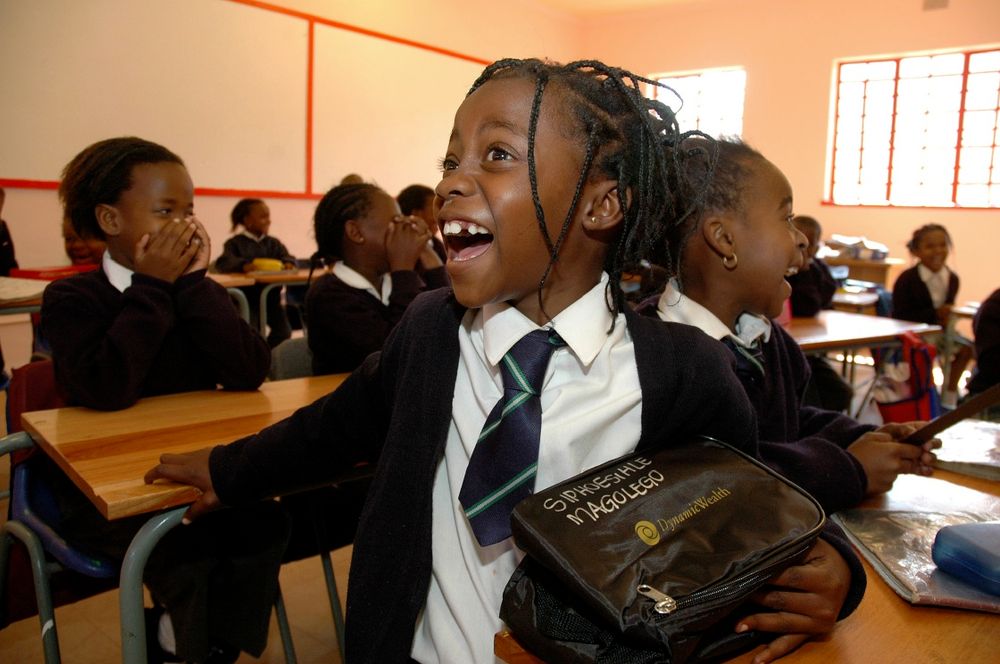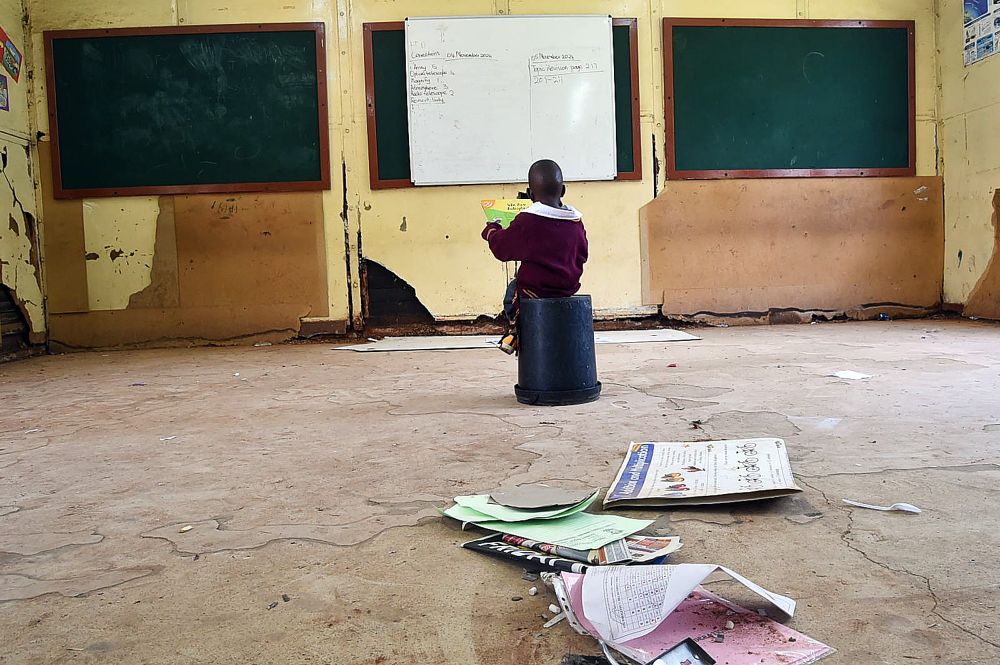
A young Grade 1 learner at Kliptown Primary School finds a precarious seat atop a makeshift bucket inside a classroom that tells a story of neglect.
South Africa’s public education system has largely broken down in the past decade, with 85% of schools being mostly dysfunctional. Despite government policies boosting access—reflected in a 222.4% increase in Grade R enrolment over 25 years—the overall quality of education has declined.
Moreover, only 63% of students who start school complete their matric. However, completing high school does not guarantee future success. Many matric graduates cannot access university, limiting their ability to contribute meaningfully to the economy.
In a recent podcast on Palatable Politics, economist Dr Azar Jammine noted that many university entrants will likely never become productive members of a modern economy.
“The way that poor basic education shows up in the data is that much of the youth does not study in the areas where jobs are being created and are really needed,” Jammine said.