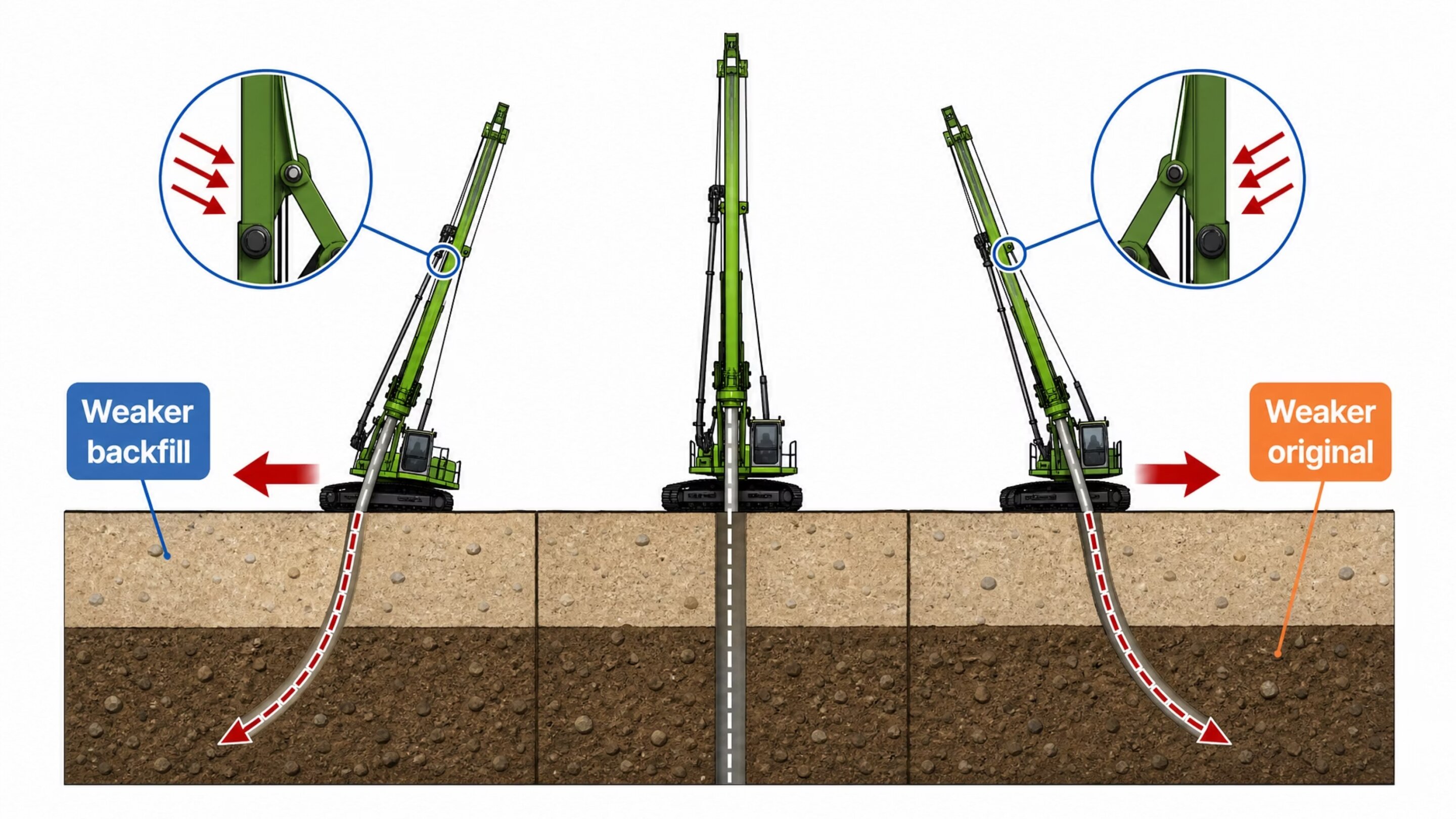
Strenght differences between backfilled soil and original ground can lead to inlined drilling and unserviceable piles. The framework proposed in the study offers practical guidelines to develop backfill specifications, improve resilience, and sustainability during foundation renewal programs. Credit: Professor Shinya Inazumi, Shibaura Institute of Technology
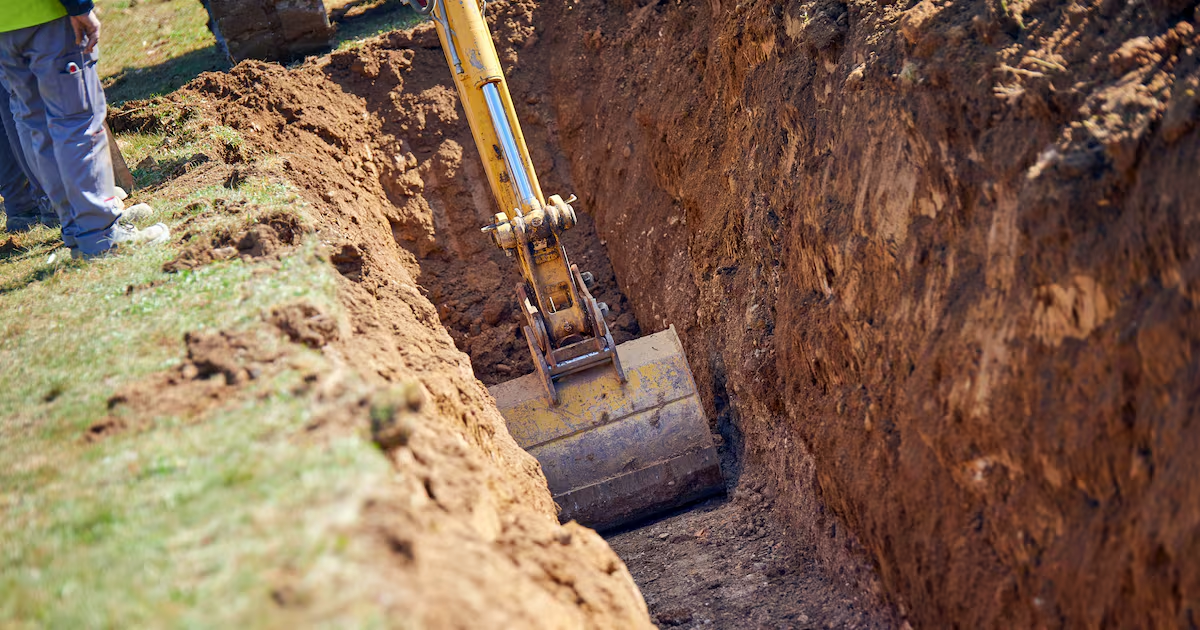
Urban redevelopment in densely populated areas often requires demolition and replacement of aging buildings. As buildings are replaced, existing foundation piles must be removed, leaving cylindrical voids that must be backfilled before the installation of new cast-in piles. However, with backfilled soil, it is difficult to achieve the same ground properties as the undisturbed original ground because of limited space, depth constraints and compaction issues. Strict construction schedules further limit sufficient backfill consolidation.
These differences between the backfilled and native ground can create significant geotechnical challenges during subsequent pile installation.
When drilling for new piles occurs near or partially through backfill zones, inadequate consolidation can lead to inclined drilling. This arises from the strength differences between the backfilled soil and the original ground, resulting in unbalanced force application at pin joints in drilling equipment. As a result, piles can become inclined, with field observations reporting deviations exceeding 10 millimeters per meter of depth.