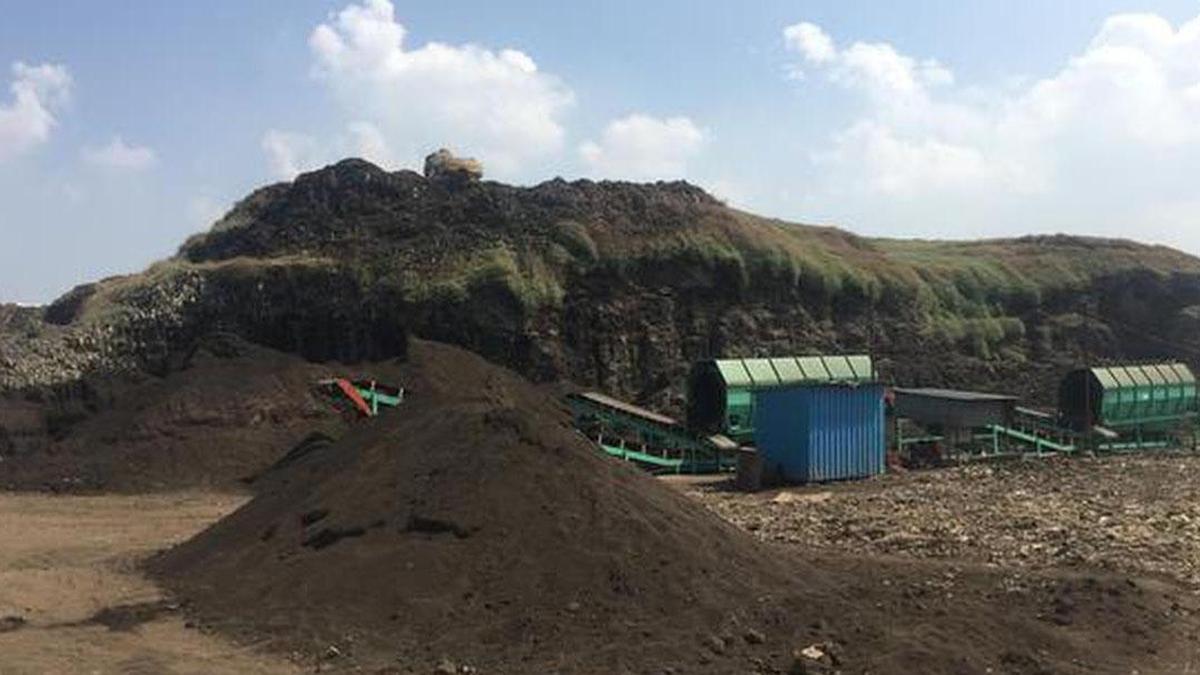
Legacy garbage dumpyards may be of some use after all. Bioearth mined from these sites may be used to enhance soil quality in degraded lands, according to a study by Anna University.
Bioearth is a type of fine residual soil that is formed in legacy dumpyards through long-term microbial degradation of organic matter. It constitutes about 30 to 40% of the total waste volume. Two scientific papers on the studies, published earlier this year in Environmental Science and Pollution Research and Stochastic Environmental Research and Risk Assessment, throw light on the physical, chemical and nutrient characteristics of bioearth, besides assessing heavy metal content and related risks.
Carried out by Centre for Environmental Studies of Anna University, the studies analysed multiple samples from 13 dumpsites across Tamil Nadu and found that the bioearth contained nutrients in adequate proportions to support plant growth. Although the presence of heavy metals was a concern, the alkalinity of the bioearth (pH of 7.75 to 8.5) ensured that the solubility of the heavy metals was greatly reduced, thereby limiting their intake by plants and soil organisms, said Saranya Kuppusamy, visiting professor, Centre for Environmental Studies and co-author of the papers.