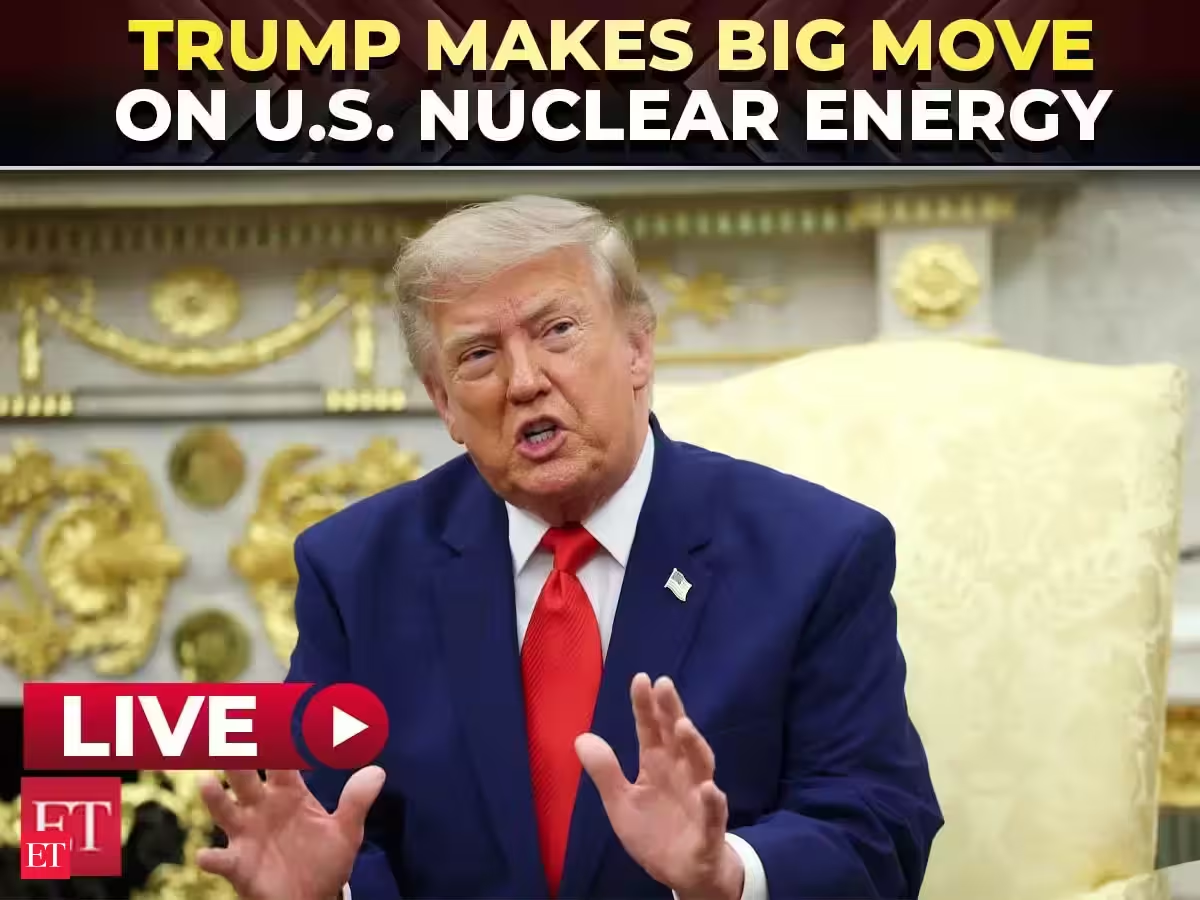
The US government just committed up to $17.5 billion in conditional loans to build ten new nuclear reactors across five separate projects. The announcement, made on June 23 by the Department of Energy, is the most aggressive federal push for nuclear power in decades, and it has implications that stretch well beyond the traditional energy sector.
Ten reactors, five projects, one very big bet
Each of the five projects will construct two Westinghouse-designed AP1000 reactors, with construction expected to begin by 2030. The AP1000 is not some experimental design on a whiteboard. It’s an established large-scale reactor platform, which is precisely why the DOE chose it as the backbone of this initiative.
Energy Secretary Chris Wright framed the loans as low-risk for taxpayers while positioning the program as central to what he called “unleashing the next American nuclear renaissance.” The conditional structure means the money flows only as projects hit milestones, a mechanism designed to prevent the kind of cost overruns that plagued earlier nuclear builds like the Vogtle expansion in Georgia.
A key part of the program targets long-lead-time components in the nuclear supply chain. In English: the specialized parts that take years to manufacture, things like reactor pressure vessels and steam generators, need orders placed now if reactors are going to be operational in the early 2030s. The US largely offshored this manufacturing capacity over the past two decades, and rebuilding it domestically is arguably as important as the reactors themselves.